





 English
  Francês
  Alemão
  Italiano
  Japonês
  Norueguês
  Portuguese
  Spanish
  5 min of reading
  0 comments


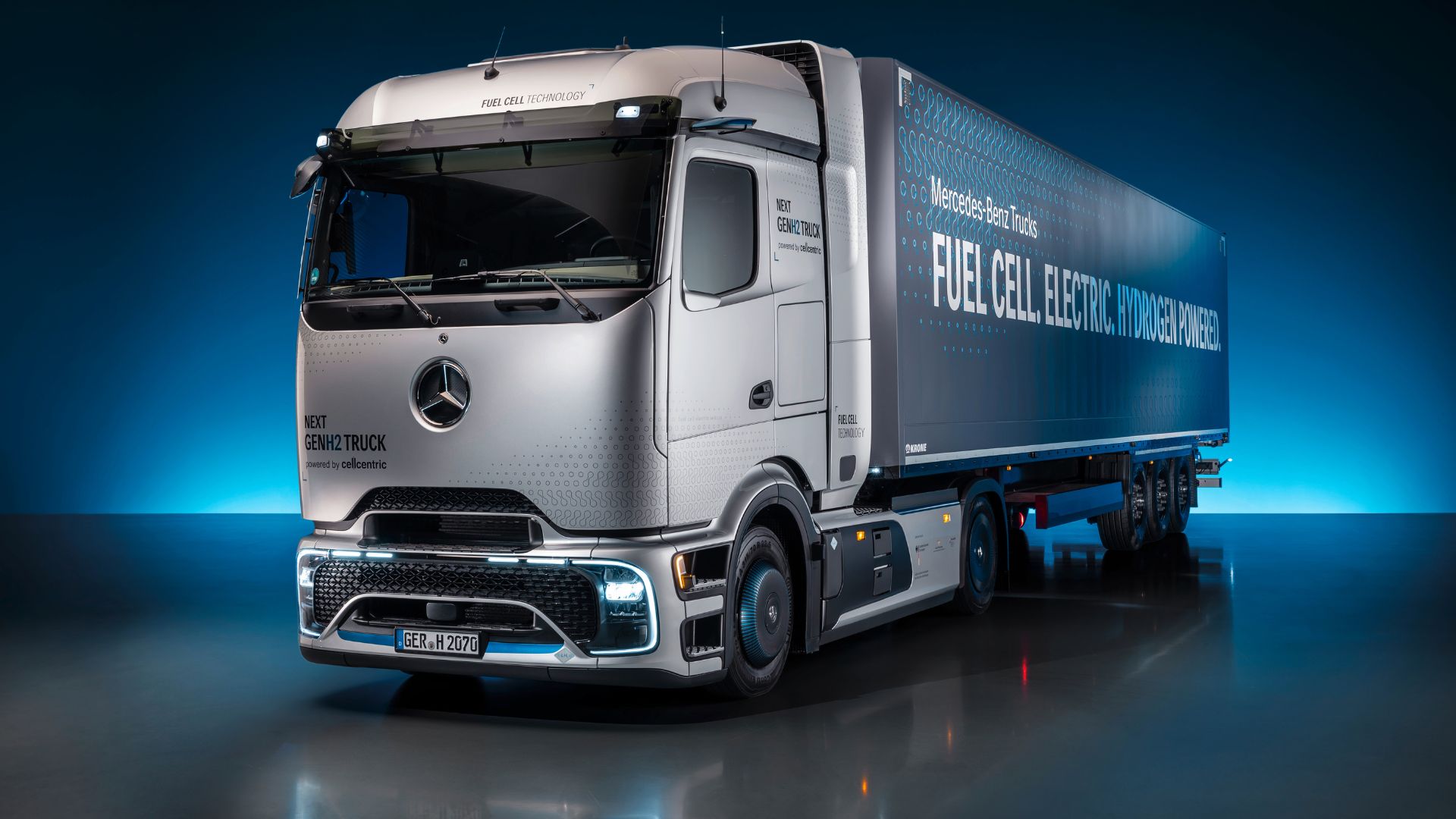
Mercedes-Benz Starts Testing A Long-Range Hydrogen Truck In Europe. The NextGenH2 Focuses On Fuel Cells, High Autonomy, And Real Operations To Boost Sustainable Transport.
Mercedes-Benz announced in Europe the beginning of small-scale production of the NextGen H2, an advanced hydrogen truck designed for real long-distance operations and equipped with fuel cell technology. According to an official publication from Daimler this Monday (26), the project plans for the initial manufacture of 100 units starting in 2026, with a direct focus on decarbonizing heavy sustainable transport.
The announcement marks a significant step for the automotive industry towards reducing emissions in road freight transport. By combining liquid hydrogen, modern electrical systems, and components already used in the brand’s electric trucks, Mercedes-Benz advances in establishing hydrogen as a viable alternative to diesel in long-distance applications.
Mercedes-Benz Bets On Hydrogen Truck For Sustainable Transport
The NextGen H2 is not just an experimental concept, but a truck ready to operate on commercial routes. The units will be used by carriers in different countries in Europe, allowing for performance, autonomy, and reliability evaluations under real working conditions.
-
The Federal District bets on innovation and sustainability by launching a hydrogen-powered bus on a new tourist route, promising to reduce emissions and transform the urban experience for residents and visitors.

-
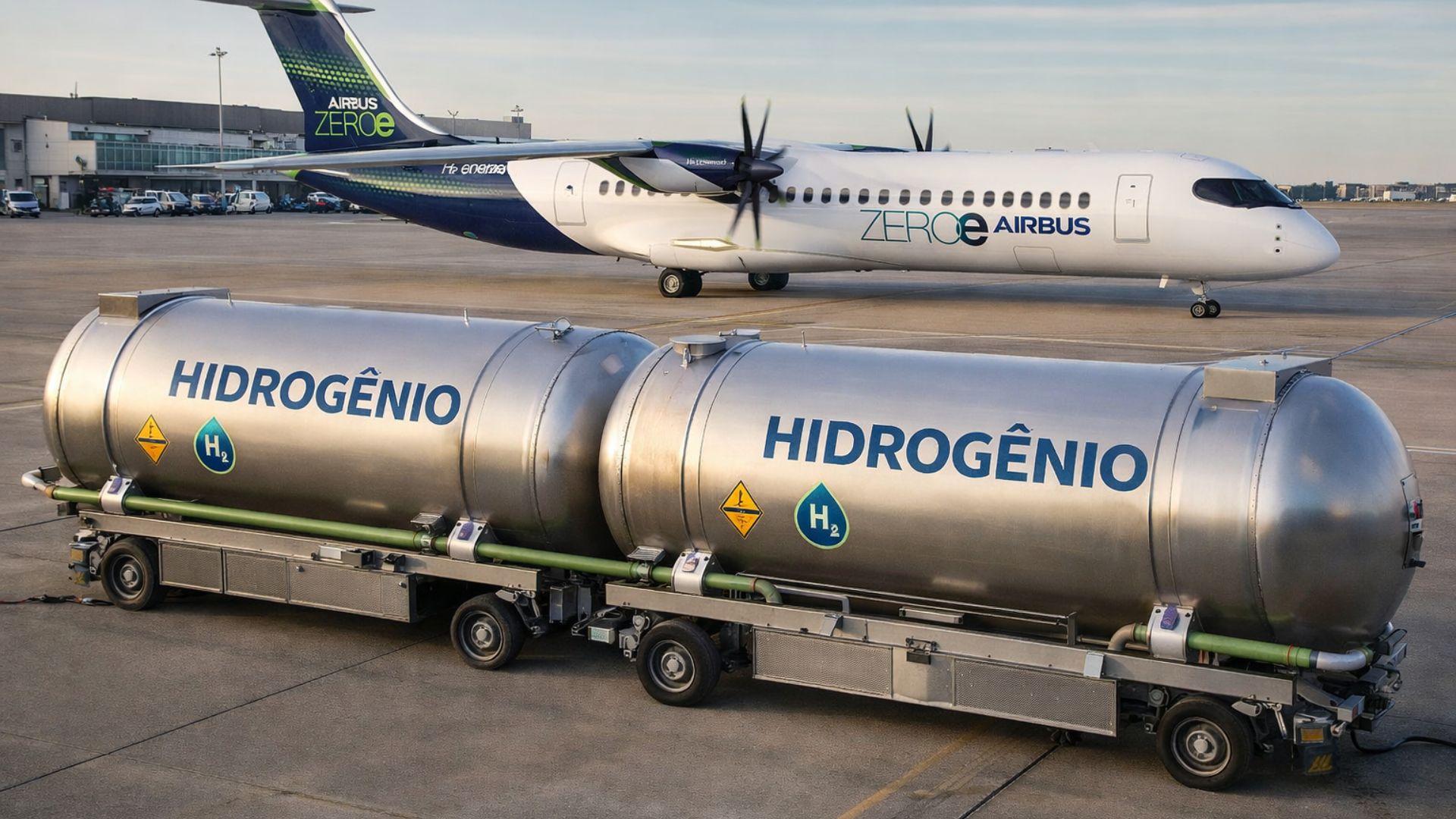
Hydrogen gains strength in aviation with Airbus and its fuel cell aircraft, potentially paving the way for sustainable flights, reduced environmental impact, and a new energy era in global air transport.
-
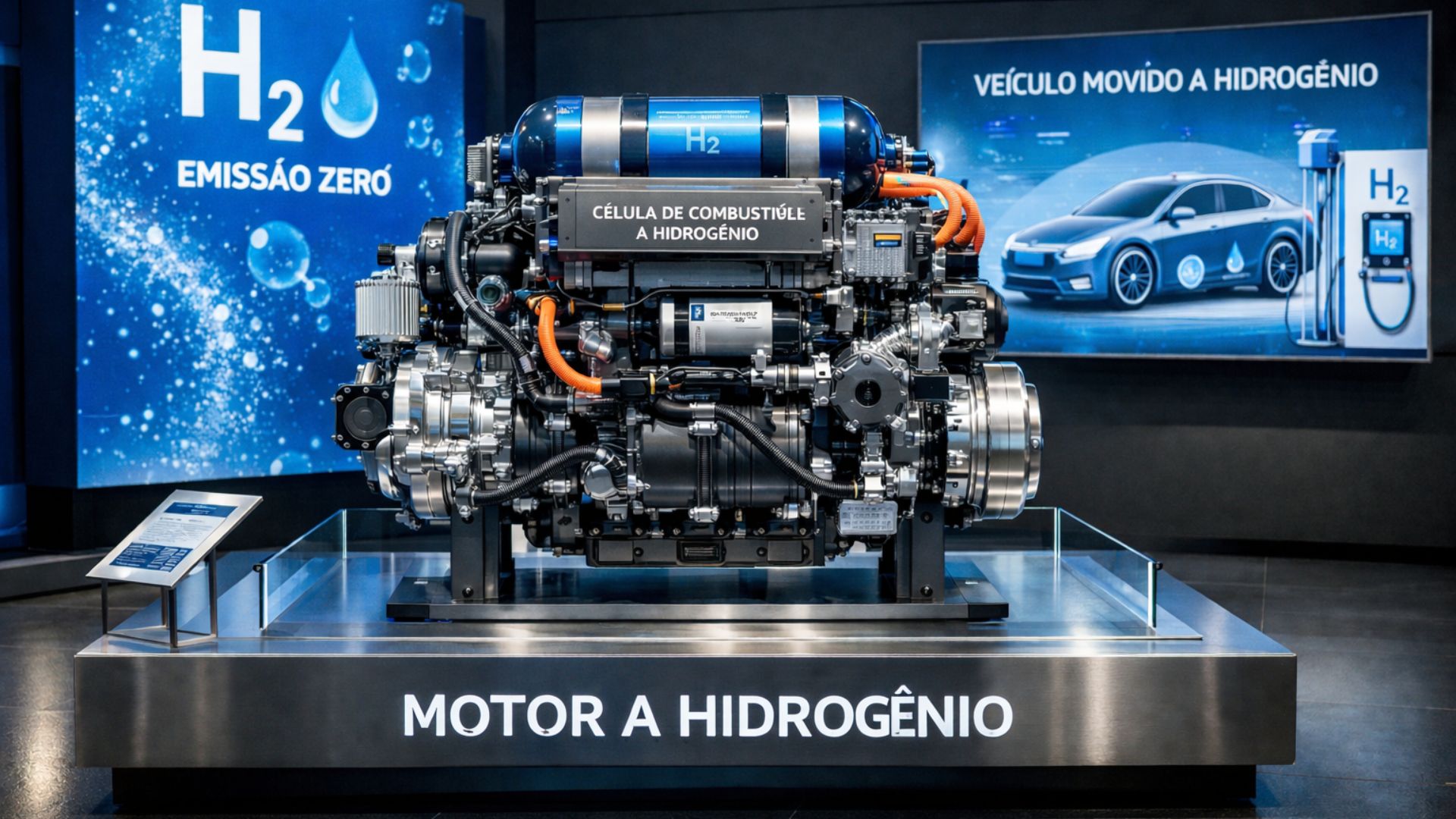
Hydrogen Engine Promises to Revolutionize Automotive Market and Creates a New Technological Horizon, But Economic Challenges Explain Global Resistance from Manufacturers
-
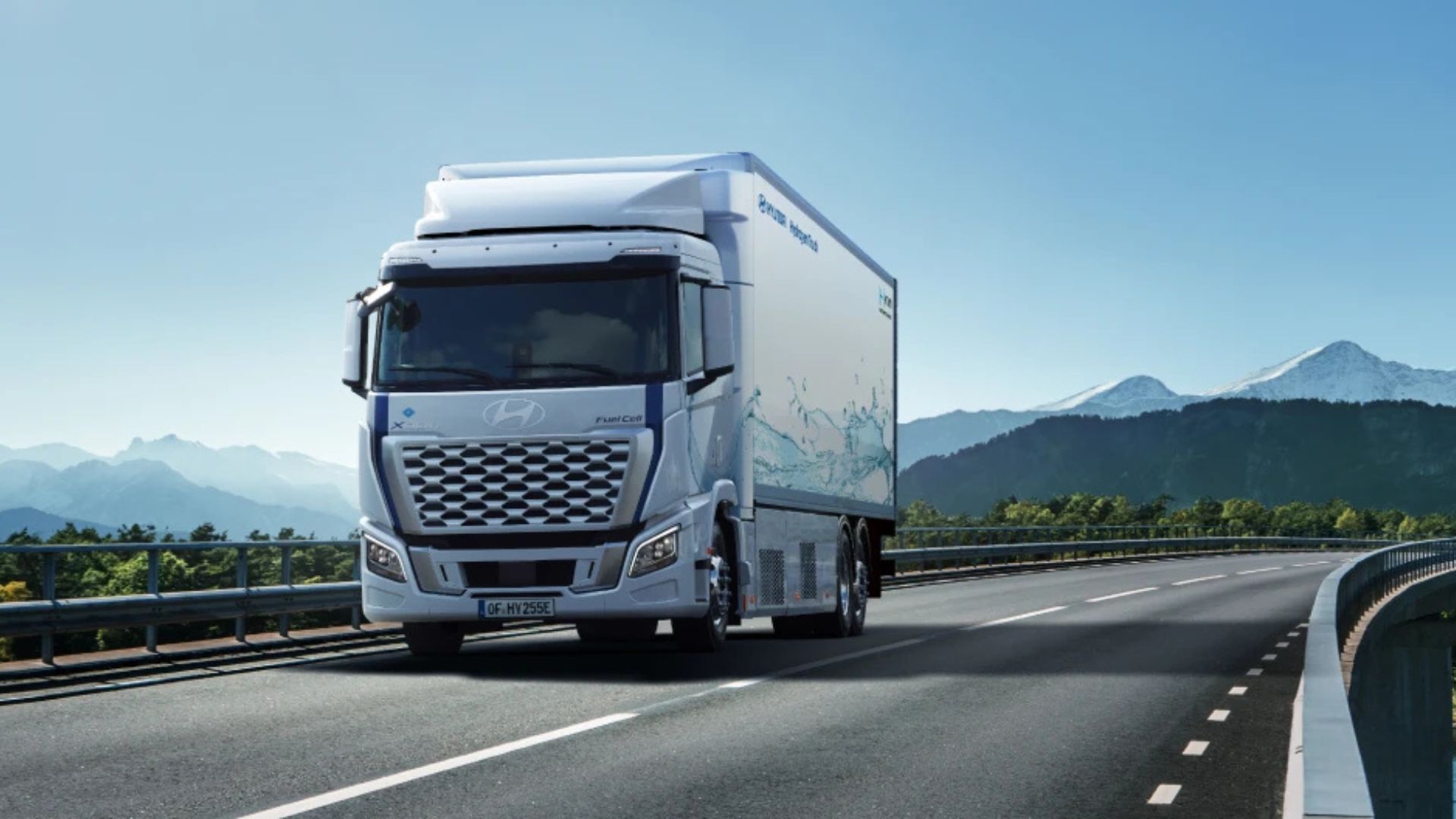
Hyundai XCIENT Fuel Cell Reaches 20 Million Km in Europe in Sustainable Logistics: Historic Milestone for Hydrogen Truck Fleet and Advancement of Global Clean Mobility

The Mercedes-Benz NextGen H2 is the direct evolution of the first GenH2 prototypes developed by the automaker in recent years. The new generation marks the transition from the testing phase to a pre-commercial stage, focusing on sustainable long-distance transport, a segment considered one of the most challenging in the energy transition.
According to Achim Puchert, CEO of Mercedes-Benz Trucks, hydrogen engines play a strategic role alongside battery electric trucks. For the company, both technologies are complementary and essential for reducing emissions across different operational profiles, especially where autonomy and logistical flexibility are crucial.
This approach acknowledges that pure electrification faces limitations on certain routes, opening the way for the hydrogen truck as a long-range solution.
Initial Production Of Mercedes-Benz NextGen H2 Begins In 2026
The Mercedes-Benz strategy calls for the initial production of 100 units of the NextGen H2 in 2026. These trucks will be delivered to selected customers and used in regular road transport operations, not limited to controlled testing.
This phase will allow the automaker to gather data on energy efficiency, operational costs, fuel cell system behavior, and liquid hydrogen refueling performance.
The information obtained will be crucial for future decisions regarding production expansion and the economic viability of the project on a larger scale. This is a key intermediate step before widespread commercial adoption.
Range Over 1,000 Km Strengthens The Hydrogen Truck
One of the main differentiators of the Mercedes-Benz NextGen H2 is its range of over 1,000 kilometers on a single refuel, performance comparable to that of diesel trucks currently used in long-distance road transport.
This achievement is made possible by the use of liquid hydrogen, stored at approximately –253 °C, which ensures significantly higher energy density than gaseous hydrogen.
The model features larger tanks compared to the previous generation, capable of storing up to 85 kg of liquid hydrogen per tank. Greater range means fewer stops, higher productivity, and more operational competitiveness, decisive factors for sustainable transport.
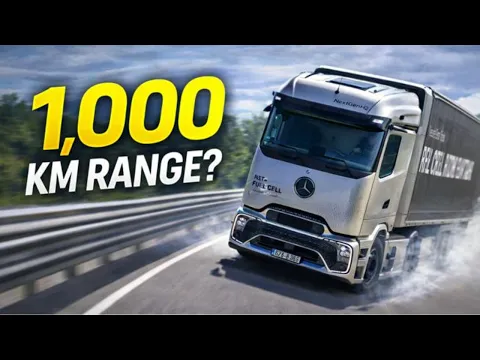

Fuel Cell Technology In The Mercedes-Benz NextGen H2
The NextGen H2 utilizes the BZA150 fuel cell, developed by Cellcentric, a joint venture between Daimler Truck, the parent company of Mercedes-Benz, and the Volvo Group. In the truck, two fuel cell units operate together, delivering 300 kW of total power.
Electricity is generated by the chemical reaction between hydrogen and oxygen, a process that occurs onboard the vehicle. This electricity powers electric motors integrated into the axle, while a 101 kWh high-voltage battery, using lithium iron phosphate technology, serves as a reserve and stores energy recovered during braking. The only emission from this process is water vapor, reinforcing the clean nature of the hydrogen truck.
The Mercedes-Benz NextGen H2 operates in two power modes. In Economy mode, it delivers 340 kW, while in Power mode it reaches 370 kW, equivalent to approximately 460 to 503 horsepower.
This level of performance places the hydrogen truck in conditions similar to those of the diesel models currently used in heavy transport, ensuring adequate traction capacity for long distances and heavy loads. Energy efficiency and performance have been balanced for daily use, according to the automaker’s strategy.

eActros Technologies Reinforce Hydrogen Truck Efficiency
The NextGen H2 incorporates several components from the Mercedes-Benz eActros 600, the brand’s battery electric truck. Among them are the ProCabin cabin, with optimized aerodynamic design, the new integrated electric axle, and the Interactive 2 multimedia cockpit.
Additionally, the model includes advanced safety and driver assistance systems based on the company’s latest electronic architecture, raising standards for comfort, safety, and operational efficiency in sustainable transport.
One of the historical challenges of hydrogen has always been refueling. In the Mercedes-Benz NextGen H2, this issue is addressed with the sLH2 standard developed by Daimler Truck in partnership with Linde. With this system, refueling can be done in 10 to 15 minutes, with safety and convenience similar to that of diesel.
The maturity of the technology had already been demonstrated at the end of 2023, when a Mercedes-Benz GenH2 truck traveled 1,047 km on a single tank during the #HydrogenRecordRun, carrying about 40 tons. This achievement reinforces the technical foundation of the NextGen H2.
What The Mercedes-Benz NextGen H2 Indicates For The Future Of Transport
The Mercedes-Benz NextGen H2 signals a concrete shift towards sustainable transport. By advancing to controlled commercial operations, the hydrogen truck is no longer just a technological promise but is approaching market reality.
With initial production set for 2026, high autonomy, quick refueling, and proven fuel cell technology, the project establishes a new benchmark for road freight transport without local emissions. Hydrogen is indeed beginning to gain traction on European roads.
With initial production of 100 units in 2026, range exceeding 1,000 km, quick refueling, and proven fuel cell technology, the project sets a new standard for road freight transport without local emissions. More than a promise, the NextGen H2 is a clear sign that hydrogen is starting to find real space on the roads.








-

-

2 pessoas reagiram a isso.