





 Portuguese
  English
  Spanish
  7 min of reading
  1 comment


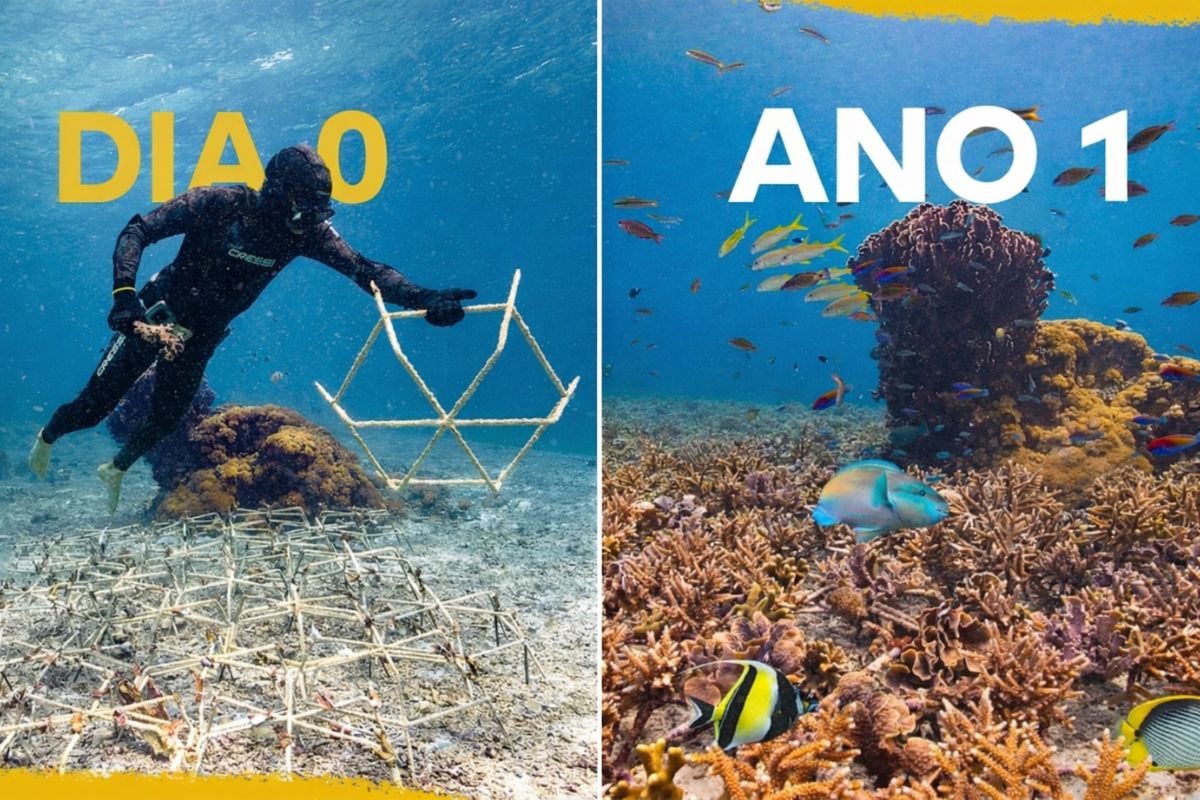


In A Diving Project, An Artificial Reef Was Built Piece By Piece With 3,300 Metal Structures And Naturally Broken Coral Fragments. In Just One Year, The Reef Now Houses Fish, Crabs, And Predators, Withstands Storms, Contains Debris, And Helps Collect Plastic In The Sea In The Coastal Area.
The reef was born from scratch, with divers implanting thousands of structures and securing coral fragments, and, one year later, what was metal on the ocean floor began to thrive with life. Instead of waiting decades for a slow recovery, the project accelerated the creation of shelter and complexity, attracting fish, crustaceans, and even predators.
The construction of this reef in northern Nusa Penida, Indonesia was not a single “heroic dive,” but a continuous process of deployment, maintenance, and fine-tuning. The team tested new structure formats to increase habitat diversity, improved materials to reduce plastic, faced algae and storms, and, at the same time, saw the corals visibly grow and occupy space.
How The Reef Was Built From Scratch, Piece By Piece

The work began with a precise and repetitive routine: taking structures to the sea, positioning them on the seabed, and connecting them so that the reef would not be a collection of loose pieces, but a stable network.
-
Made from recycled plastic, plastic wood is gaining space in the construction industry because it does not rot, resists moisture, and reduces maintenance costs over the years.

-
Florianópolis will receive a million-dollar BRT that will begin construction in 2026 with nearly 400 million in funding from the federal government and the Inter-American Development Bank, and the map already shows the routes for the exclusive bus corridors.

-
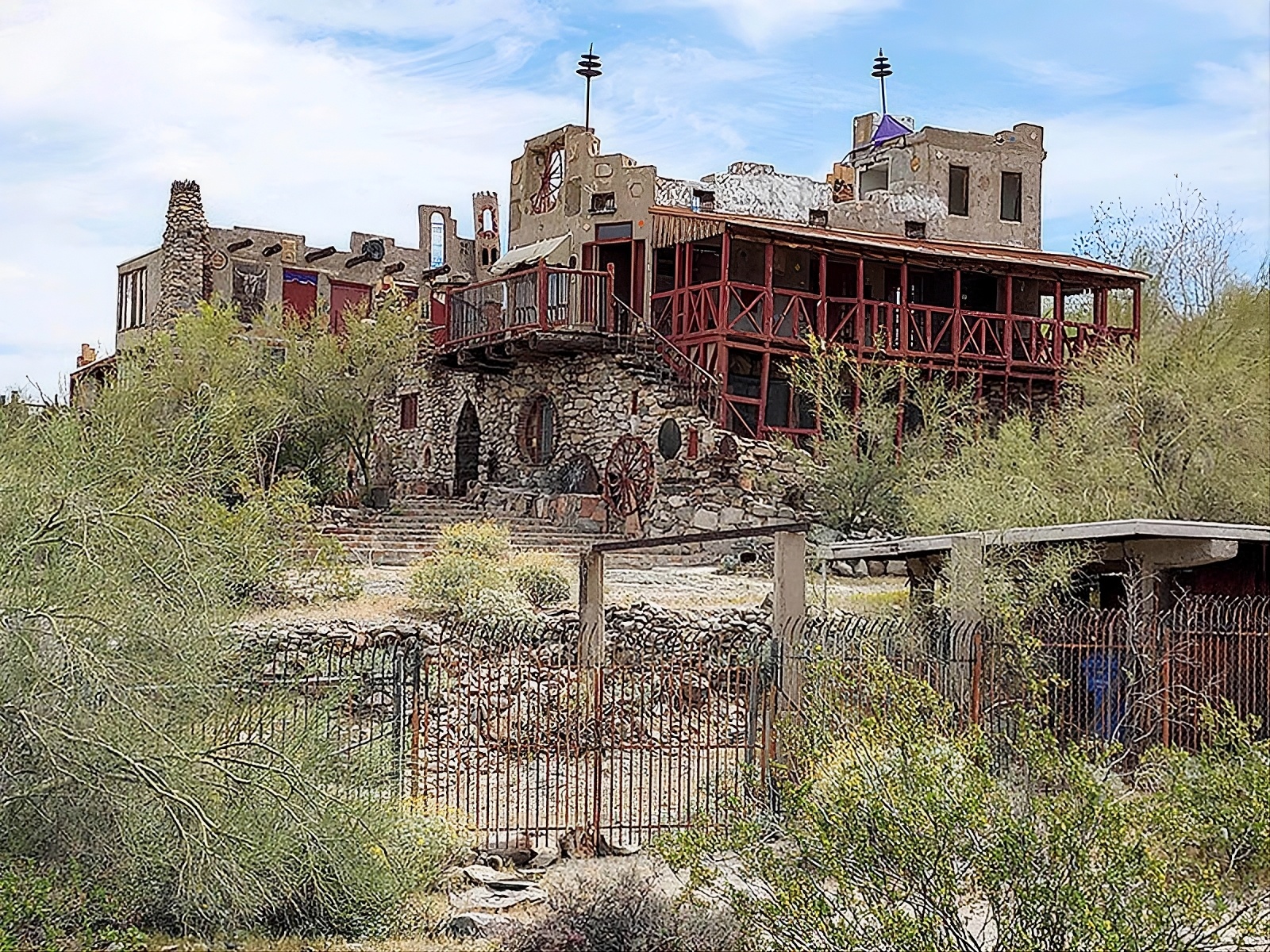
Without a blueprint, without an engineer, and using scrap from the dump, a father spends 15 years building an 18-room castle for his daughter, featuring tram tracks, 13 fireplaces, and over 700 m², which may now be demolished.
-
A megaproject worth R$ 89 billion is advancing in Iraq and promises to change the game in global trade by creating a new corridor between Asia and Europe, reducing traditional routes and repositioning the country as a logistics powerhouse.


The deployment also evolved to gain efficiency. Instead of carrying each unit with extreme care, the structures began to be launched into the water, and, down below, the divers organized everything in the correct arrangement.

To connect the reef, the team secured the structures with metal ties and aluminum wires, gradually replacing plastic solutions.
Every material change matters because the goal is not only to create habitat but to reduce waste and prevent the restoration process itself from becoming a source of pollution.
3,300 Structures And An Adjustment That Changed The Design Of The Reef

The scale is impressive: over 3,300 structures had already been deployed, forming a newly created reef large enough for the change on the seabed to be evident. And as the project grew, the design also changed.
In addition to the hexagonal structures initially used, a dome-shaped version emerged, with extra height.
The intention was simple and strategic: to create vertical diversity in the reef, offering different areas of shelter and water flow, and also favoring slower-growing corals that benefit from more suitable surfaces and positions.
Coral Attachment To The Reef And The Search For Less Plastic
The coral was not “planted” from nothing. The attachment relied on scouring a nearby reef for naturally broken fragments, collected and taken in baskets to the project area. From there, the most delicate phase begins: tying and stabilizing the fragments onto the structure so they can attach and grow.
At this point, aluminum wires come into play. They proved flexible enough to secure most corals without breaking them and efficient in fastening.
The goal is to eliminate plastic from almost everything in the process, although there is still a controlled testing period in which plastic ties continue to be used to compare performance and durability.
Strategy Change: Why Grouping Corals By Gender Helped The Reef

Another important decision was to alter the “mix” of corals. Instead of placing different types side by side on the same structure, the strategy shifted to grouping corals of a single gender in the same unit and positioning sets close to one another with the same composition.
The reason is practical: this tends to minimize competition between genders and makes it easier that, in times of stress, such as wave action, the corals have a better chance of establishing themselves as they are part of a larger colony, similar to what happens in a natural reef.
The reef becomes less of a “decorative bouquet” and more of a “functional colony”, with better chances of survival.
Storms, Algae And A Real Test Of The Reef’s Resilience

In the first months, the reef required active maintenance. Algae compete with the coral and need to be removed. There was even an unusual proliferation of algae that covered the project area, showing no immediate direct impact on the corals, but enough to reinforce the need for monitoring.
Then came the rainy season, with more energetic storms and heavy rain. The waves caused natural damage, and the team needed to address some of the typical fragility of a developing reef.
However, this period also delivered a positive signal: the newly constructed reef managed to contain debris.
In previous situations, loose debris could slide and destroy corals ahead, but this time, the network of structures held the material in place, serving as additional protection, even for nearby areas.
The Reef Also Became A Barrier For Plastic In The Sea
The storms brought another side effect: more plastic arriving in the area, carried by runoff from nearby islands. The response was direct: collect as much as possible whenever it appeared.
Here, the reef stops being just “fish habitat” and becomes part of a broader coastal restoration effort. Reducing plastic in the surrounding area reinforces the likelihood of coral survival, improves the quality of the environment, and prevents the restored area from being immediately degraded by waste.
The Drupella Challenge: Why The Reef Needs “Gardening” In The Beginning
Not every threat comes from waves and garbage. One of the cited challenges is the Drupella snail, which can kill smaller fragments and raise mortality precisely when each fixed piece represents accumulated work.
The management logic is akin to a well-kept garden: while the reef is still establishing itself, the area needs to stay clear of these snails.
Later, when the reef is fully formed and more robust, their presence can be tolerated, but in the early phase, control prevents losing effort that has not yet become established living structure.
One Year Later, The Reef Now Has A “City” Of Marine Life

When the team returned to the older reef, the impact was described as immediate: the place changed. Almost all fixed coral species managed to survive, with clear differences in growth rates.
Corals like Echinopora form leafy colonies, while Acropora branches quickly and can create dense shrubs and, in some cases, table corals.
The slower-growing corals also surprised. A Porites even managed to “swallow” the tie that was securing it, while Galaxea corals completely covered their fixations.
A Favites managed to establish itself even under the pressure from more aggressive corals nearby. The reef became a collection of living structures, not just a metal support.
Fish, Crabs And Predators: Who Occupied The Newly Formed Reef
With the corals closing off part of the space, the reef became a shelter and escape corridor. Families of small fish settled in, including different damselfish, among them a “domino” that became a local symbol.
Many fish started to use the reef to feed on algae or hunt small crustaceans, with the advantage of swimming under the structures to escape predators.
The variety also appears in specific and layered presences. Turtles visit the area to collect sponges. Below the structures, there are soft corals and starfish. At some points, soft corals like Xenia began to compete with builder species, still without becoming a critical problem.
And a curious detail caught attention: a mushroom-shaped coral began to shelter two “orangutan” crabs, reinforcing that the reef creates microhabitats that did not exist before.
Nocturnal Life In The Reef: Fluorescence And A Definitive Sign Of Food Chain
When visiting the reef at night with blue light and a yellow filter, another world emerges: the fluorescence of the corals. In this view, slow-growing corals stand out like stars, often more fluorescent than others.
And during this period, some corals appear to be “feeding,” with tentacles extended to capture zooplankton.
At night, marine life changes behavior. Certain creatures emerge more, while many fish hide to sleep under the protection of the structures.
And there was a moment that became a symbol of ecological maturity: a predator hunting inside the reef.
The presence of an active predator, using the structures as its hunting territory, was seen as the kind of evidence that “says it all” about the place, because it indicates that the reef already sustains more than shelter; it sustains a functioning food chain.
How Much It Cost To Build The Reef And What It Reveals About Scale
The project involved costs for foundation, boat purchase, equipment, production of the more than 3,300 structures, and team salaries.
The cited amount is around 3.3 billion Indonesian rupiah (around R$1,057,878.69). The number seems huge at first glance, but the implicit comparison is that, in currencies like pounds, euros, or dollars, the order of magnitude is less daunting than the figure suggests.
The central point is that the reef was built with constant optimization. The metallurgical workshop began to do both the metalwork and the coating, reducing transport time and costs.
The team improved materials, deployment techniques, and even diving logistics. Efficiency became part of the result.
Why This Reef Can Inspire Coastal Restoration
The reef is not just “a beautiful place.” It shows a pathway to restoration with three clear promises: to create habitat at scale, to withstand high-energy events like storms, and to reduce local pressures, such as plastic.
Moreover, the newly formed reef not only creates new habitat but can also protect already existing reefs by containing debris that would otherwise destroy corals ahead.
This combination makes the project a practical reference for those discussing coastal restoration: construction of structures, smart coral attachment, early maintenance, material adjustments to reduce plastic, and monitoring to measure resilience and colonization.
Do you think that projects of reef built from scratch should become a standard in coastal restoration programs, or do they only make sense in a few highly controlled and monitored spots?








Qual a referência do trabalho?