





 Portuguese
  English
  Spanish
  3 min of reading
  0 comments



Court Recognizes Employment Relationship When There Is Personal Element, Continuity, Salary, Subordination, and Risk Assumed by the Employer; Deadline for Action Is Up to 2 Years
Working without a formal contract is a common reality in Brazil, but this does not mean the absence of rights. According to lawyer Cíntia Brunelli, even without formal registration, it is possible to obtain paid vacation, thirteenth salary, FGTS, and unemployment insurance as long as the worker can prove that the relationship constituted employment.
The deadline is up to two years after the end of employment to file a lawsuit in the Labor Court.
During this period, the judge can analyze the evidence presented, and if the legal requirements are identified, determine that the employer pays everything that would be due if the contract had been signed.
-
Employee Fired After Accumulating 114 Days of Medical Leave in One Year, Labor Court Upholds Company’s Decision

-
Employee Fired While Treating Depression Wins in Court and Vale Is Required to Rehire Him Following Decision Based on the CLT and INSS Benefits

-
Workers Should Be Aware! March 6 Will Be The Fifth Business Day Of March And The Final Deadline For Companies To Pay Salaries According To The CLT

-
2026 FGTS Anniversary Withdrawal Is Released According to Birth Month, Sets Amounts by Balance Range, Establishes Deadlines for March and April, and Changes Rules in Case of Dismissal


What Are the 5 Requirements That Define the Employment Relationship
To differentiate formal employment from other forms of work, the legislation requires the simultaneous presence of five conditions.
They are:
- Personal Element: the service must be performed by the hired individual, without the possibility of substitution.
- No Occasional Nature (Continuity): the work needs to be regular and frequent.
- Remuneration: there must be payment of salary for the services rendered.
- Subordination: the worker follows orders and is under the employer’s direction.
- Risk Bearing: the business risks belong to the employer, not to the employee.
If these requirements are present, the court recognizes the existence of employment, even without registration.
In this case, the worker gains the right to all benefits guaranteed by the CLT.
How to Prove the Relationship Without a Formal Contract
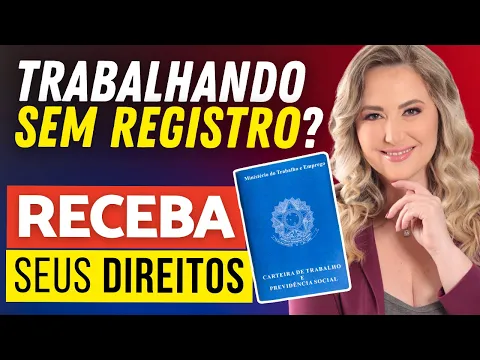

According to Cíntia Brunelli, the applied rule is the primacy of reality meaning that what matters are the facts of daily life, not just documents.
For this, evidence such as payment receipts, bank statements with regular deposits, conversations in apps, emails, photos in uniforms, point records, badges, and witnesses can be decisive in the judgment.
The worker who gathers evidence of these elements can request in court the recognition of the relationship and retroactive payment of all labor rights.
This includes vacation, thirteenth salary, FGTS deposits, and, in case of dismissal without just cause, unemployment insurance.
Rights That Can Be Claimed
By proving the employment relationship, the worker guarantees the same rights as those who had a formal contract for the entire period.
Some of the main ones include:
- Paid Vacation with an additional one third.
- Thirteenth Salary proportional to the time worked.
- FGTS deposited by the employer during the contract.
- Unemployment Insurance, in case of dismissal without just cause.
In addition to these, additional rights may arise depending on the situation, such as overtime, night shifts, and wage equality.
Even without a formal contract, the worker is not completely unprotected.
The court can recognize the relationship if the five employment requirements are proven through consistent evidence.
The deadline of up to two years after the end of the activity is crucial to ensure the chance of recovering the amounts.
Have you ever worked without a formal contract or know someone in this situation? Do you think it’s fair that the court recognizes these rights even without formal registration?
Leave your opinion in the comments.










-

Uma pessoa reagiu a isso.