





 English
  Francês
  Alemão
  Italiano
  Japonês
  Norueguês
  Portuguese
  Spanish
  4 min of reading
  1 comment


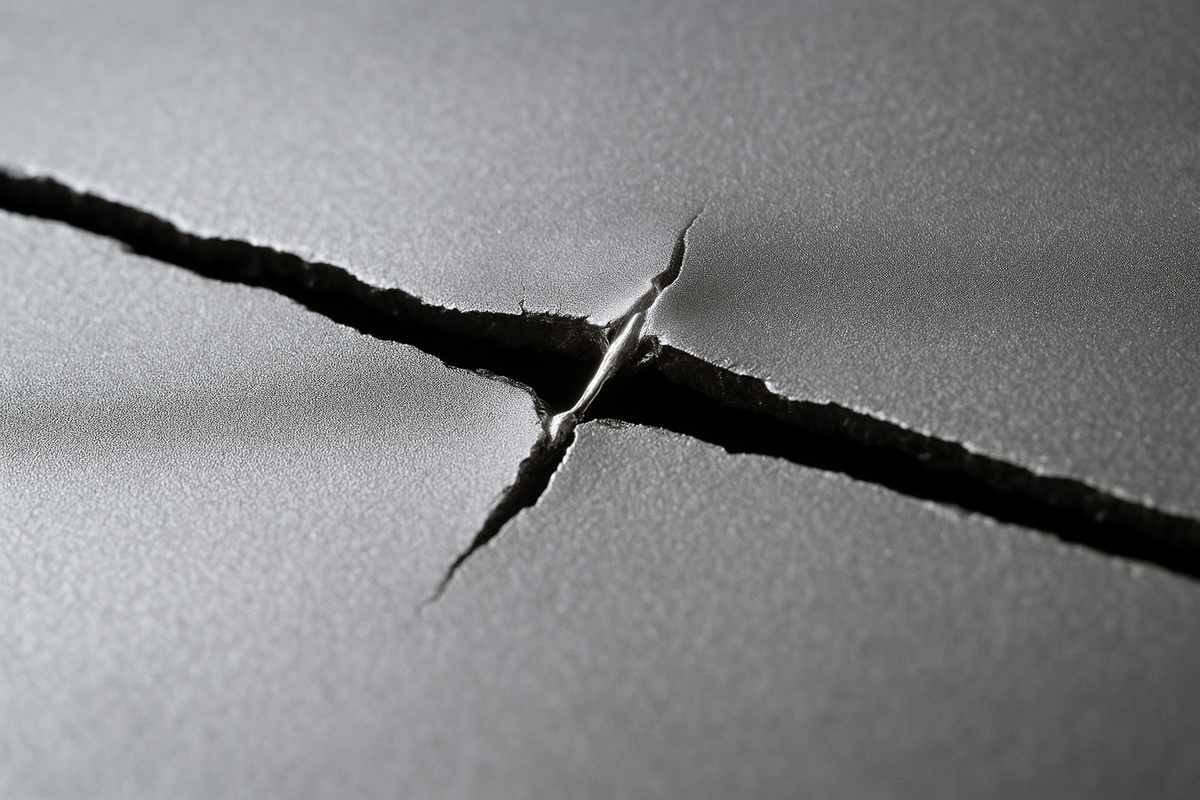


Accidental Experiment Reveals Metal Capable of “Healing” Cracks Without Human Intervention and Intrigues Materials Science
A surprising discovery in the United States caught the attention of the scientific world: a metal managed to “self-repair” after being damaged by fatigue. Therefore, this revelation could mark a new chapter in engineering and the creation of materials used in automobiles, airplanes, electronics, and industrial structures.
Scientists at the Sandia National Laboratories identified the phenomenon during tests with nanometric-scale platinum. They accidentally observed the spontaneous regeneration of the metal, as reported in July 2023 in the scientific journal Nature.
Consequently, this unprecedented observation paves the way for the development of more durable and intelligent materials capable of self-repairing and reducing maintenance costs.
-
A “silent skill” is allowing Brazilians to earn up to R$ 22,000 per month without a degree and become indispensable for companies that rely on millions of data to survive.

-
Researchers at the Toyota Research Institute found that if a human uses robotic arms to flip a pancake 300 times in an afternoon, the robot learns to do it on its own the next morning, and this is currently the most promising method to solve the biggest bottleneck in modern robotics.

-
Goodbye iron: a common item in households is starting to lose space to technology that smooths clothes in minutes without an ironing board and with less energy consumption.

-
Antarctica reveals an unusual clue high in the Hudson Mountains, and what appeared to be just an isolated rock began to expose a secret hidden under the ice for ages.


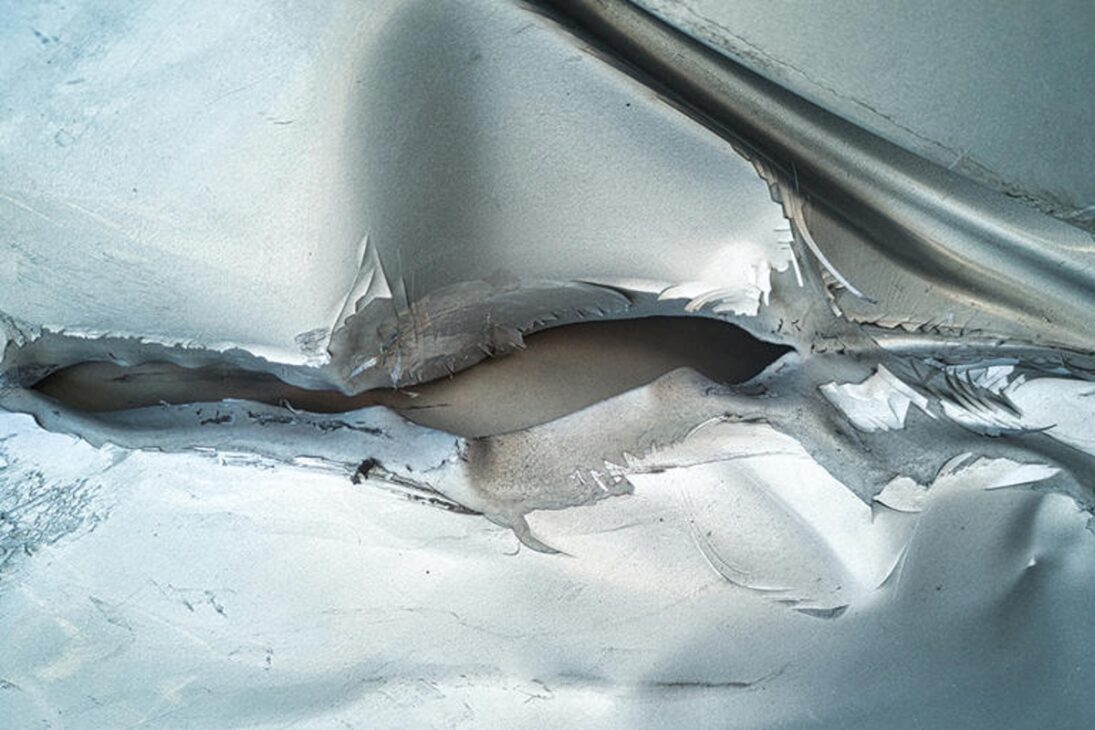
Platinum Test Reveals Unexpected Phenomenon
The scientific team was conducting a routine experiment to test the resistance of metals under stress. To do this, they used a fragment of platinum that was only 40 nanometers thick, less than half the thickness of a sheet of paper.
During the process, the researchers applied a repetitive force of 200 cycles per second, using a transmission electron microscope. As a result, the continuous pressure caused microscopic cracks, known as fatigue damage, which are common in engines and structures subjected to constant stress.
However, after about 40 minutes, the crack began to close on its own. Soon after, the damage shifted to another point, indicating that the material regenerated without any external intervention.
Experts See Revolutionary Potential in the Discovery
The materials scientist Brad Boyce, one of the project leads, described the phenomenon as “absolutely astonishing”. For him, understanding and controlling this capability could usher in a new era of functional materials.
Traditionally, engineers work under the idea that metal cracks grow irreversibly. For this reason, they design structures to slow this progression as much as possible.
However, the new evidence challenges this concept. Although the tests revealed the effect only in nanocrystalline metals and in a vacuum environment, scientists believe that the phenomenon could be reproduced under other conditions.
Therefore, the study brings profound implications for modern engineering and raises important questions about how we design materials.
Explanations and Predictions Gaining Traction
Despite the astonishment, the discovery did not arise without precedent. Michael Demkowicz, co-author of the study and materials science specialist, had already predicted this possibility in 2013 based on computational simulations.
According to him, the most plausible explanation involves cold welding, a process in which metal atoms spontaneously connect when they are close enough.
Even more surprisingly, this phenomenon occurred at room temperature. In other words, unlike traditional processes that require high heat, this effect opens new industrial possibilities, especially in applications requiring thermal stability.
Demkowicz emphasized that materials, under certain conditions, can exhibit completely unexpected behaviors, and that new discoveries arise when researchers remain open to the unusual.
Practical Applications and Future Challenges
If confirmed on an industrial scale, this property could benefit various sectors around the world. From engines and turbines to airplanes and cars, components will gain durability and safety.
Moreover, the phenomenon could also revolutionize areas such as urban infrastructure, space exploration, and underwater technology. In all these cases, repair is complex, expensive, or dangerous.
Still, scientists recognize that the path ahead will be long. Environment, type of metal, exposure time, and applied forces are variables that require in-depth study.
Boyce stated that this will be one of the most intensive research lines in the coming years, as it is still unclear how far the phenomenon can be reproduced on a large scale.
A New Perspective for Modern Engineering
The regeneration of metal cracks compels engineers and researchers to rethink old concepts. Universities, technology centers, and companies will need to adapt their approaches and methods.
In summary, the durability and behavior of metals may be understood from a new perspective, transforming the way we design machines, structures, and equipment.
Meanwhile, even with many questions, the discovery reinforces an old lesson in science: sometimes, the greatest innovations arise where no one expected — even in an ordinary laboratory test.
What if the cars, airplanes, and bridges of the future could repair themselves? Do you believe this is the path for the engineering of tomorrow?







Em escala manométrica e sem carga, pode ser possível, mas em grande escala e sob tensão, a ponto de causar a ruptura, como um material poderá se regenerar? Ao meu ver essa pesquisa não tem futuro!