





 Portuguese
  English
  Spanish
  2 min of reading
  0 comments


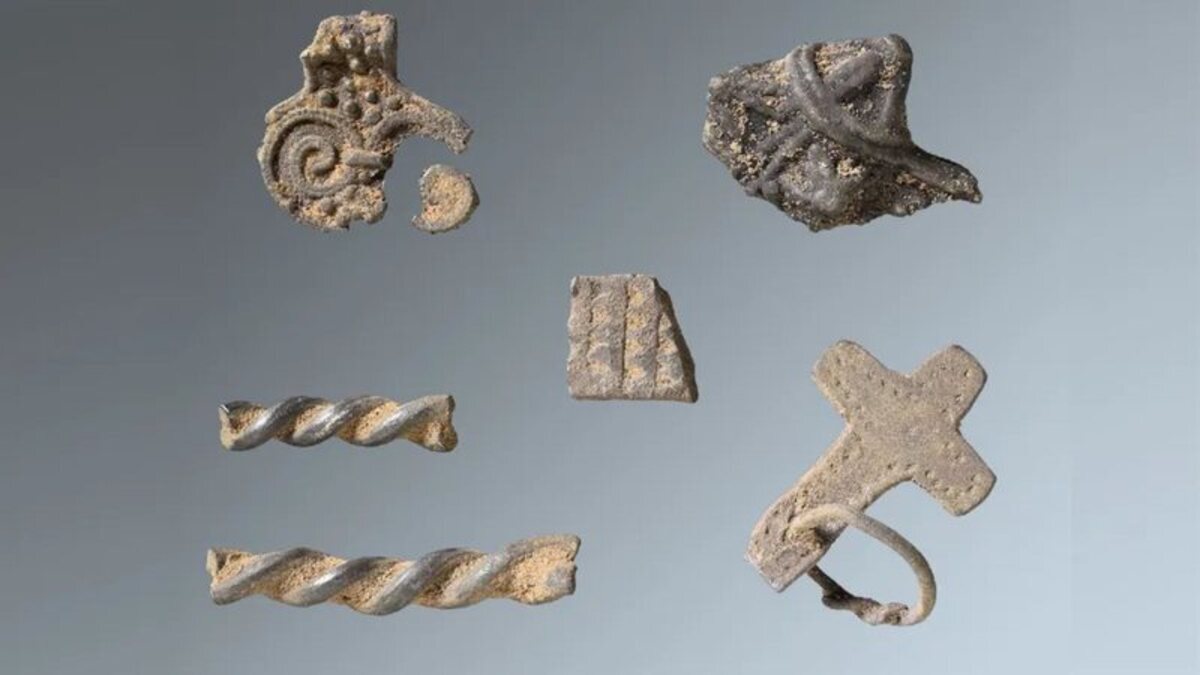
Viking Treasure With Coins, Silver And Mysterious Pendant Discovered In Germany May Reveal Signs Of The Arrival Of Christianity In The Region
An impressive collection of Viking Age artifacts was found in northern Germany. The discovery took place near Haithabu, an ancient port city that was one of the most important trading centers of the time.
The find was made by Arjen Spießwinkel, a volunteer from a group of metal detectors in Schleswig-Holstein.
The treasure includes around 200 artifacts, among them Arab coins, silver ingots, fragments of silver used as currency — known as hacksilver — and a mysterious pendant. The centerpiece of the discovery may represent either a Christian cross or an unfinished Thor’s hammer.
-
Motorola launched the Signature with a gold seal from DxOMark, tying with the iPhone 17 Pro in camera performance, Snapdragon 8 Gen 5 that surpassed 3 million in benchmarks, and a zoom that impresses even at night.

-
Satellites reveal beneath the Sahara a giant river buried for thousands of kilometers: study shows that the largest hot desert on the planet was once traversed by a river system comparable to the largest on Earth.

-
Scientists have captured something never seen in space: newly born stars are creating gigantic rings of light a thousand times larger than the distance between the Earth and the Sun, and this changes everything we knew about stellar birth.

-
Geologists find traces of a continent that disappeared 155 million years ago after separating from Australia and reveal that it did not sink, but broke into fragments scattered across Southeast Asia.

Sign Of Religious Change
The pendant has sparked debate among researchers. If it represents a cross, the object may be one of the first signs of the Christianization of the region.
Birte Anspach, spokesperson for the Archaeological Office of the State of Schleswig-Holstein, explained to the portal Live Science that Christianity began to spread in Haithabu in the 9th century, following St. Ansgar’s visit to the area.
However, the way the pendant is used raises questions. The eyelet for hanging is located at one long end, causing the object to appear upside down when worn.
This may indicate that it is not a cross, but rather a Thor’s hammer, a symbol of Norse mythology. If this is the case, the piece could represent the cultural and religious resistance of the Viking peoples to Christianity.
Indicators Of Settlement
In addition to the pendant, archaeologists also found a fragment of pottery and a sharpening stone. These objects indicate the possibility of an ancient settlement previously unknown in the region. The discovery was made near the Schlei, a branch of the Baltic Sea that borders Haithabu.
Authorities are now investigating whether the collection was intentionally buried or if it was part of a lost Viking village. The discovery helps to understand the trade, rituals, and cultural transformations experienced in the region over a thousand years ago.
With information from Aventuras na História.







Seja o primeiro a reagir!