





 English
  Francês
  Alemão
  Italiano
  Japonês
  Norueguês
  Portuguese
  Spanish
  5 min of reading
  0 comments


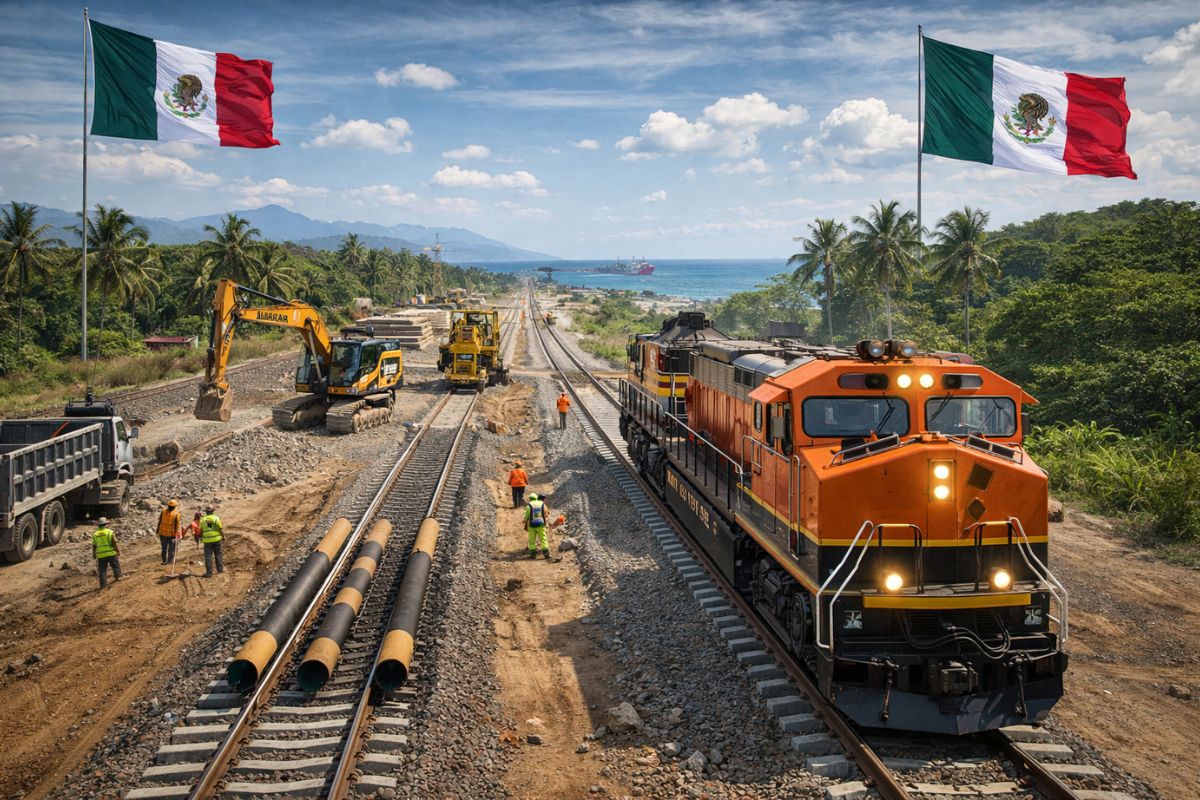
The Interoceanic Corridor of the Isthmus of Tehuantepec is an interoceanic railway corridor that connects the Pacific to the Atlantic through about 300 km of modernized railway, ports, and industrial centers in Mexico. The goal is to cross containers from one ocean to the other in less than seven hours and reach a capacity of 1.4 million containers per year, competing with the Panama Canal.
Mexico has launched one of the most ambitious infrastructure projects in Latin America: a railway corridor that links the Pacific Ocean to the Atlantic Ocean through about 300 kilometers of modernized railway in the Isthmus of Tehuantepec. The so-called Interoceanic Corridor connects Salina Cruz in Oaxaca to Coatzacoalcos in Veracruz through a logistics system that includes ports, freight trains, and industrial centers. The goal is to complete the crossing of containers from one ocean to the other in less than seven hours and achieve a capacity of up to 1.4 million containers per year, according to official data from the Mexican government.
The railway corridor aims to compete directly with the Panama Canal, which in 2023 faced severe restrictions due to water scarcity. This problem highlighted the need for alternatives for global maritime trade. Mexico positions itself as a logistical option for large ships that do not always manage to transit through Panama, especially in the trade flow between Asia, the Americas, and the East Coast of the United States.
How the railway corridor that links two oceans in Mexico works

The operation of the railway corridor is straightforward: containers arrive by ship at one of the ports, are unloaded, cross the country by train, and are re-sent on the other side. The project is not a canal in the physical sense, but an integrated logistics system that functions as a “dry canal.” The infrastructure is based on three main lines.
-
For 45 years, Spain and Morocco have been trying to connect Europe to Africa through a project of just 14 kilometers in the Strait of Gibraltar, and an active tectonic fault on the seabed continues to make the project nearly impossible.
-
Goodbye expensive water tank: residents replace traditional system with a cheaper and more efficient solution that reduces water consumption and reuses rainwater.

-
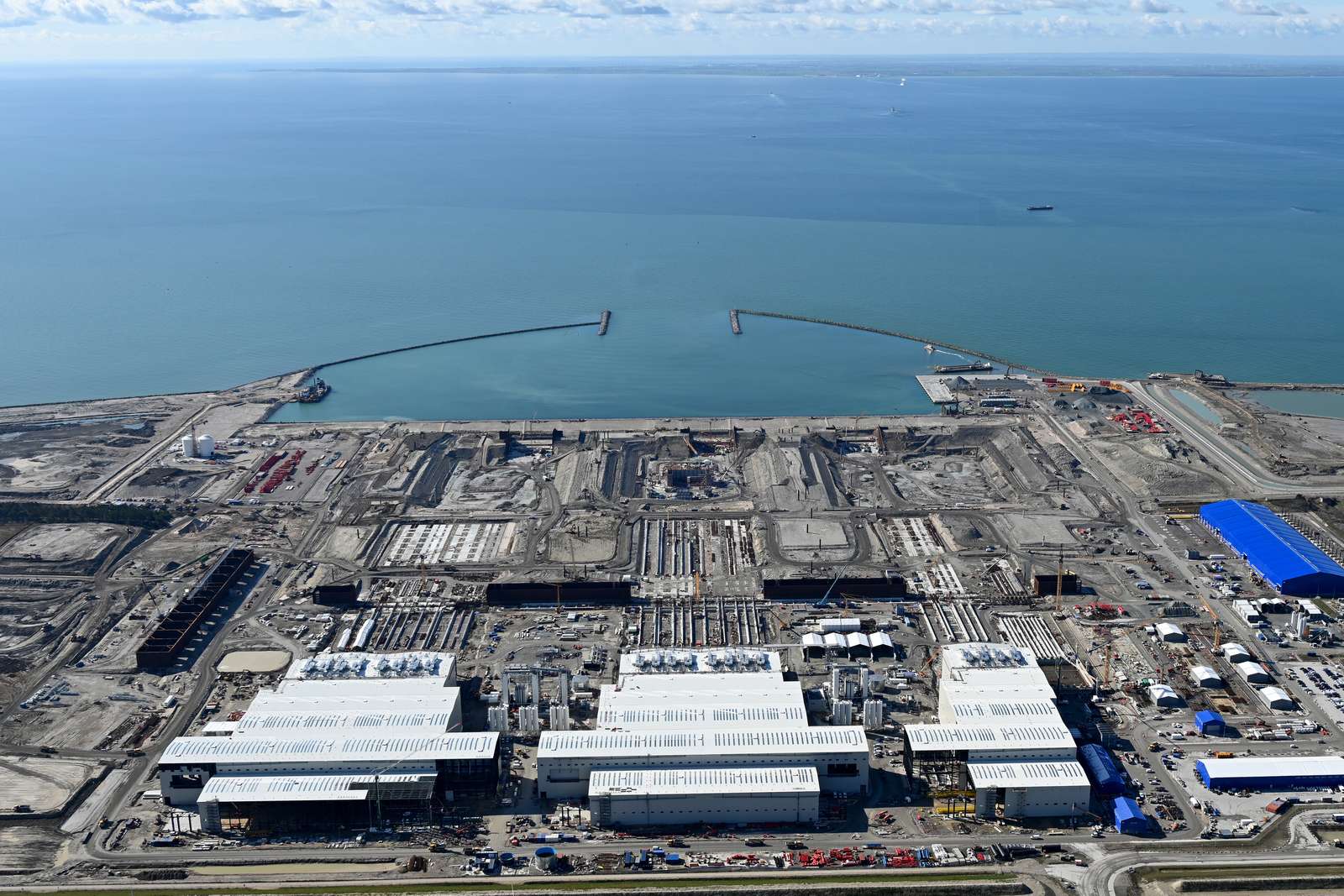
The largest tunnel module factory in the world was built from scratch on a beach in Denmark to produce 89 concrete blocks and will be demolished after the project: each structure weighs up to 10 times the Eiffel Tower and will be installed on the bottom of the Baltic Sea with an accuracy of 12 millimeters in a tunnel that will halve the travel time between Hamburg and Copenhagen.
-
India wants to build the highest railway in the world in the Himalayas, 489 kilometers crossing four mountain passes above 3,900 meters, with 74 tunnels and pressurized carriages like airplanes, and the most expensive project in Indian railway history still has no date for the start of the main works.


The Z Line, with 214 kilometers between Coatzacoalcos and Salina Cruz, has been operating since December 2023. The FA Line connects the southeast to the Maya Train. And the K Line, under construction, will extend the railway corridor to Guatemala.
In total, the network exceeds 1,200 kilometers when all branches are included. The ports of Salina Cruz and Coatzacoalcos have been modernized to accommodate large ships.
The Mexican government plans to install between 10 and 14 logistics centers with tax incentives to attract companies, taking advantage of the nearshoring phenomenon, which leads companies to establish themselves close to the American market. The railway corridor serves as a distribution hub in this strategy.
Why the railway corridor wants to compete with the Panama Canal

In 2023, the Panama Canal faced one of its worst operational crises. The shortage of freshwater, caused by severe drought, forced authorities to drastically reduce the number of ships authorized to transit through the canal.
This restriction highlighted a structural vulnerability: the Panama Canal depends on rainwater to operate its locks. Any prolonged climatic variation can limit its capacity and cause delays in global trade.
The Mexican railway corridor does not depend on water to operate. This is its main competitive advantage. Additionally, the project targets new and large ships that, due to their size, do not always manage to pass through the Panama locks.
If the railway corridor achieves the projected capacity of 1.4 million containers per year, it will become a real alternative for a significant portion of the trade between Asia and the East Coast of the United States, a route that today relies almost exclusively on the Panama Canal.
The limitation of the dry canal: why containers do not flow like ships

Despite the ambition, the Mexican railway corridor has a structural limitation that is difficult to overcome. Unlike a canal, where ships pass continuously, here goods need to be unloaded, transported by train, and reloaded at the other port.
This intermediate step incurs costs, time, and complexity that do not exist in transit through the Panama Canal. The efficiency of transshipment will be crucial in determining whether the railway corridor can truly compete on a global scale.
So far, the volumes of cargo moved by the railway corridor are still far below expectations. The discrepancy between the ambition of the project and the operational reality is the main point of skepticism among logistics analysts.
Coordinating ports, railways, and industry as a single system, ensuring security, and having a skilled workforce will be determining factors. Mexico promises that the railway corridor will be fully operational later this year and that the crossing will take less than seven hours, but the real test will come when actual commercial demand meets the projected capacity.
An idea from the nineteenth century that resurfaces with billions in investment
The idea of connecting two oceans by railway in Mexico is not new. In the nineteenth century, during the Porfirio Diaz era, the country had already built this link. However, the opening of the Panama Canal in 1914 rendered the project obsolete and relegated the Mexican route to oblivion for over a century.
Now, with the limitations of Panama exposed by the water crisis of 2023, the railway corridor between the Pacific and the Atlantic resurfaces with multimillion-dollar investment and renewed strategic importance.
The Mexican government sees the railway corridor not only as an alternative to the Panama Canal but also as a development engine for one of the poorest regions of the country. The planned industrial centers along the route between the Pacific and the Atlantic are expected to generate jobs and attract international investments.
If the project is successful, the Isthmus of Tehuantepec could become one of the most important logistics corridors in the Americas. If it fails, it will be yet another infrastructure promise that did not survive the confrontation with reality.
Do you think this project has a chance?










Seja o primeiro a reagir!