





 Portuguese
  English
  Spanish
  4 min of reading
  3 comments


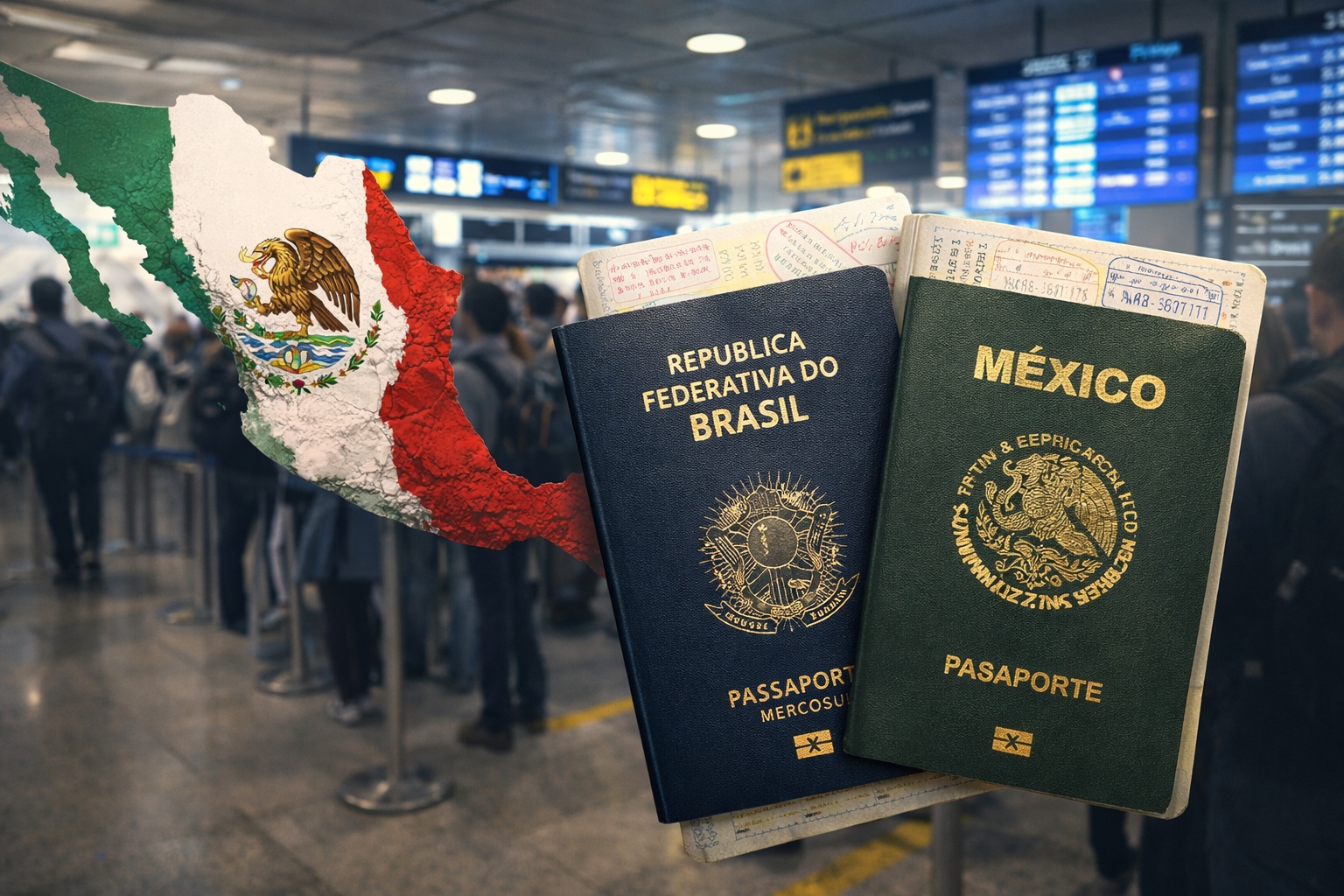


As of February 2026, Mexico Reintroduces E-Visa for Brazilians, Facilitating Travel and Impacting Tourism, Business, and Connections Between Brazil and Mexico.
As of February 5, 2026, Mexico will reactivate the electronic visa (e-Visa) for Brazilian citizens wishing to visit the country for tourism or short-term business. The change was confirmed by the Mexican government and represents a reversal of the rules in effect since August 2022, when Brazilians were required to apply for a traditional visa at consulates before boarding.
The official intention is to boost the flow of Brazilian tourists to popular destinations such as Cancun, Riviera Maya, Mexico City, and Los Cabos, as well as facilitate business travel and corporate events between the two countries.
It is estimated that more than 180,000 Brazilians per year will be directly benefited by the change, considering the traditional volume of visitors from Brazil to Mexico before the suspension of the e-Visa — a number that includes leisure tourism, events, cultural exchanges, and business travel. This flow places Brazilians among the top tourist emitters in Latin America, just behind tourists from the United States and other larger markets.
-
If the USA were to go to war with Brazil, Washington’s greatest fear would not be the attack itself, but facing a vast territory, prolonged resistance, and a costly, chaotic, and unpredictable occupation.

-
In 2013, Nicaragua sold the concession for a canal to rival Panama to a Chinese billionaire who lost 85% of his fortune, disappeared, and was declared bankrupt. Now the project resurfaces with a new route, a new Chinese partner, and a cost of $64.5 billion.

-
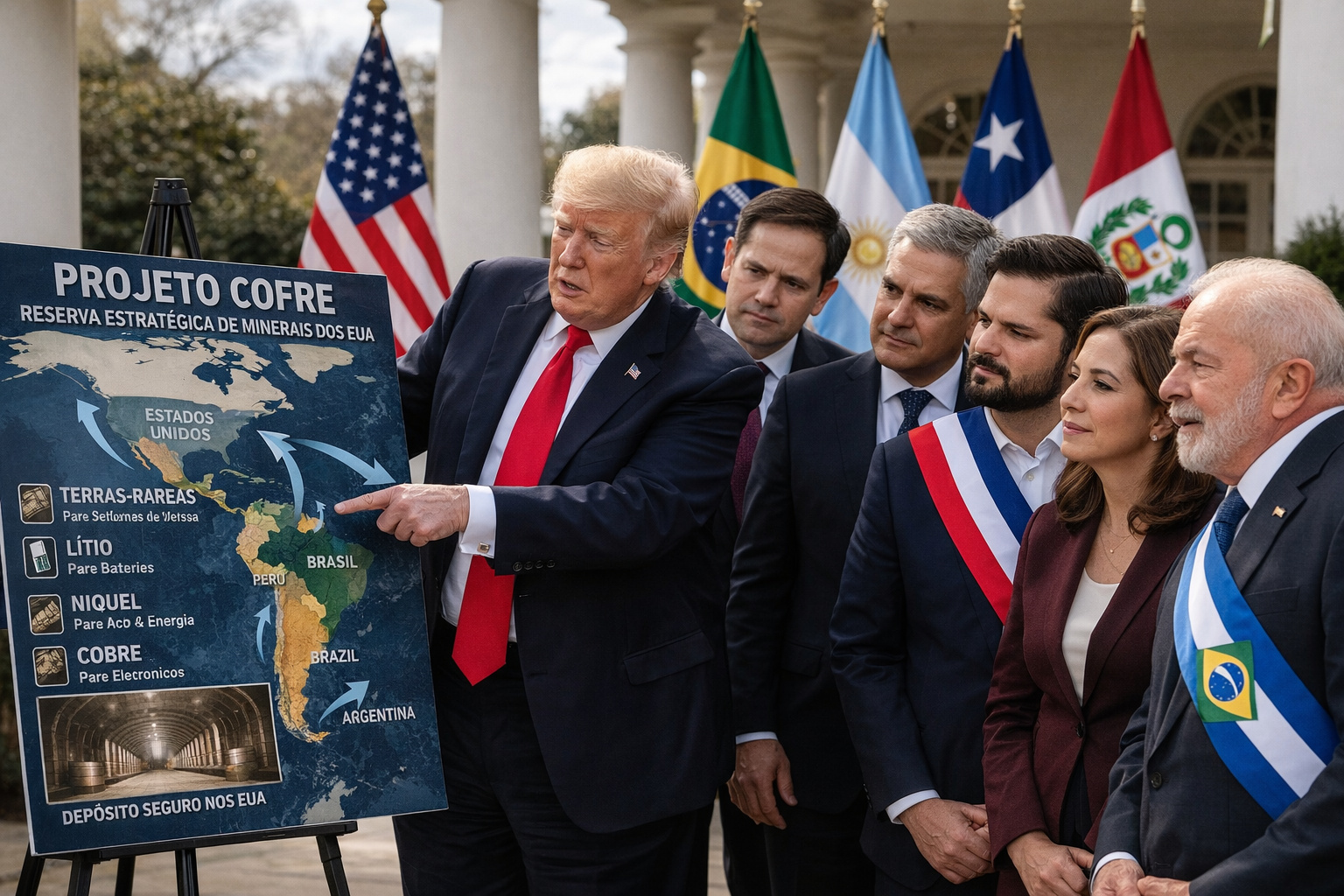
The USA announces a mysterious billion-dollar vault project to store critical minerals, but what intrigues experts is not just the plan itself, but why Latin America, including Brazil, has entered the center of this global dispute against China.
-
Trump Announces Bombing of U.S. Military Targets on Iranian Island Responsible for About 90% of Iran’s Oil Exports, Warns of Further Attacks if Navigation in Strategic Strait of Hormuz Is Threatened


Physical Visa vs. E-Visa: What Changes in Practice
Until the beginning of February 2026, Brazilians who do not have a valid visa from countries such as the USA, European Union, or Canada still need to apply for a physical visa at Mexican consulates before boarding — a process that can take weeks and requires in-person interviews in some cases.
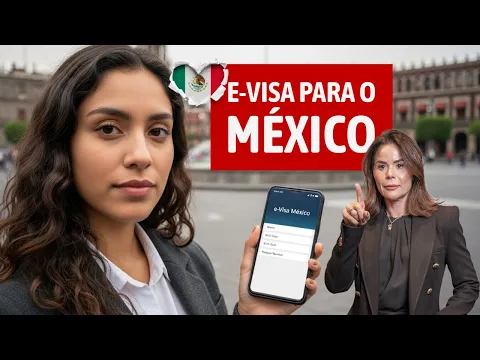

With the reintroduction of the e-Visa:
- Applications will be made entirely online;
- The authorization will arrive via email in about 48 hours;
- The application fee will be lower than the total cost of a traditional consular visa;
- The traveler may receive an authorization with multiple entries, usually valid for up to five years or stays of up to 180 days per visit.
This change significantly reduces bureaucracy, eliminates the need for trips to consulates, and allows Brazilians to plan trips with more flexibility without the fear of long timelines and the requirement for physical document submission.
Why Did Mexico Resume the E-Visa? Strategy for Tourism and Business
The reactivation of the e-Visa is not just an isolated facilitation: it is part of a broader strategy by the Mexican government to recover tourism markets and strengthen economic ties with Latin America.

In recent years, Mexico has faced challenges in the tourism sector, especially in beach destinations that rely heavily on international travelers.
The suspension of the electronic visa in 2022 was partially criticized by industry agents, as it increased bureaucracy for Brazilian tourists and consequently reduced the flow of visitors.
The resumption of the electronic visa is also aligned with major international events such as the FIFA World Cup 2026, which will have matches hosted in Mexican cities. The ease of access to the country is seen as a key point in attracting fans and visitors from various parts of the world, including Brazil.
Impact on Tourism and Connectivity Between Brazil and Mexico
Before the COVID-19 pandemic, Brazil ranked among the top emitters of tourists to Mexico, with direct flight schedules between São Paulo, Rio de Janeiro, Brasília, and well-established Mexican destinations, and high occupancy at airports such as Cancun and Mexico City.
With the electronic visa, it is expected that:
- The number of Brazilian travelers will grow again, possibly surpassing pre-pandemic levels;
- Travel agencies and airlines will expand flight and package offerings;
- Mexico will regain competitive market share compared to Latin American destinations such as Colombia, Costa Rica, and the Caribbean.
In addition, the simplification tends to benefit business travel, events, fairs, and commercial partnerships, as Mexico and Brazil maintain robust economic relations in sectors such as agriculture, technology, energy, and manufacturing.
Who Needs the E-Visa and Who Can Still Enter Without It
Even with the reintroduction of the e-Visa in 2026, there will be situations in which Brazilians will not need to apply for the e-Visa:
- Holders of valid visas from the United States, Canada, Japan, the United Kingdom, or Schengen Area countries can enter as tourists by presenting only that valid visa, along with the usual documents (valid passport and tourist migration form).
For travelers planning studies, work, or residency, the e-Visa does not replace the specific visas required for those purposes — it will be necessary to follow the regular consular immigration procedures of Mexico.
The Migratory Scenario in Latin America in 2026
The Mexican change is part of a broader context of revisions and modernizations of visa policies in Latin America and around the world.
Countries and economic blocs are adopting electronic authorizations such as ETIAS in the European Union and revising requirements to balance security, tourist flow, and diplomatic relations.
While some countries ease entry for tourists through digital systems, others are revising their rules for security or reciprocity purposes, making 2026 a year of important adjustments in global migration and tourism routes and regimes.










Acho um absurdo que o Brasil não tenha aplicado a reciprocidade e exigido visto dos mexicanos, assim como fez com EUA, Austrália, Japão e Canadá. Reciprocidade é só pra países ricos? Enquanto isso, os brasileiros continuam se submetendo ao processo pra tirar visto para ir ao México, e o governo nada faz.
Olá, você fez essa matéria com as informações que saíram em 2025? Ou confirmou esse ano que de fato o visto eletronico estará disponível em fevereiro? Mandei um e-mail ara a embaixada do México perguntando se de fato o visto eletronico iria voltar no próximo mês e eles me responderam con negativa.
Pois é…atualmente tirar o visto mexicano está mais chato e mais cheio de exigências que tirar o americano, e está assim por pressão dos americanos que querem impedir a entrada de ilegais através do México…não sei se vai ser fácil eles fazerem uma estratégia para alavancar o turismo no México prevalecer sobre uma exigência do Tio Sam….