





 Português
  Inglês
  Espanhol
  5 min de leitura
  0 comentários


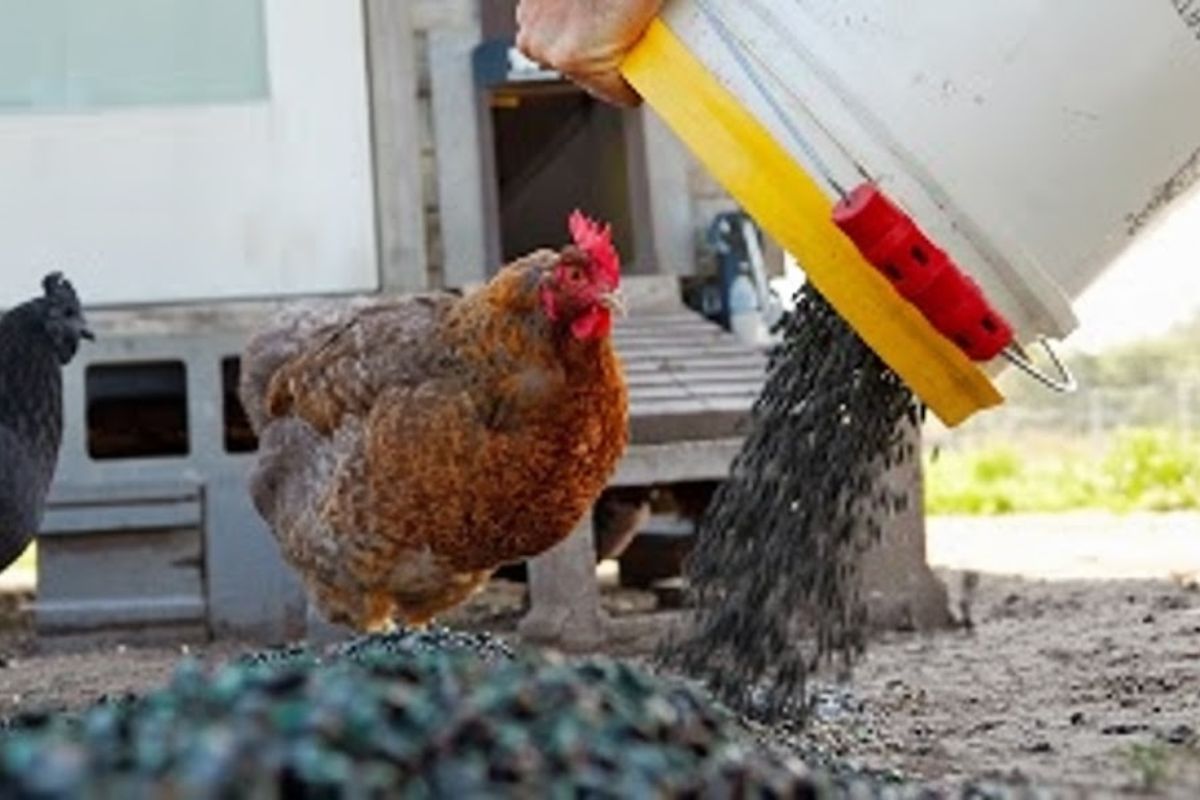
In A Rural Property, Japanese Beetles Destroyed Peach Trees And Attacked Apple Trees, Leading The Family To Spread Traps At The Edge Of The Lot And Near The Orchard. Without Poison, The Bait Attracts, The Panel Takes Them Down, They Accumulate, Die From Suffocation And Become Protein For About 50 Chickens At Peak Annual.
In 2022, a rural family noticed that Japanese beetles were not just showing up in the yard: they were destroying the small peach tree and advancing onto the orchard, including apple trees that were starting to yield a more consistent harvest. The reaction was practical, repeated over three years, and guided by a direct objective: to capture and eliminate Japanese beetles before the fruit trees and the garden were stripped bare.
The method was not limited to a single point. Traps were installed on the east side of the property and at other boundaries of the lot, to draw pest pressure away from the center and reduce the attack on the orchard. The result, described as thousands of captures, opened up a second use: turning Japanese beetles into food for chickens, with cost savings and immediate impact on the coop routine.
The Attack In The Orchard And The Decision To Attract Away

The trigger was visual and quick. Japanese beetles began devouring leaves, and soon the apple tree showed signs of loss at the top, with dead leaves scattered and fruits threatened.
-
Alone, the producer applies 7,400 hectares with the T100 drone in an optimized structure, replaces the generator with a silent battery, and demonstrates how technology reduces costs, increases productivity, and even challenges the uniport in the field.
-
China banned the export of 22 tons of meat from Argentina.

-
JBS, founded by the Batista brothers, continues to conquer the world: entrepreneurs built a ‘factory in the desert’ creating 3,000 jobs.

-
With only 1% of Brazil’s territory, Santa Catarina has built one of the most competitive industrial parks in the country, with 64,000 companies, nearly 1 million jobs, and a growth rate of 5.3% while the national industry is practically stagnant.


The nightmare feeling in the orchard appears when the family realizes that the season that year started slowly but accelerated abruptly and required action before it was too late.
The decision to place traps outside the orchard has an operational logic: to divert the concentration of pests from the fruit trees and create a controllable collection point.
Even with the common criticism that traps may attract more Japanese beetles, the family relied on practical compensation: if they come, then they stay where they can be removed, rather than remaining in the orchard and around the coop.
How The Traps Work Without Poison

The described structure is simple and modular, assembled in seconds. A T post is driven into the ground and, with a carabiner, the trap is hung to maintain height and stability.
The set features a top with an impact panel, a collection bag, and a lower opening point with a zipper, used to empty the contents when the volume increases.
The central mechanism is non-toxic. There is no poison in the bait: there is an aroma that attracts Japanese beetles to the panel. When they hit it, they fall into the bag where they accumulate.
With the stacking, they die from suffocation, and this allows for later handling without direct spraying.
The family also mentions a natural repellent made with neem oil and dish soap as an attempt to reduce immediate attack while the traps do the bulk work against the pests.
How Much Comes In, When It Overflows And Why Collection Becomes Routine

The entry rhythm appears as an indicator of density.
Near the orchard, the trap began to receive Japanese beetles in less than a minute after being hung, with insects arriving by the smell and accumulating quickly.
On a second day, one of the traps is described as completely full, requiring a bucket and lid to prevent escape during transport.
During the most intense period, the trap near the garden and the orchard would have filled two and a half times. In one of the collections, the bucket was already almost half full, which helps to gauge the scale without relying on unit counts.
The urgency is not aesthetic, it is logistical: the longer the bag remains full, the greater the risk of overflow, of insects escaping, and of the orchard remaining under pest pressure.
Japanese Beetles In The Coop: Economics, Protein And Limits
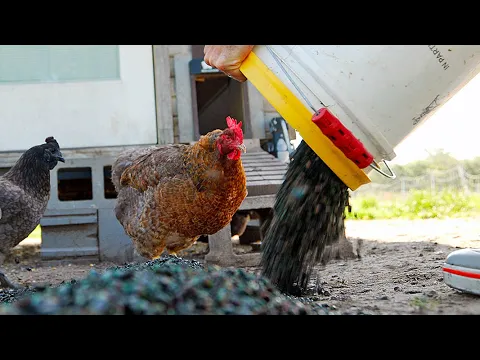
The most controversial step is also the most objective. The Japanese beetles are dumped into a bowl and offered to the chickens as protein.
The family avoids doing this early in the day to increase the chance of consumption and emphasizes that the main flock consists of about 50 chickens, although the total on the property is close to 100.
When the Japanese beetles are fresher, the competition becomes fiercer; when they have been dead longer, the smell increases and the birds’ interest tends to decrease.
There is also a point of public perception that often appears in coop conversations: the taste of the eggs. The family asserts that, despite the disgust and odor, there has been no noticeable change in taste related to what the chickens have eaten.
The logic presented is economical and seasonal: for a few weeks in June and July, the traps become a source of extra food, reducing some feed consumption while removing pests from the orchard.
End Of The Season And The Risk Of Reinfestation
The timeline brings a relevant detail: the season usually starts in June and ends in early July, but that year it started later, in early July, and extended for almost two months, reaching the first week of August with still some Japanese beetles active on the leaves.
This variation reinforces that pest pressure does not follow a perfect clock, and monitoring needs to be constant, especially as the orchard starts to recover.
At the end, the family collects the traps spread throughout the property and describes the decision to discard and burn part of the material, as it becomes disgusting, replacing the bait for the next cycle.
The reasoning is preventive: not to leave live Japanese beetles inside stored equipment and reduce the chance of the problem restarting.
In the end, the scene leaves a harsh message: control is repetition, and the orchard depends on operational discipline to bear the cost of pests year after year.
What This Strategy Says About Cost And Pest Control In The Field
The proposal is not glamorous or clean, but it is measurable.
Traps require little assembly time, use a post, carabiner, and aromatic bait, and concentrate Japanese beetles in points where removal is possible.
This replaces frequent spraying with a physical collection, more compatible with family routine, especially when the orchard is small and the coop already exists on the property.
At the same time, the method exposes a limit: success depends on volume and persistence. If the traps are too far apart, the orchard may continue to be devoured; if they are too close without collection, the bag fills up, and effectiveness decreases.
What sustains the strategy is the complete cycle: install, monitor, collect, feed the chickens, reduce pests, and repeat.
Would You Have The Courage To Use Traps To Turn Japanese Beetles Into Food In The Coop, Or Is This Limit Non-Negotiable For You? If You Have Already Protected An Orchard From Pests, What Decision Saved You The Most Money And Which Mistake Cost The Most?










-

-

-

4 pessoas reagiram a isso.