





 Portuguese
  English
  Spanish
  4 min of reading
  2 comments


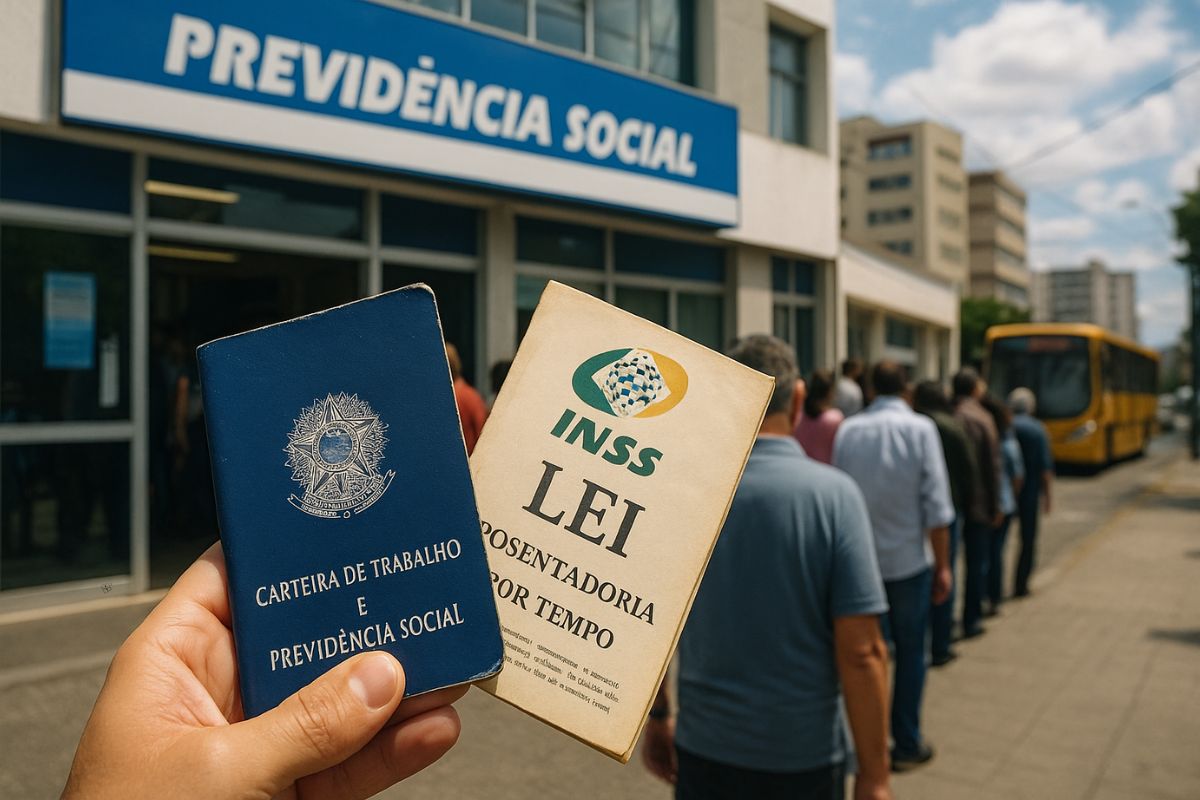


Supplementary Law Guarantees Benefits for People with Disabilities Who Contributed to the INSS for at Least 180 Months
Many people are still unaware that, in certain situations, it is possible to be entitled to retirement with only 15 years of contributions. This possibility is provided for in the Supplementary Law No. 142/2013, which addresses retirement for people with disabilities in Brazil. The objective is to guarantee inclusion and social protection for those facing physical, social, and institutional barriers in their daily lives.
According to the legislation, men aged 60 and women aged 55 can retire if they prove at least 180 months of contributions (15 years) and are recognized as a person with a disability. The process is conducted by the INSS based on medical and social assessments, carried out by a multidisciplinary team.
Who Is Entitled to Retirement with 15 Years of Contribution?
The benefit applies to workers with disabilities who, at the time of the application or when the conditions are met, are formally classified in this category. The main requirements are:
-
A new Brazilian shopping center worth R$ 400 million will be built in an area equivalent to more than 4 football fields, featuring 90 stores, 5 cinemas, a supermarket, a college, and parking for 1,700 cars, potentially generating 3,000 jobs.

-
Larger than entire cities in Brazil: BYD is building a 4.6 km² complex in Bahia with a capacity for 600,000 vehicles per year, but the discovery of 163 workers in conditions analogous to slavery has shaken the entire project.

-
With an investment of R$ 612 million, a capacity to process 1.2 million liters of milk per day, Piracanjuba inaugurates a mega cheese factory that increases national production, reduces dependence on imports, and repositions Brazil on the global dairy map.

-
Brazilian city gains industrial hub for 85 companies that is equivalent to 55 football fields.

- Minimum age: 60 years for men and 55 years for women
- Contribution time to the INSS: minimum of 15 years (180 months)
- Proof of disability with updated reports and technical documentation
The assessment of the degree of disability — mild, moderate, or severe — is carried out through a process called biopsychosocial assessment, which considers not only the medical reports but also the barriers faced in practical life.
How Is the Benefit Analysis Done by the INSS?
The request can be made 100% digitally through the Meu INSS website or app, and in-person attendance is only necessary in cases of technical doubt or document pending. During the analysis, the INSS checks:
- Updated medical reports and certificates
- Professional history and documents such as Work Card and Contribution Time Certificate
- Specific forms and supplementary statements (when necessary)
In complex situations, the INSS may request a in-person examination, but the follow-up can be done entirely online.
Does the Contribution Time Need to Be Entirely with a Disability?
No. The law provides that it is not necessary to have the full 15 years in the condition of a person with a disability. It is possible to combine previous periods, as long as the disability is proven during part of the contribution time. For this, the medical and functional documentation must demonstrate since when the condition has been present and how it impacts the insured’s life.
Additionally, those who have contributed in more than one category (such as MEI, self-employed, or CLT) can also combine the times to qualify for retirement.
What Documents Are Required for the Application?
The request requires organizational documentation. Among the main items are:
- Personal documents (ID, CPF, proof of residence)
- Recent medical reports, signed by specialists
- Work Card, CNS statement, contribution proofs
- Reports of therapies, rehabilitation, or ongoing treatments, if any
For those who need help making the request, it is possible to appoint a legal representative, as long as they present the necessary representation documents.
After Granting, What Are the Guaranteed Rights?
Once approved, the retirement by age for people with disabilities guarantees all common social security rights, in addition to some additional protections. The retiree:
- Can continue working normally
- Has the right to withdraw the FGTS and PIS/PASEP
- Can request free professional rehabilitation through the INSS
- May be accompanied by another person during examinations, if desired
If they withdraw from the benefit before receiving the first payment, they can still reverse the process without penalties, provided that they have not withdrawn amounts associated with retirement.
How to Clear Doubts and Track the Request?
The official INSS channels offer complete support:
- Phone 135, Monday to Saturday
- Meu INSS Portal (meu.inss.gov.br)
- Meu INSS App available for Android and iOS
For specific cases or legal guidance, citizens can seek the Public Defender’s Office of the Union, which provides free and specialized assistance in social security rights.
Did you already know this right? Do you think it is fair? The right to retirement with 15 years of contributions for people with disabilities is still little disclosed, but it represents an important step in the guarantee of social inclusion. Do you think this model should be expanded to more groups? Share your thoughts in the comments — real experiences help strengthen everyone’s rights.










No papel é muito lindo! Agora quero ver na realidade. Meu irmão sofreu acidente perdeu a perna , tem dois filho pra tratar. Faz 18 anos e pediram ele que fizesse um curso pra continuar trabalhando …..ele fez curso cabeleireiro só que não consegue ficar em pé o dia todo com a prótese machuca e ele usa um tamborete e fica pulando o dia todo forçando a outra perna com todo osso do corpo e esse serviço é um complemento pra cuidar da família pois da onde que salário mínimo vai dar pra sustentar uma família. E o INSS já cortou a aposentadoria dele 2x ele teve que arrumar advogado pra não perder aposentadoria. Absurdo tem pessoas que falta 1 dedo e são aposentado com salário alto e nunca foi cortado nada. Com salário alto ninguém precisa ter outro emprego mesmo não.
No meu caso a D.P .U não deu a importância devida em conjunto com um processo na Justiça Federal.