





 Portuguese
  English
  Spanish
  6 min of reading
  4 comments


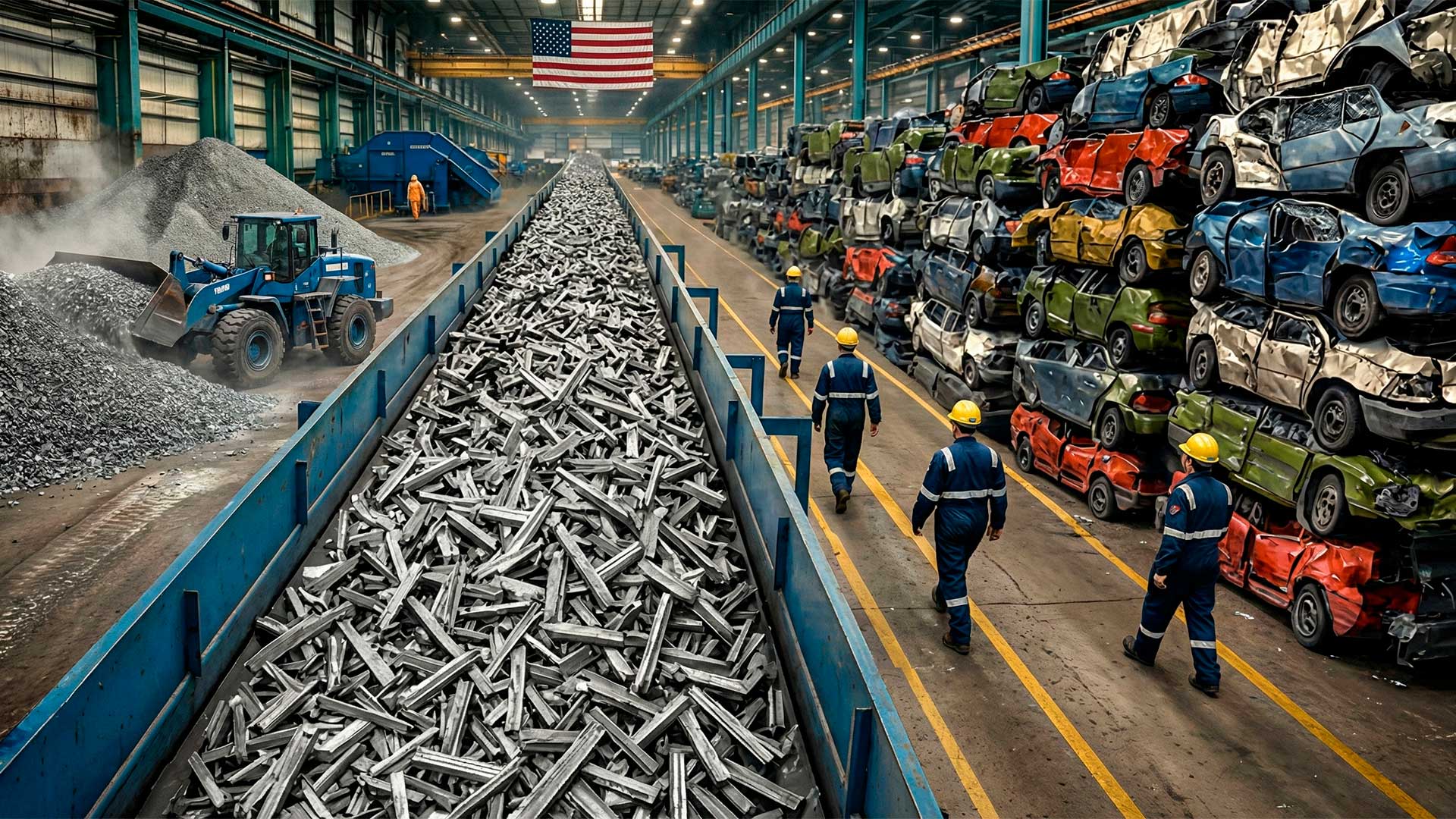


From Parts Removal to New Steel, the Destination of End-of-Life Vehicles Moves Billions, Saves Energy, and Requires Strict Control of Hazardous Waste
Old cars are often seen as a problem, but in practice, they are one of the largest sources of recycled steel in the world. Technical studies indicate that over 12 million vehicles reach the end of their useful life every year just in the United States, and that over 95 percent of them enter focused recycling routes, primarily for the metal, which accounts for about 75 percent of the weight of a vehicle.
This “urban mine” starts in dismantling yards and sorting centers, where each car undergoes identification, inspection, and separation of what can still be reused. The logic is simple: the sooner the vehicle is processed, the lower the environmental risk and the higher the recovered value.
The critical stage comes before any pressing or shredding, because discarded vehicles carry fluids and hazardous components. The U.S. Environmental Protection Agency describes that the first step is to drain fluids and remove hazardous items, following a safety sequence that starts with the battery, passes through refrigerants and fuel, and only then includes oil, brake fluid, and other liquids.
-
A “silent skill” is allowing Brazilians to earn up to R$ 22,000 per month without a degree and become indispensable for companies that rely on millions of data to survive.

-
Researchers at the Toyota Research Institute found that if a human uses robotic arms to flip a pancake 300 times in an afternoon, the robot learns to do it on its own the next morning, and this is currently the most promising method to solve the biggest bottleneck in modern robotics.

-
Goodbye iron: a common item in households is starting to lose space to technology that smooths clothes in minutes without an ironing board and with less energy consumption.

-
Antarctica reveals an unusual clue high in the Hudson Mountains, and what appeared to be just an isolated rock began to expose a secret hidden under the ice for ages.


The result of this industrial flow is significant for the economy and the climate. Steel production from scrap, in secondary production facilities, can use about 74 percent less energy than producing steel from ore, according to estimates cited in an analysis by the U.S. Energy Information Administration.
The Urban Mine That Starts in the Dismantling Yard

When a vehicle arrives at a recycling or dismantling center, it stops being just a used asset and becomes a set of valuable materials. The EPA itself describes that, regardless of age and weight, a vehicle is composed of approximately 75 percent metals, with the remainder being tires, fluids, and other components.
In practice, this transforms vehicle yards into “depots” of steel, aluminum, and copper, as well as parts that can be resold and reduce the demand for new items. This reuse stage usually garners the most consumer attention, as it is where engines, transmissions, electronic modules, and finishes can gain a second life.
The sector is also a major employer. The Automotive Recyclers Association points out that the automotive recycling industry in the U.S. employs over 140,000 people, operates at over 9,000 locations, and generates 32 billion dollars in sales in the country.
From Safe Removal of Batteries and Fluids to Preparation for Shredding
Before pressing or shredding any car, the goal is to prevent the process from spreading contamination. The EPA advises that the vehicle should be drained of hazardous fluids and that removal should follow an order that reduces the risk of fire and leaks, starting with the battery, refrigerants, and fuel.

The same guideline then lists other liquids that need to be removed from the vehicle, such as antifreeze, brake fluid, engine oil, and transmission fluid. The estimate from the guide is that the total amount of fluids removed could hover around 19 liters per vehicle, helping to scale the impact when discussing millions of units per year.
At this point, the battery deserves a separate chapter. In the case of lead-acid batteries, widely used in combustion cars, the EPA notes that the U.S. recycles 99 percent of them each year, driven by disposal rules and incentives such as the refundable deposit system, known as a core charge.
On the other hand, lithium-ion batteries, common in hybrids and electric vehicles, raise the standards for storage and transport. The U.S. transportation regulatory agency, PHMSA, reinforces that lithium batteries are treated as hazardous material under federal transportation rules, with specific requirements for handling.
The EPA itself warns that many discarded lithium-ion batteries likely qualify as hazardous waste due to fire risk or reactivity, pressuring the chain for adequate procedures and facilities.
Parts That Gain a Second Life and Metals That Become New Steel

After decontamination, the dismantling and separation phase begins. Part of the value comes from the used auto parts market, which reduces maintenance costs and postpones the manufacturing of new parts, while another part comes from the metal that will go on to pressing, shredding, and separation by type.
On an industrial scale, automotive recycling relies on two main routes: reuse of components and recovery of materials. The ARA estimates that approximately 86 percent of the material content of a vehicle is recycled, reused, or utilized for energy recovery, although efficiency varies by technology and infrastructure.
When the vehicle becomes “prepared scrap,” the metal enters steelmaking chains, often via electric arc furnaces that predominantly work with scrap. The EIA describes that in the U.S., a significant portion of steel production comes from electric furnaces that use over 90 percent scrap as input, reinforcing the role of discarded cars as a source of post-consumer metal.
Why Scrap Steel Cuts Energy and Emissions and Where There Is Still Waste
The energy gain is one of the central arguments for treating automotive scrap as a strategic asset. The EIA points out that secondary steel production, based on scrap, can use about 74 percent less energy than the route from ore, precisely because it eliminates intensive steps like the blast furnace.
Even so, there is still significant loss in non-metallic materials. Technical research from Argonne National Laboratory observes that while metals account for about 75 percent of the weight of the vehicle and are widely recovered, the remaining fraction tends to end up in landfills or undergo limited recycling, which keeps the debate on how to expand the recovery of plastics, foams, and complex mixtures.
In addition to the technical challenge, there is the challenge of governance. The chain only works well when there is traceability, proper decontamination, and appropriate disposal for hazardous waste, which includes less considered items by the public, such as mercury switches in older models and other components that should not be shredded without prior removal.
This point helps explain why irregular dismantling and uncontrolled scrapping become an environmental problem, even when the overall narrative is positive. When fluids and hazardous components escape the process, the cost is transferred to soil, water, and public health, and the bill often appears later.
New Rules in Europe and the Competition for Scrap in the Transition to Electric Cars
Regulatory pressure is also increasing. In the European Union, the reuse and recovery target has reached 95 percent by weight per vehicle per year, with a reuse and recycling target of 85 percent, in accordance with the goals framework associated with rules for end-of-life vehicles.
In 2025, the topic returned to the center of negotiations with rules that seek to raise recycled content and standardize requirements, including targets for recycled plastics and space for future targets involving steel and other materials, according to a Reuters report on the position of the European Council.
This movement occurs as electrification grows and changes the profile of the “recyclable car.” While the electric vehicle increases the demand for batteries and critical minerals, it also creates a new logistical and environmental risk because batteries require strict standards and a specialized chain to avoid fires and material losses.
In the end, recycling old cars tends to be one of the most important gears in the circular economy, but also one of the easiest to sabotage when there is a lack of oversight, infrastructure, and responsibility at the end.
Automotive recycling is a climate and economic solution, but the uncomfortable question remains: who ensures that the “recycled car” hasn’t gone through illegal dismantling or improper disposal of fluids and batteries? Do you think that the current oversight and regulations address the problem, or is the industry still too reliant on the green narrative? Leave your comment and let us know which side you take in this discussion.







Dentro de la palabra acero existen un montón de aleaciones que están compuestos de otros metales con un valor añadido más elevado y difíciles de encontrar en la tierra.
Si miramos nuestro sistema técnico “sociedad moderna ” hemos creado una “máquina entropica” y no sabemos cómo reciclar un 60% de los metales que usamos.
Se debería enfocar más el artículo a esta realidad si queremos tomar las buenas decisiones.
Desgraciadamente en la realidad prima la conveniencia económica, no siempre todooo es reciclado (muchos cementerios de chatarra) y lo q es recolectado..es desmontado… Vidrios, asientos y revestimientos.. etc… Ojalá prime el sentido ambiental
Creo que no hay suficiente conciencia ambiental