





 Portuguese
  English
  Spanish
  4 min of reading
  2 comments


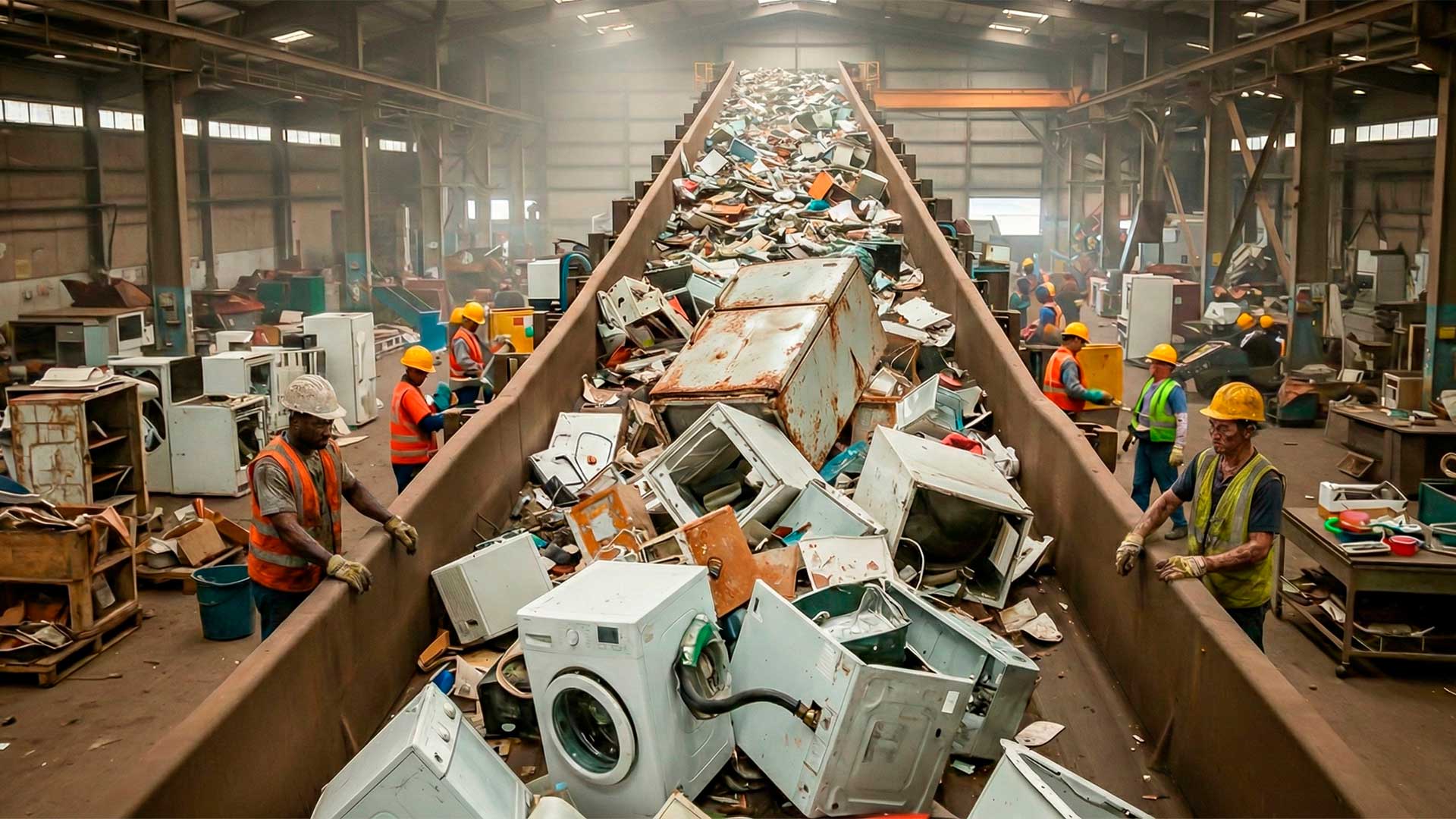


The World Produces Tens of Millions of Tons of Electronic Waste Each Year, and Only a Small Portion Has the Correct Destination. The Circular Economy Tries to Turn the Tide with Sorting, Decontamination, and Reuse of Metals and Plastics.
With each replacement of a refrigerator, cell phone, TV, or washing machine, a question becomes harder to ignore. Where does this volume of equipment that becomes useless and turns into electronic waste go?
The problem is not just the physical mountain of scrap. When disposal occurs in landfills, vacant lots, or informal recycling, there is a risk of releasing toxic substances and contaminating soil, water, and air.
At the same time, within these devices are materials that have monetary value and reduce the need for mining. The logic is simple: what seems like trash today may be a resource tomorrow.
-
A “silent skill” is allowing Brazilians to earn up to R$ 22,000 per month without a degree and become indispensable for companies that rely on millions of data to survive.

-
Researchers at the Toyota Research Institute found that if a human uses robotic arms to flip a pancake 300 times in an afternoon, the robot learns to do it on its own the next morning, and this is currently the most promising method to solve the biggest bottleneck in modern robotics.

-
Goodbye iron: a common item in households is starting to lose space to technology that smooths clothes in minutes without an ironing board and with less energy consumption.

-
Antarctica reveals an unusual clue high in the Hudson Mountains, and what appeared to be just an isolated rock began to expose a secret hidden under the ice for ages.

That’s why factories and reverse logistics programs are gaining traction. The promise is to transform an old refrigerator into steel for new structures and, in some cases, into inputs that even enter the automotive supply chain.
The Size of the Electronic Waste Problem and What Has Changed in the Numbers
Recent reports from the United Nations indicate that the world generated 62 million tons of electronic waste in 2022, a record high.
The most troubling figure comes next. Only 22.3% of this volume was documented as collected and recycled formally in the same year, far from what would be necessary to curb pollution and recover materials.
This helps explain why some estimates and popular comparisons, such as “the equivalent of dozens of Eiffel Towers,” continue to appear in videos and campaigns. The real scenario has worsened rapidly, with annual growth of millions of tons and a projection to reach 82 million by 2030, according to the Global E-waste Monitor.
Why Refrigerators and TVs Can’t Go to Regular Trash
The improper disposal of electronic devices is not just an urban cleanliness issue. The World Health Organization highlights that electronic waste contains and can release dangerous substances, such as lead, in addition to other contaminants, especially when it is dismantled, burned, or improperly discarded.
In the case of refrigerators, freezers, and air conditioners, there is an additional complication. These devices may contain refrigerants and other compounds that require controlled removal because leaks and improper handling exacerbate environmental damage and occupational risks.
Therefore, international and European standards and guidelines require treatment steps that include removal of fluids and hazardous components before shredding and separating materials.
Inside a Modern Recycling Plant: How the Appliance Becomes Raw Material
The process usually starts with collection and receiving at licensed facilities. Instead of breaking the equipment in an ad-hoc manner, the industrial process prioritizes disassembly and separation by categories to reduce cross-contamination and increase the value of the recovered material.
The most critical stage is decontamination, when substances and parts that need controlled disposal are removed. International technical guides cite the removal of items such as refrigerants, foam-blowing agents, and other sensitive elements before the rest of the equipment proceeds to mechanical processing.
Next comes the part that resembles a “factory that devours scrap.” Shredders reduce the volume into smaller fragments, and then the plant uses separation systems to recover specific fractions. Magnetic separation removes iron and steel, while induction separators help isolate non-ferrous metals.
The result is the generation of secondary raw materials like steel, aluminum, and copper, which re-enter the market and can supply various industrial chains. The goal is to recover value where there was once cost and pollution.
Even so, not everything becomes a resource easily. Mixed plastics, foams, and materials with old additives may require extra treatment, and some still need safe disposal due to technical and economic limitations.
When Waste Becomes a Car Part and Where the Circular Economy Gets Stuck
The idea that a washing machine can become part of a car makes sense through an indirect path. Recycling transforms the equipment into fractions of materials, and some of these plastics and metals can be reintroduced into high-volume products, including automotive components, as is already happening with the growing use of recycled plastics in the sector.
However, there is real tension in this market. Research indicates that plastics from electronic waste may carry restricted substances from older generations, raising debates about traceability, quality, and safe applications, especially in items requiring higher technical standards.
In Brazil, the machinery depends on collection structure and adherence targets. Decree No. 10,240 of February 12, 2020 established norms for reverse logistics of household electronic devices, attempting to standardize responsibilities and accelerate correct disposal.
If the promise of the circular economy is to transform waste into wealth, controversy is inevitable. The system must prioritize more oversight and strict targets for manufacturers, or the focus must be on educating consumers and convenience of disposal to increase actual collection.
Leave your comment with your opinion on this: do you think the main responsibility lies with the companies that put products on the market or with the consumers who buy and discard them at home?







Finding a trustworthy partner for oil disposal is a top priority for our workshop this quarter. We’ve had a few bad experiences with vendors who don’t provide the correct manifest documentation. I really appreciate finding a company that highlights their team’s expertise and their long-term commitment to environmental safety. In 2026, the human element behind the business is what creates trust, especially when you are dealing with hazardous materials that could impact the local environment for decades if handled incorrectly.
Onde posso encontrar esses postos de coletas. Deveria ter mais divulgação.Tinha uma televisão e não sabia o que fazer com ela, acabei dando para alguém que encocerta,para nao jogar no lixo.