





 Portuguese
  English
  Spanish
  5 min of reading
  0 comments


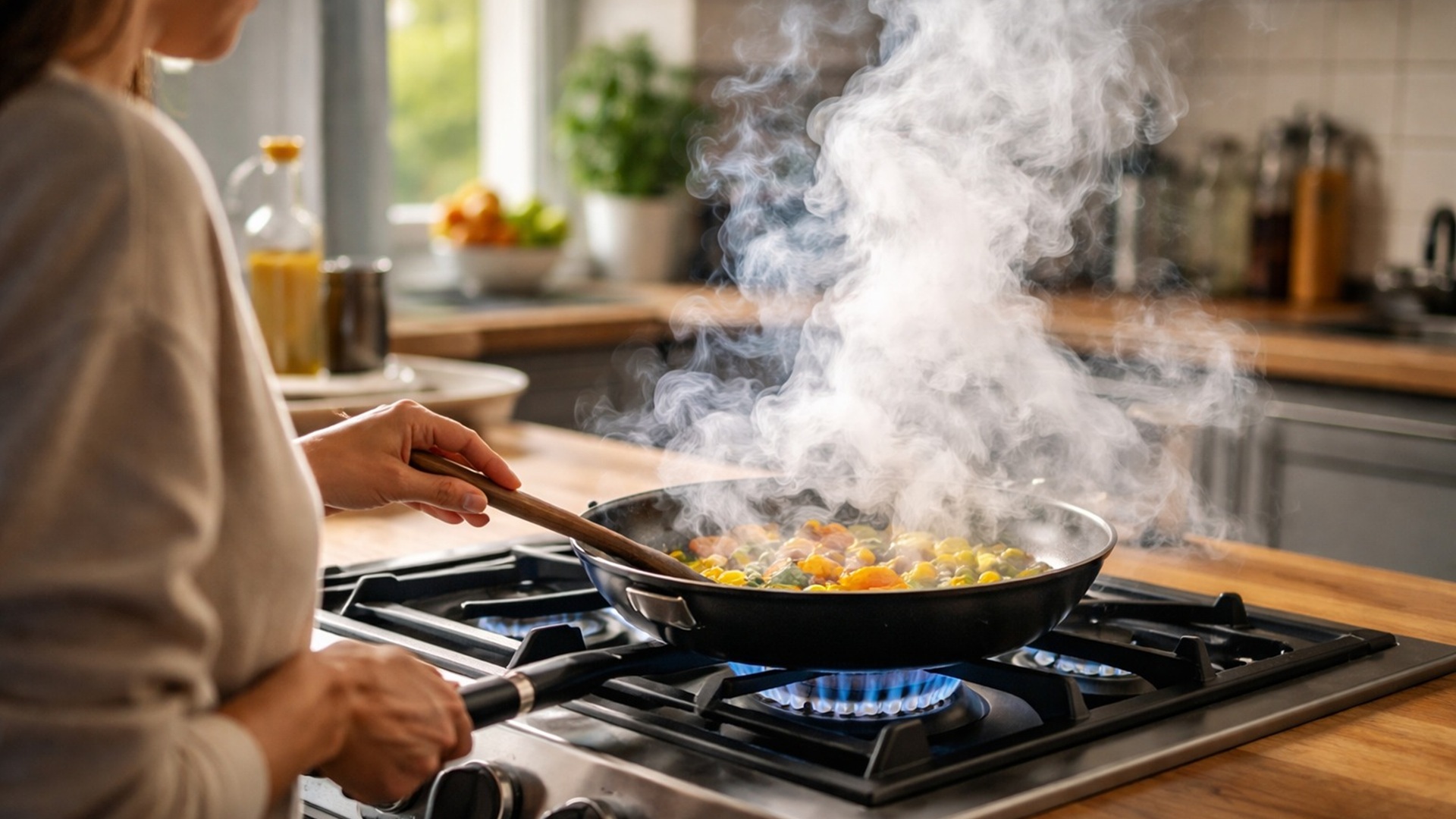
National Study Led By Stanford And Published On December 2 In PNAS Nexus Maps, By Zip Code, Internal And External Exposure To Nitrogen Dioxide, Shows That Gas And Propane Stoves Elevate Concentrations Above Safety Limits In Millions Of Homes And Quantifies Reductions Greater Than 25% With The Switch To Electric Stoves
A study led by Stanford University reveals that gas and propane stoves elevate internal exposure to nitrogen dioxide, affecting 22 million Americans, with levels that often exceed health guidelines and equal external sources, according to a national analysis published on December 2.
The work, published in the journal PNAS Nexus, shows that staying indoors does not guarantee protection from harmful air pollution. The research indicates that household use of gas stoves releases significant amounts of nitrogen dioxide, a pollutant associated with asthma, chronic obstructive pulmonary disease, premature birth, diabetes, and lung cancer.
The national analysis concludes that replacing gas stoves with electric ones can reduce nitrogen dioxide exposure by more than 25 percent nationwide. For families that use stoves more frequently, the reduction can reach about 50 percent, according to the consolidated data.
-
Motorola launched the Signature with a gold seal from DxOMark, tying with the iPhone 17 Pro in camera performance, Snapdragon 8 Gen 5 that surpassed 3 million in benchmarks, and a zoom that impresses even at night.

-
Satellites reveal beneath the Sahara a giant river buried for thousands of kilometers: study shows that the largest hot desert on the planet was once traversed by a river system comparable to the largest on Earth.

-
Scientists have captured something never seen in space: newly born stars are creating gigantic rings of light a thousand times larger than the distance between the Earth and the Sun, and this changes everything we knew about stellar birth.

-
Geologists find traces of a continent that disappeared 155 million years ago after separating from Australia and reveal that it did not sink, but broke into fragments scattered across Southeast Asia.

Novel Assessment Of Internal And External Exposure
Although previous studies have examined nitrogen dioxide emissions from gas appliances, this is the first to assess, on a national scale, combined internal and external exposure. The investigation considered both domestic and external sources simultaneously, such as vehicles and electricity generation.
According to the study’s senior author, Rob Jackson, Michelle and Kevin Douglas Professor in Earth System Science, there is a misconception about indoor air safety. He states that gas stove users often breathe in as much nitrogen dioxide pollution at home as from the sum of external sources.
The research reinforces that outdoor air pollution is widely recognized as harmful to health. However, the study shows that indoor pollution, despite being comparable in risk, remains poorly regulated in the United States.
Health Impacts And Regulatory Gaps
Every year, outdoor air pollution kills hundreds of thousands of Americans and causes millions of new cases of childhood asthma worldwide. Laws like the Clean Air Act have reduced outdoor emissions, but do not comprehensively address pollution inside homes.
The study represents the first broad national assessment of nitrogen dioxide exposure from both internal and external contributors. These include emissions from vehicles, electricity generation, and household gas stoves, analyzed in an integrated manner.
A related investigation conducted in 2024 by the same team had already identified that gas stoves release nitrogen dioxide at levels considered unsafe. Concentrations can remain elevated for several hours even after burners and ovens are turned off, extending exposure time.
Additional Evidence And Other Pollutants
Further research conducted by some of the same authors showed that gas stoves also emit dangerous levels of benzene. The compound is a carcinogen associated with leukemia and other blood-related cancers, raising concerns about indoor air quality.
During the study, Stanford researchers collected air samples in the kitchen of a residence in Bakersfield, California. The measurements reinforced the consistent presence of pollutants during and after the use of gas stoves, highlighting the persistence of contamination.
The lead author, Yannai Kashtan, an air quality scientist at PSE Healthy Energy, emphasized that families are spending more time indoors. According to him, this makes it essential to redirect attention to what happens inside homes.
Methodology And National Mapping
The investigators combined indoor air quality measurements with data on outdoor air quality. They also considered the characteristics of buildings from 133 million residential homes and statistical sampling of occupant behavior.
With this approach, it was possible to identify the sources of pollutants and estimate their effects on human health. The team created national maps that quantify short- and long-term exposure to nitrogen dioxide in indoor and outdoor environments, organized by zip code.
For most Americans, the majority of exposure still comes from external sources, such as cars and trucks powered by fossil fuels. However, the scenario changes significantly under certain residential conditions.
22 Million Exposed Above Recommended Limits
The maps revealed that, for 22 million Americans, cooking with gas leads to nitrogen dioxide levels that exceed recommended long-term safety limits. In these cases, external exposure alone would not exceed such limits.
The effect is most pronounced in smaller homes and rural areas, where stoves are proportionally responsible for a larger share of exposure. Still, the highest total exposures occur in large cities, where external levels are already high and residential spaces tend to be small, concentrating the internally generated pollutant.
These results show that the combination of high external sources and compact indoor environments creates conditions conducive to critical nitrogen dioxide concentrations, even without direct industrial activities nearby.
Short-Term Peaks And Inequalities
The study identified that the highest short-term exposures inside homes are solely attributable to the use of gas stoves. Unlike external sources, pollution from these appliances occurs in concentrated bursts, generating intense peaks of nitrogen dioxide.
The researchers indicate that specific communities may benefit more from targeted interventions. These include discounts and tax incentives for cleaner cooking technologies that can reduce exposure to harmful indoor pollutants.
The benefits tend to be stronger for residents of small homes, rental units, and communities with less capacity to bear the initial cost of a new electric stove. In these situations, the lack of incentives for landlords exacerbates the persistence of polluting appliances.
Racial And Regional Inequalities
A previous study led by Stanford showed that long-term exposure to NO2 is 60 percent higher among American Indian and Alaska Native families. Among Black, Hispanic, or Latinx families, exposure is 20 percent higher than the national average.
Many of these communities already face elevated levels of nitrogen dioxide pollution from external sources, such as vehicle exhaust and fossil fuel industries. The sum of these exposures disproportionately amplifies health risks.
According to Jackson, prioritizing indoor air quality is essential to move towards a healthier life. He states that transitioning to electric stoves represents a positive step towards cleaner cooking and better health, even as the regulatory debate is still in its early stages.
The study, titled “Integrating Indoor And Outdoor Nitrogen Dioxide Exposures In US Homes Nationally By ZIP Code,” was published on December 2, 2025, with DOI 10.1093/pnasnexus/pgaf341. The research was funded by the Stanford Doerr School of Sustainability, its Department of Earth System Science, and the Knight-Hennessy Scholars program at Stanford, reinforcing the institutional foundation of the work, despite minor limitations acknowledged by the authors.








-

-

-

5 pessoas reagiram a isso.