





 Portuguese
  English
  Spanish
 3 min of reading


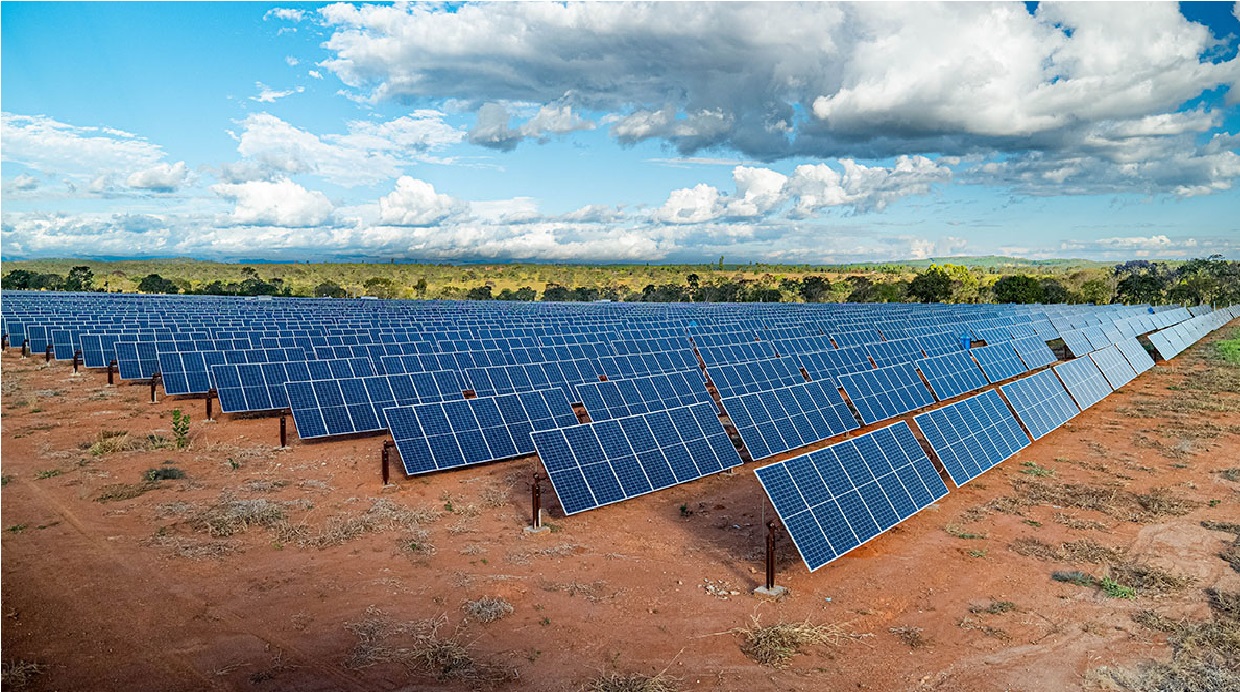
Epamig Invests in Research to Unite Agricultural and Livestock Production with Solar Energy Generation in Minas Gerais, Understand
With the aim of expanding the income sources for rural producers, the Agricultural Research Company of Minas Gerais (Epamig) is embarking on a pioneering research project that aims to combine solar energy production with agricultural and livestock activities. Brazil will see its first large-scale agrovoltaic initiative in the state of Minas Gerais, in the North and Central regions, chosen due to the high solar incidence, according to the website Diário do Comércio.
According to Polyanna Oliveira, a researcher at Epamig Norte, the agrovoltaic project consists of integrating agriculture and livestock with solar energy generation. This combination shows promise as it optimizes land use, makes it more sustainable, and brings benefits to rural producers. If successful, the project could become a new source of income for these professionals.
The goal is to enable farmers to conduct their agricultural and livestock activities alongside the installation of solar energy generation panels, optimizing space utilization and adding value to their production.
-
Renewable energy advances over protected areas in Brazil, and a survey by the Energy Transition Observatory reveals silent impacts that challenge environmental conservation and pressure sensitive traditional territories.

-
Rio Grande do Sul accelerates energy transition: State invests in renewable technologies and consolidates decarbonization strategies and pathways to attract billions in new industrial investments.

-
With 160,000 m² of collectors, an area larger than 20 football fields, Silkeborg, in Denmark, hosts a solar thermal plant that heats 19,500 homes and could become the largest solar heating plant in the world.

-
A study reveals the expansion of renewable energy procurement in Brazil and shows how companies are taking advantage of opportunities to reduce expenses, ensure energy efficiency, and strengthen strategic environmental commitments.


Development of the Solar Energy Project and Pilot Units
The actions to implement this innovative solar energy project are already underway. Epamig will start with training courses for its technicians and researchers. The research will be conducted in two pilot units of Epamig.
One of these units will be at the Mocambinho Experimental Field, located in Jaíba, in the North of Minas. The second unit will be installed at the Santa Rita Experimental Field, situated in Prudente de Morais, Central region of the state.
Polyanna highlights that the training was conducted by the Fraunhofer Institute for Solar Energy Systems, based in Germany. The expectation is that the pilot projects will be fully implemented and operational in about seven months.
Potential Benefits and Tested Crops
Epamig’s research aims to understand how agricultural and livestock crops interact with the energy generation system. Upon completion, the technology will be transferred to rural producers in Minas Gerais.
In North Minas Gerais, the research will evaluate the feasibility of intercropping solar energy generation with crops such as pineapple, strawberries, melons, and grains like beans. In the Central region, the focus will be on grazing and the raising of dairy heifers.
Polyanna emphasizes that the research aims to provide a complete business model for producers, from implementation to the most suitable crops for the system. The project is funded by the Foundation for Research Support of the State of Minas Gerais (Fapemig) and the Energy Company of Minas Gerais (Cemig), along with support from the Telecommunications Research and Development Center (CPqD). The initiative not only promises to improve agricultural efficiency but could also become an important source of revenue throughout the year for rural producers in the state.








Seja o primeiro a reagir!