





 Portuguese
  English
  Spanish
  4 min of reading
  0 comments


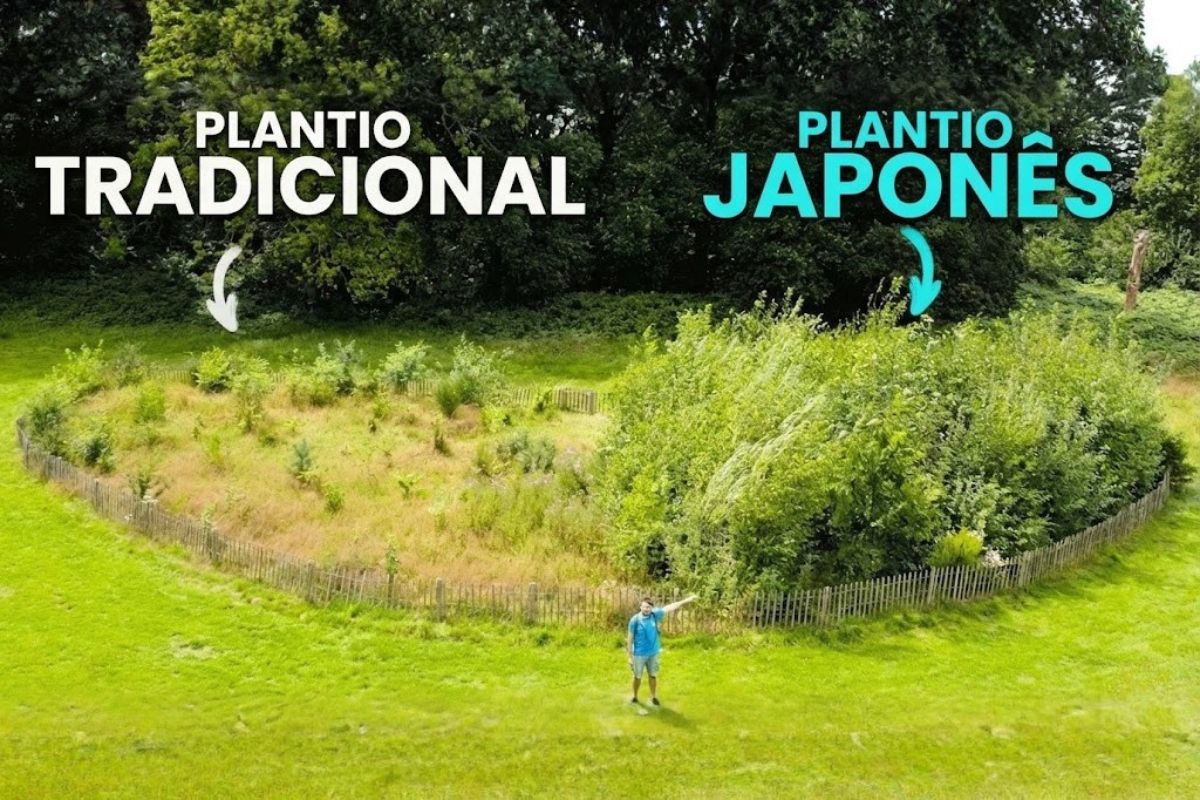
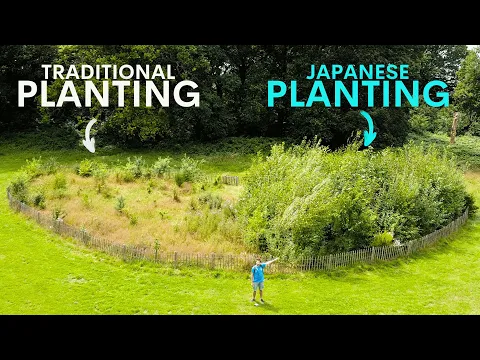
Japanese Mini Forests Started Spreading Across Great Britain From Pilot Projects in Urban Parks, Underutilized Public Land, and Residential Areas Surrounded by Housing. In Kent, the Experiment Gained Attention for Being Implemented Alongside Conventional Planting, Allowing for Real Differences to be Observed Without Climate, Timing, or Different Management Interference.
The method is based on a simple and rigorous technical principle: there is no healthy forest without functional soil. Before planting, the area underwent deep tillage, compaction correction, and enrichment with organic matter. Compaction was expected, as it was an urban park used for decades for heavy foot traffic and sports activities.
Soil preparation included the incorporation of organic fertilizers and specific microscopic fungi, creating a biologically active environment capable of sustaining accelerated growth without continuous chemical fertilization. This technical detail explains why Japanese mini forests do not depend on constant irrigation after the first few years.
The Decisive Role of Native Vegetation and Phytosociology

The Miyawaki method applied to Japanese mini forests relies on the identification of what is known as potential natural vegetation. This concept defines which native species would naturally occupy that territory if there were no human intervention.
-
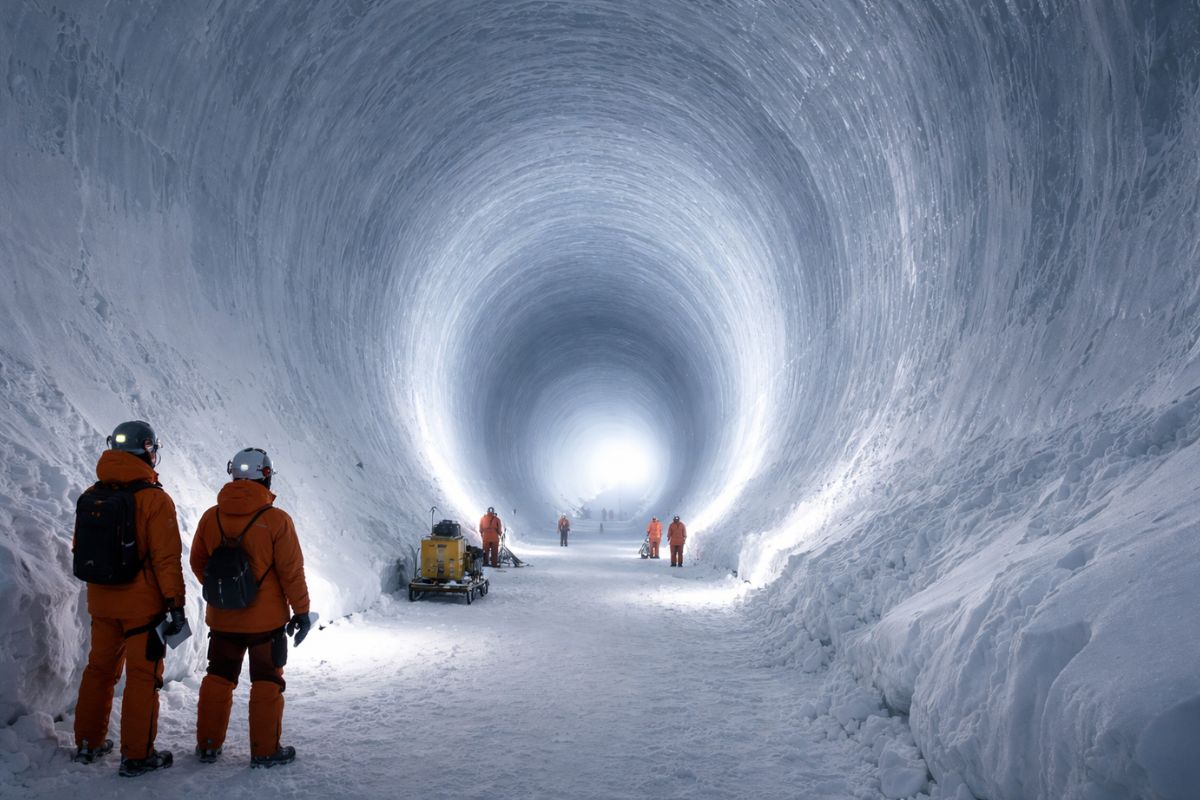
Scientists have excavated a giant cave beneath the snow of Antarctica to create a natural refrigerator at minus 50 degrees that operates without electricity and can preserve the Earth’s climate memory for centuries.
-
Scientists detect a rare and frightening phenomenon in the Pacific Ocean that could trigger a devastating Super El Niño as early as 2026, and American experts say it is one of the strongest ever recorded in history.

-
Researchers from Embrapa have discovered how to transform the saline water found in 140,000 wells in the Brazilian Semi-Arid region into a tool for producing food in an area where agriculture has always relied solely on rainfall.

-
China inaugurates a ghost factory that operates in the dark 24 hours a day without any human workers and produces 10 million smartphones a year using 97% of equipment developed by the company itself.


In practice, this means collecting local botanical records, historical vegetation covers, and species adapted to the urban microclimate. In Kent, dozens of native species were selected, distributed among canopy trees, secondary trees, shrubs, and understory plants.
Unlike conventional planting, all layers are introduced at the same time, creating intense competition for light and space from day one. This positive stress forces plants to grow faster and more vertically, closing the canopy in a few years.
Extreme Density as an Ecological and Urban Strategy

One of the most determining factors of Japanese mini forests is density. The planting can concentrate three to five saplings per square meter, compared to a single sapling in conventional areas. This difference completely alters the dynamics of the system.
High density reduces direct sunlight incidence on the ground, decreases water evaporation, stabilizes local temperature, and creates a humid and protected microclimate. This microenvironment favors fungi, insects, birds, and small mammals, accelerating biodiversity recovery.
In addition to the ecological aspect, density acts as a physical barrier against urban vandalism. In Kent, conventional planting areas had saplings easily pulled out, while Japanese mini forests remained intact precisely because they are difficult to traverse or access.
Survival Rate and Real Cost of the Project

The data collected from the project indicates a 99% survival rate in Japanese mini forests, compared to around 75% in conventional planting. This indicator completely changes the cost analysis.
Although the method requires a higher initial investment in soil preparation, species diversity, and concentrated labor at the beginning, the almost total reduction of replacements and corrective maintenance makes the model cheaper over time.
In urban environments, where each replanting involves public cost, logistics, and risk of failure, the high survival rate becomes a decisive argument for adopting the method on a large scale.
Direct Impact on Urban Biodiversity

Japanese mini forests have shown to harbor up to twice as much local fauna in direct comparison with neighboring traditional planting areas. The simultaneous presence of shrubs, young trees, closed canopy, and living soil layer creates niches for multiple species.
Pollinating insects, urban birds, small reptiles, and soil microorganisms find shelter, food, and circulation routes in an extremely reduced space. This concentration of biodiversity in just a few square meters is one of the factors that make the method so attractive for dense cities.
Another observed effect was the prolonged retention of leaves in autumn, indicating more vigorous plants and less water stress.
Community as a Structural Part of the Method
Since its inception, the Miyawaki method has incorporated community participation as a central element. In Great Britain, plantings often involve local residents, schools, volunteers, and neighborhood associations.
This participation generates two simultaneous effects. First, it reduces operational costs at the time of planting. Second, it creates an emotional bond with the restored area, which decreases vandalism and increases informal vigilance.
In fragmented cities with little everyday contact with nature, Japanese mini forests serve as points of ecological and social reconnection.
Why the Method Fits So Well in Great Britain
Great Britain presents ideal conditions for the expansion of Japanese mini forests: small territory, high population density, fragmented urban spaces, and urgent need for local climate solutions.
Projects that require large continuous areas are unfeasible in many British urban centers. Already, Japanese mini forests can transform minimal plots, even areas of 3 by 4 meters, into functional ecological nuclei.
This factor explains why European cities have begun to view the method not as landscaping but as strategic green infrastructure.
Japanese mini forests are moving from being academic experiments to becoming concrete tools for urban transformation. They grow faster, survive more, concentrate biodiversity, and are better resistant to human pressure. In a climate crisis scenario, heat islands, and urban degradation, the Miyawaki method emerges as a technically, socially, and economically viable solution.
Instead of waiting decades for uncertain results, cities are opting for complete forests in just a few years, even in minimal spaces.
In your opinion, should Japanese mini forests be a priority in central parks, public schools, or peripheral neighborhoods?







-

-

-

11 pessoas reagiram a isso.