





 Português
  Inglês
  Espanhol
  4 min de leitura


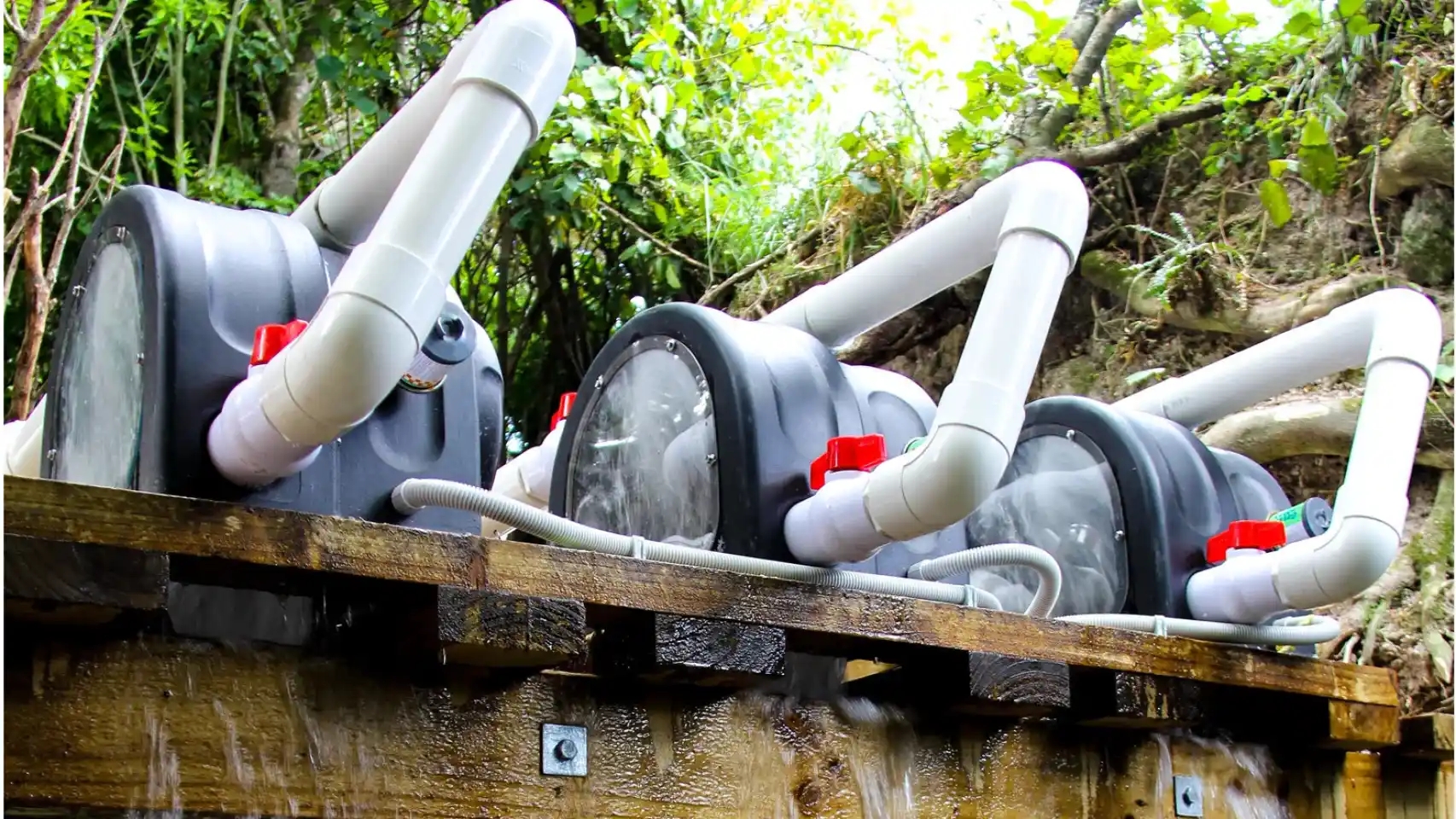
The Small Smart Turbine That Turns River and Stream Currents Into Clean Energy Uses Nylon with Fiberglass and Stainless Steel as Building Materials!
PowerSpout created different models of mini home turbines, so each customer can do their own installation based on the river flow they have. The invention has attracted international attention, as their blog showcases installations in countries as diverse as Kenya, Mexico, Romania, Greece, and Thailand.
Installed individually or in groups, these small turbines convert water flow into direct current, reaching 2,000 W of maximum power. A quite homey way to reduce the electricity bill, although it is also possible to request that the installation be done by the company itself.
Watch the Video Below and See How to Install Your Powerspout!


Anyone with a Constant Water Flow Available Can Reduce Their Electricity Bill Through This Mini Turbine!
“If you have a place that can generate more energy than a turbine, just install as many as you need up to the limit of the water flow resource“, the company recommends. Obviously, the generation capacity of the turbines largely depends on the water supply where they are installed, mainly due to the height from which the water falls and the amount of water that flows at any given time.
-
Renewable energy advances over protected areas in Brazil, and a survey by the Energy Transition Observatory reveals silent impacts that challenge environmental conservation and pressure sensitive traditional territories.

-
Rio Grande do Sul accelerates energy transition: State invests in renewable technologies and consolidates decarbonization strategies and pathways to attract billions in new industrial investments.

-
With 160,000 m² of collectors, an area larger than 20 football fields, Silkeborg, in Denmark, hosts a solar thermal plant that heats 19,500 homes and could become the largest solar heating plant in the world.

-
A study reveals the expansion of renewable energy procurement in Brazil and shows how companies are taking advantage of opportunities to reduce expenses, ensure energy efficiency, and strengthen strategic environmental commitments.


Currently, they have three different turbine models. For example, the Pelton model (PLT) supports a flow of less than 8 liters per second. “A PLT turbine is a low-flow turbine, so it tends to be used in higher locations, generally over 20 meters”, they state on their website.
Anyone with a constant water flow available can reduce their electricity bill through this more sustainable mechanism. Not everyone has this possibility, but some villages near rivers could use it, complementing renewable energy generation with solar panels and wind turbines.
In addition, it can operate independently, charging electricity in a battery, or connected to the grid. A standard turbine has a capacity of up to 1,200 W, while the high-power version reaches 1,600 W. In some special cases, it can achieve 2,000 W.
The proponents assure that one of their devices placed in a sufficiently strong constant current to generate 1 kW/h would be capable of providing clean electricity to a home for a year. In any case, each owner can assess the placement of multiple turbines in the water flow they have available if more power is needed.
How Much Does Your Own Power Plant Cost? The Mini Turbine Costs as Much as a Cell Phone!
Each of the models has its own installation and operation. The PowerSpout PLT must be placed at the end of several long tubes so that the water drop has sufficient force. The turbine has several jets that convert pressure into high-speed thrust, impacting a Pelton rotor to extract almost all the energy. This is connected directly to a permanent magnet alternator, thus producing electricity.
Another of the models, the PowerSpout LH, is a propeller-type turbine that remains constantly submerged. Unlike the other models, it does not operate by the water flow produced by the tubes but is placed at the upper end of a tube that connects two bodies of water, which could be described as a drain in a pond.
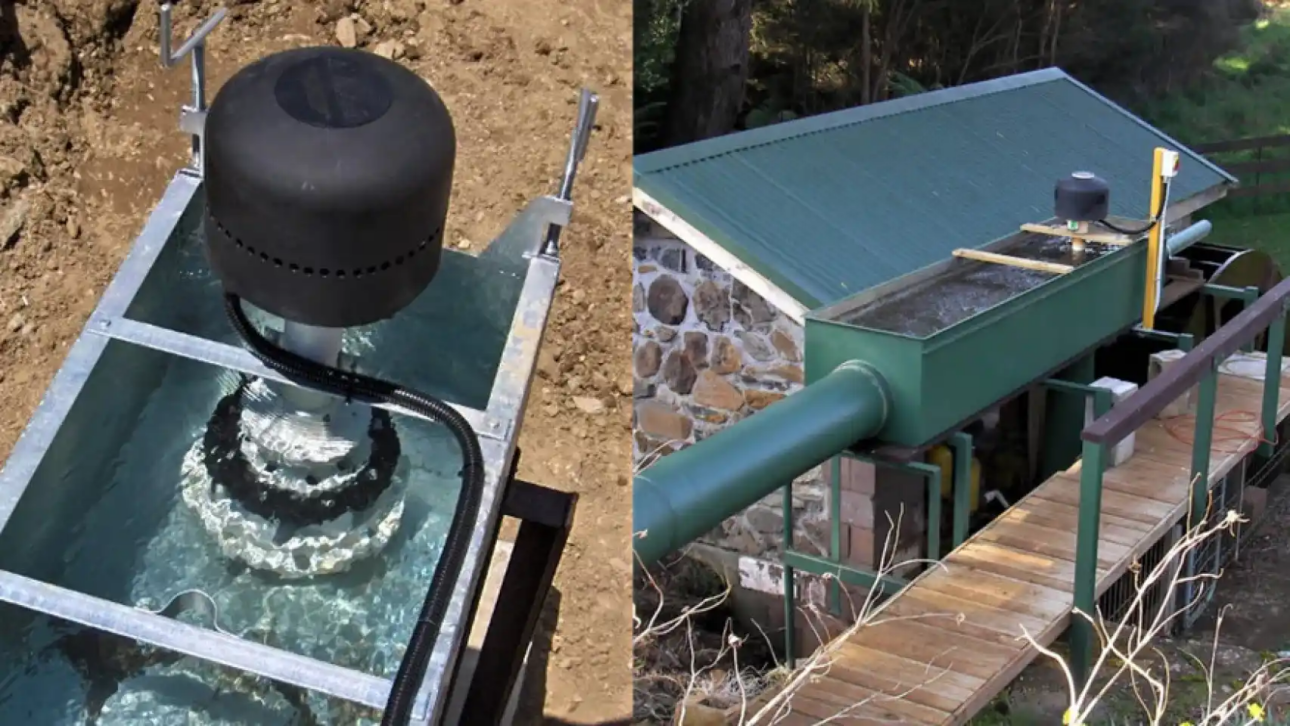
The company aimed to give each model a robust construction, using nylon with fiberglass or stainless steel, although it indicates that periodic maintenance is necessary. Respect for the environment is also present in manufacturing. In an attempt to create a circular economy, 68% of the materials that make up this turbine are recycled and 70% can be recycled when the product’s life cycle ends.
For those interested in purchasing one of their solutions, which range from $3,000 to over $4,000, the company has created a series of virtual calculators to assess the installation of one of these turbines and how much savings on the electricity bill it can bring to a home. The calculators show everything from electricity generation based on flow to project impact, such as the length and diameter the pipe will have, system voltage, cable size, and material.










Seja o primeiro a reagir!