





 Portuguese
  English
  Spanish
  4 min of reading
  0 comments


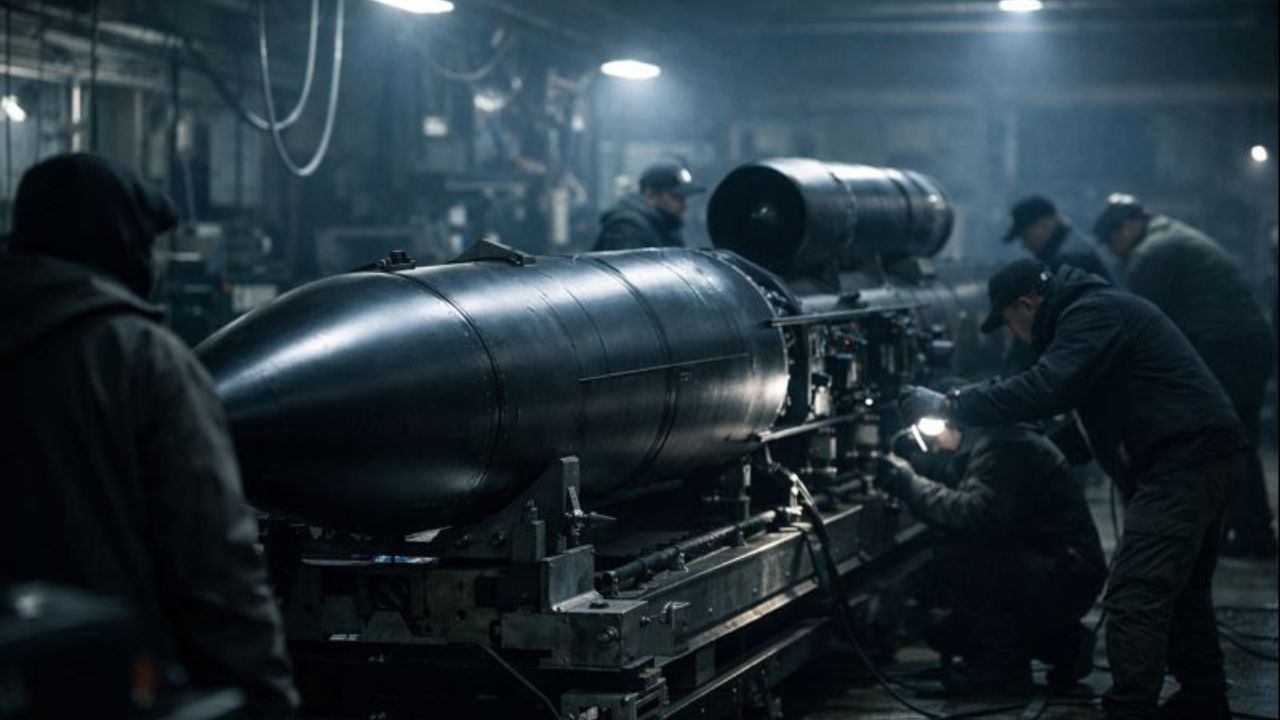
Fire Point Leads Long-Range Missile Manufacturing in Secret Factories in Ukraine, Changing the Balance of the Conflict.
Amid the war against Russia, Ukraine has intensified its production of long-range missiles in secret factories, scattered and hidden to escape enemy attacks. The strategy, led by national companies like Fire Point, gained momentum throughout 2024 and 2025, as the country seeks to reduce reliance on external support.
Production takes place in highly confidential locations, with strict security rules, precisely because these missiles have become one of the pillars of Ukrainian defense and its ability to hit strategic targets far beyond the front lines.
Right at the beginning of the conflict, Ukraine heavily relied on stockpiles inherited from the Soviet era and the shipment of Western arms.
-
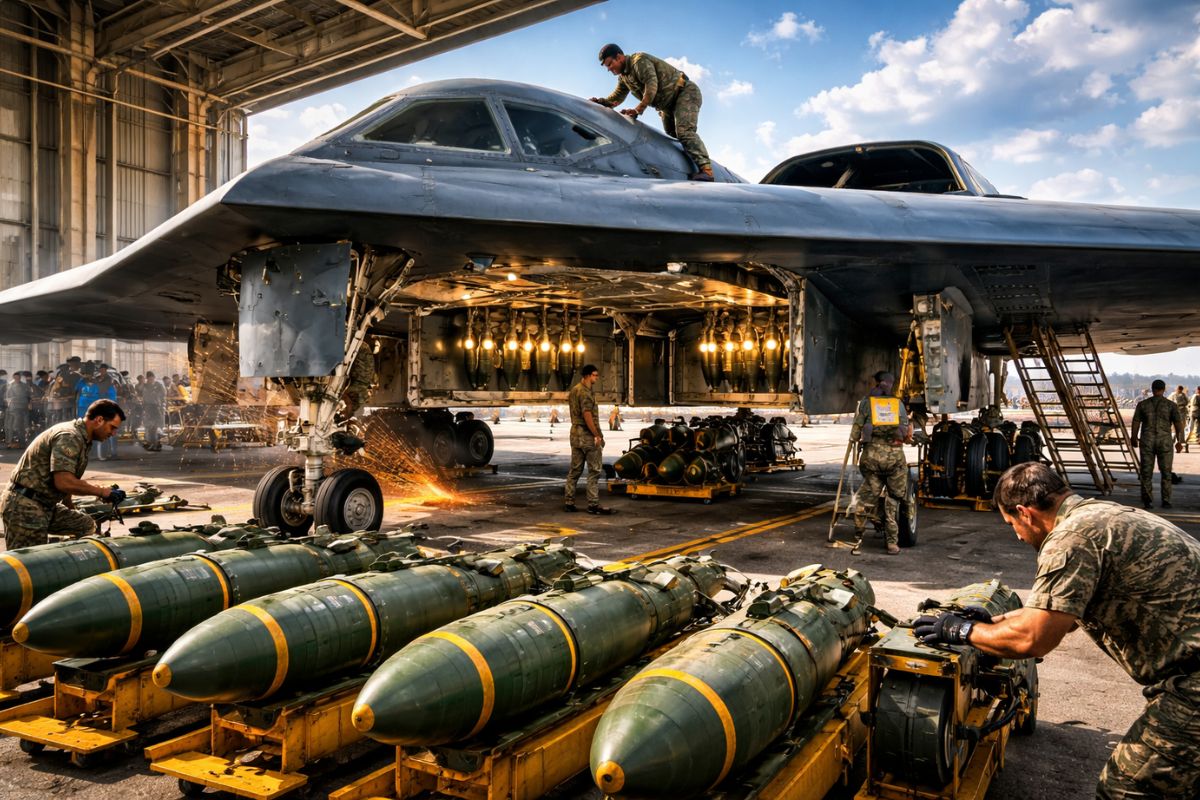
Valued at over $2 billion, the B-2 Spirit bomber requires meticulous inspection, bombs calibrated in a controlled environment, and extreme preparation to disappear from radar and launch attacks with lethal precision.
-
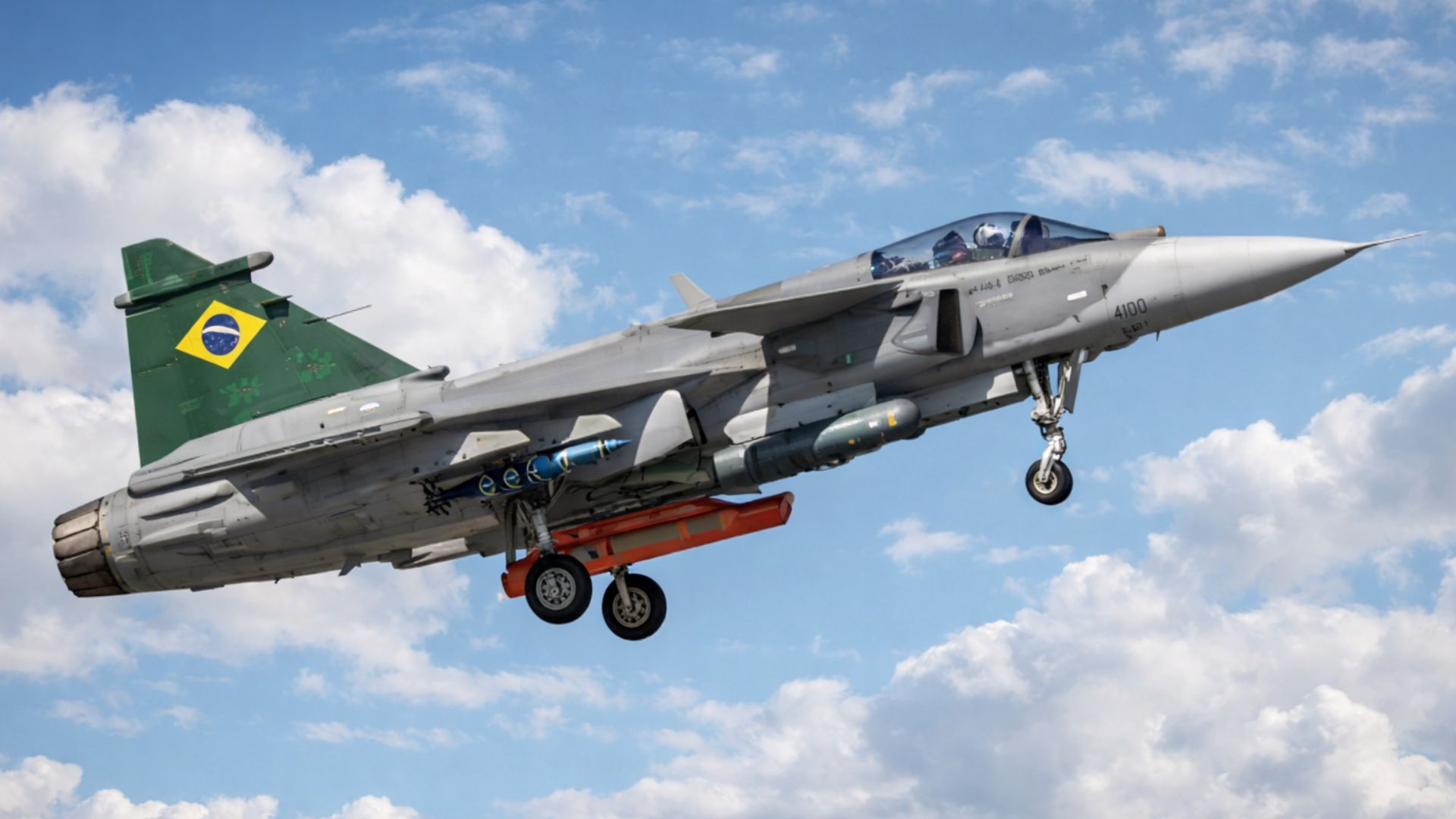
Brazil presents the first national F-39 Gripen fighter and redefines air defense with technological advancement, job creation, and strengthening of the defense industry on the global stage.
-
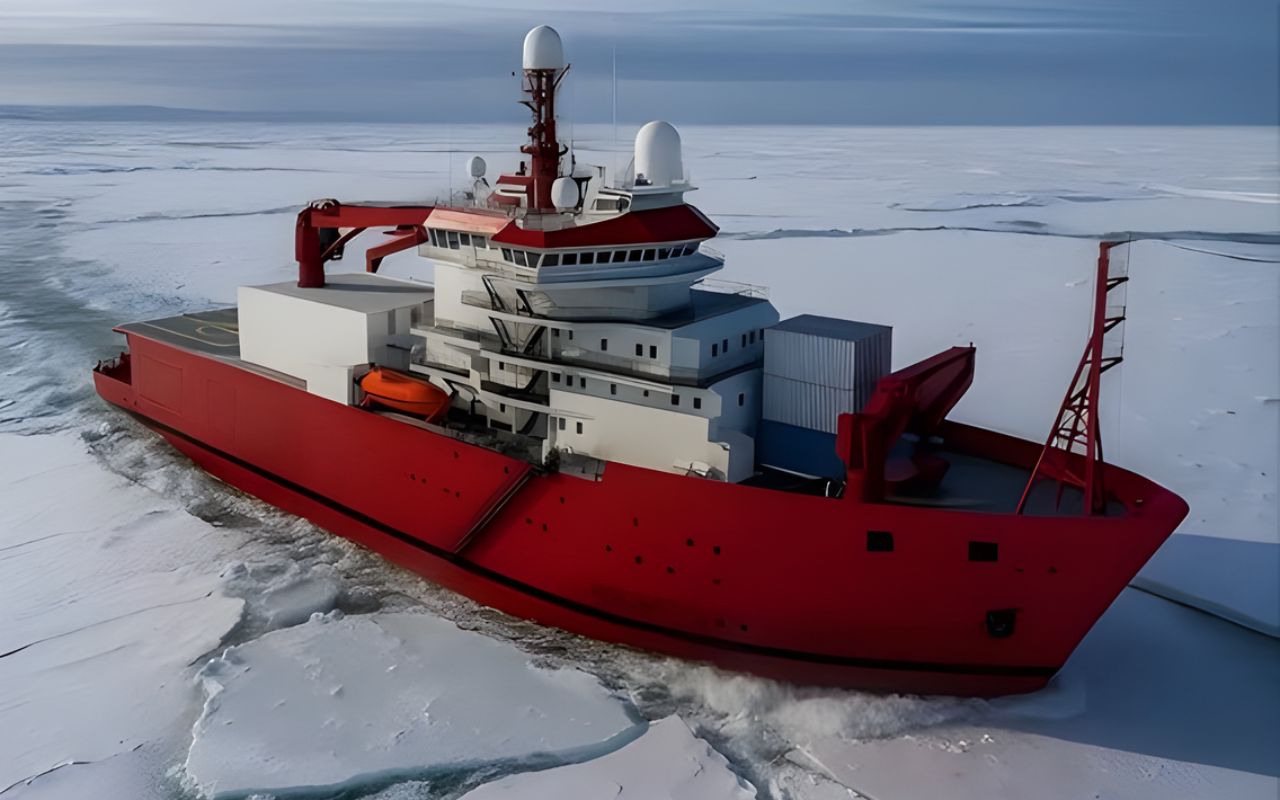
The construction of the Polar Ship Almirante Saldanha is progressing ahead of schedule and strengthens Brazil’s presence in Antarctica; the vessel will be 93 meters long, have a two-month autonomy, and technology to face ice.
-
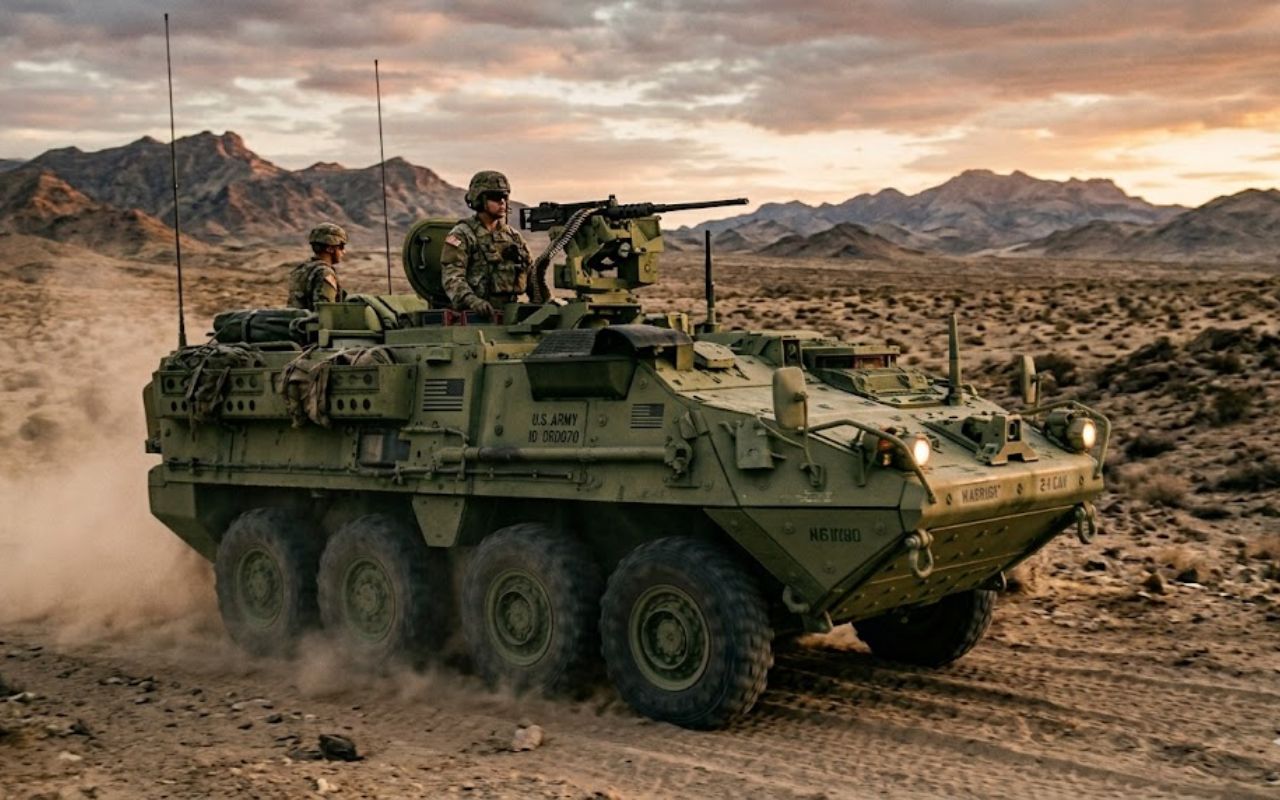
The United States Army has an armored vehicle that reaches speeds of up to 100 km/h, capable of operating normally on different types of terrain and also on asphalt without causing damage; equipped with a 350 hp engine, it can transport up to 9 soldiers — meet the Stryker.

However, with the prolongation of the war and geopolitical uncertainties, the country began to accelerate its internal weapons development, prioritizing autonomy, production speed, and battlefield adaptability.
Hidden Factories and Production Under Absolute Secrecy
The level of secrecy surrounding these factories is impressive. Visitors are led in blindfolded, forced to turn off their cell phones, and prevented from recording any structural details of the buildings.
Inside the facilities, cameras are not allowed to capture pillars, windows, or faces of workers. The objective is clear: to protect the production chain from Russian attacks, which have already hit two units linked to Fire Point.
Despite the losses, the company has maintained active production. This industrial dispersion has become a survival strategy.
Instead of large centralized plants, Ukraine is betting on smaller, mobile units, making it more difficult to completely neutralize production capacity.
Long-Range Missiles Enter the Center of Military Strategy
According to President Volodymyr Zelensky, more than 50% of the weapons used on the front lines are now manufactured in the country itself.
Almost the entire arsenal of Ukrainian long-range missiles is now domestic, a significant milestone amid the conflict.
These weapons allow for deep attacks into enemy territory, hitting refineries, ammunition depots, and Russian military factories.
This kind of capability is something Western countries have shown reluctance to provide directly, forcing Ukraine to develop its own solutions.
Fire Point and the Flamingo Missile
At the center of this transformation is Fire Point, a startup that didn’t even exist before the Russian invasion in 2022. Today, the company produces about 200 drones per day and developed the Flamingo cruise missile, already used in combat.
The company’s technical director, Iryna Terekh, explains that the Flamingo has undergone symbolic and practical changes. Initially pink, the missile is now painted black. According to her, the reason is simple: “because it consumes Russian oil.”
The weapon resembles the German V1 rocket from World War II, with a large jet engine mounted on a tube the length of a bus.
The estimated range of the Flamingo reaches 3,000 kilometers, putting it in the same category as weapons like the American Tomahawk, which the United States refused to provide to Ukraine during the administration of Donald Trump.
Deep Attacks and Economic Impact
Attacks with missiles and long-range drones have a clear strategic objective: to weaken Russia’s war economy.
The commander of the Ukrainian Armed Forces, Oleksandr Syrskyi, states that these actions have already caused losses exceeding US$ 21.5 billion to the Russian economy just this year.
Ruslan, an officer in the Special Operations Forces, summarizes the logic of the offensive: “Reduce the enemy’s military capabilities and its economic potential.” According to him, hundreds of attacks have targeted refineries, depots, and factories within Russian territory.
Limitations, Adaptation, and Tactical Intelligence
Even with advancements, Ukraine recognizes that it cannot match Russia’s industrial scale. Moscow launches around 200 Shahed drones per day on average, while Ukraine’s response reaches half that number.
Moreover, Russian attacks with long-range missiles continue to affect civilian infrastructure, causing blackouts and difficulties for millions of people.
Still, Ukraine’s strategy is to fight smart. “We are trying to fight with tactics,” says Terekh.
The chief designer at Fire Point, Denys Shtilerman, emphasizes that there is no “miracle weapon.” For him, “what changes the game is our will to win.”
Self-Sufficiency and the Future of International Support
The pursuit of independence also involves choosing suppliers. Fire Point has decided to prioritize components produced within Ukraine and avoid parts from China and the United States.
According to Terekh, American political instability creates risks for the continuity of military programs.
By the end of Joe Biden’s administration, the United States had sent nearly US$ 70 billion in military aid to Ukraine.
This flow was interrupted later, shifting greater responsibility to Europe and increasing uncertainties about future security guarantees.
For Terekh, manufacturing its own missiles is more than a military necessity. “It is the only way to really provide security guarantees,” she states.
According to her, the Ukrainian experience serves as a harsh warning to the rest of Europe about the importance of preparation in times of war.









-

-

2 pessoas reagiram a isso.