





 Portuguese
  English
  Spanish
  3 min of reading
  3 comments


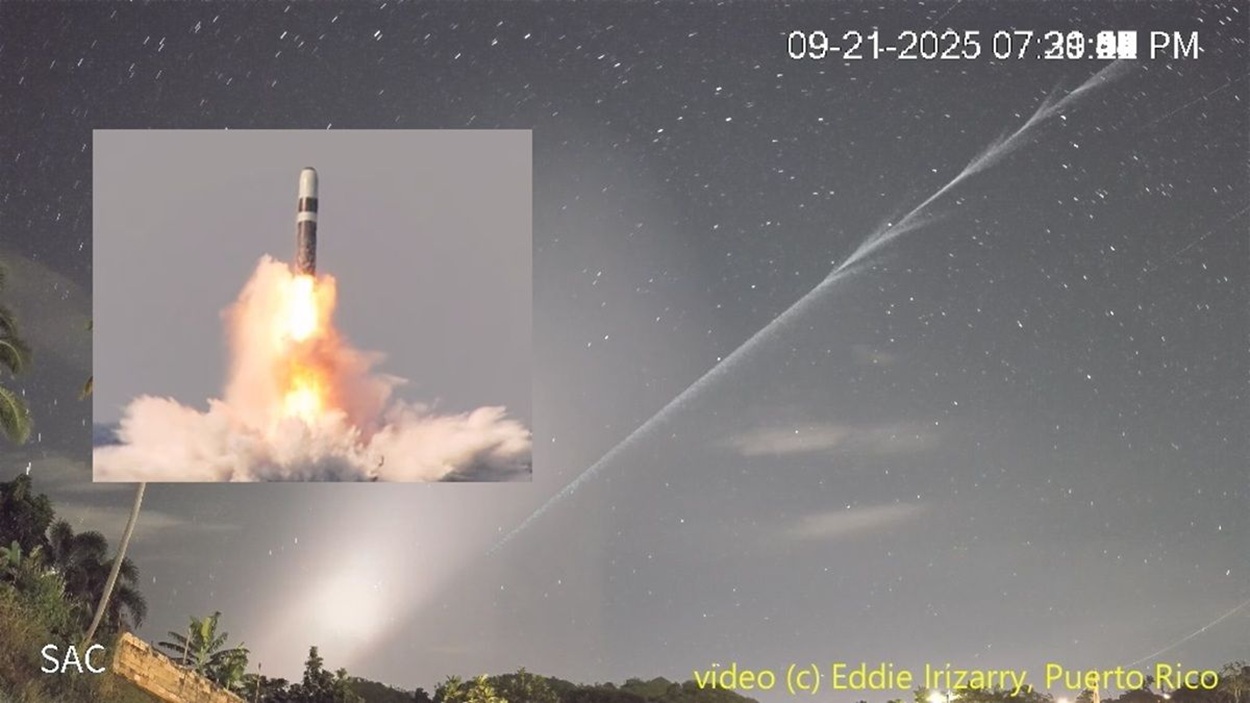


A Mysterious Launch In The North Atlantic Exposed The Power Of The Trident II D5 Nuclear Missile, Weighing 58.5 Tons, Range Of 7,360 Km, Up To 12 Independent Warheads, And Costing US$ 30.9 Million Per Unit, Generating Tension And Official Silence
On Sunday night, the North Atlantic became the stage for a military enigma regarding a nuclear missile that drew the attention of residents, experts, and curious onlookers.
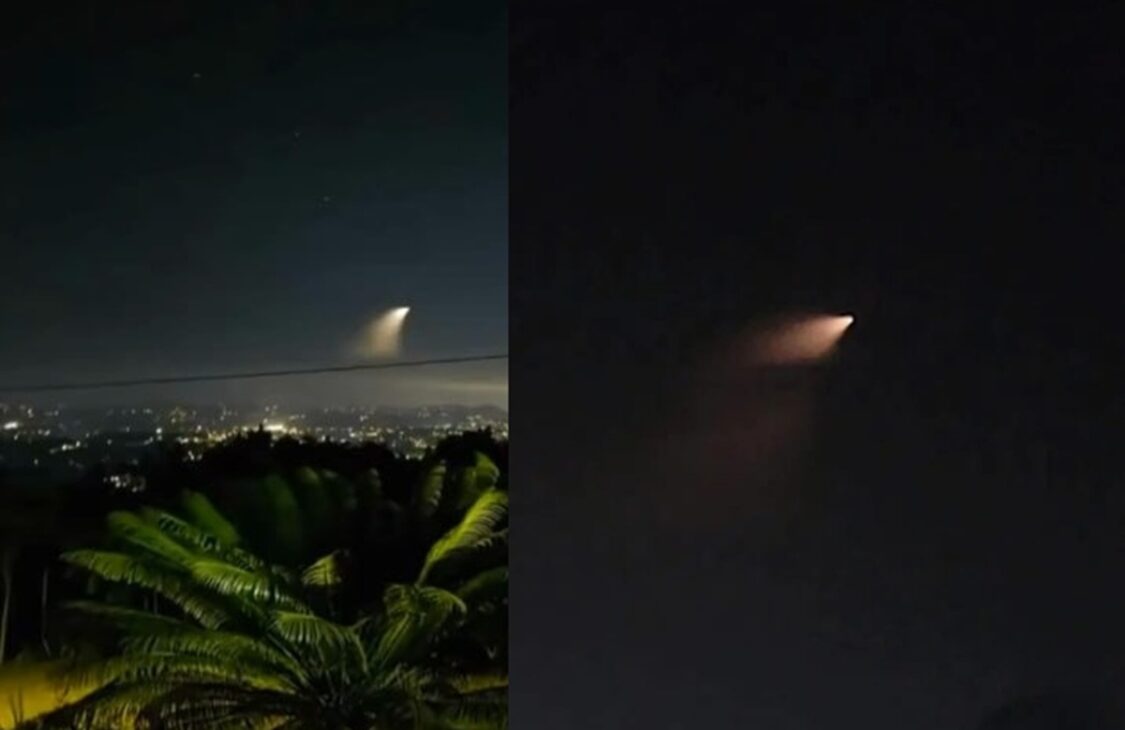
Videos recorded in Puerto Rico showed a luminous object cutting across the sky around 23:25 UTC. The scene quickly spread across social media, generating theories and questions.
According to independent observers, the phenomenon is believed to have been the launch of a submarine-launched ballistic missile (SLBM) UGM-133 Trident II D5, fired from a nuclear submarine of the United States or the United Kingdom.
-
Motorola launched the Signature with a gold seal from DxOMark, tying with the iPhone 17 Pro in camera performance, Snapdragon 8 Gen 5 that surpassed 3 million in benchmarks, and a zoom that impresses even at night.

-
Satellites reveal beneath the Sahara a giant river buried for thousands of kilometers: study shows that the largest hot desert on the planet was once traversed by a river system comparable to the largest on Earth.

-
Scientists have captured something never seen in space: newly born stars are creating gigantic rings of light a thousand times larger than the distance between the Earth and the Sun, and this changes everything we knew about stellar birth.

-
Geologists find traces of a continent that disappeared 155 million years ago after separating from Australia and reveal that it did not sink, but broke into fragments scattered across Southeast Asia.

So far, neither navy has officially confirmed the event.
Mystery In The Caribbean Sky
A navigational alert issued between September 17 and 22 had already indicated unusual activities in the region.
The coincidence further raised suspicions that the launch actually took place.
The Caribbean Astronomical Society classified the episode as a “military test.” However, it did not indicate which country would have conducted the operation.
Meanwhile, images taken at different locations in Puerto Rico show the bright trajectory that intrigued the local population.
The Strategic Weapon
The Trident II D5 missile is considered the backbone of the maritime nuclear deterrence of the United States and the United Kingdom.
The system integrates 14 Ohio-class submarines in the U.S. Navy and four Vanguard-class submarines in the Royal Navy.
Each Ohio submarine can carry up to 20 Trident II missiles. The Vanguard submarines carry 16 units. According to the U.S. Navy, this armament is the most reliable and lethal in operation on the planet.
The range is impressive: about 7,360 kilometers. The three-stage system uses solid fuel and can launch up to 12 independent warheads. However, international agreements limit the current payload to four or five.
Produced by Lockheed Martin, the missile measures 13.4 meters in length, has a diameter of 2.1 meters, and weighs around 58,500 kilograms. The cost of each unit is around US$ 30.9 million.
Future Of The Nuclear Fleet
The U.S. is already working on modernizing its Trident arsenal. The goal is to maintain the system’s reliability until the 2080s. In January, Lockheed Martin announced a US$ 383 million contract to develop the Trident II D5 Life Extension 2 (D5LE2) program.
This project will equip the new Columbia-class submarines, which will gradually replace the Ohio-class submarines starting in the 2040s.
The Pentagon, through the 2022 Nuclear Posture Review, emphasized the need to accelerate investments to ensure the credibility of strategic deterrence.
In Britain, modernization is also underway. The Dreadnought-class submarines are expected to enter service in the early 2030s and should already receive the updated missile.
The Nuclear Triad In Action
For experts, the maritime component of the nuclear triad ensures stealth and mobility, characteristics that guarantee second-strike capability. This strategy has sustained the nuclear defense of allies for over 40 years.
American and British officials highlight that updates are essential in light of the advancements in missile defense by rival powers. The evolution of tracking and interception systems forces nuclear programs to constantly reinvent themselves.
Official Silence
Despite the repercussions, neither Washington nor London has released details about the launch recorded on September 21.
The silence fuels speculation. Some analysts believe the episode marked the first flight of a modified Trident II with a hypersonic glide vehicle. Others assess that it may have just been a routine test, without prior disclosure.
As answers remain elusive, the videos continue to circulate, turning the Caribbean sky into a backdrop for debates on security, technology, and the future of global nuclear balance.








Como os jornais souberam que era um míssil com todas as caracteristicas sitadas, sendo que se trata de um evento secreto?
Tem uma galera que é vidrada em tecnologia militar , e sabe identificar esses disparos de mísseis , pelo barulho, tamanho do rastro, rota de ascensão, local do disparo…etc
É muito simples, os Estados Unidos vazaram as informações para, neste momento denso em que vive o mundo, demonstrarem força e poder. Isto se faz necessário para afastar qualquer aventureiro do seu caminho. Nós temos uma dívida eterna com os Estados Unidos, pois se eles não tivessem entrado na Segunda Guerra Mundial, o Mundo estaria falando alemão e nas mãos dos nazistas. Quem critica os Estados Unidos, é porque não conhece a história da Segunda Guerra Mundial. Só uma pala: sabe quanto aviões os Estados Unidos fabricaram durante a Segunda Guerra Mundial? 380 mil aviões. É mole?