





 Portuguese
  English
  Spanish
  3 min of reading
  108 comments


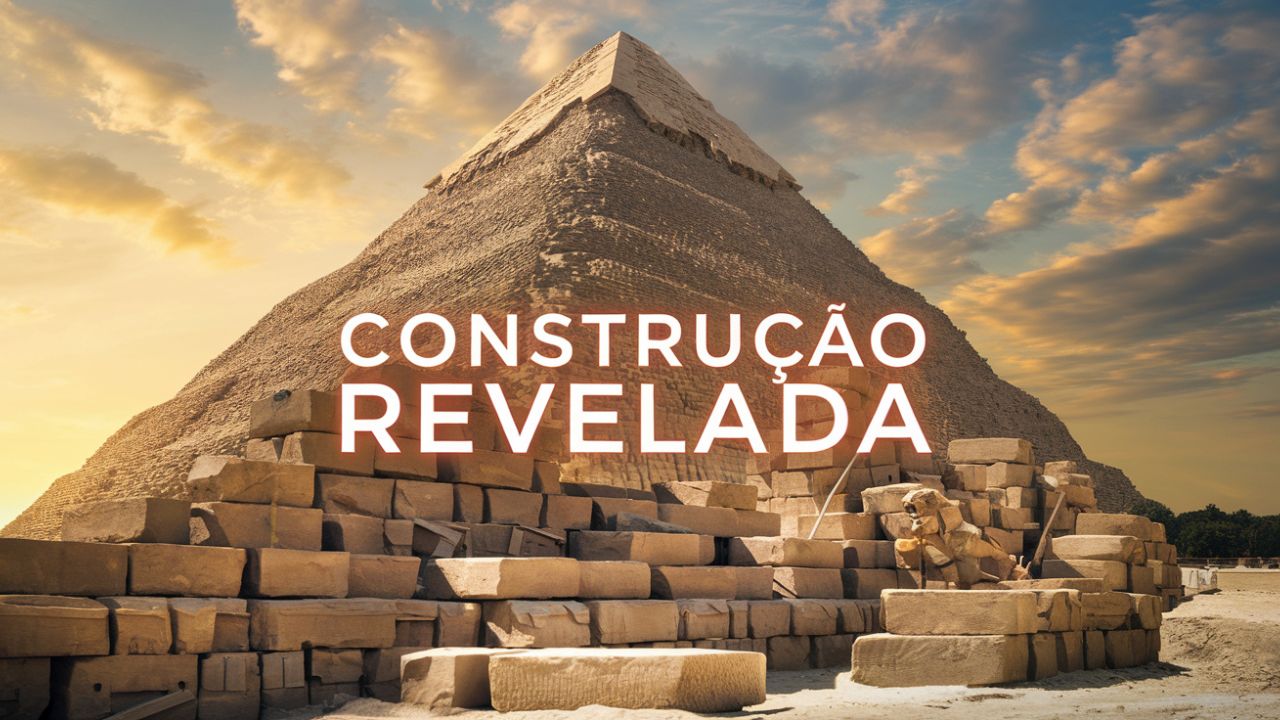


Discover How The Egyptians Built The Pyramids More Than 4,500 Years Ago Using Innovative Ramps To Move Stones Weighing Up To 15 Tons And Constructing The Great Pyramid Of Giza In Just 20 Years.
The Egyptian pyramids are not just stone structures; they are the symbol of a brilliant and enigmatic civilization. Built more than 4,000 years ago, these monumental edifices, like the Great Pyramid of Giza, continue to intrigue archaeologists and scientists. After all, how did the ancient Egyptians manage to raise millions of stone blocks, some weighing up to 15 tons, without modern technology?
Despite many theories over the centuries, there is still no complete consensus on the method used. However, recent research has shed light on this mystery, offering new clues and fascinating explanations.
Traditional Theories: Ramps And Advanced Engineering For Pyramid Construction
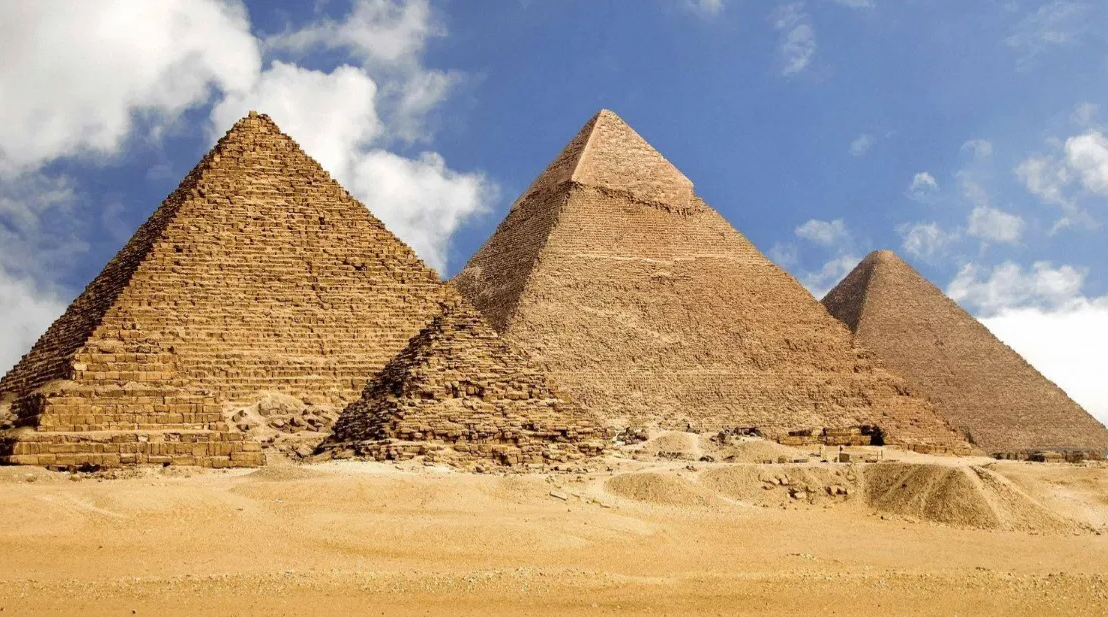
One of the most accepted hypotheses is that ramps were used to hoist the enormous stone blocks to impressive heights. Discoveries in Hatnub, an ancient alabaster quarry in Egypt’s eastern desert, showed that inclined ramps with more than 20% gradient may have been crucial in the process. This finding, led by Dr. Roland Enmarch and his team, suggests that the Egyptians were masters at creating practical solutions to monumental challenges.
-
New CCR concrete paving technology promises roads up to 3x more durable, less maintenance, and cost reduction in Brazil.
-
Made from recycled plastic, plastic wood is gaining space in the construction industry because it does not rot, resists moisture, and reduces maintenance costs over the years.

-
Florianópolis will receive a million-dollar BRT that will begin construction in 2026 with nearly 400 million in funding from the federal government and the Inter-American Development Bank, and the map already shows the routes for the exclusive bus corridors.

-
Without a blueprint, without an engineer, and using scrap from the dump, a father spends 15 years building an 18-room castle for his daughter, featuring tram tracks, 13 fireplaces, and over 700 m², which may now be demolished.

The great debate revolves around the angle of the ramps. A less steep ramp would need to be so long that its construction would be almost as challenging as the pyramid itself. On the other hand, steeper ramps would require advanced techniques to move the stones without damage. This discussion remains heated among experts, demonstrating how the pyramids still challenge our understanding.
The Role Of The Nile River And Transportation Logistics
In addition to ramps, the transport of materials was another monumental challenge. The Nile River was the main route for carrying stones and workers to construction sites. However, over the centuries, the river changed course, and many of its old arms have disappeared. Current research is attempting to map these areas to better understand how the Nile contributed to the logistics of the pyramids.
Without the Nile, Ancient Egypt likely would not have been able to erect these wonders. It’s like trying to move mountains without an efficient route: impossible.
The Life Of The Workers And The Construction Timeline
Another impressive factor is the speed at which the pyramids were built. The Great Pyramid of Giza, for example, was completed in just 20 years. This means that thousands of workers dedicated themselves to exhausting tasks daily. With an average life expectancy of only 35 years, constructions had to be planned early in the reign of the pharaoh.
The workers were not slaves, as was once thought. Archaeological evidence shows that they had a balanced diet and lived in organized villages near the construction site.
The pyramids of Egypt continue to teach us lessons about human ingenuity and the power of cooperation. Despite advances in research, there is still much to discover about how the pyramids were constructed. Each new discovery brings us a little closer to unraveling this millennial puzzle.










Realmente foram os egípcios??? Onde está as inscrições que mostram como foram feitas ? Uma contrução tão grandiosa era pra ter muitas informações,feitas para se orgulharem.Só tem o nome do faraó, não diz como foi feito,ou seja é como eu colocar meu nome no prédio e dizer que foi feito por mim kkkk .Então vamos lá…. há blocos de pedra de até 70 toneladas,a pedreira fica há 800 kilometros do local de construção,a pedreira fica do outro lado do rio Nilo,e mergulhadores não encontraram nenhum bloco no fundo do rio,e olha que foram transportados 2,5 milhões de blocos ,(incrível como não caiu nenhum!!!)ela está alinhada perfeitamente com os pontos cardeais , está no centro exato do planeta e divide de forma igual em 4 partes todas as terras descobertas do planeta (divide os continentes ,ou seja , teriam que ter conhecimento do planeta inteiro), há sinais de erosão por água da chuva,a última vez que choveu suficiente para desgastar a rocha foi ha 14.000 anos atrás, quando o Egito não era um deserto mais sim uma região tropical,antes da mudança dos pólos ,e pra finalizar há registros sobre as pirâmides do Egito em manuscritos Sumérios,mil anos antes da “suposta” data da construção das mesmas.Nunca saberemos,o governo do Egito é pouco permissivo quanto a escavações e pesquisas que vão contra a ideia de que elas são obras egípcias ,eu entendo que é uma questão de identidade e orgulho nacional, jamais vão admitir que não foram eles, sempre aparece uma bobagem dessas tentando nos tapiar, mas está cada vez mais difícil esconder a verdade,eu apenas imagino um conhecimento de uma civilização anterior,, quando os egípcios chegaram lá as pirâmides já existiam
Ainda tem gente gastando tempo e dinheiro para criar hipóteses criando assim cada vez mais seres humanos b…..os
Que gente sem noção!
Reclamam de política em uma matéria sobre o antigo Egito, certamente estão doentes coitados