





 Portuguese
  English
  Spanish
  4 min of reading
  0 comments


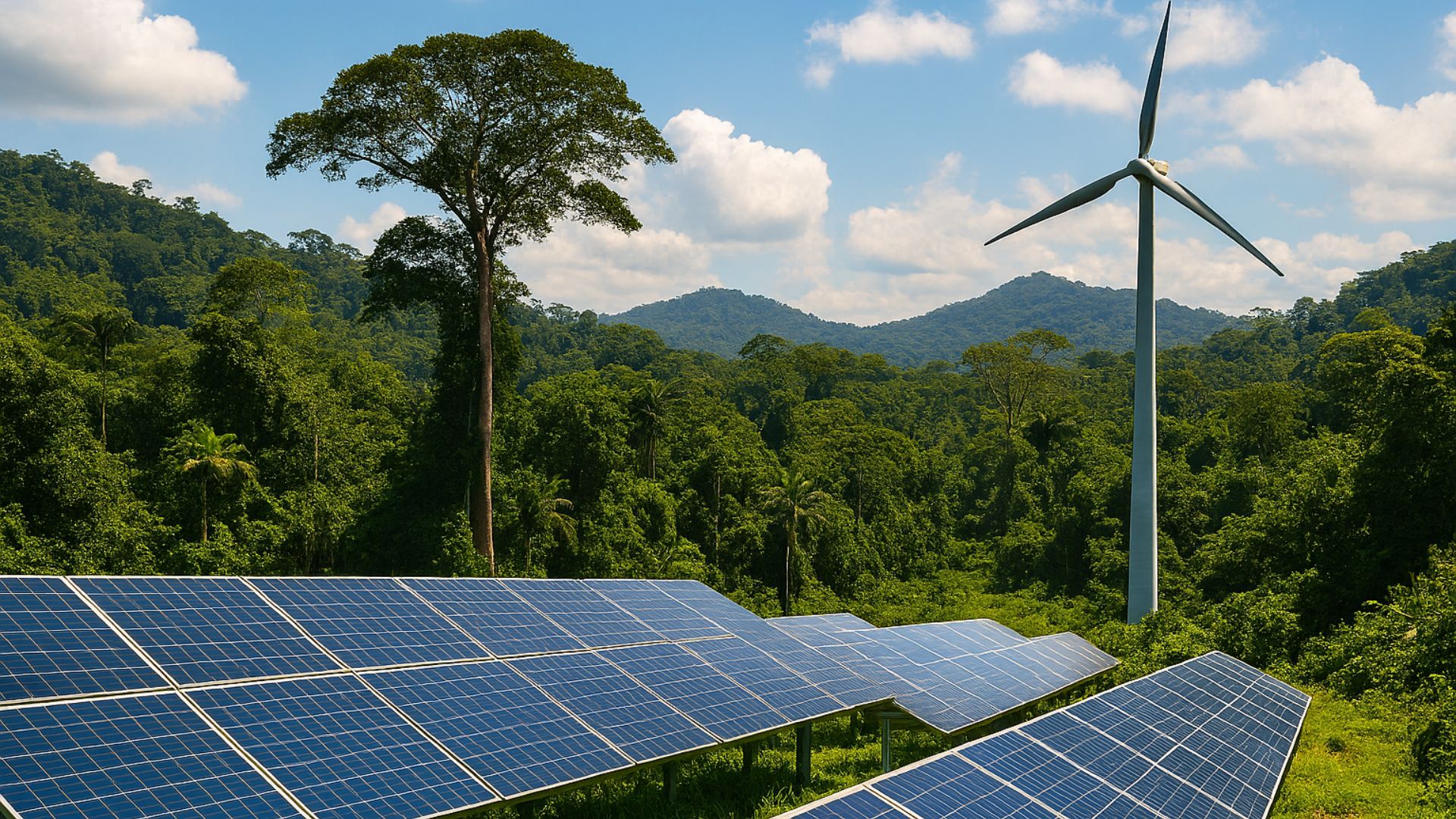
The Ministry of Mines and Energy and GEAPP Advance in a New Partnership to Expand Renewable Energy Solutions in the Amazon and Strengthen Sustainability Initiatives
During the sixth day of COP30, held in Belém (PA), the Ministry of Mines and Energy (MME) and the Global Energy Alliance for People and Planet (GEAPP) signed a protocol of intentions valid for five years.
According to a report published by Agência Eixos this Sunday (16), the central objective is to increase the supply of renewable energy in the Amazon, promote sustainable development, and drastically reduce energy poverty in the region.
Renewable Energy and Microgrids: Solutions for the Amazon
According to MME, about 1 million Brazilians still live without access to electricity, and another 2 million are not connected to the national grid. The partnership with GEAPP aims to reverse this scenario through innovative and sustainable solutions.
-
Renewable energy advances over protected areas in Brazil, and a survey by the Energy Transition Observatory reveals silent impacts that challenge environmental conservation and pressure sensitive traditional territories.

-
Rio Grande do Sul accelerates energy transition: State invests in renewable technologies and consolidates decarbonization strategies and pathways to attract billions in new industrial investments.

-
With 160,000 m² of collectors, an area larger than 20 football fields, Silkeborg, in Denmark, hosts a solar thermal plant that heats 19,500 homes and could become the largest solar heating plant in the world.

-
A study reveals the expansion of renewable energy procurement in Brazil and shows how companies are taking advantage of opportunities to reduce expenses, ensure energy efficiency, and strengthen strategic environmental commitments.


The proposal of the agreement is to implement microgrid systems — local energy distribution networks — powered by clean sources, such as solar and wind. These structures are ideal for remote areas of the Amazon, where territorial extent and difficult access make connection to the traditional electrical grid unfeasible.
Energy decentralization is an effective solution for isolated communities, as it reduces logistical costs, increases supply reliability, and strengthens local autonomy. Furthermore, it directly contributes to reducing dependence on fossil fuels, aligning with the country’s decarbonization targets.
Sustainability and Income Generation Go Hand-in-Hand
The protocol between MME and GEAPP also provides for strengthening the Amazonian bioeconomy. The generation of renewable energy will be integrated into local productive projects, such as agro-industries, extractive cooperatives, and sustainable tourism initiatives.
By promoting the sustainable use of natural resources, the agreement boosts the local economy and protects the forest. Clean energy will enable communities to develop economic activities with lower environmental impact, creating jobs and improving quality of life.
Reduction of Energy Poverty in the Amazon
Energy poverty is one of the greatest challenges facing the Amazonian population. Without access to electricity, thousands of families live in precarious conditions, with limitations on access to education, health care, and economic opportunities.
MME estimates that universal access to energy could profoundly transform the reality of these communities. Rural electrification is a powerful tool for social inclusion, allowing schools to operate full-time, health posts to function with adequate equipment, and small entrepreneurs to thrive.
Investments in Renewable Energy and Goals of the MME-GEAPP Agreement
The pilot phase of the project has already begun with an initial investment of US$ 3 million by GEAPP. The goal is to triple this amount over the next three years by raising new resources and forming partnerships with the private sector and multilateral organizations.
The protocol also provides for technical and regulatory support to enable projects, as well as fostering public policies that encourage the energy transition. Collaboration between government and the private sector is essential for the project’s success, ensuring scale, efficiency, and lasting impact.
Renewable Energy and Brazilian Leadership at COP30
The signing of the protocol between MME and GEAPP during COP30 reinforces Brazil’s role as a leader in the sustainability agenda. The country has stood out for its potential in renewable sources and for preserving strategic biomes, such as the Amazon.
The initiative is a concrete example of how public policies can align economic development and environmental protection, contributing to the goals of the Paris Agreement and the United Nations Sustainable Development Goals (SDGs).
Decarbonization and Sustainable Energy Future
The agreement also fits into the context of the “Energies of the Amazon” program launched by MME, which aims to accelerate the energy transition in the region. The replacement of diesel generators with renewable sources is one of the priorities, with a direct impact on reducing greenhouse gas emissions.
The decarbonization of the energy matrix is a crucial step to face the climate crisis, and the Amazon plays a strategic role in this process. With an abundance of natural resources and high solar incidence, the region has the potential to become a global reference in clean energy.
Renewable Energy as a Legacy for Future Generations
The partnership between MME and GEAPP represents a significant advance in the search for sustainable solutions for the Amazon. By combining technological innovation, social inclusion, and environmental preservation, the agreement establishes a new paradigm for regional development.
Bringing renewable energy to Amazonian communities is more than a technical goal — it is a commitment to social justice, sustainability, and the future of the planet. The initiative demonstrates that it is possible to reconcile economic growth with environmental responsibility and positions Brazil as a leader in building a fairer and more resilient world.









Seja o primeiro a reagir!