





 Portuguese
  English
  Spanish
 4 min of reading
  3 comments


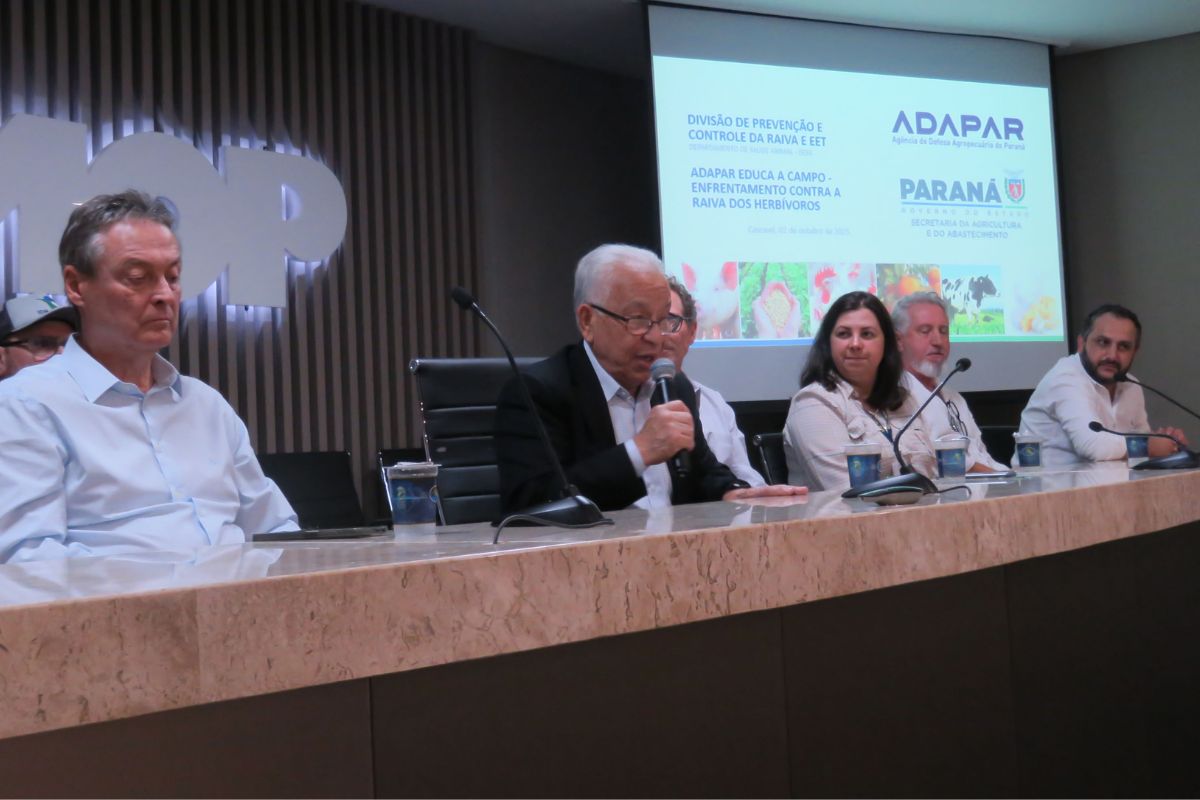


The West of Paraná Was the Stage for a Meeting That Highlighted the Mobilization Against Rabies in Herbivores in Paraná, Gathering Producers, Managers, and Technicians from Adapar
The mobilization against rabies in herbivores in Paraná was the central theme of an event held at the headquarters of the Association of Municipalities of the West of Paraná (Amop), in Cascavel, on October 2, according to a report published.
Gathering public managers, state leaders, rural producers, and specialized technicians, the action highlighted the role of the Paraná Agricultural Defense Agency (Adapar) in raising awareness and confronting the disease, which still concerns animal and human health in the region.
The meeting reinforced the importance of vaccination, sanitary education, and dialogue between the community and defense agencies, especially in light of the increase in outbreaks reported in recent years.
-
Brazil has just secured a secret route through Turkey to save agribusiness exports that were threatened by the closure of the Strait of Hormuz amid violent clashes in the Middle East.

-
JBS, founded by the Batista brothers, continues to conquer the world: the entrepreneurs built a ‘factory in the desert’ with 3,000 jobs.

-
With only 1% of Brazilian territory, Santa Catarina has built one of the most competitive industrial parks in the country with 64,000 companies, nearly 1 million jobs, and a growth of 5.3% while the national industry is practically stagnant.

-
China banned the export of 22 tons of meat from Argentina.


Mandatory Vaccination in 30 Municipalities and Its Impact on Agricultural Defense
The main measure announced by Adapar was the publication of Ordinance No. 368/2025, which made vaccination of cattle, buffaloes, goats, sheep, and horses mandatory in 30 municipalities in the West.
Producers will have six months to comply with the requirement, a measure adopted due to the seriousness of the situation. In 2024, Paraná confirmed 227 rabies outbreaks, with more than half in the regions of Cascavel and Laranjeiras do Sul.
By September 2025, there had already been 170 outbreaks in 41 municipalities, with 88 cases concentrated solely in the West.
The risk for herds near the Iguaçu National Park and the need for medical attention for residents who had contact with suspect animals reinforced the decision.
According to Adapar technicians, vaccination is the main barrier to contain the spread of the disease and reduce the economic losses caused to producers.
Preventive Sanitary Education and Community Involvement in Confrontation
In addition to vaccination, the agency highlighted the creation of Adapar Educa a Campo, a pilot project launched in the West to bring agricultural defense closer to the population.
The proposal involves actions in schools, universities, rural unions, and municipalities, providing clear information on diagnosis, prevention, and notification of suspected cases.
According to Rafael Gonçalves Dias, head of the Animal Health Department of Adapar, the goal is “to raise awareness among producers and society so that they understand the seriousness of rabies and act as allies in the prevention process.”
The initiative was considered unprecedented because it breaks the logic of merely publishing ordinances and requiring compliance, starting to invest in direct dialogue with communities.
This strategy was also praised by representatives of the Ministry of Agriculture and Livestock (Mapa), who emphasized the importance of balancing inspection and sanitary education.
According to Cesar Pian, “this is a transformation because awareness enhances the effectiveness of defense policies.”
Participatory Agricultural Defense and Sector Integration in the West
The president of Adapar, Otamir Cesar Martins, highlighted during the event that the mobilization against rabies cannot be restricted to government agencies.
He advocated that society in general participates in agricultural defense, creating a collaborative network that involves producers, veterinarians, academics, and public managers.
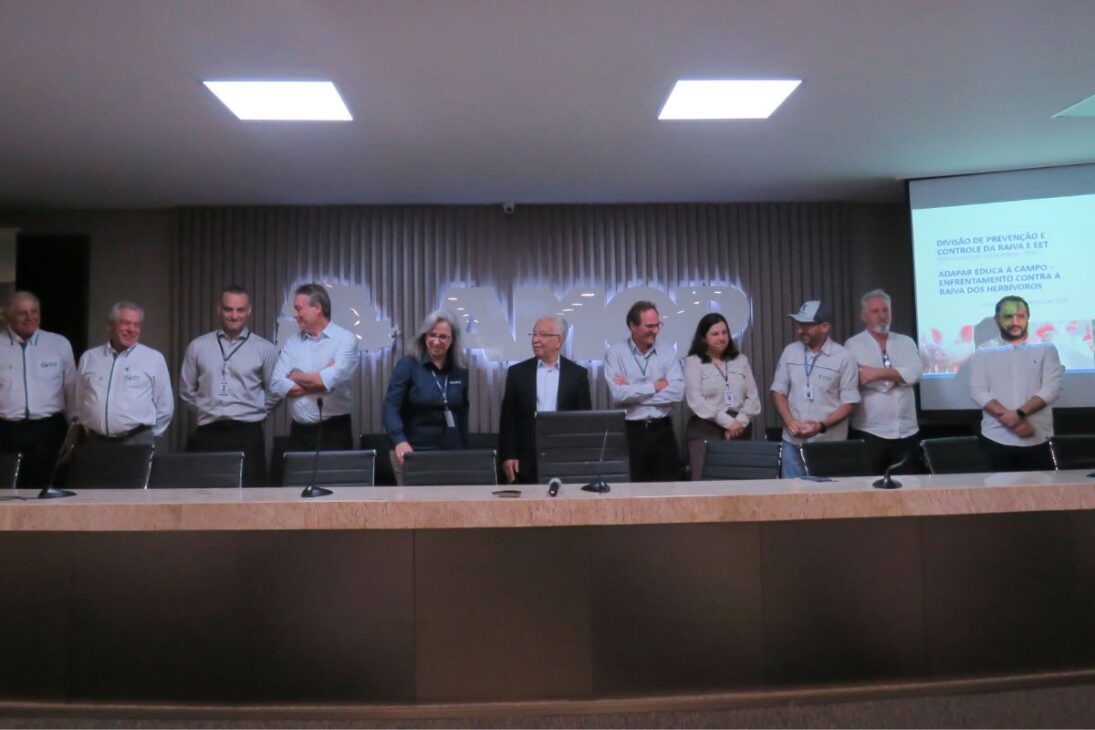
This integration was reinforced by municipal secretaries of Agriculture who participated in the meeting. According to them, maintaining continuous mobilization is essential to protect herds and avoid new economic losses.
The involvement of various sectors also aligns with the concept of “One Health,” which relates animal health to human and environmental health.
Another highlight of the program was the technical presentation given by the head of the Herbivore Rabies Division, Elzira Pierre, and the head of the Laboratories Department of Adapar, Rubens Chaguri de Oliveira.
They detailed the mechanisms of rabies transmission, the laboratory methods used for diagnosis, and the importance of promptly notifying any suspicion.
Reduction of Rabies Outbreaks and Strengthening Public Health in Paraná
The reduction of rabies outbreaks in herbivores in Paraná is one of the main objectives of the mobilization.
In regions where the disease advances, losses for the agricultural sector are significant, as infected animals have no cure and the virus poses a direct risk to human health.
Transmitted primarily by blood-sucking bats, rabies can be fatal in all symptomatic cases.
Adapar’s work seeks to reduce these occurrences through a tripod: mandatory vaccination, preventive sanitary education, and strengthening participatory agricultural defense.
In addition, technicians emphasized that suspected cases must be reported immediately so that containment measures can be applied swiftly.
According to data from the event, more than 500 producers and technicians participated in activities throughout the week in different municipalities.
The expectation is that, with massive adherence to vaccination and the expansion of the Adapar Educa a Campo program, it will be possible to significantly decrease the number of outbreaks by the end of 2026, strengthening public health and the rural economy.









You’re so awesome! I don’t believe I have read a single thing like that before. So great to find someone with some original thoughts on this topic. Really.. thank you for starting this up. This website is something that is needed on the internet, someone with a little originality!
thanks…
çiçek gönder