





 Portuguese
  English
  Spanish
  4 min of reading
  1 comment


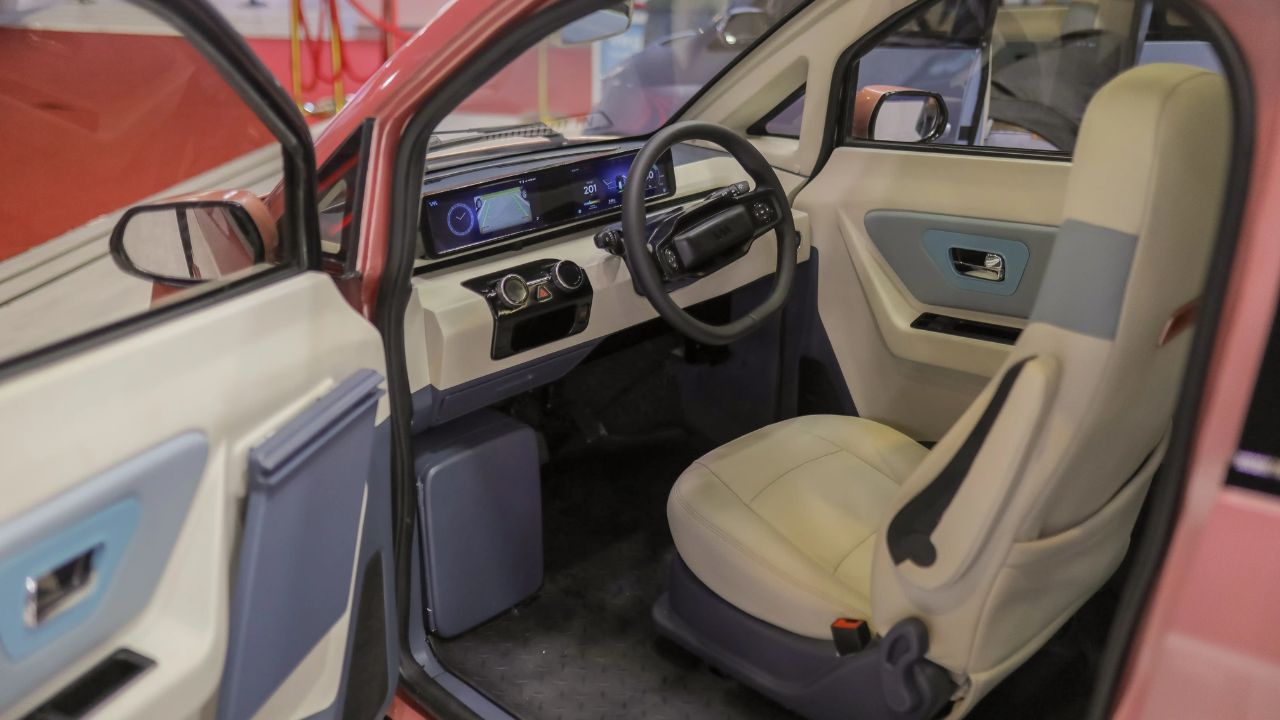


Startup Vayve Mobility Promises Urban Electric Vehicle With Solar Panels, But the Entry Into Brazil at Low Price Faces Great Barriers of Taxes and Regulation.
A new electric car has generated great curiosity in the automotive market. Coming from an Indian automaker, the Vayve Eva promises to be a solar car that “recharges itself” with a price below R$ 50,000. Produced by the startup Vayve Mobility, the vehicle positions itself as an alternative for urban mobility. However, a detailed analysis of its features and import costs reveals a more complex reality.
What Is the Vayve Eva, the Electric Car With Solar Assistance?
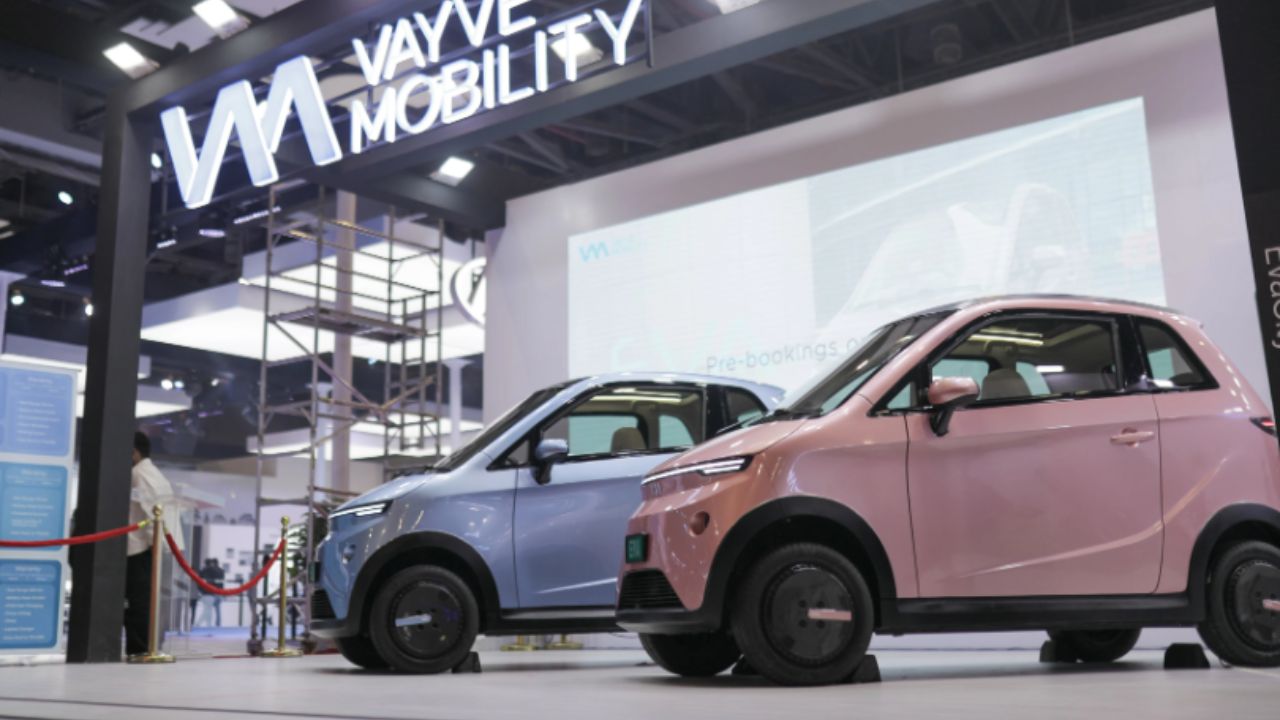
The Vayve Eva is the creation of Vayve Mobility, a young Indian automaker founded in 2021 and based in Pune. The company’s mission is to develop solutions for sustainable urban mobility at scale. The Eva is its main bet, presented as the first electric quadricycle in India with solar energy assistance.
It is crucial to understand that the Eva is not a conventional passenger car. It is classified as a compact quadricycle. Its dimensions are approximately 3 meters long and 1.2 meters wide. It has a capacity for 2 or 3 people, with the driver in a central front position and space for one or two passengers in the back. Its focus is strictly urban, designed for owners with daily commutes under 35 km.
-
Engineers propose a fourth traffic light for intersections – the change promises to affect crossings, queues, and waiting times.
-
Chevrolet Suburban Z71 lands in Brazil with a V8 engine, off-road design, air suspension, seven seats, and colossal size, a rare version imported for around R$ 1.3 million with luxury and exclusivity.

-
The Chevrolet Onix 1.0 turbo achieves 17.7 km per liter on the highway and ranks among the three most economical cars in Brazil in 2026, alongside two more expensive Toyota hybrids available at dealerships.
-
Little sister of the Hilux: Toyota launches Land Cruiser FJ with 4 radical versions, 2.7 engine with 166 hp and 4×4 traction with locking.

Technology and “Self-Recharging”: How Does the Solar Energy of the Eva Work?
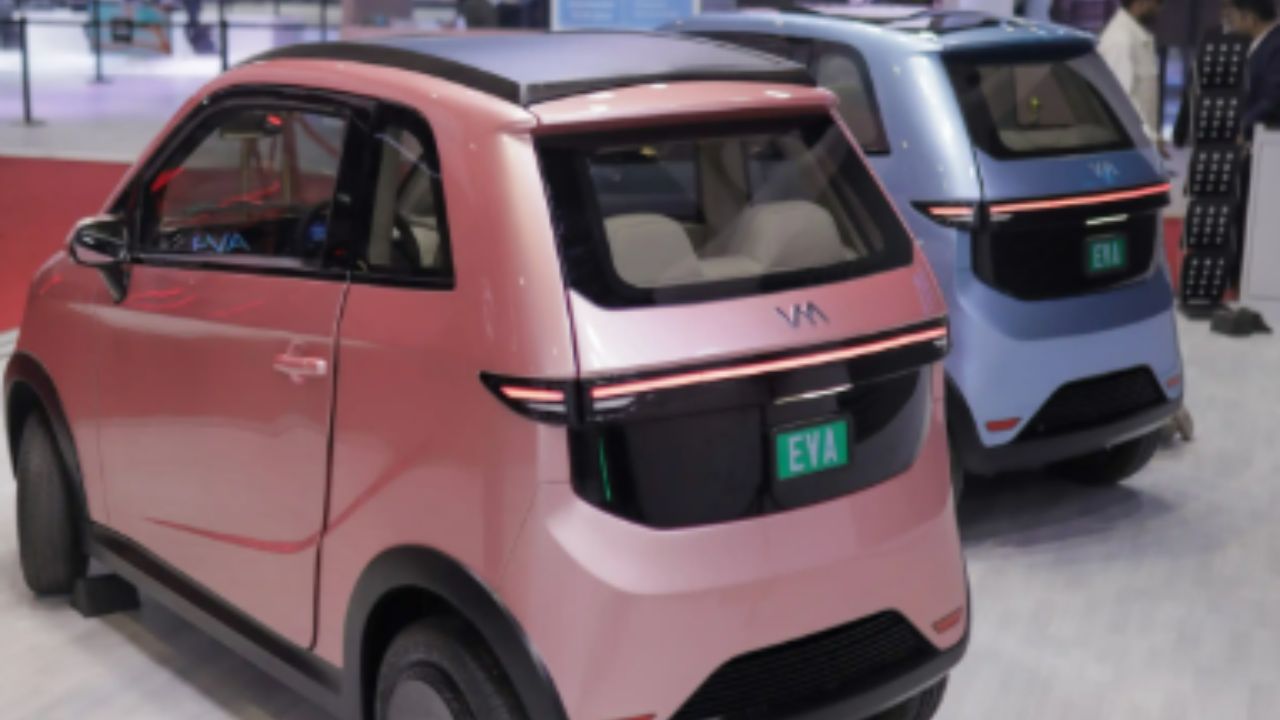
The claim that the car “recharges itself” is a simplification. The Vayve Eva has a flexible solar panel on the roof that functions as a support system. This technology can add 10 to 12 kilometers of range per day. According to the manufacturer, this can generate energy for up to 3,000 kilometers per year without recharging from the electrical grid, depending on sunlight exposure.
The main range of the Indian automaker’s vehicle, however, comes from its LFP batteries (Lithium Iron Phosphate). There are three options:
- Nova (9 kWh): Range of 125 km.
- Stella (12.6 kWh): Range of 175 km.
- Vega (18 kWh): Range of up to 250 km.
Charging at a home outlet (AC) takes about 5 hours. Only the top-tier version (Vega) supports fast charging (DC), recovering from 10% to 70% of the charge in 15 to 20 minutes. Thus, the solar system complements the charge but does not eliminate dependence on the electrical grid for most users.
Why Would the Car from the Indian Automaker Not Cost R$50,000 in Brazil?
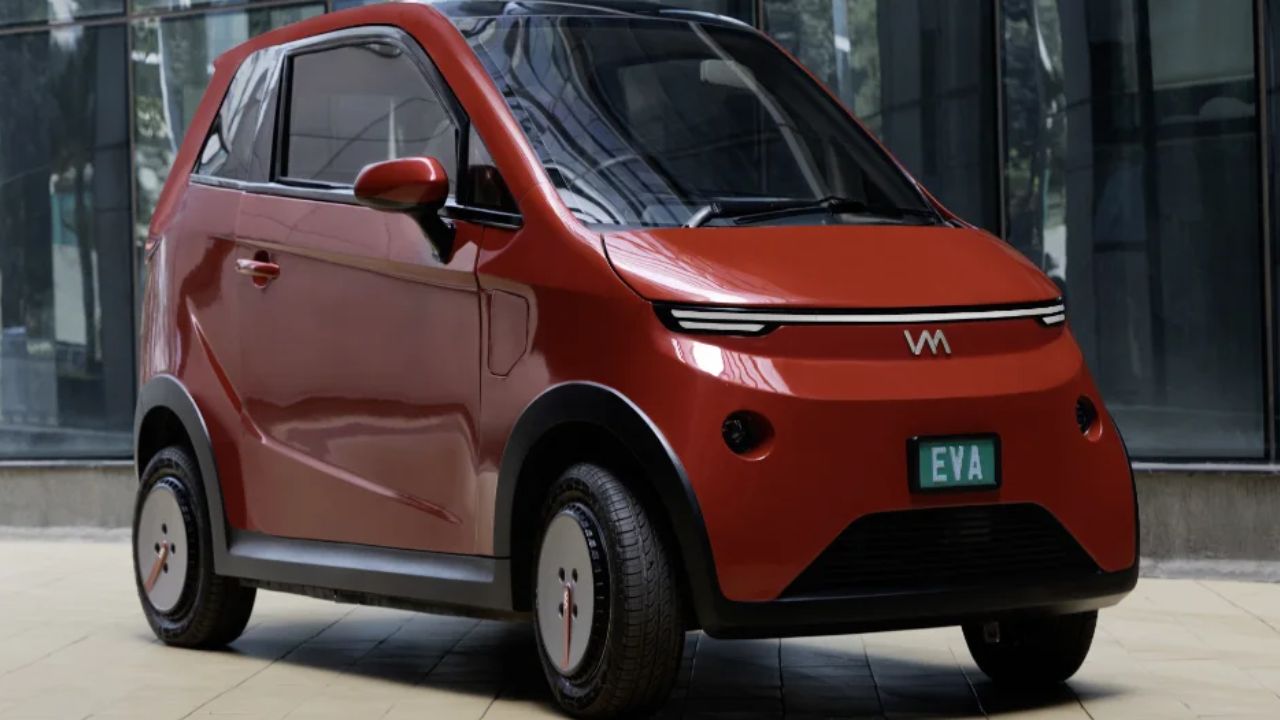
The price is one of the main attractions of the Vayve Eva. In India, the starting price is $₹3.25$ lakh, which is equivalent to around R$ 21,000 in direct conversion. This price, however, is for the basic model and with the Battery as a Service (BaaS) system, where the customer pays a monthly subscription for the battery. With the purchase of the battery, the starting price rises to $₹3.99$ lakh, or approximately R$ 26,000.
For this vehicle to arrive in Brazil, the price would be much higher. The famous “Brazil Cost” adds a series of expenses:
- Import Taxes (II): Tariffs that can reach up to 35%.
- Federal and State Taxes: IPI, PIS/COFINS, and ICMS.
- Logistics and Homologation: Freight, insurance, and certification costs for Brazilian regulations.
- Importer’s Margin.
Historically, these costs can double the original price of an imported vehicle. Therefore, it is highly unlikely that the Vayve Eva, the car from the Indian automaker, would be sold in Brazil for less than R$ 50,000. The final price, even for the basic model, would likely exceed R$ 70,000.
Vayve Eva vs. BYD and GWM: A Comparison of Different Categories
Comparing the Vayve Eva with electric cars from BYD and GWM sold in Brazil is a misunderstanding. The model from the Indian automaker belongs to a fundamentally different category. While BYD Dolphin and GWM Ora 03 are compact passenger cars, with greater range, space for 4 or 5 passengers, and more robust safety standards, the Eva is a quadricycle.
Its proposal is to be an ultracompact vehicle for specific urban use, prioritizing extreme cost savings in its home market. It was not designed to be a family car or for road trips. The correct comparison would be with other microcars or quadricycles, a niche still little explored in Brazil.
Is the Vayve Eva a Viable Option for the Future in Brazil?
The Vayve Eva is an intriguing project, with strengths like the affordability in India and the innovative solar assistance. However, it faces huge challenges. Its size, capacity, and range are limited to very specific use. Additionally, Vayve Mobility is a “unfunded startup”, according to sources, with a launch expected only in the second half of 2026 in India, which creates uncertainties about its ability for large-scale production.
For the Brazilian consumer, the message is clear: manage expectations. The price below R$ 50,000 is unrealistic for an imported model. There is no forecast for a launch in Brazil, and the homologation process would be a complex obstacle. The Vayve Eva is a concept to be observed, but with pragmatism, as its path to becoming a reality in the Brazilian market is long and uncertain.








Imagina se esse governo comunista vai permitir uma tecnologia dessas aqui no Brasil. 🤷♂️