





 Portuguese
  English
  Spanish
  5 min of reading
  1 comment


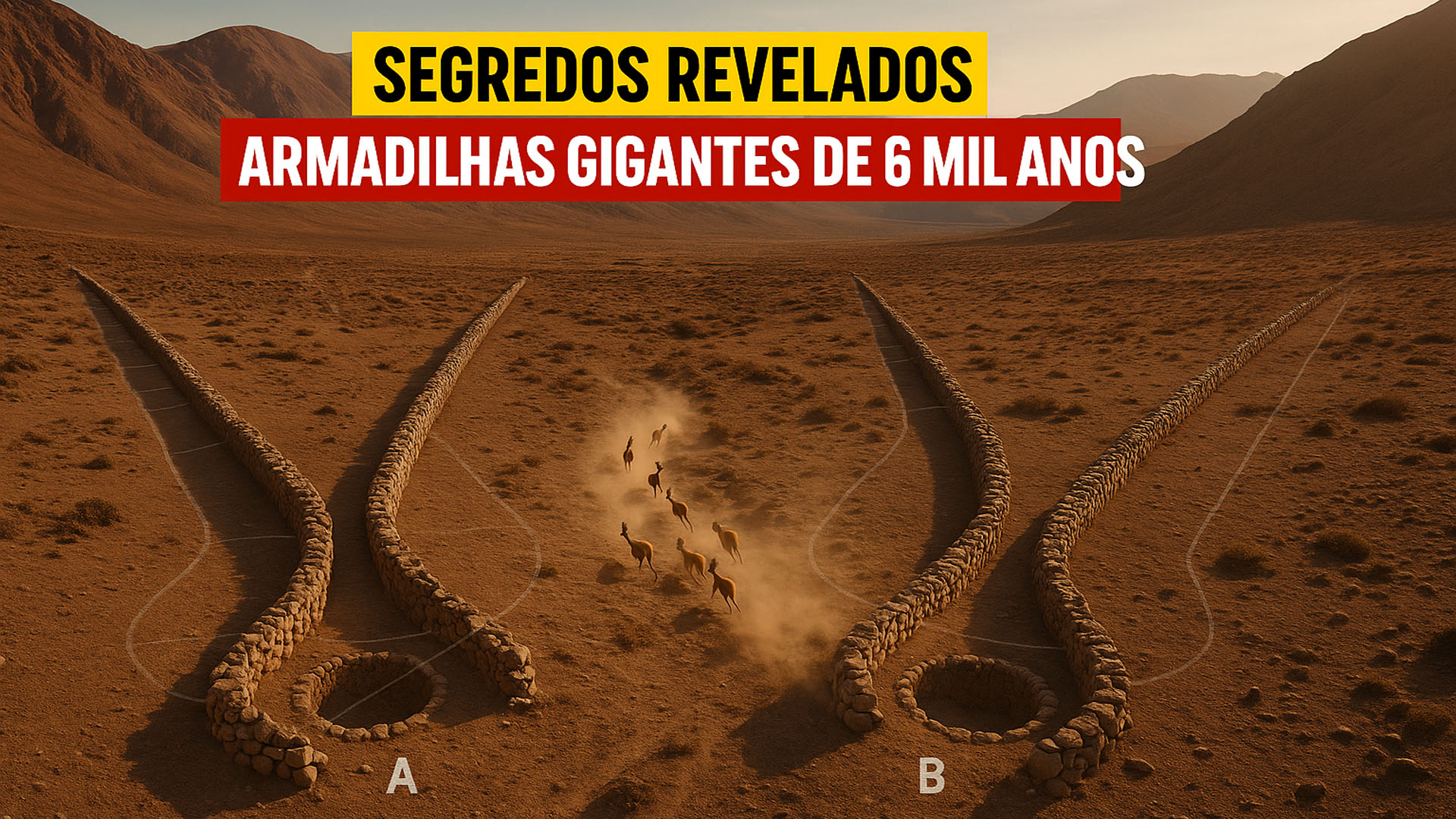


Structures In Funnel Shape Discovered By Satellites Show That Ancient Peoples Maintained Hunting Traditions For Millennia, Challenging Historical Theories About The Region.
A surprising archaeological discovery in the northern mountains of Chile is transforming the understanding of how ancient peoples of the Andes lived and hunted. Satellite images revealed 76 sophisticated stone traps, known as “chacus”, that were built around 6,000 years ago to capture vicuñas, wild animals related to alpacas.
The research, led by archaeologist Adrián Oyaneder from the University of Exeter and published in the scientific journal Antiquity in October 2024, challenges long-held beliefs about the disappearance of hunting in the Andes. Until now, experts believed that the practice of hunting was abandoned around 2,000 B.C., when agriculture became predominant. However, the evidence shows that hunter communities remained active until the 18th century, coexisting with farmers and herders.
Giant Structures Built At Extreme Altitudes
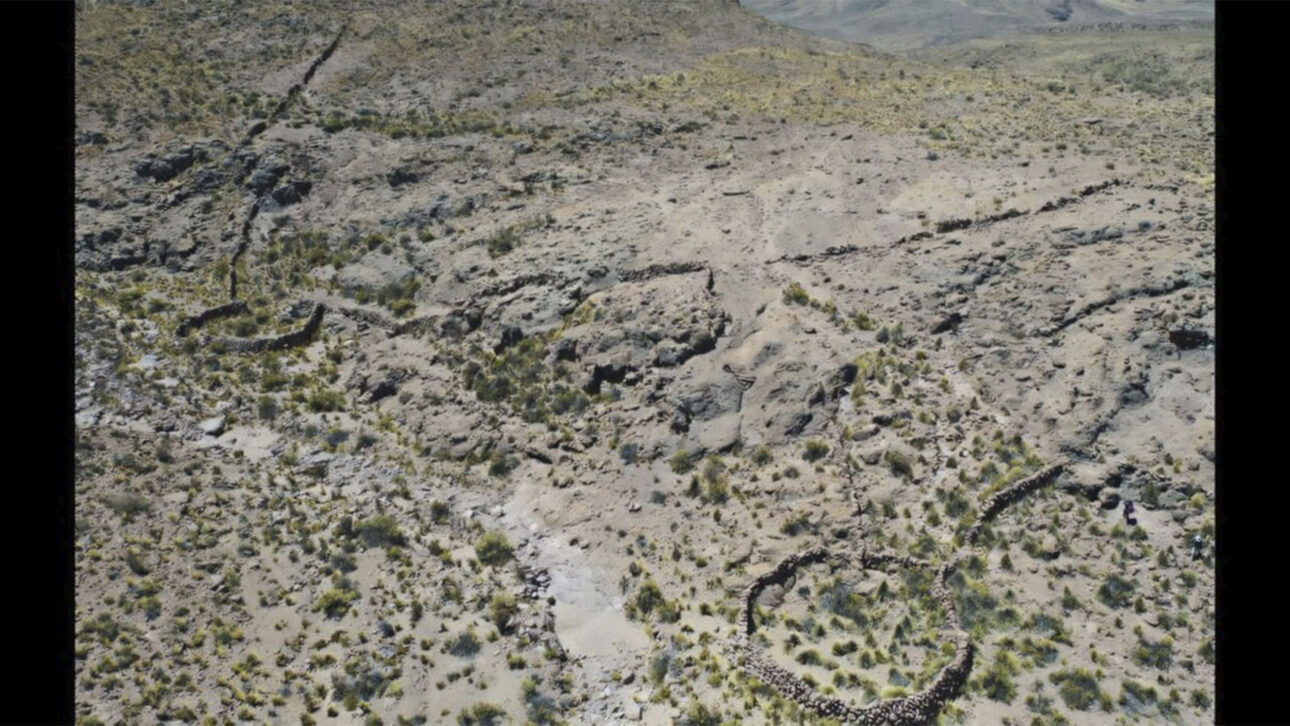
The traps were identified in the Camarones River basin, covering an area of 4,600 square kilometers. The structures are V-shaped, with dry stone walls that reach up to 150 meters in length and 1.5 meters in height. At the end of the funnel, the hunters dug circular holes approximately two meters deep, where the animals would become trapped.
-
Friends have been building a small “town” for 30 years to grow old together, with compact houses, a common area, nature surrounding it, and a collective life project designed for friendship, coexistence, and simplicity.

-
This small town in Germany created its own currency 24 years ago, today it circulates millions per year, is accepted in over 300 stores, and the German government allowed all of this to happen under one condition.

-
Curitiba is shrinking and is expected to lose 97,000 residents by 2050, while inland cities in Paraná such as Sarandi, Araucária, and Toledo are experiencing accelerated growth that is changing the entire state’s map.

-
Tourists were poisoned on Everest in a million-dollar fraud scheme involving helicopters that diverted over $19 million and shocked international authorities.


All 76 traps were built on steep slopes above 2,700 meters in altitude, within the natural habitat of the vicuñas. The strategic location reveals sophisticated collective planning and deep ecological knowledge of the ancestral hunters.
According to Oyaneder, finding these structures was an unexpected experience. “My reaction upon seeing the first chacu was to check two or even three times. Initially, I thought it was a unique occurrence, but as I continued my research, I realized they were everywhere in the highlands and in a quantity never before recorded in the Andes,” the researcher reported in a statement.
Vicuñas: The Noble Target Of Andean Hunting
The vicuña is the smallest of the Andean camelids, reaching a maximum height of 1.30 meters and weighing up to 40 kilograms. Its fur is extremely fine and has high commercial value. Currently, vicuñas are found in Peru, northwestern Argentina, Bolivia, and northern Chile, living at altitudes between 3,200 and 4,800 meters.
These animals were so valuable that during the Incan Empire, only royalty could wear garments made from their wool. The Incas developed a sustainable capture system, shearing the animals alive and then releasing them back into the wild. This ancestral method inspired modern techniques for managing the species.
Network Of Settlements Challenges Archaeological Theories
In addition to the traps, the researcher located nearly 800 stone settlements near the chacus, ranging from isolated dwellings to clusters of several buildings. Most of these camps were located less than five kilometers from the traps, forming a seasonal occupation network used by hunting groups for millennia.
“For a long time, there has been a discrepancy between what archaeological and ethno-historical records tell us about life in the Western Valleys of northern Chile during the colonial period,” Oyaneder stated. Spanish records from the 16th to 19th centuries mentioned groups called “uru” or “uro”, who maintained hunting and gathering practices even after the arrival of colonizers.
Evidence points to a mixed way of life that combined hunting, herding, and agriculture for millennia. The findings contradict traditional archaeological models, which suggest that hunting completely disappeared when agriculture was established in the region.
Modern Technology Serving Archaeology
To conduct the study, Oyaneder analyzed the region for four months using publicly available satellite images. Subsequently, drones flew approximately 60 meters above the surface to capture detailed images, which underwent three-dimensional processing. This technology allowed for the precise digital recreation of the terrain and archaeological structures.
A Geographic Information System (GIS) software was used to mark each settlement on a digital map, grouping the points into clusters linked to the chacus within a radius of up to five kilometers. This way, it was possible to understand how peoples distributed themselves across the territory over the centuries.
Parallel With Middle Eastern Traps
Interestingly, the discoveries present parallels with similar structures found in the Middle East and Central Asia, known as “desert pipes”.
Although constructed independently, they share the same conical shape and purpose: directing herds of wild animals into enclosures for capture.
Until recently, only a few chacus had been recorded in the Andes, mainly in Peru and related to Incan royal hunts. The concentration of 76 traps in a single region suggests that the hunting tradition is much older and may predate the Inca civilization itself.
Resilience Of Andean Societies
The discoveries reveal a resilient society that, from 6,000 B.C. to the 18th century, thrived in a hostile environment. Hunting, evidenced by camps and stone traps, coexisted with agriculture and herding for millennia.
“The picture that emerges is one of a landscape occupied by a variety of human groups from at least 6,000 B.C. to the 18th century,” Oyaneder emphasized. “These groups moved strategically through the highlands, primarily linked to hunting resources, particularly the vicuña.”
The discovery redefines the history of the Andes, showing not a simple transition from foraging to agriculture, but the overlap and continuity of multiple ways of life. The chacus of the Camarones basin stand as concrete evidence of this cultural resilience and the capacity of Andean peoples to adapt over thousands of years.
This fascinating archaeological discovery raises important questions about how we interpret the past. Have other regions of the world also maintained ancestral practices longer than we imagined? The Chilean traps show that the transition between different ways of life was much more complex and gradual than history books typically present. And you, do you believe that there are still many archaeological secrets hidden in the mountains waiting to be revealed? Share your thoughts in the comments!










Your blog is a breath of fresh air in the often mundane world of online content. Your unique perspective and engaging writing style never fail to leave a lasting impression. Thank you for sharing your insights with us.