





 Portuguese
  English
  Spanish
 8 min of reading
  0 comments


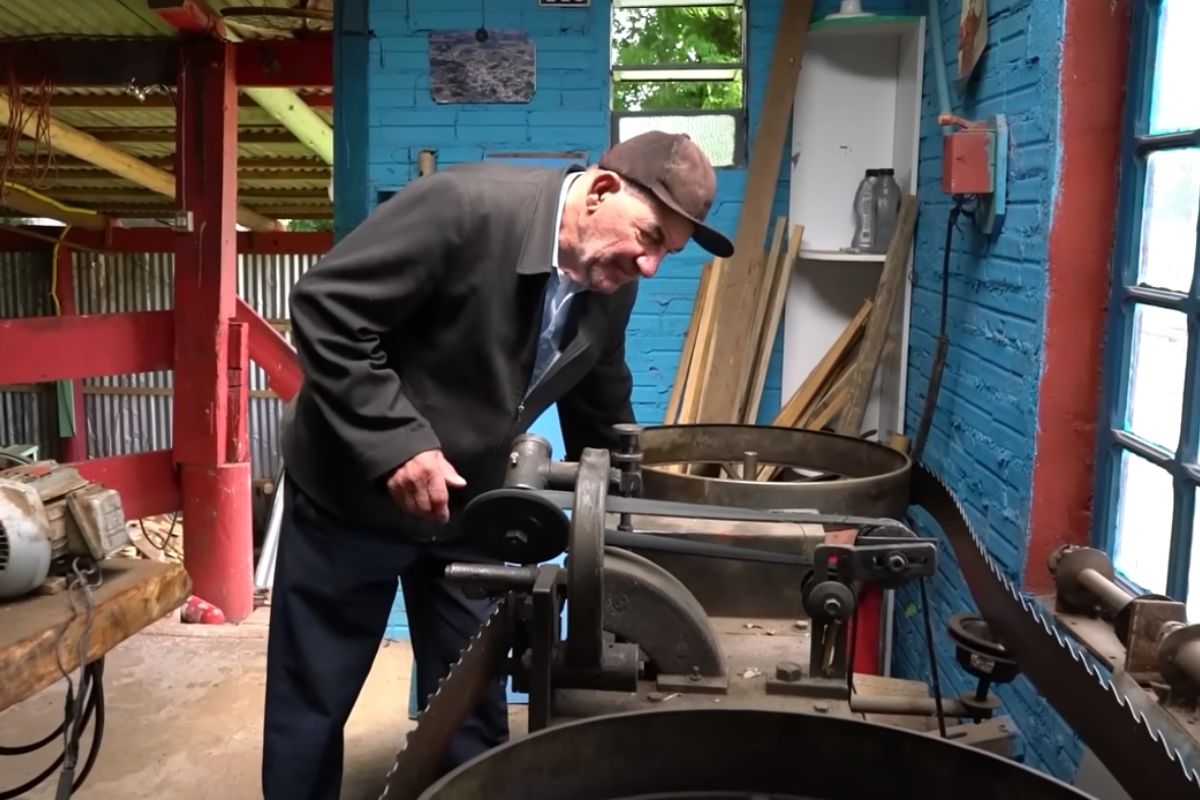
In Ciríaco, a Brazilian City 277 km from Porto Alegre, the Small Hydroelectric Plant from 1944 Sustained About 200 Homes. The Flood of 1968 Took Away the Dam and Wooden Pipes, Left Industries Without Power, and Almost Emptied the City, Until the Bonamigo Family Bought the Power Plant and Rebuilt the Captation.
In the interior of Rio Grande do Sul, the Brazilian city of Ciríaco experienced a breaking point in 1968, when the flood of 1968 tore away the dam and wooden piping from the structure and interrupted the electricity supply. The impact affected services, production, and daily life, and the risk of emptiness began to be treated as a real threat to local survival.
The turning point occurred when the Bonamigo family, recently settled in the municipality and owners of a locksmith business, carpentry, and furniture factory, decided to buy the power plant and take on the responsibility of rebuilding the captation. By resuming generation, the Bonamigo family contained the collapse and restored predictability to a Brazilian city that depended on that system.
The Energy That Took Time to Arrive and the 1944 Power Plant That Sustained the Brazilian City

The history of Ciríaco fits a pattern in the gaucho interior: electricity began to spread in Brazil at the end of the 19th century, but took decades to reach rural areas.
-
Florianópolis will receive a million-dollar BRT that will begin construction in 2026 with nearly 400 million in funding from the federal government and the Inter-American Development Bank, and the map already shows the routes for the exclusive bus corridors.
-
Without a blueprint, without an engineer, and using scrap from the dump, a father spends 15 years building an 18-room castle for his daughter, featuring tram tracks, 13 fireplaces, and over 700 m², which may now be demolished.
-
A megaproject worth R$ 89 billion is advancing in Iraq and promises to change the game in global trade by creating a new corridor between Asia and Europe, reducing traditional routes and repositioning the country as a logistics powerhouse.
-
Goodbye bedside table: floating shelves become a trend in 2026 by freeing up space in the bedroom, improving circulation, bringing visual lightness, and integrating technology without taking up floor space.

In Rio Grande do Sul, many cities only started to have light thanks to small power plants built near rivers and waterfalls, harnessing the force of water to spin turbines and convert motion into energy.
In Ciríaco, 277 km from Porto Alegre, a small hydroelectric plant was described as a structure that moved dreams, work, and ensured the survival of an entire city.
At the top of the waterfall, a power plant was born in 1944 that would change many people’s destinies, and the 1944 power plant became a reference for those who lived in a phase where the Brazilian city depended on the river itself to have light.
The account also preserves the physical dimension of the work: rolled pipes, raised and positioned by workers, in an effort that, by today’s standards, seems unlikely.
The infrastructure that supported the Brazilian city began with arm strength, technique, and persistence.
Flood of 1968: The Blackout That Became a Concrete Threat of Abandonment in Ciríaco

The turning point came with the flood of 1968. In 1968, after a major flood that swept away the old dam and wooden pipes, the owners decided to halt operations.
Without electricity, industries, businesses, and entire families considered leaving, and the future began to be seen as uncertain.
Local memory describes, with direct examples, what is lost when the light goes out: corn, wheat, and rice mills, electric welding, ice cream shops, hospitals, and the feeling that even collective structures would cease to “matter” without basic functionality.
The message was simple: without electricity, there was no way to maintain the economic life of a Brazilian city.
This excerpt is important because it shows how the flood of 1968 was not merely a climatic event. It became an economic and social event, with an immediate risk of exodus, devaluation, and rupture of productive chains.
In a small Brazilian city, a prolonged interruption of electricity alters family and business decisions in the short term, with no room to “wait for improvement.”
The Decision of the Bonamigo Family: Buy the Plant and Rebuild the Captation


At the time of the collapse, the Bonamigo family had just settled in the municipality and maintained a locksmith business, carpentry, and furniture factory.
In the face of uncertainty, the Bonamigo family took the opposite path of abandonment: they decided to buy the power plant and take on the responsibility.
The testimony points out that the instability had been present even before the disaster, with alternating periods with and without electricity, until the flood of 1968 knocked down what remained.
The warning came like a sentence, and doubt arose immediately: leave, with a recently purchased industry and no electricity.
It was a choice between abandoning the Brazilian city or rebuilding the infrastructure with what existed.
The text also records the transaction and the size of the bet.
The seller mentioned is Joaquim Ribeira Neto, and the purchase included not only the power plant, but also land, waterfall, dam, and complete machinery.
There is mention of “12 hectares,” without detailing the unit, but with the idea of an integrated package to make it possible to rebuild the captation and keep the city functioning.
From Wood to Iron: What Changed in Engineering After the 1968 Flood
Reconstructing the captation meant dismantling, refurbishing, and remaking critical parts.
The machines were taken to Estrela, refurbished, and heavy parts gained new life.
A central point was technical and material: the wooden pipes were replaced by iron.
The shift from wood to iron became a dividing line between collapse and recovery in a Brazilian city.
Logistics appears with numbers and locations: a trip to Porto Alegre, at Beira Rio, to pick up 300 kg pipes, along with references to measurements in the account.
Even in oral language, the set shows the transportation and assembly efforts compatible with local infrastructure works, made to feed Ciríaco again without relying solely on the state network at that moment.
The hydraulic circuit is described with parameters that help understand the energy gain: the water came from above and entered the pipe with a drop of 37 m, passing through segments of pipe that totaled 100 m plus 100 m until reaching the dam, where the water closure allowed the turbine to work.
How the 1944 Power Plant Produced Electricity for the Brazilian City
In the mechanical part, the force of the water spun a bronze turbine that activated a 100 horsepower generator.
The energy left at high pressure and was automatically regulated to supply homes, industries, and essential services, without needing a permanent operator.
The electrical section details voltages and regulation: the generator is described as outputting 6000 V, referencing 6600 V, and the energy being regulated to 220.
Transformers, regulators, and protective fuses appear as vital parts of the system.
This is a design that combines power, conversion, and safety to sustain a Brazilian city with variable demand.
There is also the operational detail that brings engineering closer to everyday life: when the city needed more energy, it was simply a matter of changing the “gears” of the system, like a car in first or second gear.
The metaphor shows how Ciríaco depended on mechanical adjustments to match consumption.
Protection was part of the operation.
The account cites fuses associated with lightning protection and the logic that, by “burning” an element, the circuit was turned off without knocking everything out, preventing greater damage and trying to preserve the network.
About 200 Homes, Individual Meters, and Saturdays at 3 PM
The scale of supply appears explicitly: there were years supplying about 200 homes, all with individual meters.
The shutdown had a fixed ritual: on Saturdays, at 3 PM, the energy was interrupted for just one hour for maintenance and oil changes.
For a Brazilian city small in size, this fact is more than a historical curiosity.
It indicates operational discipline, predictability, and the understanding that scheduled maintenance costs less than total failure.
After the flood of 1968, the logic of care and routine helped reduce the risk of another rupture.
1975: State Power Arrives, but Ciríaco Does Not Shut Down Immediately
The plant operated officially until 1975, when state electricity arrived.
Even so, in the interior, the system continued to supply homes, sawmills, and carpentries for another 20 years.
The account cites continuity in rural areas and mentions about 100 homes “down in the interior,” referring to São João Batista.
This extension indicates a gradual transition.
In a Brazilian city with rural dispersion, maintaining electricity in sawmills and carpentries meant sustaining productive chains linked to wood, processing, and workshops, without relying on a single supply line.
It is also during this period that the 1944 power plant ceased to be “the center” of the city but remained as concrete support for the interior.
From the Risk of Abandonment to the Museum: What Remains When Light Becomes Memory
Today, what once generated light has become a museum, and the collection preserves not just the power plant, but also machines and vehicles used by the family in the locksmith and carpentry businesses.
There is mention of trucks used to haul logs and deliver furniture “throughout the region,” with references to the years 73 and 77, as well as a German-origin vehicle described as without a radiator and without water, operating only on oil and air cooling.
The preservation narrative insists on durability: a motor stuck for decades in the brush, without breaking down, and the idea that, if started, it would still work.
In the same vein, there is a planer associated with Invicta, over 100 years old, manufactured when there was almost no electricity in many places, and adaptable for use with gasoline or diesel engines.
It is the materiality of a Brazilian city that learned to function with local solutions and constant maintenance.
The museum includes everyday objects and also old technical risks.
One example is the water heating for showers, described as an external pot heated over a fire, where cold water enters, heats up, and exits to the shower.
The detail is the vent, necessary to avoid the risk of explosion when the water boils.
Even operational communication became a piece of memory: a telephone used to alert about problems with the turbine and lack of oil, triggering logistics so that maintenance could occur on Saturday with the necessary supplies available.
In Ciríaco, the flood of 1968 exposed the dependence of a Brazilian city on a single infrastructure asset: the 1944 power plant.
The risk was not abstract.
It manifested in the fear of seeing industry and commerce stop and in the idea that, without electricity, the Brazilian city would lose value and people.
The collapse was contained when the Bonamigo family bought the power plant, rebuilt the captation, replaced wood with iron, refurbished machines, and ensured recovery.
With the arrival of the state network in 1975, the 1944 power plant lost its central role but did not disappear: it continued to supply the interior for another 20 years and now serves as a museum and physical archive for a Brazilian city that almost fell into darkness. L54-L61
If you are in the region, the most direct action is to visit the preserved structure, record testimonies from those who lived through the flood of 1968, and support the preservation of the collection, because the technical memory of a Brazilian city tends to disappear when it is not documented.
Have you ever heard anyone recount what it was like to live in Ciríaco during the flood of 1968 and the lack of electricity?






-

Uma pessoa reagiu a isso.