





 Português
  Inglês
  Espanhol
  4 min de leitura
  24 comentários


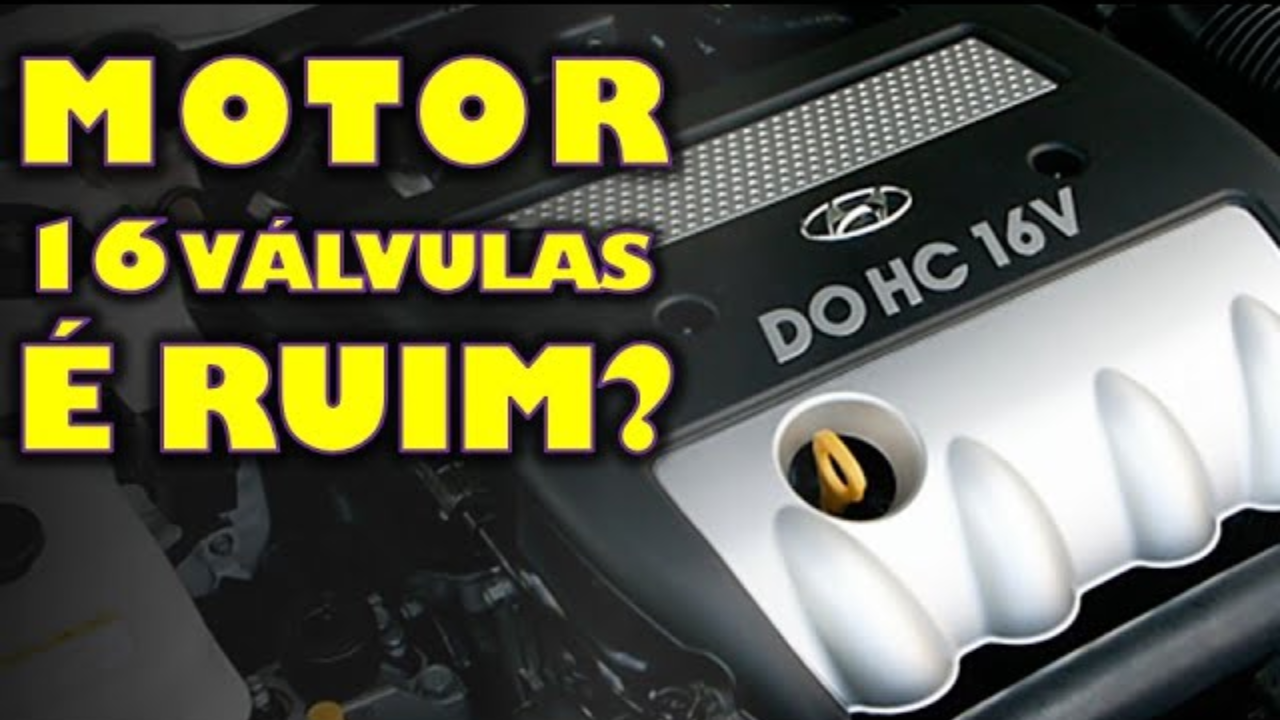

Understand How the 16V Engine, with More Valves Per Cylinder, Conquered the Automotive Market and Cleared Up Myths About Its Durability and Maintenance.
The 16V engine, or multi-valve engine, is one of the most discussed components in the automotive market. Present in most new cars, the 16V engine, which can have three to five valves per cylinder, is widely used in the Brazilian market, especially in compact cars and more sophisticated models. However, some consumers still have concerns about the durability and maintenance costs of the engine, which often leads to doubts about choosing between a 16V engine and other types of engines.
What Makes the 16V Engine Stand Out in the Automotive Market?
The 16V engine has been an innovation in the automotive market since it started being used in Brazilian cars.
In multi-valve engines, the number of valves per cylinder allows for greater combustion efficiency, resulting in better performance and higher fuel economy.
-
OMODA & JAECOO grows in Europe in 2026 with an integrated strategy of sales, innovation, local production, and technological advancement in the United Kingdom, Italy, and Spain.

-
OMODA & JAECOO expands after-sales service in Brazil with competitive maintenance, a 7-year warranty, and high availability of parts for technological SUVs.

-
OMODA & JAECOO appoints Alessandra Souza as executive marketing director in Brazil and accelerates brand expansion with a focus on innovation, networking, and hybrid portfolio.

-
Jaecoo 7 with super hybrid SHS system exceeds 1,200 km of combined range with a 1.5 turbo engine, high-density battery, and intelligent energy management.


The engine, with four valves per cylinder, provides better air and fuel intake, increasing the engine’s performance.
The presence of this type of engine in the market, initially associated with high-performance cars and sports models, has become a common feature in popular vehicles as well.
Why Did the 16V Engine Generate Concerns in the Market?
Despite the advantages of the 16V engine, the transition to multi-valve engines was not immediately accepted by all consumers.
In the early years of its introduction, drivers feared the complexity of maintaining the engine.
The replacement of timing belts and the maintenance costs were higher in cars with a 16V engine, which generated some apprehension in the market.
In addition, many cars with this engine were harder to repair, contributing to the distrust of some drivers.
However, experts claim that these concerns are largely unfounded.
Although the engine required a different type of maintenance in the past, current manufacturing technologies for 16V engines make this type of engine much more reliable and easier to maintain.
The engine market has adapted over time, and nowadays the maintenance costs of the 16V engine are comparable to those of other types of engines.
Advantages and Disadvantages in the Current Market
The 16V engine is currently one of the most popular options in the new car market. The main advantage of the 16V engine, with its additional valves, is the increase in efficiency.
With more valves per cylinder, the engine can perform quicker air and fuel exchanges, enhancing the car’s performance.
Furthermore, the 16V engine is more fuel efficient, which is a significant advantage in times of environmental restrictions and pollutant emissions.
However, the engine is not the only option on the market. There are other types of engines, such as 8-valve engines, which are still preferred by some consumers due to their simplicity and lower maintenance costs.
For those living in rural areas or far from large urban centers, for example, the 8-valve engine may be a more practical choice, as maintenance and repair of the 8-valve engine are usually easier and cheaper.
The Future of Innovation in the Automotive Market
With the popularization of the 16V engine in the market, it is likely that the trend will continue in the near future.
Energy efficiency and engine performance are factors that continue to attract consumers and manufacturers.
The market for cars with this engine tends to grow even more as manufacturers seek to improve fuel economy and meet the increasing demand for more eco-friendly cars.
The engine, with its advanced technologies, will continue to be an attractive option for those seeking a car with good performance and higher efficiency.
The 16V Engine Is Here to Stay in the Automotive Market
In the current market, this engine is one of the most common and reliable options. Although it was viewed with skepticism in the past, the technology behind the 16V engine has evolved considerably.
Cars with a 16V engine are now common across all market segments, from popular models to luxury cars.
Additionally, the maintenance costs of the engine are no longer an obstacle for most drivers.
The trend is that, with the evolution of automotive technologies, the 16V engine will become even more efficient and accessible, solidifying its position as a preferred choice for the car market in the future.










Quanto mais combustível no cilindro o carro não vai consumir mais?
Seu Boris, bom dia….. Apesar de mais potente o 16V em relação ao 8V, isso não aumenta o consumo não?!!!….. abraço a todos.
O que é mais importante não foi citado que é o favorecimento na saída dos gases para dar espaço a mistura em admissão a ser queimada e gerar energia.