





 Português
  Inglês
  Espanhol
  4 min de leitura
  12 comentários


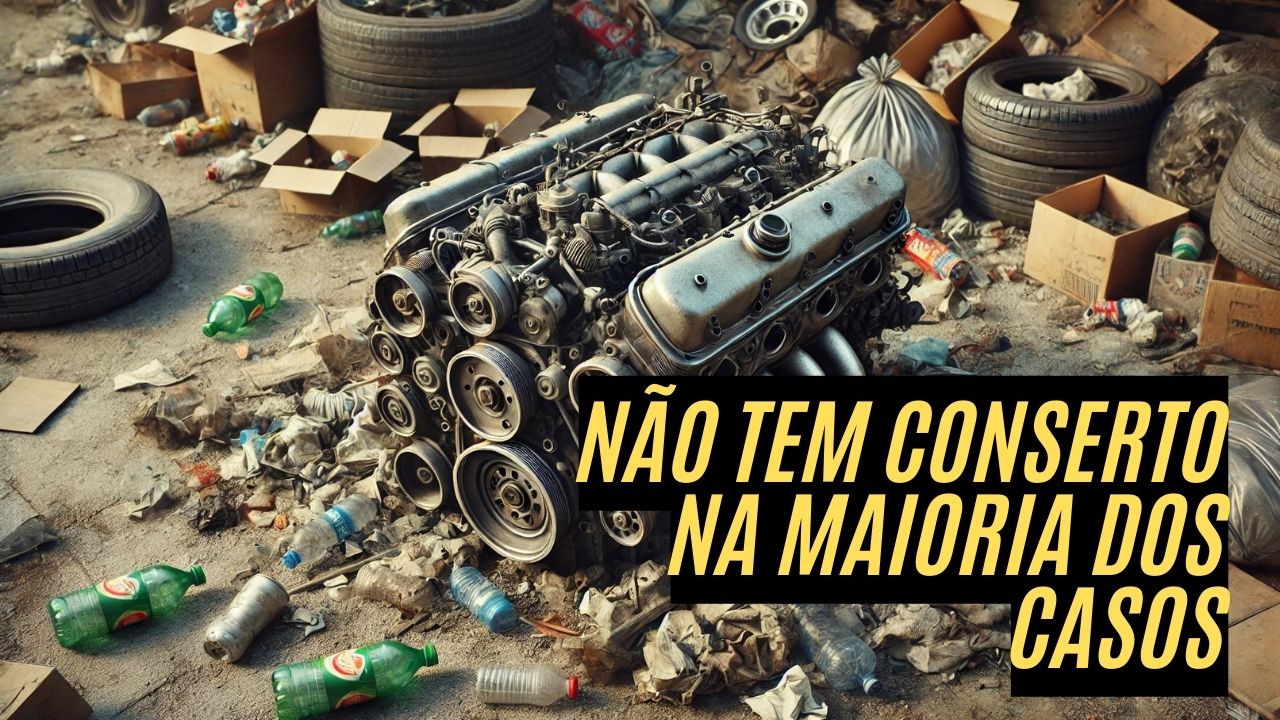

Disposable engines are a topic that has generated intense discussions among automotive enthusiasts and industry experts. Learn how new engines, especially the 3-cylinder turbo engines, can cause serious problems and, in some cases, render repairs unfeasible, leading owners to face high costs or even the need to replace the engine completely.
The innovation in the automotive sector has brought about so-called disposable engines, designed for modern vehicles equipped with advanced technology, such as 3-cylinder turbo engines. At first, these engines offer performance and efficiency, but when they fail, they reveal themselves as true “villains” from a maintenance perspective. These engines often do not accept traditional reconditioning or repairs, which means that if a significant failure occurs, the only viable option may be to replace the entire engine – a rather expensive operation. CPG spoke with Vinícius Hozara, an automotive specialist on the subject.
This reality leads many experts to point to these new engines as a “trap” for consumers. Let’s understand more about the main available models, their advantages and disadvantages, and how to proceed if you have or intend to acquire a car equipped with one of these disposable engines.
What Are Disposable Engines?
Disposable engines are those designed with little to no possibility of repair in case of a failure. In older engines, when problems such as head or cylinder wear arose, it sufficed to resort to reconditioning, a process that widened these parts to improve fit and function. However, modern 3-cylinder engines, especially turbocharged ones, often do not allow for such intervention.
-
OMODA & JAECOO grows in Europe in 2026 with an integrated strategy of sales, innovation, local production, and technological advancement in the United Kingdom, Italy, and Spain.

-
OMODA & JAECOO expands after-sales service in Brazil with competitive maintenance, a 7-year warranty, and high availability of parts for technological SUVs.

-
OMODA & JAECOO appoints Alessandra Souza as executive marketing director in Brazil and accelerates brand expansion with a focus on innovation, networking, and hybrid portfolio.

-
Jaecoo 7 with super hybrid SHS system exceeds 1,200 km of combined range with a 1.5 turbo engine, high-density battery, and intelligent energy management.


This happens because these engines are manufactured with very specific tolerances, designed to operate at the limit of their capacity, both in terms of power and efficiency. Any alteration to the parts can compromise functionality and safety, making repair impractical and, in many cases, financially unfeasible.
Why Are 3-Cylinder Engines Known as Disposable?
3-cylinder engines, whether turbocharged or naturally aspirated, have become popular due to their performance and efficiency. However, their compact structures and the complexity of their components make them more vulnerable to failures. Models like the Hyundai 1.0 Turbo (equipped in cars like the HB20 and Creta), Fiat Firefly 1.0, and Volkswagen TSI 1.0 are some examples of modern engines that do not support invasive interventions.
In some cases, these engines do not have spare parts available for reconditioning, and when there is a possibility, the procedure is discouraged by the manufacturers themselves, who claim that durability and performance will never be the same.
Main 3-Cylinder Engines in the Market
Hyundai Kappa 1.0 Turbo Engine: Equipping models like HB20 and Creta, this engine is known for its efficiency and low vibration. However, it has chronic failures, such as coolant leaks, which can overheat the engine and compromise the head gasket. With no possibility of reconditioning, the repair involves replacing expensive components.
Fiat Firefly 1.0: Present in models like Argo and Mobi, this engine is simple and economical but also presents maintenance challenges. Failures in the timing chain and problems with the PCV valve are common, which can compromise functioning in the medium term and demand high costs for an engine that is often more viable to replace than to repair.
Volkswagen EA211 1.0 TSI Engine: Used in models like Polo and Virtus, the EA211 exhibits good performance and fuel economy, but failures in the water pump and carbonization of the valves are recurring issues. Moreover, the direct injection system is sensitive to low-quality fuels, becoming a headache for owners who do not perform adequate maintenance.
Fiat GSE 1.0 Turbo Engine: Used in models like the Pulse and Fastback, this engine is praised for its performance but operates at its capacity limit, increasing the chances of premature wear. Issues with the oil pump and excessive oil consumption are common, making this engine more suitable for those committed to rigorous maintenance.
Chevrolet CSS Prime 1.0: Present in vehicles like Onix and Tracker, this 1.0 engine features an oil-bathed timing belt that requires periodic replacement with the correct lubricant. Failures in this system can lead to premature wear of the belt, compromising the entire engine and increasing repair costs.
Advantages and Disadvantages of Disposable Engines
Disposable engines are designed to meet environmental and consumption standards, offering efficient performance in small engines. This is achieved with technologies such as turbocharging and direct fuel injection. However, durability is sacrificed, and maintenance costs are high, which generates dissatisfaction among owners, especially regarding turbo 3-cylinder models.
Advantages:
Fuel Efficiency: Compact, low-displacement engines consume less.
Pollutant Reduction: They meet environmental standards, being less polluting.
Satisfactory Performance: They offer power and torque comparable to larger engines.
Disadvantages:


High Repair Costs: The lack of reconditioning possibilities in many models increases costs.
Reduced Durability: They operate at the limit, which accelerates wear.
Sensitivity to Fuel and Maintenance: They require high-quality fuels and rigorous maintenance to avoid failures.
Disposable engines, especially turbo 3-cylinder ones, reflect a market trend towards efficiency, but this can represent a problem for consumers in the long term. The lack of repair possibilities and the need for complete replacement in case of critical failures raise questions about the viability of these engines for those seeking durability and low maintenance costs.
For those who are looking to acquire vehicles with these engines, it is essential to pay attention to the maintenance history and the recommendations of manufacturers, ensuring the best possible performance and avoiding unexpected losses.










O meu tá ótimo. Funciona perfeitamente e não tem nenhum dos problemas que vc falou. Esses que estraga, é porque o dono não sabe usar
NÃO EXISTE ALMOÇO GRÁTIS!! QUEREM eficiência e baixo consumo e ainda redução de custos para as fábricas.
Mas ,daí, o consumidor que se dane! Pior será para aqueles que comprarem essas bombas de segunda mão !! Daqui a poucos anos serão verdadeiras sucatas..
Matéria **** capciosa, bom mesmo é um 8 cilindros 4 litros que tu podes trocar os anéis e as camisas mais de 10 vezes de 2 e dois anos e é esquecer quanto gastou neste tempo todo e declarar ‘como era bom e barato’ o meu v8