





 Portuguese
  English
  Spanish
  3 min of reading
  77 comments


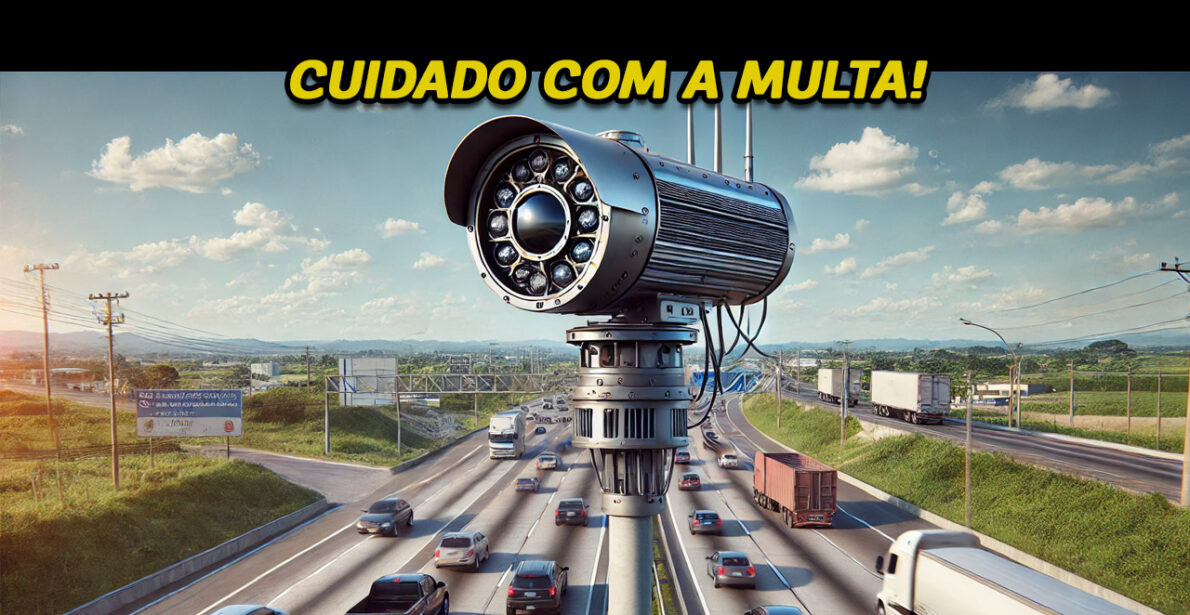

Technology Comes to Revolutionize Traffic Enforcement in Brazil. In addition to monitoring vehicle speed from a distance, these radars are capable of catching a series of other infractions. Drivers must be more alert than ever.
If you are one of the drivers who tends to brake abruptly when spotting a traffic radar, it’s better to rethink that strategy.
A new radar technology promises to put an end to this tactic, catching many Brazilian drivers by surprise.
Already in operation in 24 states, this innovation leaves no room for error and could revolutionize speed enforcement across the country.
-
A 250cc motorcycle that can reach 560 km with a 14-liter tank, features disc brakes on both wheels and is among the most well-known in Brazil.

-
Man finds over 200 rare cars abandoned on a lot and tries to do the impossible in 8 hours with a surprise at the end.

-
An irregular parking case gains attention after a Mercedes Classe A was removed in such a strange way that it even raised doubts about damage to the car.

-
Costing R$ 16,000, the new Yamaha features a 125 cc hybrid engine with electric assistance, delivers 8.3 hp, includes ABS, optimized fuel consumption, Y-Connect connectivity, 25 liters of storage space, and a surprising 4-year warranty in the urban segment.

The Doppler radars, responsible for this change, have the ability to detect infractions from long distances, up to 100 meters, making it ineffective to merely slow down when approaching the radar.
How Do Doppler Radars Work?
Unlike traditional radars, which rely on physical sensors or loops installed in the pavement, Doppler radars use continuous electromagnetic waves.
These waves, when reflecting off moving vehicles, undergo frequency changes that are calculated to accurately determine the speed of the car.
Additionally, this device can monitor multiple traffic lanes at the same time, further enhancing its effectiveness.
More than a Speed Radar: The Expanded Functions of the Doppler Radar
If the ability to measure vehicle speed from a distance already seems impressive, it is worth mentioning that Doppler radars go beyond that.
They are equipped to identify a range of traffic infractions.
Among the main ones are:
- Running a red light
- Using a mobile phone while driving
- Making illegal turns
- Driving against traffic
- Stopping on the pedestrian crossing
This broad enforcement capacity places Doppler radars ahead of previous systems, which were limited to speed monitoring only.
The new technology, according to experts, offers a more comprehensive solution for traffic authorities.
Advantages of Doppler Radars: Efficiency and Simplified Maintenance
Among the advantages offered by these radars, one of the most notable is the absence of physical components installed in the pavement.
This not only facilitates installation and maintenance but also prevents interruptions in traffic flow during these processes.
According to the National Institute of Metrology, Quality and Technology (Inmetro), Doppler radars are certified and undergo regular checks, ensuring precision over time.
Where Are Doppler Radars in Brazil?
Currently, Doppler radars are operating in 24 states in Brazil, monitoring about 1,700 traffic lanes.
In São Paulo, this technology can already be found on busy highways such as Washington Luís (SP-310), Luiz de Queiroz (SP-304), and Comandante João Ribeiro de Barros (SP-225).
These stretches are now under constant surveillance, and any attempt at infractions will be caught in time.
Challenges and Future Outlook
Although the mayor of São Paulo, Ricardo Nunes, has temporarily suspended the installation of new radars in the city, the Doppler devices, due to their efficiency, may become standard in various regions of the country.
The trend is for these radars to continue being installed on different highways, requiring drivers to be even more attentive to traffic rules.
According to industry experts, the accuracy provided by Doppler radars could soon extend to urban areas with heavy vehicle flow, such as São Paulo and Rio de Janeiro.
Furthermore, Doppler technology can be applied to other types of enforcement, such as monitoring vehicles in high-risk zones.
Responsibility on the Road is Key
With the dissemination of this new technology, the advice for Brazilian drivers is clear: it’s no longer enough to just slow down when approaching a radar.
Responsibility and respect for traffic regulations are essential to ensure everyone’s safety and avoid fines.
In the age of Doppler technology, which identifies a range of infractions from a distance, caution behind the wheel is more important than ever.
And now, will Doppler radars be the future of enforcement on all Brazilian roads? Have you encountered any?








País de ****! Fui multado em Vila Velha ES, porque estacionei em vaga marcada na cidade, e não informei ao aplicativo, feito para nos roubar. Infração grave, pode? Não ofereci risco a nenhum pedestre, não atrapalhei o trânsito, nem ocupei duas vagas. O objetivo, creio eu, é proibir os bons motoristas de dirigirem, e assaltá-los na renovação imposta. Em 47 anos dirigindo, não fui multado nem dez vezes, muito pouco para quem pode ter sua carteira apreendida, se passar de 20 pontos. Em Vila Velha, qualquer motorista pode perder sua carteira, se estacionar três vezes na rua, e não comunicar ao aplicativo. Quem não tem habilidade com celular, prepare-se, está perdido!!! Tem que andar de V1 ou Uber, obrigatoriamente, e vender o seu veículo!!!
Brasil sendo Brasil, investimento para arredar em multas sempre são prioridades, já iluminação em via publica , um bom asfalto e segurança, fica para uma outra ocasião .
Estado sendo Estado. Quesito arrecadação é eficiente, já na outra ponta, ineficiente. Normal vida que segue.