





 Portuguese
  English
  Spanish
  5 min of reading
  0 comments


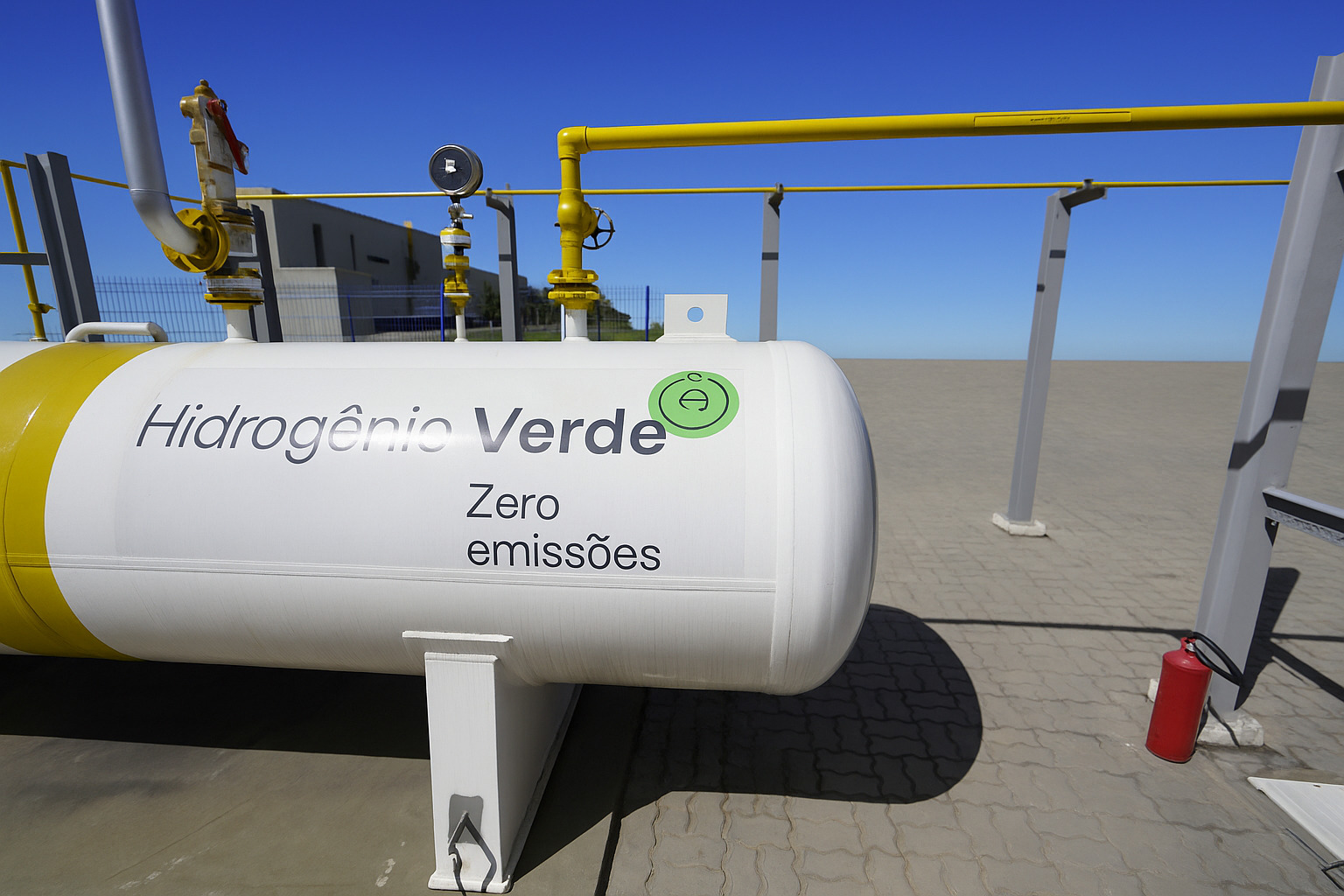
MPF Points Out Serious Irregularities and Requests the Halt of Green Hydrogen Plant in Piauí, Highlighting Environmental Risks and Legal Violations.
The discussion about renewable energies, which has been gaining global momentum, reaches a new level with the rise of green hydrogen. In this context, Brazil is starting to stand out, especially in the Northeast, due to the favorable climatic conditions for solar and wind energy generation.
For this reason, various states have started receiving projects related to this promising technology.
However, despite the optimism, technological advancement does not always align with legal requirements. In 2025, for example, the Federal Public Ministry (MPF) requested the cancellation of environmental licenses and the halt of operations of a green hydrogen plant in Piauí, located in the Export Processing Zone (ZPE) in Parnaíba.
-
Renewable energy advances over protected areas in Brazil, and a survey by the Energy Transition Observatory reveals silent impacts that challenge environmental conservation and pressure sensitive traditional territories.

-
Rio Grande do Sul accelerates energy transition: State invests in renewable technologies and consolidates decarbonization strategies and pathways to attract billions in new industrial investments.

-
With 160,000 m² of collectors, an area larger than 20 football fields, Silkeborg, in Denmark, hosts a solar thermal plant that heats 19,500 homes and could become the largest solar heating plant in the world.

-
A study reveals the expansion of renewable energy procurement in Brazil and shows how companies are taking advantage of opportunities to reduce expenses, ensure energy efficiency, and strengthen strategic environmental commitments.


According to the MPF, the project presents serious flaws in the licensing process. Therefore, the agency’s actions aim not only to correct these irregularities but also to ensure that the energy transition occurs responsibly.
Thus, the case raises an important question: how to balance innovation, legality, and sustainability?
Moreover, this situation highlights that the accelerated growth of clean technologies must be accompanied by clear and effective public policies. Otherwise, promising projects can turn into sources of environmental and social conflicts.
Green Hydrogen in Brazil: Promises and Challenges
The green hydrogen, which results from water electrolysis using clean electricity, emerges as a viable and strategic alternative to reduce dependence on fossil fuels.
As a result, its usage has grown mainly in countries like Germany, Japan, and Australia, where investments have already surpassed billions of dollars.
In Brazil, on the other hand, natural conditions favor large-scale production. Furthermore, the international demand for clean energy sources places the country in a privileged position.
States such as Piauí, Ceará, and Rio Grande do Norte are already emerging as promising hubs in this market.
However, although the potential is enormous, the country still needs to overcome significant obstacles. Among them, the lack of specific regulatory frameworks, the need for technical training, and the absence of adequate infrastructure are highlighted.
Consequently, these factors make it difficult to fully leverage the potential of green hydrogen.
Another relevant challenge is related to the need for long-term financing for these projects. Often, legal or environmental instability can deter interested investors, limiting sector development.
In this context, it becomes essential to align technological development with legal rigor and social participation. Therefore, initiatives like the Parnaíba plant need to follow clear rules from conception to execution, avoiding conflicts like the current one.
Environmental Irregularities Compromise the Project
According to the MPF, various irregularities jeopardize the operation of the plant. Firstly, the exclusion of the Environmental Protection Area (APA) Delta do Parnaíba from the Environmental Impact Study (EIA) prevented ICMBio’s involvement, which is responsible for managing these sensitive areas.
Additionally, the MPF denounced the lack of prior, free, and informed consultation with traditional communities in the region. This step, mandatory by law, ensures that affected peoples can voice their opinions and prepare for changes brought about by the projects.
Therefore, its omission compromises the project’s legitimacy.
Another point raised was the fragmentation of the environmental licensing, a practice that breaks the project into smaller stages to circumvent legal requirements. This, in turn, harms the integrated analysis of impacts.
Moreover, the company has not even requested permission to use the waters of the Rio Parnaíba, which is a federal asset.
Consequently, the MPF concluded that the flaws render the continuation of the project as it currently stands unfeasible. Thus, the halt of the plant becomes necessary until legal requirements are fully met.
This decision emphasizes the importance of adhering to environmental protocols, not only to preserve nature but also to ensure legal security for entrepreneurs and peace for local communities.
Halt of Green Hydrogen Plant: Public Hearing Skipped Deadlines and Transparency
In addition to the aforementioned flaws, the MPF pointed out issues in conducting the public hearing. According to the agency, the Secretariat of the Environment called the event with deadlines shorter than the legal minimum.
As an example, the invitation to ICMBio was sent on the holiday of April 21, and the hearing took place just a few hours after the MPF’s official summons.
In addition, the absence of publication of the notice in the Official State Gazette compromised the widespread dissemination of the hearing, which hindered popular and institutional participation.
For this reason, the MPF argues that the process violated the principle of transparency, as stipulated in environmental legislation.
Therefore, based on the succession of failures, the agency requested the immediate suspension of environmental licenses, accompanied by the halt of the green hydrogen plant, under the penalty of a daily fine of R$ 1 million.
The intention, according to the MPF, is not to prevent technological advancement, but to ensure that it occurs within legal limits.
Government Defends Itself, but Situation Remains Unresolved
In response to the action, the Piauí government claimed that the entire licensing process followed legal parameters.
According to the Secretariat of the Environment and Water Resources (Semarh), the state will provide all clarifications requested by the MPF within the deadlines set by the Judiciary.
Still, the MPF recommended that, in the case of new licensing, Ibama take over the process. This way, the new procedure would ensure greater oversight and participation from agencies like ICMBio, in addition to securing the involvement of affected local communities.
Meanwhile, the halt of the green hydrogen plant in Parnaíba remains a concrete possibility.
The case, therefore, becomes a national reference on how renewable energy projects must respect the environment and social rights.
In this sense, the episode highlights the importance of legality and transparency to ensure the viability of sustainable ventures in the country.
It is worth noting that the pressure from civil society and the role of justice are fundamental to ensure that ventures comply with regulations and do not harm the environment or local populations.
Sustainable Development Requires More Than Innovation
Although the energy transition represents an urgent need, it cannot occur without planning, responsibility, and commitment to legislation.
Thus, the case of the halt of the green hydrogen plant in Piauí reinforces the essential role of oversight and environmental justice in Brazil.
Projects that ignore legal requirements risk losing social and institutional support.
For this reason, respecting the legislation and including local actors in decision-making processes must be a priority in any initiative in the energy sector.
In this landscape, Brazil can become a global leader in clean energy production.
However, to achieve this goal, it is necessary to adopt transparent, ethical, and legally solid practices.
The episode in Piauí, despite the flaws, opens space to improve processes and establish new foundations for the responsible growth of green hydrogen in the country.
Thus, the lessons learned from this case can serve for the country to develop a stronger and more inclusive energy policy.











Seja o primeiro a reagir!