





 Portuguese
  English
  Spanish
 4 min of reading
  41 comments


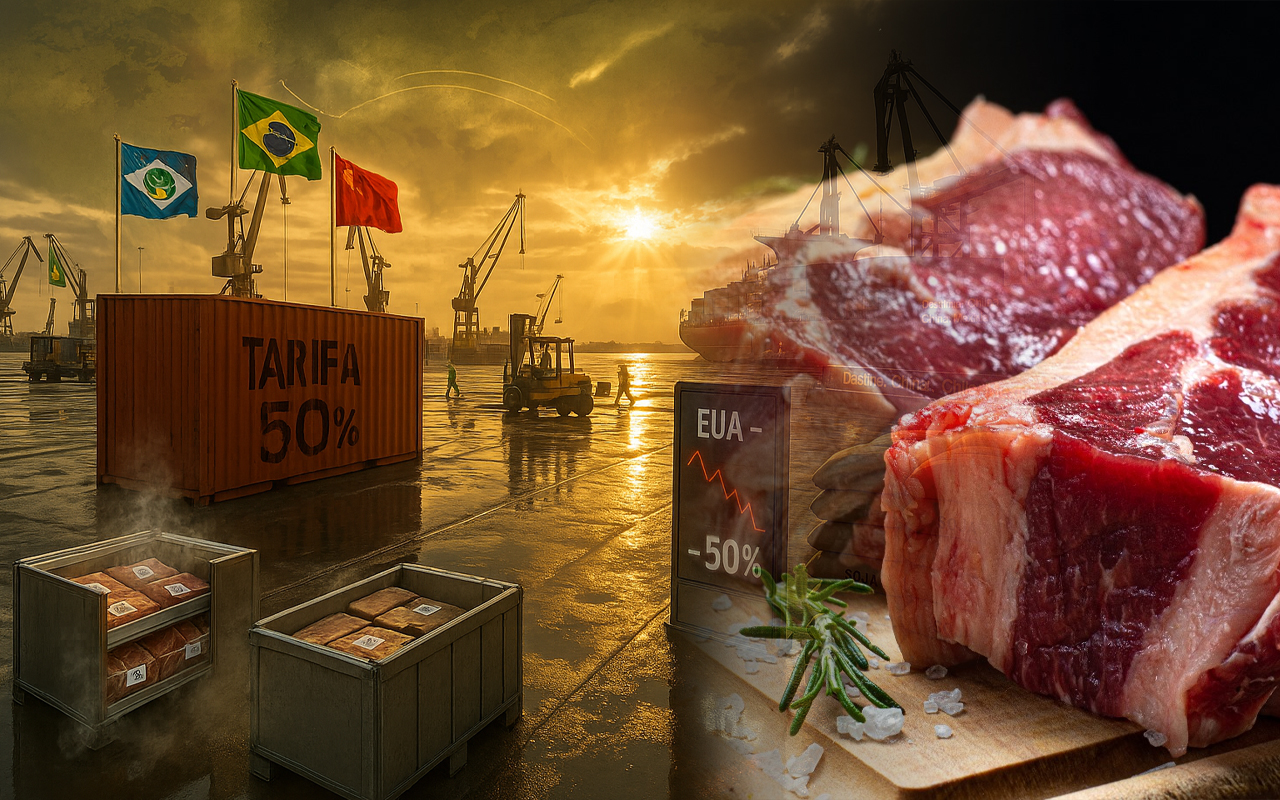


With Growing Surplus and Strong Asian Demand, Mato Grosso do Sul Increased Foreign Sales Even After the US Tariff. Beef, Cellulose, and Soy Lead the Agenda, While Logistics Along the Bioceanic Route Gains Traction.
The Foreign Trade Situation Report for August shows that Mato Grosso do Sul totaled US$ 7.24 billion in exports from January to August 2025, an increase of 3.26% compared to the previous year. The trade balance surplus reached US$ 5.53 billion, an increase of 8.4% compared to 2024, reflecting growth in sales and a decline in foreign purchases. During the same period, imports totaled US$ 1.66 billion, a decrease of 10.79%. The data is official from Semadesc.
The export agenda is anchored by cellulose, soybeans, and beef, with beef gaining ground throughout the year. Analysts from the state government believe that the combination of Asian demand, exchange rates, and diversification of destinations helped to sustain performance even amid trade policy shocks.
In the monthly analysis for August, China consolidated its leadership in purchasing Mato Grosso do Sul beef, followed by Chile and Mexico, while the United States lost market share after the tariff.
-
The government requests the Federal Revenue Service for a new system to automate the income tax declaration, reducing errors, time, and bureaucracy for millions of Brazilians.

-
Pix in installments, international Pix, and contactless payment without internet: the Central Bank revealed the new features coming to the tool that is already used by almost every adult in Brazil.

-
Mercado Livre has just started selling medications with delivery in up to three hours to your door, and this move could completely change the way Brazilians buy medicines on a daily basis.

-
In Dubai, rising tensions from the war in the Middle East are causing super-rich individuals to leave the Gulf and direct their fortunes to a new financial refuge in Asia.


Exports from Mato Grosso do Sul 2025, Surplus, Agenda, and Decline in Imports
Year-to-date, exports of US$ 7.24 billion and an increase of 3.26% indicate vitality in the state’s external sector. This performance has been sufficient to elevate the surplus to US$ 5.53 billion, even in a global environment of uncertainty.
On the imports side, the contraction to US$ 1.66 billion (–10.79%) was influenced by lower acquisitions of inputs, with natural gas still as the main item, along with copper and machinery and equipment related to cellulose and paper. This composition helps explain why the surplus grew more than exports.
At the sales level, cellulose maintains the largest share, followed by soybeans; meanwhile, fresh beef has climbed to the third position, reinforcing diversification.
MS Beef Grows 43.7%, China, Chile, and Mexico Drive Demand
Beef is the standout of 2025: year-to-date until August, the sector registered an increase of 43.7% compared to 2024, reaching 15.07% of the export agenda. This trend combines sanitary certification, greater industrial scale, and efficient redirection to more dynamic markets.
In August, China, one of the main economies part of BRICS, accounted for US$ 91 million in purchases of MS beef, with Chile (US$ 16.4 million) and Mexico (US$ 11.8 million) next in line. The recomposition of shipments to Asia and Latin America compensated for some of the loss of traction to the USA following the initiation of the 50% tariff.
The strategy of the meat packing industries has been to diversify destinations and adjust the cut mix according to each market’s appetite, preserving margins in a cost-pressured environment. This agility explains why the annual growth has been maintained despite the tariff shock.
50% Tariff from the USA: What Changed and How the Sector Reacted
The American measure was announced on July 9 and officialized on July 30, with effective from August 6, 2025. In practice, there was an addition of 40 percentage points to a rate of 10%, totaling 50% for most Brazilian products, although a list of exceptions was published. The action was formalized by executive order from the White House and detailed in technical notes and sector analyses.
The immediate effect in MS appeared in the August data: the state’s exports to the United States dropped 61% year-on-year, with beef decreasing by about 46% and cellulose 92%, according to local balances and Semadesc itself. Nonetheless, year-to-date, the redirection to Asia and Latin America preserved the positive trend.
At the federal level, negotiations and assessments regarding trade disputes are ongoing, while companies monitor tariff exceptions and potential adjustments in the decree’s scope. For the producer and exporter, the keyword in the short term is mitigation: diversifying markets, optimizing logistics, and keeping track of exchange rates.
Destinations and Logistics: China Leads, Ports Concentrate Exports, and Bioceanic Route Advances
Year-to-date in 2025, China absorbed about 46.7% of state exports, reinforcing its position as the main trading partner. Following are the United States, Italy, and Argentina, with emerging markets like Algeria growing. The mosaic of destinations has increased the resilience of MS’s export agenda this year.
In terms of logistics, Santos (SP) and Paranaguá (PR) concentrate most of the outflow, followed by São Francisco do Sul (SC). These corridors remain strategic for cellulose, soybeans, and proteins, with efficiency gains in specialized terminals.
In the Bioceanic Route corridor, the customs terminals of Corumbá and Porto Murtinho increased their participation in 2025. The logistical advancement is complemented by the work on the Bioceanic Route International Bridge, which reached 75% completion in July 2025 and is expected to be delivered in the second half of 2026, shortening distances to the Pacific and opening alternatives for markets in Asia.
What do you think? Will the 50% tariff from the USA accelerate market diversification and strengthen the Bioceanic Route, or will it tend to increase costs and disorganize MS exports in the coming months? Leave your opinion in the comments.









Quem prejudicou o país foi um BANANINHA.L, mas quem abriu ampliou o mercado de exportação para o Brasil foi o Lula. Isso a matéria não fala, ela trata o Mato Grosso do Sul como se fosse um país independente.
**** ****
Atrapalhando o nosso agro
PQP, é muita gente incapaz comentando, são **** igual a publicação, o tarifaço começou em agosto e o período analisado foi de janeiro a agosto, ou seja, o tarifaço praticamente não teve incidência nesse resultado, basta uns neurônios a mais na análise 🤦🏻♂️. Vamos ver o desempenho de agosto a dezembro.