





 Portuguese
  English
  Spanish
  4 min of reading
  0 comments


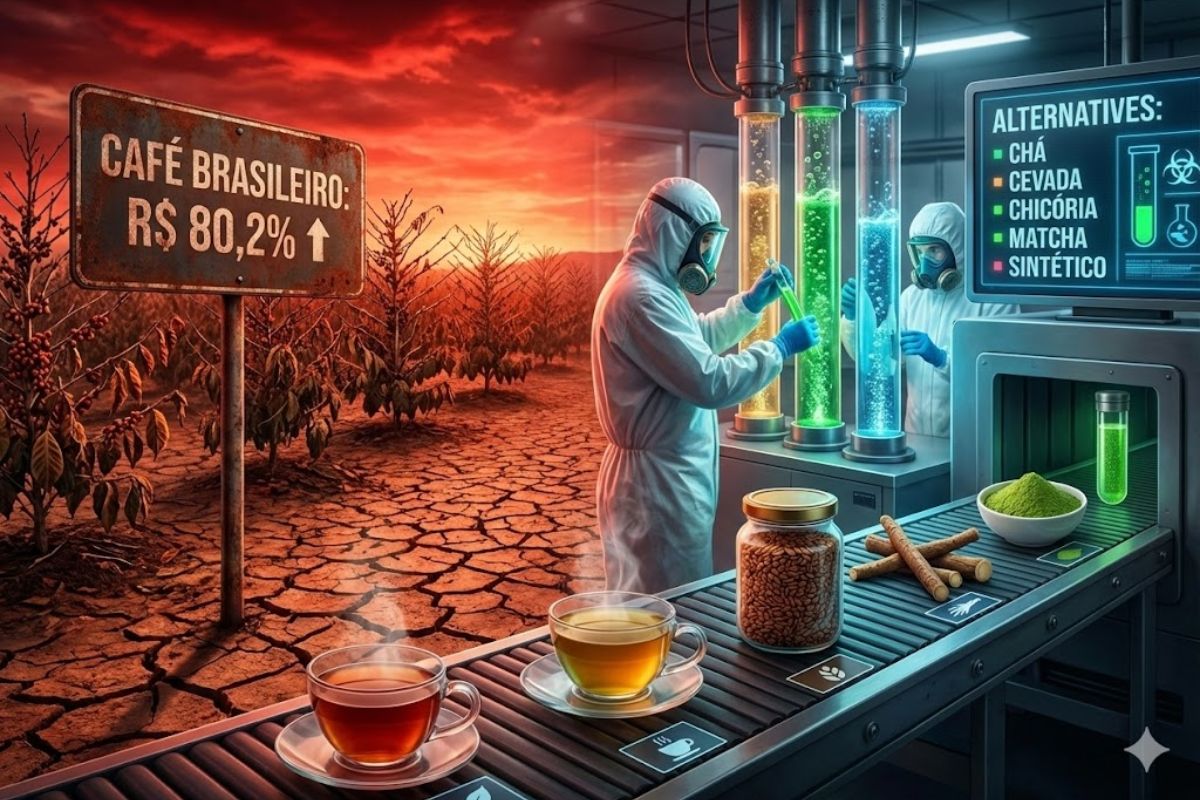
With Droughts, Frosts, and Heat Waves Hitting Crops in Minas Gerais, Espírito Santo, and São Paulo, Brazilian Coffee Becomes More Expensive, Rising 80.2% in 12 Months and Making Room for Tea, Barley, Chicory, Matcha, and Even Research on Synthetic Beverages That Try to Imitate the Flavor of Roasted Beans.
Ground coffee has accumulated an increase of 80.2% in 12 months in Brazil, and the impact is already being felt in the everyday Brazilian coffee. With wallets under pressure and the weather becoming increasingly extreme, millions are rethinking the traditional little coffee at the breakfast table.
On the farms in Minas Gerais, Espírito Santo, and São Paulo, producers are facing severe droughts, frost, heat waves, and irregular rains that reduce productivity, raise harvest costs, and alter the sensory profile of the bean. The combination of unpredictable weather and rising costs threatens future supply and the quality of the coffee served in homes and bakeries.
Extreme Weather Changes the Routine of Brazilian Coffee
What used to be a relatively predictable cycle of rain and cold has become a succession of extreme events. In many regions, flowering is hindered by water shortages; in others, off-season frost burns entire plants. Each crop becomes a gamble for the Brazilian coffee producer.
-
Engineer creates reforestation method that transforms small plots into dense forests in a few years using local biomass and can reduce environmental recovery costs.

-
Alone, the producer applies 7,400 hectares with the T100 drone in an optimized structure, replaces the generator with a silent battery, and demonstrates how technology reduces costs, increases productivity, and even challenges the uniport in the field.

-
China banned the export of 22 tons of meat from Argentina.

-
JBS, founded by the Batista brothers, continues to conquer the world: entrepreneurs built a ‘factory in the desert’ creating 3,000 jobs.

With less beans available and higher costs to keep the crops healthy, prices soar on supermarket shelves.
Families that used to buy larger packages are now opting for smaller ones, reducing their daily amount of grounds or reserving Brazilian coffee only for occasions considered special.
Alternatives Emerge in the Brazilian Cup
In light of the 80.2% increase in the price of ground coffee over 12 months, many people have started to experiment with substitutes. Black tea, green tea, roasted barley, chicory root, and matcha are emerging as alternatives to maintain the habit of a warm drink but with less impact on the budget.
Tea, in its black and green versions, offers different levels of caffeine and a ritual similar to that of afternoon coffee.
Roasted barley, traditional in some families, is gaining shelf space with its mild flavor and lack of caffeine. Chicory root attracts those looking for something closer to the taste of coffee, but without the caffeine.
Matcha, the powdered version of green tea, is becoming part of the routine for those seeking a more gradual energy boost. In the form of a latte, mixed with milk or plant-based beverages, it is taking the place of morning Brazilian coffee in cafés, offices, and even at home.
How Each Drink Tries to Take the Place of Coffee
None of these alternatives exactly replicate the ritual of freshly brewed Brazilian coffee, but they all try to carve out a piece of that emotional space.
Tea comes close in temperature and comfort, roasted barley evokes the toasted aroma, and chicory provides a bitterness reminiscent of the bean.
Consumers are creating a more varied liquid menu throughout the day: tea in the morning, roasted barley after lunch, chicory at night.
In many homes, the package of Brazilian coffee remains in the pantry, but is used more sparingly, while the new beverages take on daily consumption.
Research Is Rushing to Create Synthetic Coffee
While the fields suffer from the weather, food laboratories are working on synthetic beverages that promise to mimic the flavor and aroma of coffee, without relying on the plant.
The idea is to reproduce, through industrial processes and research, the main compounds responsible for the taste of roasted beans.
These experiments are still future tests, but they show that the industry is already preparing for a scenario where Brazilian coffee might become too expensive or unstable to meet demand alone. If successful, consumers may choose between traditional beans and synthetic versions with customized flavor profiles.
The Future of Brazilian Coffee on the Country’s Table
Producers, roasters, and researchers are racing against time to adapt Brazilian coffee to the new climatic conditions, adopting more efficient water management, shading, and more resistant varieties.
At the same time, bars, bakeries, and cafés are expanding their menus of hot beverages to maintain foot traffic.
The result is a transition phase: Brazilian coffee remains beloved and symbolic, but now shares the cup with tea, roasted barley, chicory root, matcha, and possibly soon, synthetic beverages. The decisions on what stays or goes from the routine are made by the wallet, the palate, and the farm’s ability to keep producing.
Would you be willing to swap some of your daily Brazilian coffee for these alternatives if the price keeps rising?








Seja o primeiro a reagir!