





 Portuguese
  English
  Spanish
  6 min of reading
  0 comments


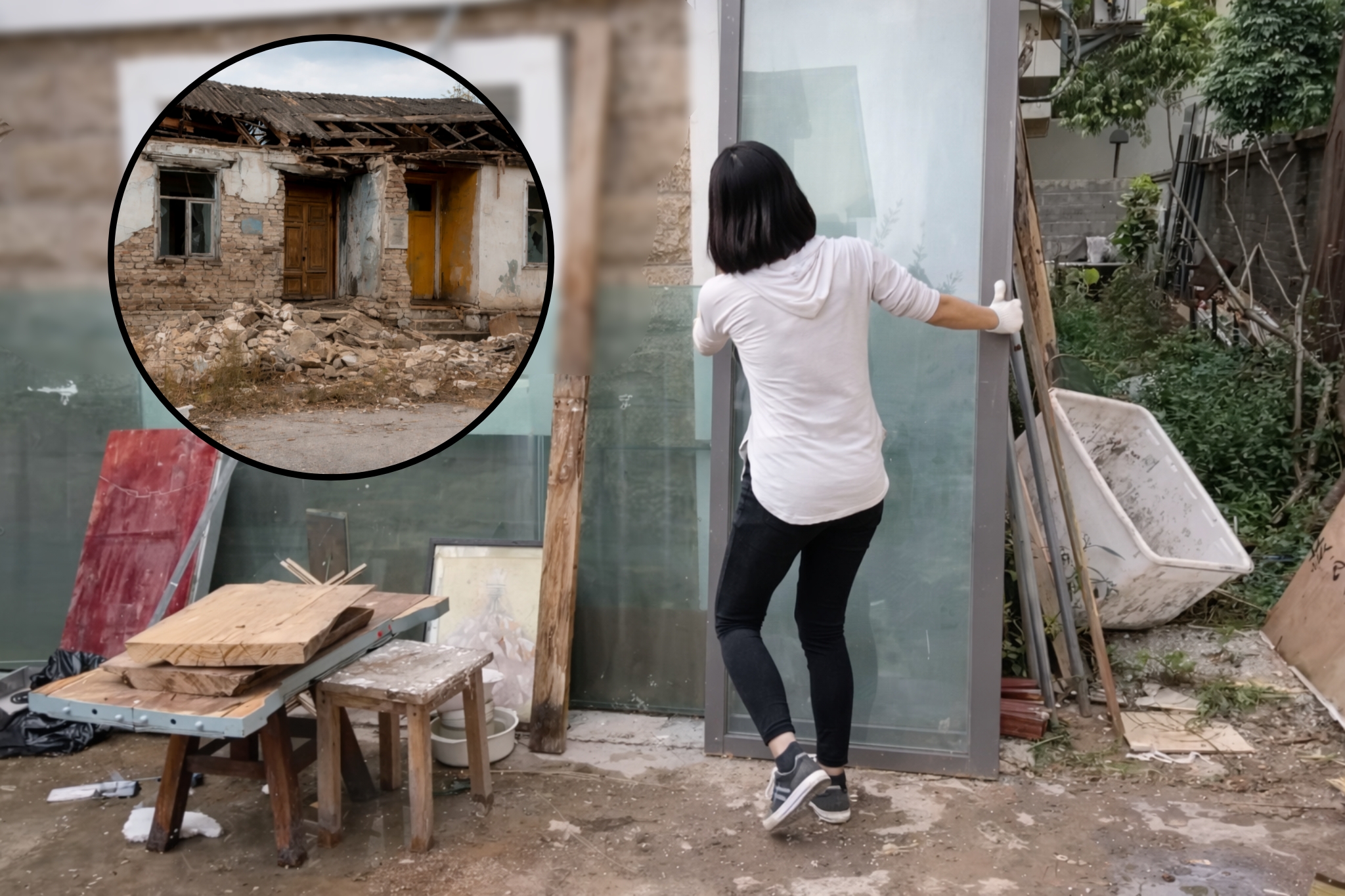
A Woman Faces An Old House Filled With Debris And Dust, Works Alone In Stages And Delivers A Renovation That Changes The Yard, Countertop And Terrace Without Tricks
The story begins the way many would give up: a woman, with an old house in her hands, full of debris and dirt, decides to undertake the renovation alone and does not back down. The first scene is blocked by tires, boards, buckets, and scattered metal parts. The end appears clean, organized, and ready for use, with a continuous countertop, double sink, brick on the wall, and a bright terrace with seating and planters.
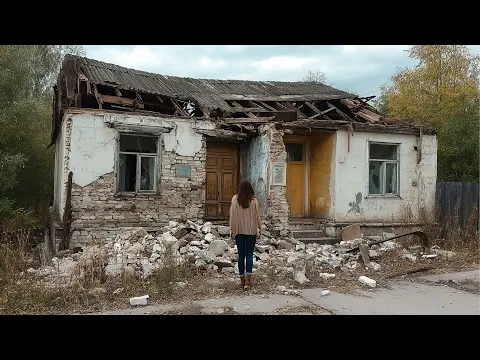

She does not try to solve everything at once. She attacks in parts, clears space, breaks down what hinders progress, restores the floor, and only then assembles the fixed areas. The work shows repetition, weight, dust, fine adjustments, and that construction routine that requires attention to detail.
What draws attention is the practical effect. The house stops functioning as a storage place and starts operating as a space for real use, with a work surface, freer circulation, and an exterior that seems designed to last. And this affects those looking from outside, because the change is visible.
-
Friends have been building a small “town” for 30 years to grow old together, with compact houses, a common area, nature surrounding it, and a collective life project designed for friendship, coexistence, and simplicity.

-
This small town in Germany created its own currency 24 years ago, today it circulates millions per year, is accepted in over 300 stores, and the German government allowed all of this to happen under one condition.

-
Curitiba is shrinking and is expected to lose 97,000 residents by 2050, while inland cities in Paraná such as Sarandi, Araucária, and Toledo are experiencing accelerated growth that is changing the entire state’s map.

-
Tourists were poisoned on Everest in a million-dollar fraud scheme involving helicopters that diverted over $19 million and shocked international authorities.


Woman Renovates An Old House Alone And Starts With The Cleaning That No One Wants To Do
The first turn comes before any “finishing.” The yard seems occupied by everything at once: tires, boards, pipes, containers, and metal parts leaned against the walls and near the fences. There’s not a clean area left to set down tools.
She separates what is large from what is small, pushes long pieces to one side, and concentrates small items in boxes and buckets. Her body goes back and forth, the rhythm repeats, and the space gradually opens up, without shortcuts.
The result appears quickly. The yard ceases to be a pile and transforms into an organized work site, with more exposed ground and more visible edges. The renovation gains traction, because now it’s possible to measure, set down, cut, and plan the next step.
A detail signals the method: cans, buckets, and hardware remain grouped near the walls. It may not look pretty, but it works, and the house starts to follow a logic.
When The Renovation Gets Tight, The Woman Breaks Concrete In The House And Creates Space To Level
The heavy phase appears on the floor. An electric impact tool enters the concrete and opens an irregular area. Fragments, dust, and that broken texture arise that leaves no one pretending the job is light.
She delineates sections, repositions her body, and maintains control of the point of contact. The electric cord follows the movement. Nearby, laid bricks act as a border, helping to guide the cut and hold the area.
The consequence changes the game. The surface ceases to be continuous, intervention zones appear, and the floor is ready to receive restoration. What previously blocked now becomes an open space to correct level and prepare the base.
The contrast shows the progress: on one side, concrete still intact. On the other, freshly broken ground, loose gravel, and damp spots that need partial cleaning before continuing.
The Outside Of The House Is Solved With Stone, Tiles, And Firmer Joints
With the floor cleared, the exterior begins to gain shape. Irregular tiles with open joints appear. Alongside, heaps of rolled stones and hollow blocks stacked, ready to be included in the composition.
She spreads material between the tiles, uses a shovel to pull, distributes by hand, and corrects unevenness in short stretches. She does not try to “close” everything in one go. She goes back, tightens, adjusts, repeats, until the surface responds better to her pace.
The effect appears in use. The path becomes clearer and more stable to walk on, with less open joints and cleaner edges. The outside loses its makeshift air and begins to show order.
A detail helps to understand the strategy: stones are separated at specific points, serving as reserves for fine corrections. It’s work done with constant adjustments, not just one layer thrown on top.
The House Changes Level When The Woman Makes The Concrete Countertop And Defines Where Everything Goes

Inside, the transformation concentrates on a long countertop. It occupies the main wall and is supported by a masonry and wood base. The gray mass remains continuous, but still with areas under adjustment, not hiding what is under construction.
She uses wooden forms to hold the concrete, applying it with a trowel, and corrects the surface in short movements. Large cuts already emerge clearly marked, designed to fit the right modules, such as the sink and cooking area.
Thus, a robust and continuous support surface is born. Instead of loose furniture, the old house gains a workstation that organizes flow, defining where to wash, prepare, and set down.
The detail that shows technical control is the transition between what is already smoothed and what is still rough. The rectangular cuts are clear and show that the fitting dictates the finish.
Woman Finishes The Renovation Alone With Stainless Steel, Brick, Slats, And Maintenance That No One Shows
The final stage gives the space a look ready for routine. The double stainless steel sink is embedded in the countertop. The black faucet is already installed. On the wall, therefore, the brick-type coating enters and changes the visual without exaggeration.
She fits the bowl into the cutout, installs a black cooking module, and organizes the top with shelves and supports. A panel of wooden slats holds hanging utensils, such as ladles and spatulas, freeing up workspace.
The result is practicality. The countertop stops being just structure and starts functioning as a complete area, with fixed points for washing, preparing, and storing. Everything becomes accessible, without relying on a drawer for every little thing.
And there’s a scene that few include: cleaning a metal filter with gloves and a basin. The renovation, therefore, does not end when assembled, it ends when it can be maintained without accumulation.
The Old House Gains A Bright Terrace And The Woman, Alone, Assembles Pallets, Planters, And Corners Ready For Use
Up top, the upper exterior appears more open. The smooth floor and metal guardrail make the space bright and easy to navigate. Instead of empty, it gains function.
She assembles a bench with pallets, places light cushions, and uses structured sides to secure the seat. Linear planters take place along the edges. Pots and beds occupy corners with cacti, white stones, and plants of different heights.
The change appears at once. The terrace thus becomes an area for rest and support, with free circulation and well-defined usage points. The light paint highlights the plants and the wooden furniture without cluttering the floor.
Niches and side shelves complete the set. The floor remains clear, cleaning becomes simpler, and the house gains a space that seems ready for everyday life.
In the end, what surprises is not an isolated detail, but the entire sequence: she removes volume, breaks concrete, restores with stone, assembles a concrete countertop, and finishes with stainless steel, wood, and brick, always controlling edge and fit. The neighborhood notices because the house changes for real, in use and in organization, and that cannot be hidden behind discourse.
If This Renovation Caught Your Curiosity, Leave A Comment About What Stood Out Most To You And Share It With Someone Who Always Says “A House Like This Can’t Be Done.”










-

-

-

-

-

25 pessoas reagiram a isso.