





 Portuguese
  English
  Spanish
  4 min of reading
  96 comments


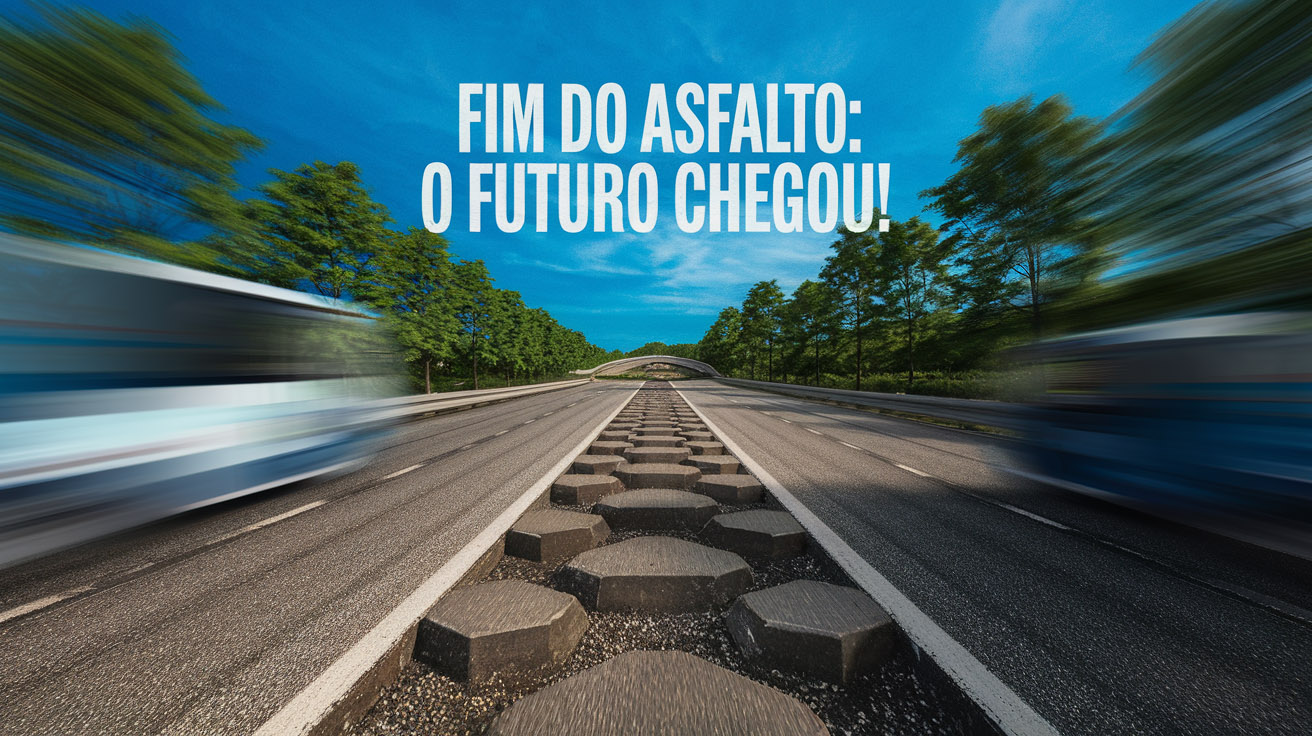


Asphalt May Be On Its Way Out! A New Concrete Technology Promises Double The Durability And Is Already Being Considered In Joinville. Find Out How This Change Could Transform The Infrastructure Of Brazilian Highways And The Challenges That Still Need To Be Overcome For This Revolution To Gain Strength In The Country.
A silent revolution is taking shape on Brazilian highways, and you may not have even noticed.
For decades, asphalt has dominated the country’s roads, but this hegemony may be coming to an end.
An alternative that promises greater durability and lower maintenance costs is gaining ground: concrete.
-
50 viaducts, 4 tunnels, 28 bridges, and 40 kilometers of bike paths: BR-262 in Espírito Santo will receive 8.6 billion reais for the largest engineering project in the state’s history, inspired by the Immigrant Highway in São Paulo.

-
Brazil produces too much clean energy and doesn’t know what to do with it: over 20% of solar and wind capacity was wasted in 2025 while investors flee and 509 renewable generation projects were abandoned in the last year.

-
Piauí will produce a new fuel that replaces diesel without needing to change anything in the truck’s engine and reduces pollutant gas emissions by half: truck drivers from all over the Northeast are already celebrating the news that will arrive later this decade.

-
New CCR concrete paving technology promises roads up to 3x more durable, less maintenance, and cost reduction in Brazil.
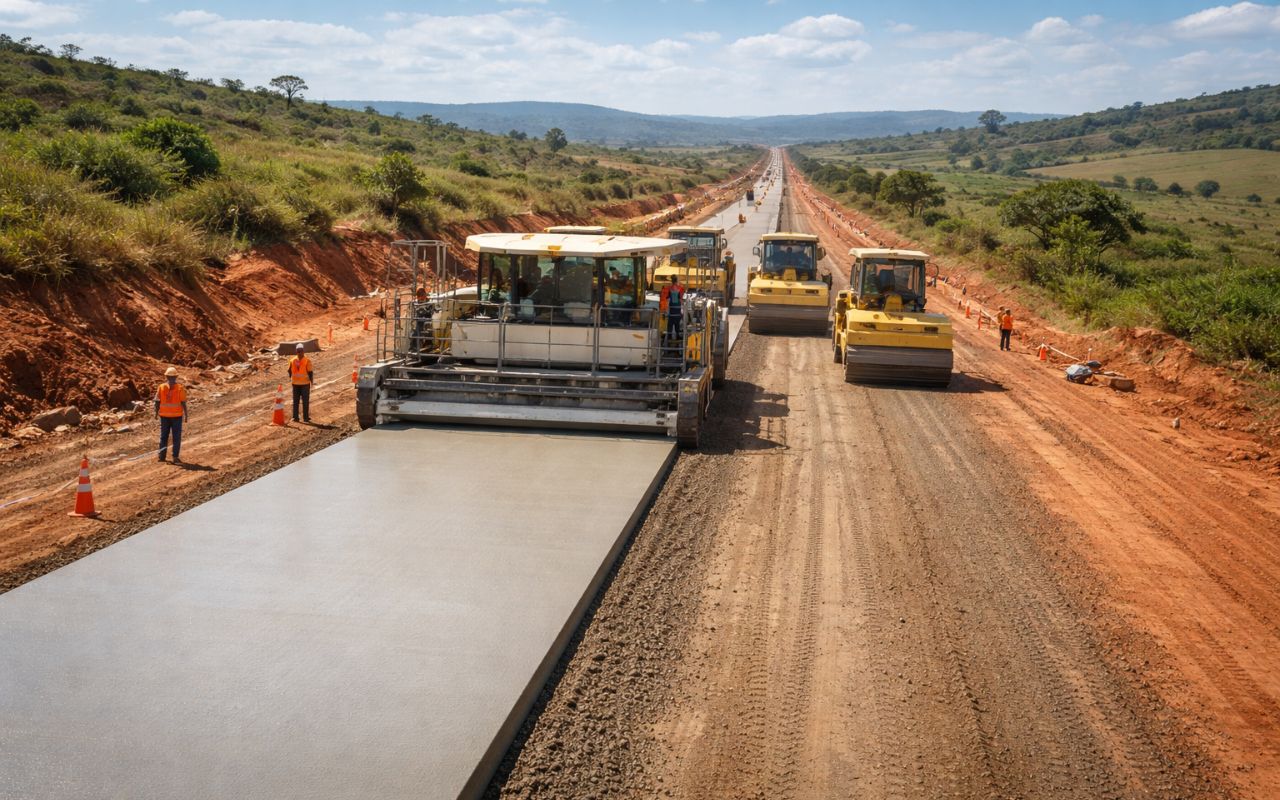

In addition to lasting longer than traditional asphalt, concrete offers advantages that go far beyond savings. However, this transformation does not happen overnight.
There are still financial, environmental, and technical challenges that need to be overcome for concrete to become the new standard. But why is this change so relevant?
Joinville City Hall Studies New Paths
In Joinville, the largest city in Santa Catarina, an ambitious proposal is under study: the construction of a new road in the southern zone of the city to connect the neighborhoods of Adhemar Garcia, Ulysses Guimarães, and Paranaguamirim.
More than just serving the 56,000 residents of the area, this new road promises to ease traffic and improve access to BR-280, one of the main highway corridors in the state.
The project includes the possibility of using concrete as the main paving material, which would represent a milestone for the city’s infrastructure.
The idea is to integrate sections of existing streets with new paths that would mostly pass through rural areas and decommissioned lands, such as the lagoons of the old wastewater treatment station of Jarivatuba.
But the challenges are many. Most of the route lies outside the urban perimeter, which requires strict environmental licenses.
Moreover, the financial viability of the project is also uncertain, as large-scale works demand significant investments.
The East Bypass and Its Impacts
Another ambitious project is the East Bypass, a route planned to divert heavy traffic from the urban center of Joinville.
This route would connect strategic neighborhoods, such as Boa Vista, Comasa, and Jardim Iririú, to Aventureiro, passing through more remote areas of the city.
The East Bypass would not only reduce traffic on central roads but also open up space for urban and economic development in the served areas.
However, as was the case with the defunct Beira-Mangue proposal, environmental licensing could be a significant obstacle.
Thus, both the new road in the southern zone and the East Bypass share an uncertain fate: they depend on technical studies, financial resources, and the resolution of environmental issues to come to fruition.
Concrete vs. Asphalt: Why Change?
The use of concrete on highways is not exactly a novelty in Brazil.
Highways like the Immigrants Highway in São Paulo and the Beltway of Belo Horizonte have already adopted this material, showing impressive results.
Among the main advantages of concrete, its durability stands out.
While traditional asphalt requires frequent repairs, especially in areas with heavy traffic, concrete can last up to 30 years without significant maintenance.
This represents considerable savings in the long run, both for public coffers and for users.
Another advantage is its resistance to heat and weather. Concrete does not soften at high temperatures, an important feature in a tropical country like Brazil.
Moreover, it better supports the weight of heavy vehicles, such as trucks and buses, reducing the formation of potholes and deformations on the road.
According to studies by the Brazilian Portland Cement Association (ABCP), the initial cost of concrete is indeed higher than that of asphalt.
However, when analyzing the life cycle of the pavement, concrete can be up to 40% cheaper.
Curiosities About Concrete Roads
To further enrich the debate, here are some interesting facts about concrete roads:
First Concrete Highway in Brazil: Avenida Paulista in São Paulo, inaugurated in 1891, was the first road paved with concrete in the country.
Global Application: Countries like Germany, the United States, and China already widely use concrete in their highways due to its durability and efficiency.
Emission Reduction: Although the cement manufacturing process releases CO₂, concrete roads reflect more sunlight, reducing energy consumption for public lighting and decreasing the carbon footprint in the long run.
Minimal Maintenance: In the United States, concrete highways can operate for over 40 years with minimal interventions, while asphalt needs resurfacing every 5 to 10 years.
Growing Sustainability: New technologies allow the production of concrete using recycled materials, such as construction waste, making it a more ecological option.
Joinville and the Future of Brazilian Highways
With the projects in Joinville, there is an opportunity to elevate Brazil to a new level in highway construction.
But the main question remains: will the initial costs and technical challenges justify the long-term benefits?
While other Brazilian cities still hesitate to adopt concrete on a large scale, Joinville could be a pioneer in this transformation.
The expectation is that, if the studies are approved, the new projects will become models for other regions of the country.
Conclusion: What Does The Future Hold For Our Roads?
The adoption of concrete in Brazilian highways is more than just a technical issue; it is a debate about innovation, sustainability, and planning.
Although the challenges are many, the potential benefits are undeniable.
And you, do you believe that concrete can be the definitive solution to Brazil’s road problems? Or is the initial cost still an insurmountable obstacle? Share your opinion in the comments!







Essa discussão é lamentável!!!!!
“São de concreto a mais de 15 anos”. Ótima ideia, é o que parece. Mas observe que para indicar tempo decorrido o correto é usar o verbo haver.
“Há mais de 15 anos”.
Quem manda nessa área é a Petrobras, monopólio. Quando cair o uso do capi (asfalto) daí começa a melhorar o preço e qualquer um pode fazer as manutenções.