





 Portuguese
  English
  Spanish
  3 min of reading
  0 comments


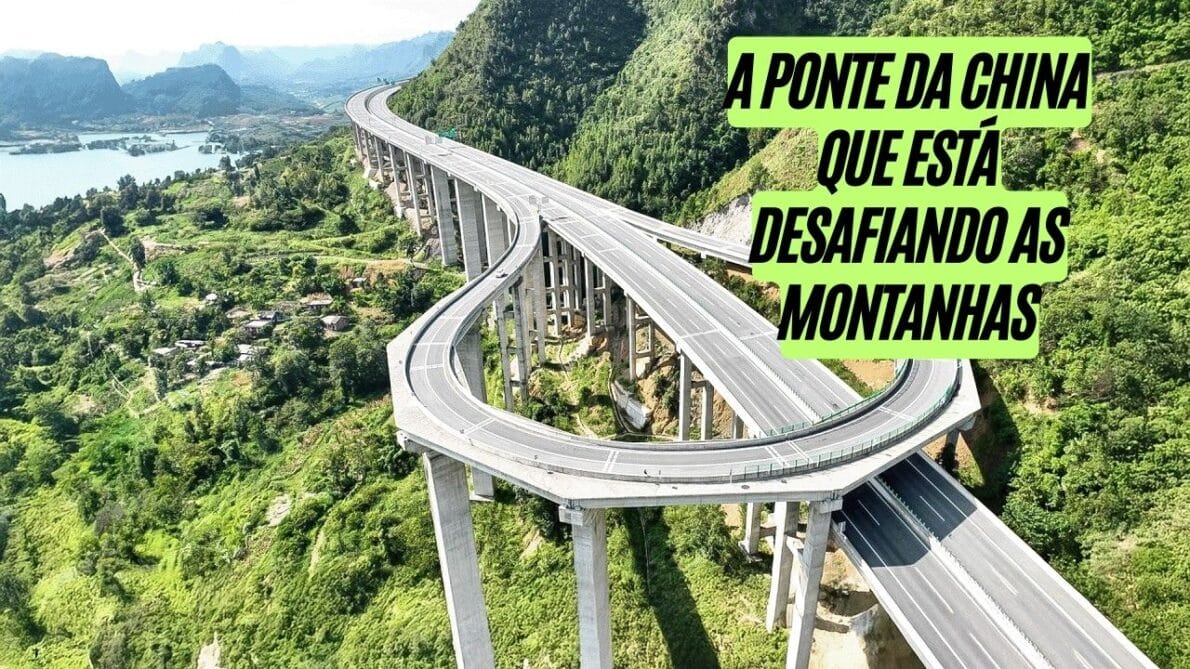
Imagine crossing a bridge that winds between mountains, at a height equivalent to a 30-story building, on a suspension road that defies gravity and imagination. The China Bridge that is challenging the mountains is not just another imposing construction, but an engineering feat capable of connecting communities and transforming the local economy. With a total length of 4.75 km and pillars reaching 107.5 meters in height, this bridge raises the standard of infrastructure works in mountain areas, becoming a symbol of progress and overcoming.
Located in Guizhou Province, southwestern China, the Huohua Bridge is a feat of modern engineering, designed to tackle one of the country’s most challenging terrains. With its extension winding through the Narong River Valley, supported by dozens of concrete pillars, this structure connects the counties of Ziyun and Wangmo, where the path was formerly long, dangerous, and winding, isolating communities and limiting economic development.
The necessity for this construction was evident to the Chinese government, which planned the bridge as part of a larger infrastructure project in the western region, aiming to boost trade, tourism, and improve the quality of life for communities. The central span, with three sections of 120 meters in length, and the bridge’s dizzying height of up to 115 meters, transformed travel time and brought isolated communities closer together, fostering new economic opportunities.
Challenges and Innovations in the Construction of the China Bridge
Building the China Bridge that is challenging the mountains required innovative solutions to conquer the extreme topography and karst formations of the region, known for caves and unstable rocks. Renowned Chinese companies, such as China Metrological Construction Engineering Group and Guizhou Communications Construction Group, joined forces to conduct extensive geological studies and develop adapted foundation techniques. A total of 360,000 cubic meters of concrete and 50,000 tons of steel rebar were used to erect the structure – a volume that could fill 144 Olympic-sized swimming pools!
-
New CCR concrete paving technology promises roads up to 3x more durable, less maintenance, and cost reduction in Brazil.

-
Made from recycled plastic, plastic wood is gaining space in the construction industry because it does not rot, resists moisture, and reduces maintenance costs over the years.

-
Florianópolis will receive a million-dollar BRT that will begin construction in 2026 with nearly 400 million in funding from the federal government and the Inter-American Development Bank, and the map already shows the routes for the exclusive bus corridors.

-
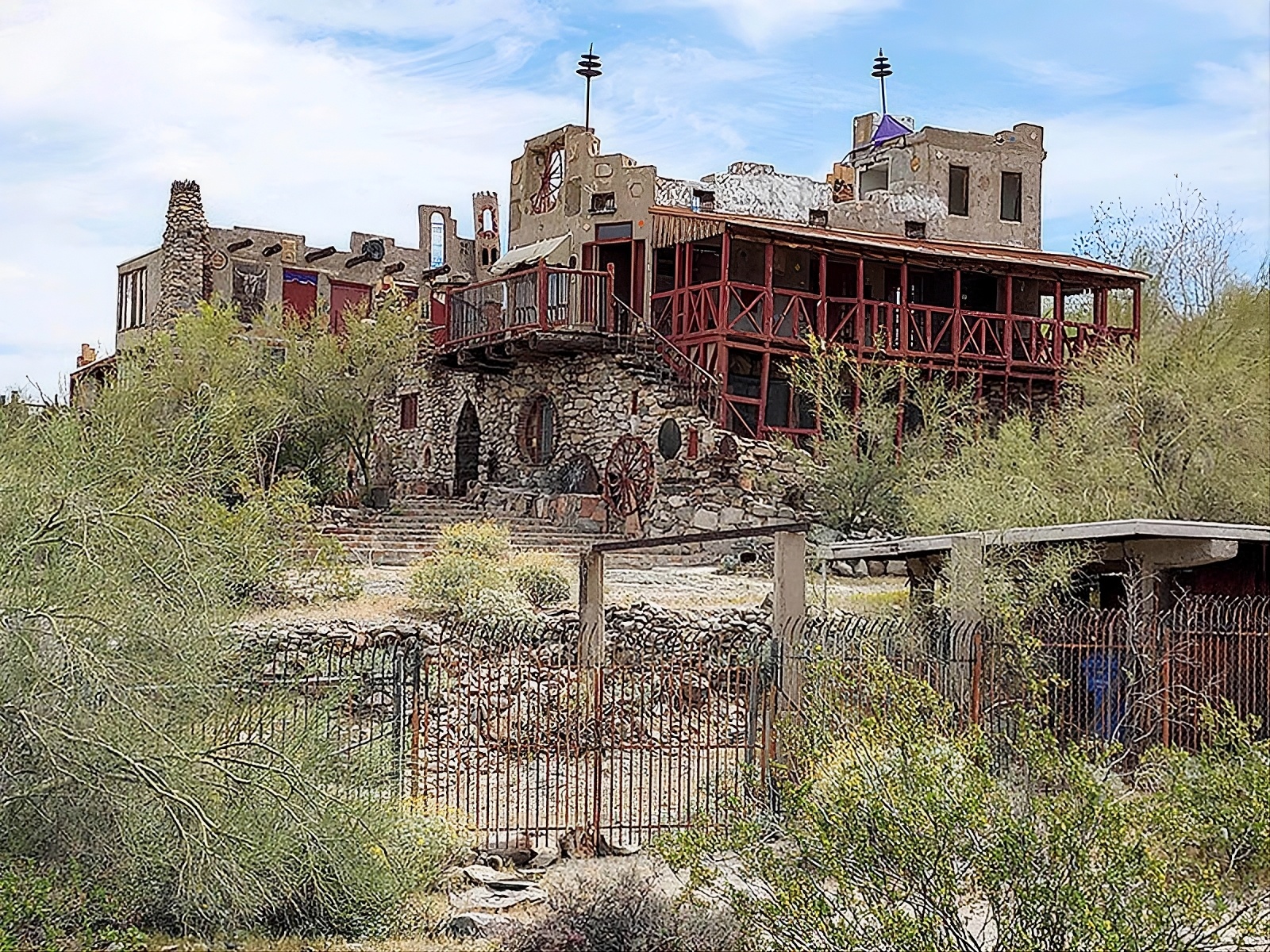
Without a blueprint, without an engineer, and using scrap from the dump, a father spends 15 years building an 18-room castle for his daughter, featuring tram tracks, 13 fireplaces, and over 700 m², which may now be demolished.

Another challenge was the transportation of construction materials and equipment, which had to be moved through the mountains on temporary roads and by air. Topographic mapping drones and computerized simulations ensured precision in measurements and adjustments of the construction. Safety was also crucial, with strict protocols that protected teams working at extreme heights, using state-of-the-art equipment.
Economic and Social Impacts of the Huohua Bridge
The bridge in China that is challenging the mountains represents more than an infrastructure project – it is an economic driver. It promises to reduce travel time, facilitate the transport of goods, and attract investments to a historically isolated region.
Local trade and tourism already show signs of growth, and new businesses are expected to emerge nearby. Socially, the bridge represents an important integration, providing rural communities with easier access to essential services and opportunities, improving local quality of life.
A Legacy of Engineering and Global Inspiration
The construction of the Huohua Bridge is a landmark in engineering and places China on the global stage of major infrastructure works. Comparable only to cutting-edge projects like the Millau Viaduct in France, the bridge challenges the limits of what is possible in mountainous regions. It is also a symbol of innovation that inspires future constructions worldwide, proving that with technology and vision, geographical barriers can be overcome.
The China Bridge that is challenging the mountains asserts itself not only as a path between mountains, but as a link between communities, economies, and cultures, showing that innovation and human determination can transform even the most impassable terrains into pathways of progress and integration.









Seja o primeiro a reagir!