





 Português
  Inglês
  Espanhol
  4 min de leitura
  3 comentários


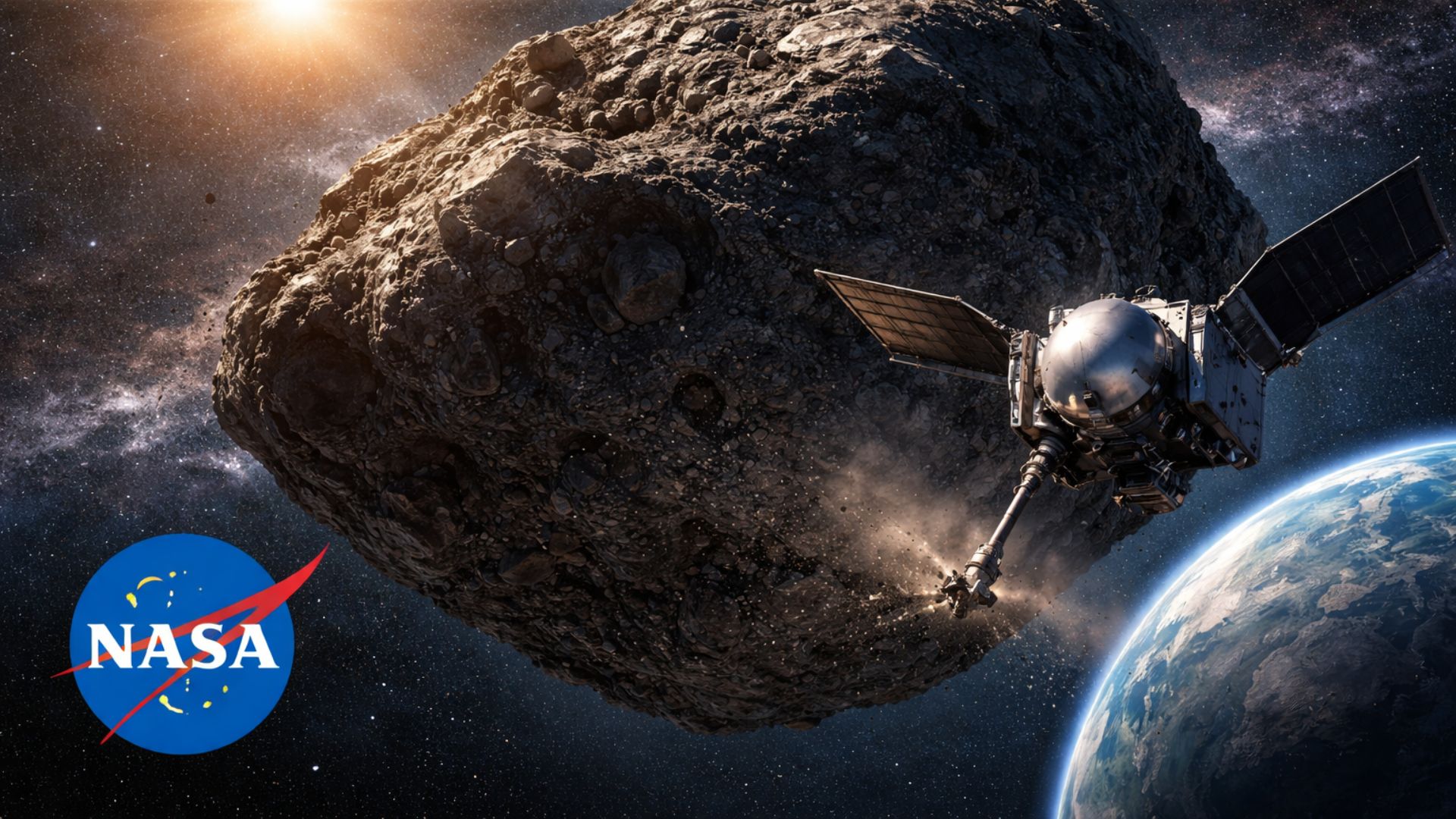


Water and Carbon Discovery on Asteroid Reignites Debate on Space Mining, Off-Earth Economy and Technical Challenges to Transform Science into Large-Scale Industrial Operation.
NASA stated that it had found direct evidence of water and high carbon content in samples brought back from the asteroid Bennu, reinforcing the idea that off-Earth resources may influence the future of space missions and their operational costs.
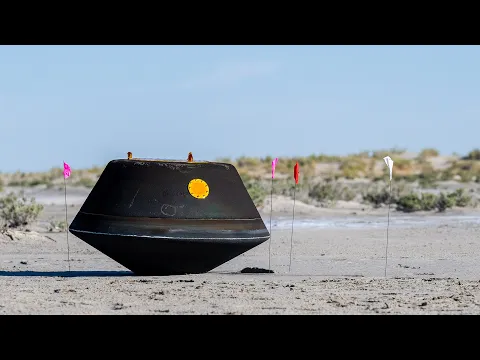
The material was collected by the OSIRIS-REx mission and analyzed in the lab after arriving on the planet in a capsule recovered in the Utah desert, which reduces common uncertainties in observations made solely by telescopes or remote instruments.
Bennu Samples Reveal Water and Carbon-Rich Compounds
Bennu is classified as a carbonaceous asteroid, associated with ancient materials from the early Solar System, and the agency reported in 2023 that early studies had already shown carbon and signs of minerals formed in the presence of water.
-
Found in one of the most radioactive places on Earth, this Chernobyl fungus may be doing something with radiation that no one has been able to explain to this day.
-
A bright yellow mushroom imported from Asia escaped from a cultivation farm in the United States in 2010 and is now aggressively spreading across 25 states, destroying entire communities of native fungi in American forests.

-
Buried under China, a colossal machine weighing 20,000 tons began operating as the largest neutrino detector on the planet and, in just 59 days, surpassed results that science took half a century to achieve.

-
Iran enters the center of a climate alert after the war emitted 5.6 million tons of CO2 in two weeks, surpassing the annual pollution of entire countries.


In detailing the initial inventory, NASA also announced that the capsule contained an estimated about 250 grams of rock and dust, a figure treated as preliminary while curation separated and cataloged the content in a controlled environment.
Later, in January 2025, the agency expanded the picture by reporting the identification of a set of minerals associated with water evaporation processes with dissolved salts, a chemical record interpreted as evidence of brines at some stage of the source body.

Water in Space and the Economic Potential of Trillions
Although the term “mining” often evokes gold and rare metals, the central point of the debate with Bennu is water, regarded as a strategic input to sustain long missions and, importantly, to be converted into propellants.
In this context, the economic logic connects to the historical cost of sending mass into space, as obtaining water off-Earth may reduce the need to launch large volumes from the ground and enable refueling in orbit.
It was in this theoretical calculation that a frequently cited figure emerged in outreach texts: an estimate cited by Western University in Canada claimed there is something like US$ 330 trillion in “value” linked to water on Bennu, based on logistical assumptions.
The way this number is presented indicates its limits, as it is neither a market price nor a value “stamped” by NASA, but rather an approximation built from economic hypotheses about transportation and refueling off-Earth.
Technical Challenges to Transform Discovery into Space Mining
Despite the appeal of the term “mine it,” the operation that brought the sample is a portrait of how delicate everything still is: OSIRIS-REx made a brief contact with the surface, collected material in small quantities, and returned everything for laboratory analysis.
Subsequently, a curation chain came into play that includes opening the container under clean conditions, inventory, weighing, storage, and gradual distribution to partner institutions, a process that NASA describes as planned to last for years.
A “real” extraction would require something quite different: to operate for long periods in microgravity, excavate and process regolith on-site, separate water and volatile compounds, and also store fluids with thermal control and safety during maneuvers.
Even when the objective is merely to demonstrate “use of local resources,” accumulated experience indicates that each step needs to be validated step by step, with robotics and autonomy, because the failure of a component can interrupt the entire chain and render transportation useless.
The scientific results themselves point to an additional complexity, as the material contains evaporitic minerals that, on Earth, are linked to specific chemical processes, suggesting environments where salts concentrated over time and left crystals as records.
This interpretation highlights that the Bennu sample carries an unusual set of salts in meteorites and other extraterrestrial samples already analyzed, which enhances its scientific value, not necessarily its industrial value.
Space Governance and Rules for Resource Exploration
Beyond engineering, space resource exploration projects encounter governance discussions because the activity involves interpretations and gaps regarding usage rights, responsibilities, and predictability for investments, insurance, and operations surrounding celestial bodies.
As this legal environment continues to evolve, what Bennu offers today is a concrete research base: a measurable sample, returned by a robotic mission, that helps reconstruct the chemistry available in the primitive Solar System and test hypotheses with real material.
Thus, the discovery stands more as a scientific milestone than as a promise of immediate return, as there exists a long, costly, and technically demanding path between the confirmation of water in the laboratory and an off-Earth supply chain.
If water continues to be treated as the most strategic resource to sustain human and robotic presence beyond the planet, what practical demonstration, at scale and with stable refueling, will convince the sector to take the next step?






Reabastecimento sustentável,ainda penso que a melhor opção de energia é a vinda do sol, temos que pensar em um jeito de aprisioná-la.
1 de onde veio essa água ?, 2 quais bactérias existe nela ? 3 quais as consequências de trazer algo desconhecido pra terra ?
De acordo com a matéria, eles não estão se importando com isso.
Negócio é cifras, economizar gastos de transporte e reduzir quantidade de combustível x peso transportado.
Tudo se resume a isso, lucro, prejuízo e “necessidade”.
Usar água de um objeto que está rodando por aí, sabe lá quantos milhares de anos, fora de uma atmosfera. Bactérias e organismos desconhecido é o que não falta.
Coisas assim, como desejos de extrair água, não deveriam serem tratados de forma tão leviana, é algo de extremo risco.
Só citou ” escavar e processar regolito no local, separar água e compostos voláteis, e ainda armazenar fluídos com controle térmico e segurança durante manobras.”
Ganância cega demais as pessoas, pior que isso não é um erro atual é algo que já ocorreu mto no passado, o fracasso através da cega ganância.