





 Portuguese
  English
  Spanish
  3 min of reading
  0 comments


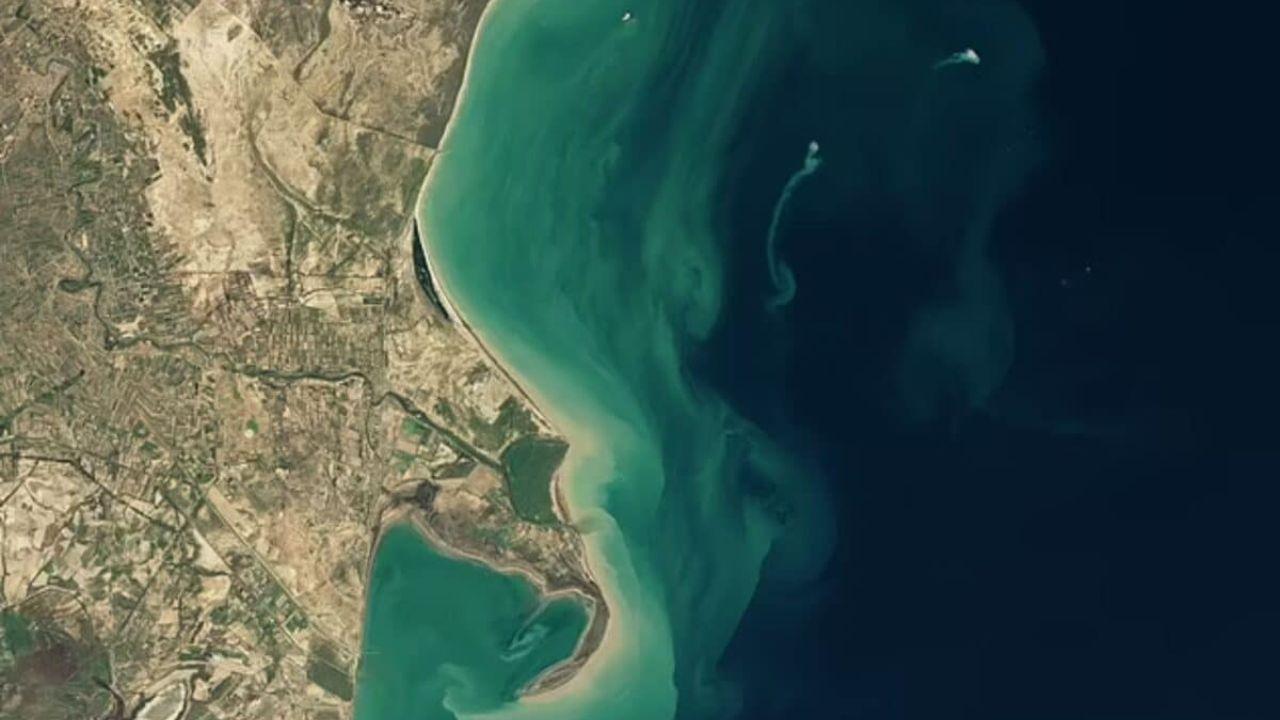
Satellites From NASA Captured The Rare Phenomenon Of An Island That Emerged In The Caspian Sea After The Eruption Of A Mud Volcano And Disappeared Completely In Less Than Two Years, Challenging Scientists And Revealing The Unpredictable Force Of Nature.
An island that appears from nowhere and disappears as if it were a magic trick. That is exactly what NASA satellites captured in the Caspian Sea. This island, nicknamed “ghost,” appeared in 2023 and vanished in 2024, leaving scientists intrigued by the geological forces behind this unique phenomenon.
What makes this story even more fascinating is the fact that the island was created by the eruption of a mud volcano, a rare characteristic that is little studied. Let’s explore this mystery and understand how NASA is helping to decipher the secrets of the Earth.
NASA Finds Appearance And Disappearance Of The Ghost Island
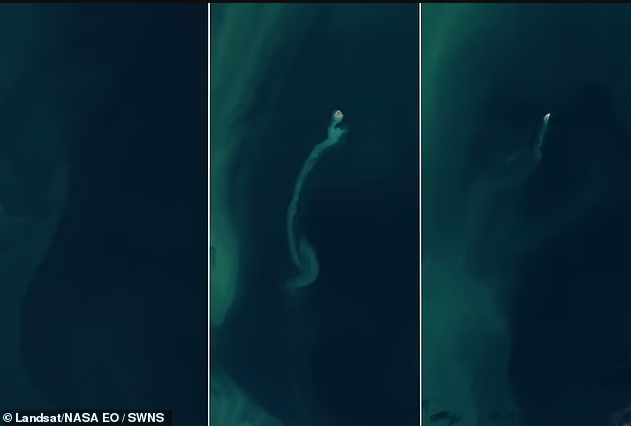
It all started with an eruption of the Kumani Bank mud volcano, located on the coast of Azerbaijan. Mud volcanoes, unlike traditional volcanoes, expelled a mixture of mud, gas, and sediments, forming the island. Within days, this mass of land was already visible from space, thanks to images captured by NASA’s Landsat 8 and 9 satellites.
-
Man builds functional 5-meter submarine in his garage using gas cylinders, PVC pipes, and a refrigerator motor, and navigates with the vessel on a lake in Colombia.

-
Millions of people have been eating yam for centuries without knowing that this humble tuber contains a compound called diosgenin, which scientists have now discovered can improve memory and help control blood sugar levels.

-
Scientists from an international project drill 1,800 meters of ice in Antarctica using hot water and discover details about one of the most intriguing places on planet Earth.
-
Seen from space, a colossal volcano nearly 5,000 meters high in Russia has released 1,600 km of smoke over the Pacific, forming “devil’s horns” of lava and revealing the brutal force of the Ring of Fire.

But why didn’t an island created so quickly remain? That’s the question scientists are trying to answer by analyzing the geological dynamics and conditions of the region.
If the birth was impressive, the disappearance was equally dramatic. In less than two years, the island was completely eroded by winds, waves, and tides, leaving only traces of Kumani Bank above water. Nature proved once again its strength, showing that nothing is permanent, not even land.
What Are Mud Volcanoes?
Mud volcanoes are curious geological phenomena, formed by underground pressures that force the expulsion of mud, gas, and sediments. They are common in hydrocarbon-rich regions, such as Azerbaijan, and can create transient landscapes, like the mysterious island in the Caspian Sea.
In the case of Kumani Bank, the history is filled with similar events. The island found by NASA is not the first; since 1861, the volcano has produced several ephemeral islands, always erased by the relentless forces of nature.
The Science Behind The Phenomenon
The Caspian Sea is a tectonically active region where the Arabian and Eurasian plates collide, creating ideal conditions for mud volcanoes. This intense activity makes Azerbaijan one of the most studied places by geologists.
With the help of satellites, NASA was able to monitor the life cycle of the island from 2023 in detail, something that was impossible in the past. This not only helps to understand local phenomena but also offers valuable clues about how tectonic forces shape our planet.
Risks And Wonders Of Ghost Islands
Despite being fascinating, like this island discovered by NASA, these islands also pose risks. Eruptions of mud volcanoes can release large amounts of gas and sediments, threatening wildlife and even local infrastructure. Some previous eruptions launched flames hundreds of meters into the air, highlighting the explosive power of these phenomena.
On the other hand, these ephemeral formations are a visual and scientific spectacle. They remind us that, even with all technology, there is still much to discover about our planet.








Seja o primeiro a reagir!