





 Portuguese
  English
  Spanish
 5 min of reading
  3 comments


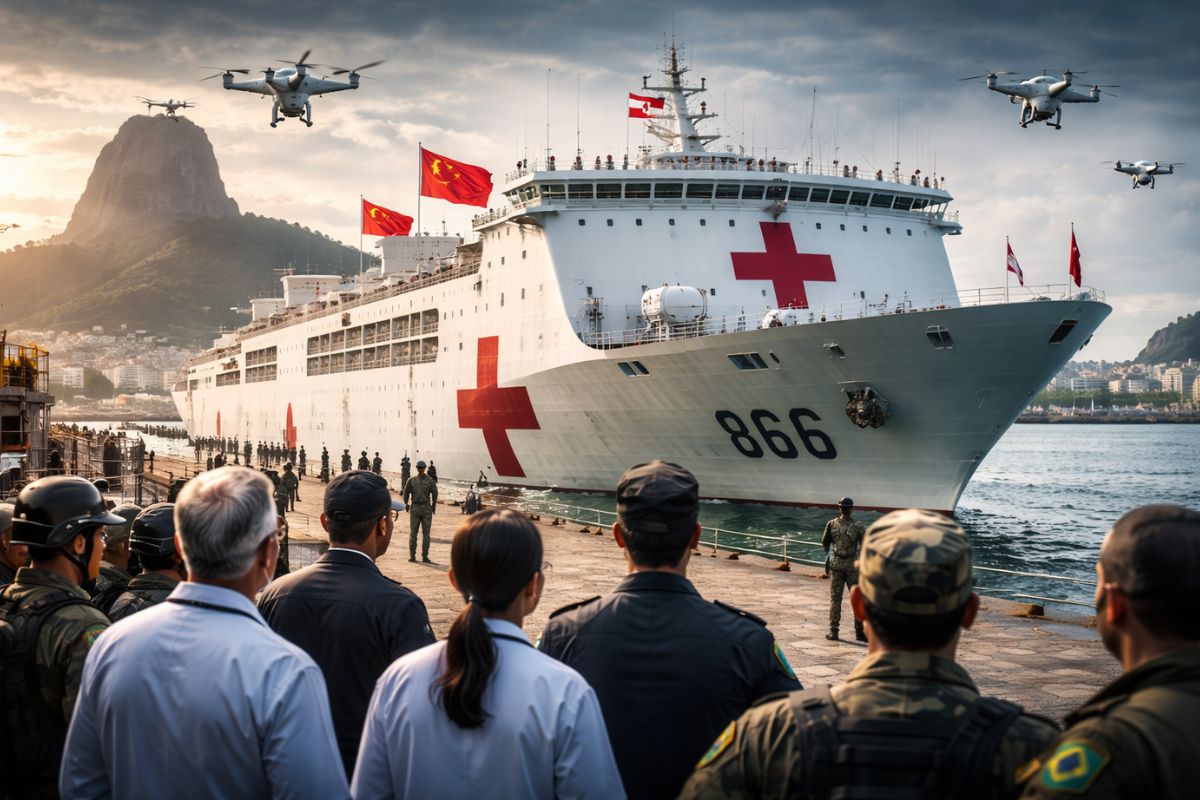


Arrived On January 8, The Giant Chinese Hospital Ship Silk Road Ark Of The Chinese Navy Remained In The Port Area Of Rio Until Thursday 15. Cremerj Received Reports Of Onboard Care And Demanded Qualification. Pier Denied Humanitarian Action. Consulate Cites Exchange And Training. Military Fear Collection Of Strategic Data.
The giant Chinese hospital ship docked in Rio de Janeiro last week and remained at Pier Mauá in the Port Area until last Thursday, January 15. The unannounced arrival increased attention around the size of the vessel and the symbolism of an official visit linked to the Chinese Navy in a sensitive area of the city.
The episode triggered an immediate reaction from the Regional Medical Council of Rio de Janeiro, which sought clarifications regarding possible care onboard and the qualification of foreign professionals to practice medicine in Brazil. At the same time, concerns arose about collection of strategic data and the real extent of the presence of a military ship with hospital structure in Brazilian waters.
The Arrival In Rio And The Timeline Of Docking At Pier Mauá
The Silk Road Ark, identified as a hospital ship of the Chinese Navy, arrived in Rio de Janeiro on January 8 and remained docked at Pier Mauá in the Port Area until January 15.
-
Son of a seamstress from the rural area of Ceará who did not speak English wins a scholarship of over 2 million reais at Williams College, one of the top 10 universities in the United States, covering everything including dormitory, meals, and annual trips to Brazil.

-
Bill Gates revealed that the true secret behind every great achievement is not a brilliant leap but rather small improvements repeated over the years, and the data from his own career and the fight against climate change prove that he is right.

-
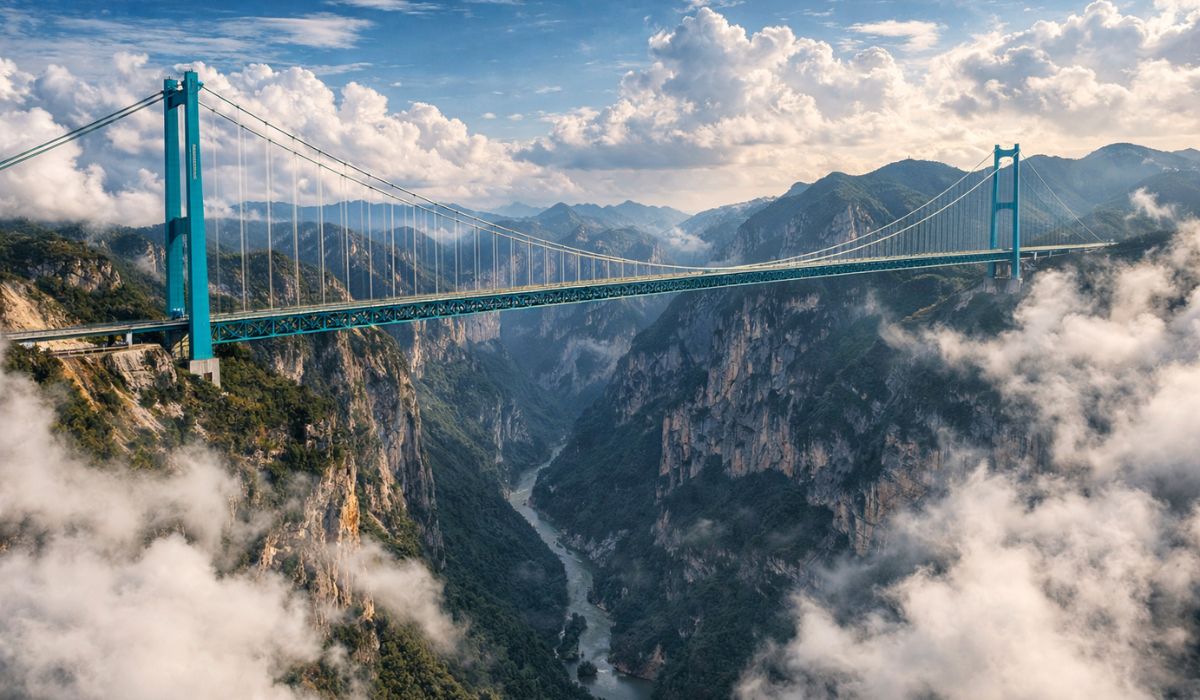
With 22 thousand tons of steel, a height nearly three times greater than the Eiffel Tower, and a cost of R$ 1.6 billion, China is building the highest bridge on the planet over a colossal canyon, reducing a crossing time of over 2 hours to just over 2 minutes.
-
With more than 635,000 doctors, Brazil sees competition increasing in large cities, and recent graduates are competing for shifts at an accelerated pace while the countryside still faces shortages.


This stay established a short but intense window for institutional questioning and for political and security interpretations about what was practically authorized, observed, and restricted during its passage.
The location of the docking, a point of logistical and tourist circulation in the city, reinforced the visibility of the case.
A large official ship tends to activate attention protocols due to involving port authority, consular negotiation, and, in the background, sensitive interests when the vessel belongs to a foreign naval force.
Cremerj Steps In And Questions Medical Care Onboard
Cremerj stated that it had received information that medical care might be occurring within the vessel.
The central concern was not limited to the existence or absence of consultations: the council also wanted to know if any foreign professionals on board would have the qualification to practice medicine in the country, a point that directly touches on professional practice rules and sanitary responsibility.
This questioning gained weight because the very nature of a hospital ship can generate public perception that there would be assistance, even when the agenda is purely diplomatic.
In the absence of detailed transparency about internal activities, the combination of rumor and expectation tends to accelerate pressures for formal confirmation and for clear limits on what may or may not happen.
What Was Said About Care For The Population And Why Did It Become Controversial
Alongside the council’s questions, information circulated that there would be no record of care offered to the Carioca population during the ship’s stay.
This point is crucial because it separates an institutional visit from a humanitarian operation, and completely changes the standards of oversight, communication, and accountability.
The controversy consolidated precisely in the friction between two perceptions: on one side, the idea that a hospital ship could provide care; on the other, the indication that the passage would have been restricted, with no opening for public service.
This gray area tends to fuel suspicions, especially when the vessel is military and the visit occurs without broad and advance communication.
Note From Pier Mauá: “There Is No And There Will Not Be Humanitarian Medical Care”
The pier where the ship was docked declared that there is no and there will not be humanitarian medical care onboard, and that the passage was only a visit by the Chinese delegation to the country, aimed at strengthening ties of friendship between the two nations.
This statement seeks to close the main doubt that mobilized the debate: whether or not there would be care.
By denying the humanitarian nature, the statement repositions the visit as a protocol and relationship activity, reducing the space for interpretations of direct medical service to the public.
Position Of The Consulate: Exchange, Joint Training, And Cultural Activities
The Chinese Consulate presented the purpose of the trip as providing knowledge exchange, joint training, and cultural activities.
It was also reported that the ship left China in September last year and that Brazil was the first destination of the vessel in South America.
This framing broadens the meaning of the displacement: it is not just a technical stop, but an agenda of relationship that combines institutional rapprochement, demonstration of presence, and activities that, while classified as cultural and training, occur in the context of a vessel linked to the Navy.
What The Brazilian Navy Stated And What The Visit Restrictions Were
The Navy reported that the presence of the ship had an official and diplomatic character.
In practice, this delimits the treatment of the case as an institutional visit and reinforces that it was not an operation open to the general public.
Visits to the vessel were described as restricted to consular representatives and journalists.
This access control is a key detail, as it defines who can observe the interior of the ship, what type of activity can be recorded, and what information remains concentrated in official channels.
Intelligence Suspicions And Fear Of Collecting Strategic Data
In addition to the medical debate, the presence of the giant Chinese hospital ship generated discomfort due to an additional suspicion: the hypothesis that the vessel could carry intelligence equipment capable of collecting strategic data.
The concern arose associated with reports of a military environment, elevating the reading that the visit could have layers beyond diplomatic discourse.
Even without public confirmation of equipment and without detailed exposure of what was onboard, the simple possibility of data collection changes the temperature of the debate.
In practical terms, it shifts the conversation from the sanitary and protocol field to the field of sovereignty, security, and limits of what is acceptable in official foreign visits.
Why The Episode Reignites The Debate On Diplomacy, Security, And Clear Rules
The passage of a hospital ship from a foreign navy through Rio de Janeiro concentrates sensitive elements: the potential for medical care, the need for professional licenses, access restrictions, official character, and at the same time, rumors about intelligence and data collection.
When these elements mix, the discussion ceases to be merely logistical and becomes a narrative and trust dispute.
The case also highlights the importance of clear protocols and objective communication regarding purpose, activities, and limits.
The less public clarity, the more room for suspicion, especially when the vessel is military, the destination is strategic, and the visit occurs in a short interval that hampers formal checks and coordinated response.
In your opinion, should the arrival of the giant Chinese hospital ship in Rio have stricter rules of transparency and oversight, or can official visits proceed with restricted access and little public exposure?








Que estranho o exército brasileiro aceitar isso, eles estão vendo como é fácil dominar o Brasil
Soberania nacional, que piada. Brasil o pais que não manda nem no seu próprio quintal.
Se fosse um navio brasileiro, atracado na China, em condições parecidas, seria digno de investigações maiores pela parte do governo chinês. É que o Brasil está se tornando uma terra de ninguém. Estamos de volta ao período dos descobrimentos, das expedições, das explorações?! Tipo vamos lá ver o que tem pra ser explorado? Reconhecimento do terreno?Ou são apenas convidados simpáticos do Lula e da Janja para implantar aqui certos vírus para fazer certas experiências com nossos indígenas, digo, povo brasileiro. Será que trouxeram espelhinhos e colares com eles?! Se não fosse real, seria uma viagem …