





 English
  Francês
  Alemão
  Italiano
  Japonês
  Norueguês
  Portuguese
  Spanish
  4 min of reading
  0 comments



Largest Medieval Cog Ever Discovered in the Øresund Strait Reveals How Medieval Maritime Trade Functioned in the 15th Century.
Archaeologists have discovered in the Øresund Strait, between Denmark and Sweden, the largest medieval cog ever identified during infrastructure works in Copenhagen, revealing new evidence about medieval maritime trade, naval engineering, and life aboard a 15th-century merchant ship.
Archaeologists from the Danish Museum of Viking Ships located the vessel, named Svælget 2, about 13 meters deep, and dated it to approximately 1410.
The discovery occurred during underwater surveys for the construction of the artificial district of Lynetteholm and helps explain how well-structured trade routes sustained the economy of Northern Europe in the Late Middle Ages.
-
OceanPact Announces Acquisition of CBO and Creates One of Brazil’s Largest Maritime Support Structures with 73 Vessels, Annual Revenue Above R$ 4 Billion and R$ 14 Billion Backlog

-
With Extreme Winds, Giant Waves, and Unrestricted Currents, Drake Passage Is Considered the Most Violent Stretch of the Oceans

-
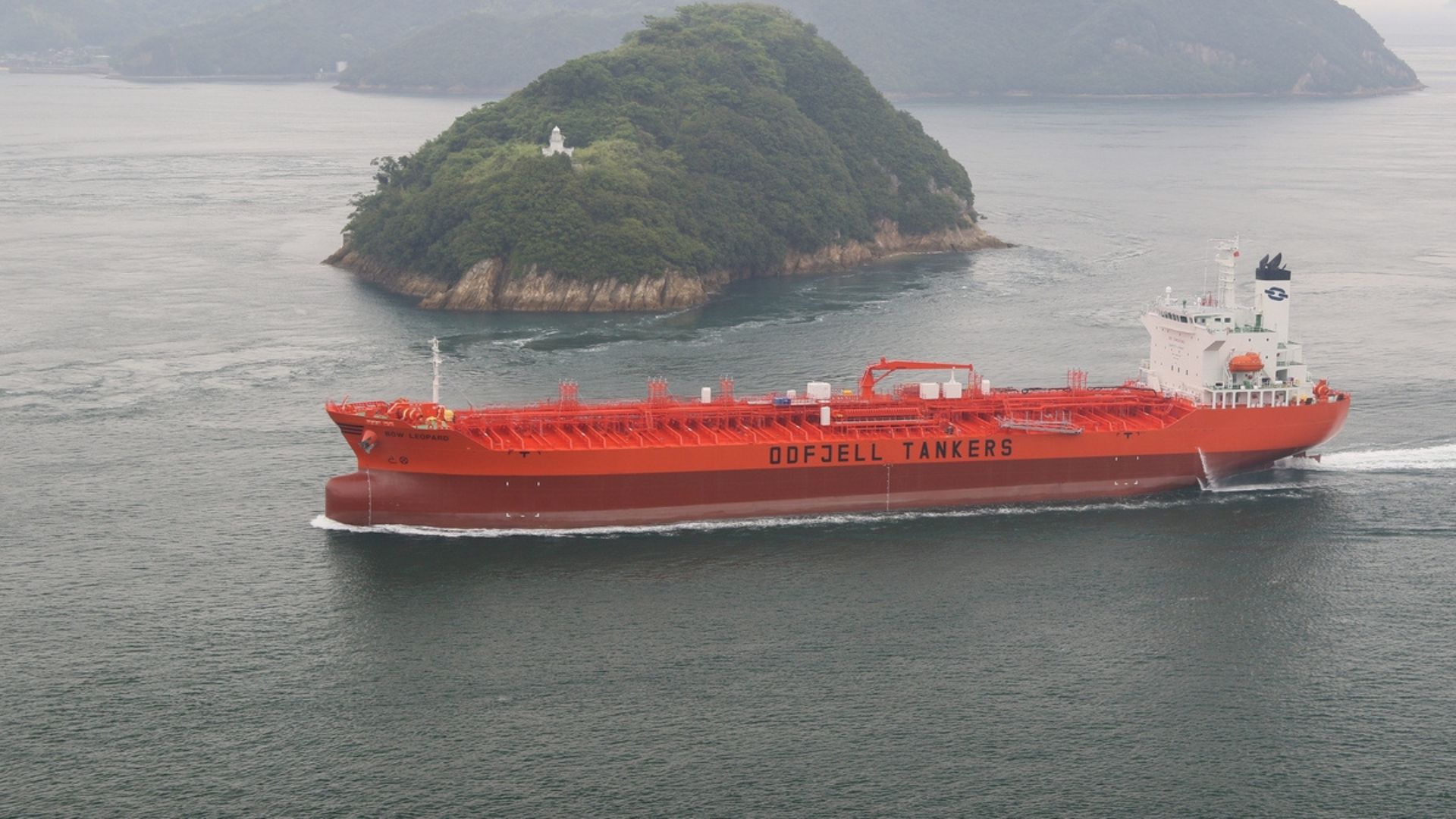
Odfjell Inaugurates First Operational Green Corridor Between Brazil and Europe Using Sustainable B24 on Maritime Routes and Reinforces Decarbonization Strategy
-
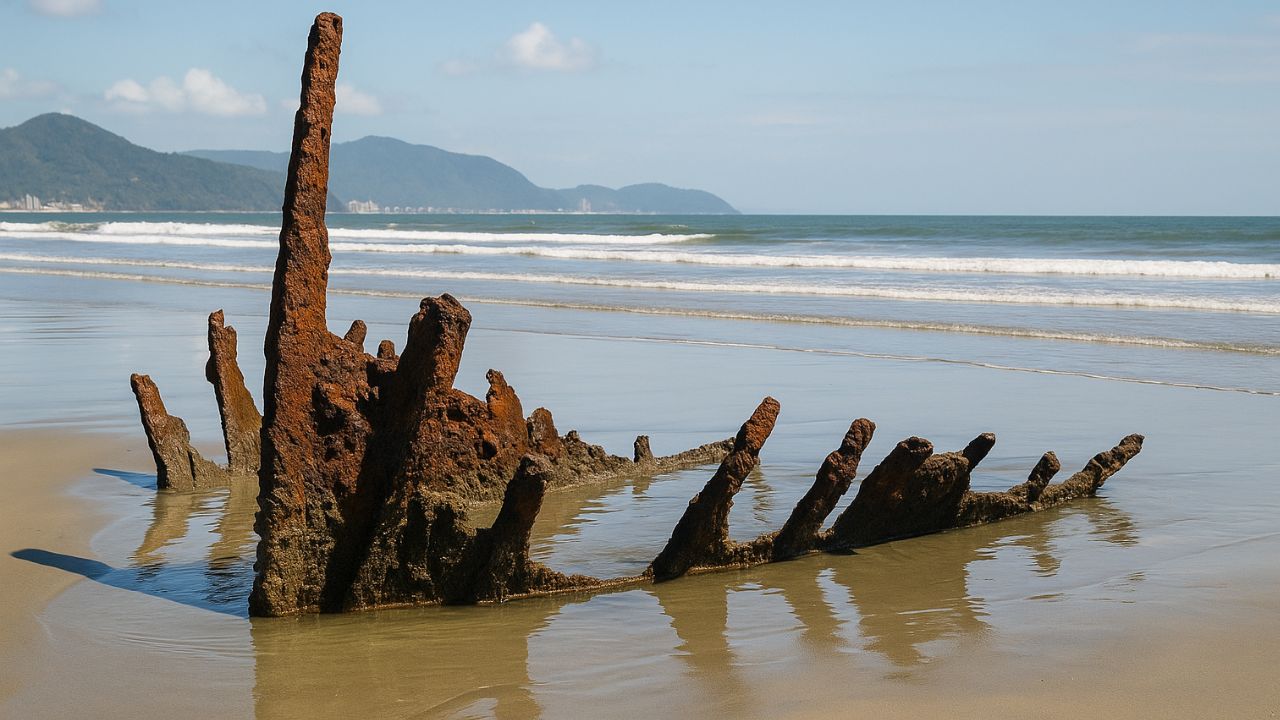
Maré Reveals Secret From 1895: Ghost Ship Kestrel Reappears at Embaré Beach

Medieval Cog Changes Understanding of Medieval Maritime Trade
The identification of this medieval cog sheds new light on the scale and organization of medieval maritime trade.
At about 28 meters long, 9 meters wide, and 6 meters high, the ship had a capacity to carry up to 300 tons of cargo—an exceptional volume for its time.
These dimensions surpass all known cogs until now.
According to researchers, this indicates the existence of a highly organized economy, with stable markets, consolidated routes, and significant financial investments.
15th-Century Merchant Ship Made to Transport Essential Goods
Contrary to the common idea that medieval trade was based on luxury goods, the Svælget 2 shows the opposite.
15th-century shipbuilders designed the merchant ship to transport essential cargoes such as salt, timber, bricks, and food.
This detail reinforces the strategic role of these vessels in urban supply.
Thus, the growth of coastal cities depended directly on robust ships, capable of long journeys and heavy loads.
Underwater Archaeology Reveals International Supply Chain
The dendrochronological analyses—the study of the growth rings of trees—revealed an international origin of the materials used in the construction of the vessel.
The planks of the hull came from Pomerania, a region that now belongs to Poland, while structural parts were made with wood from the Netherlands.
This combination proves that materials were transported to large shipbuilding centers. Thus, underwater archaeology evidences sophisticated and integrated production chains as early as the 15th century.
Exceptional Preservation in the Øresund Strait
The state of preservation of Svælget 2 is considered extraordinary. Protected from the most intense waves and currents, the starboard side of the ship remains almost intact, from the keel to the upper edge.
This level of preservation allowed for the identification of rare rigging elements, offering new information about masts, sails, and ropes of the largest cogs.
Until now, these details were primarily known through medieval illustrations.
Castles and Covered Deck Change View of Life Aboard
Among the most relevant discoveries are the first clear archaeological evidence of the so-called “castles” of cogs—elevated wooden structures located at the bow and stern.
In the case of Svælget 2, remains of a stern castle reveal a covered deck.
This provided shelter for the crew and better working conditions, unlike older vessels, which had open decks.
Galley Reveals Daily Life of Sailors
Another surprising find was a galley built with about 200 bricks and tiles, considered the oldest ever found in Danish waters.
At the site, archaeologists identified pots, ceramic bowls, and food remains.
Additionally, personal items such as shoes, combs, rosary beads, and painted wooden plates show how sailors maintained family routines even during long crossings across the Øresund Strait.
Vessel Was Exclusively Commercial
Although archaeologists did not find the original cargo—likely lost after the flooding of the hold—the absence of ballast indicates that the ship was fully loaded at the time of sinking.
There is no evidence of military use.
This confirms that Svælget 2 operated exclusively in medieval maritime trade and played a central role in the economy and logistics of the time.
Medieval Cog Symbolizes a Transforming Europe
More than a technical feat, Svælget 2 represents a society in full transformation.
The vessel reflects technological capability, economic integration, and interdependence between regions of Northern Europe in the Late Middle Ages.
Thus, as highlighted by the Archaeology News portal, the discovery redefines the understanding of the scope of trade, naval engineering, and daily life at sea in the 15th century—and confirms the strategic importance of the Øresund Strait in European history.









-

Uma pessoa reagiu a isso.