





 Portuguese
  English
  Spanish
  5 min of reading
  0 comments



France Moves Forward With Unprecedented Proposal: Ban Screen Use By Children Under 3 In All Environments. The Measure Reignites The Debate About Screens And Child Development And May Influence Policies In Other Countries
The French government has proposed a radical measure: a total ban on screen use by children under 3 years, both at home and in educational institutions. The idea is to prevent early contact with smartphones, tablets, and televisions from compromising child development. Based on scientific evidence, the measure aims to protect the cognitive, emotional, and physical health of young children — and has raised a global alarm about the risks of indiscriminate technology use in early childhood.
Understanding The Ban On Screens For Children In France
The proposal, presented by the French Minister of Health, Catherine Vautrin, is part of a package of actions aimed at childhood. The text suggests a law in France regarding screen use that restricts any exposure to digital devices by children under 3 years in France, both at home and in daycare and schools.
For children up to 6 years old, the project recommends use with strong supervision and clear limitations. The legislation does not foresee penalties for parents who do not comply with the guidance at home, but serves as an official guideline from the state. “It is a way to support parents and provide clear direction to schools,” Vautrin explained.
-
Scientists create a semiconductor that mimics the human brain using hydrogen and boost a new generation of smart chips with learning capabilities and the potential to revolutionize artificial intelligence applications.

-
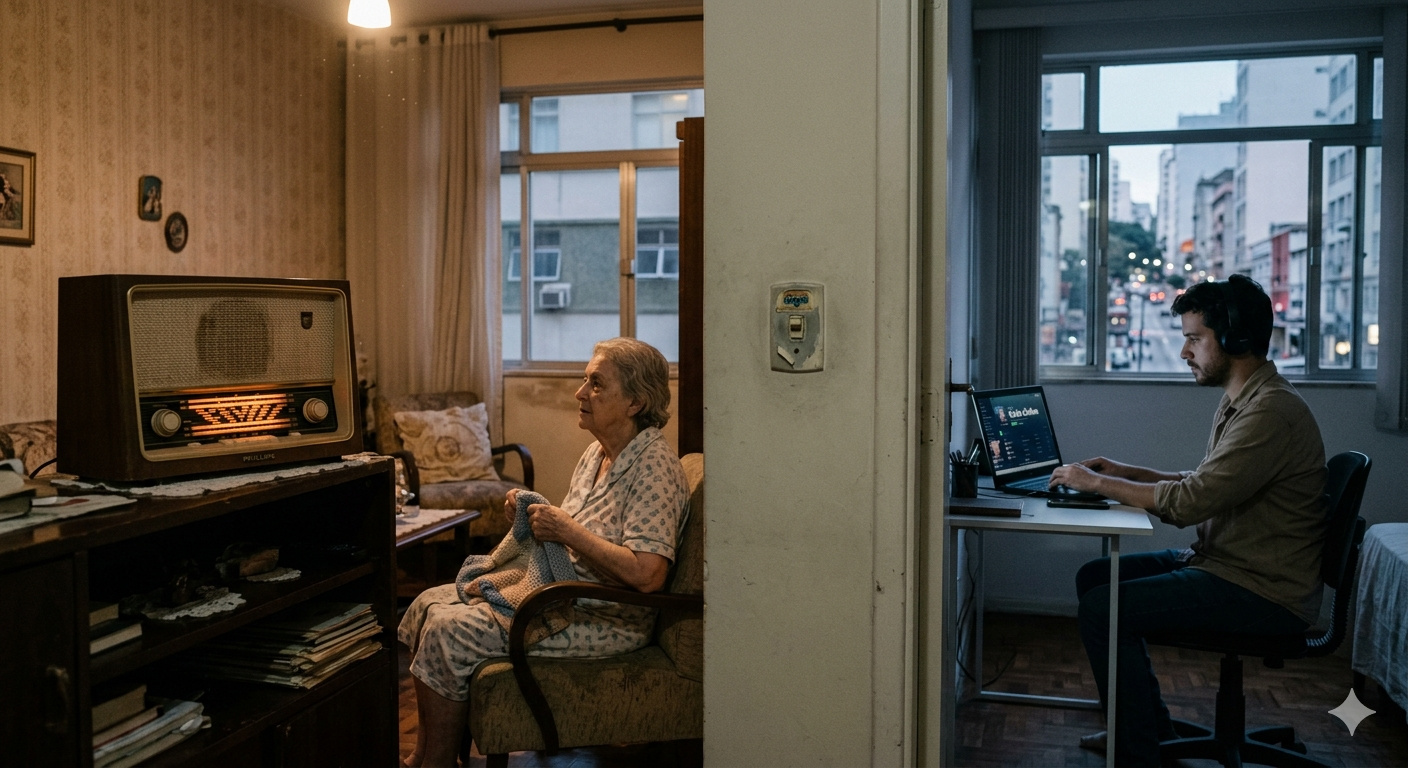
The radio has been in more than half of Brazilian households for decades, and in 2024, for the first time in history, the number of households without a device surpassed those with a device, with a decrease of 2.3 million in just one year.
-
A “silent skill” is allowing Brazilians to earn up to R$ 22,000 per month without a degree and become indispensable for companies that rely on millions of data to survive.

-
Researchers at the Toyota Research Institute found that if a human uses robotic arms to flip a pancake 300 times in an afternoon, the robot learns to do it on its own the next morning, and this is currently the most promising method to solve the biggest bottleneck in modern robotics.


Screens And Child Development: What Experts Say
Studies widely recognized by institutions such as the WHO (World Health Organization) and the American Academy of Pediatrics show that screen use before the age of three is associated with language development delays, sleep disorders, hyperactivity, and difficulties in socialization.


According to the French public health organization Santé Publique France, one in two two-year-olds already uses screens daily — a number considered alarming by experts. The relationship between screens and child development is concerning: when exposed too early, children tend to replace active play, interactions with others, and motor activities with sedentary and passive behavior.
Furthermore, the blue light emitted by screens harms the natural production of melatonin, directly impacting sleep quality. The result is poor sleep, irritability, and impaired concentration ability throughout the day.
Why The Proposal Generates Global Impact
The stance of the French government sets an international precedent. The measure is not just symbolic: it is the first time that the French government bans screens comprehensively, including the home environment, making it the first major nation to take this initiative.
Other countries are also positioning themselves. The United Kingdom, for example, has banned cell phones in primary schools, while countries like Germany and Japan discuss age limits. However, France goes further by also focusing on home use, reinforcing that combating excessive screen time cannot be solely the responsibility of educational institutions.
The measure also aims to pave the way for future legislation related to social media use by teenagers, directly influencing the debate about childhood and technology.
Children Without Screens Until 3 Years: Protection Or Exaggeration?
The phrase “children without screens until 3 years” may sound radical to some, especially in times when tablets and cell phones are used even to calm babies. But for experts in neuroscience and early childhood education, it is not about exaggeration, but prevention.
In the first three years of life, a child’s brain undergoes an accelerated process of forming neural connections. This phase, known as the “sensorimotor development window,” requires real physical and emotional stimuli — such as touch, natural sounds, facial expressions, and interaction with the environment.
Replacing these stimuli with videos, games, and apps compromises essential skills, such as empathy, logical reasoning, motor coordination, and language. The recommendation from the World Health Organization is zero screen time for children under two years old — and for those aged two to five, a maximum of one hour per day, with supervision.
How The Law In France Regarding Screen Use Will Be Applied?
Although the proposal is clear in stating that screens should not be used by children under 3 years in France, enforcement in the home environment depends solely on the awareness of parents and caregivers.
Minister Vautrin clarified that the ban on screens for children in France will not be enforced through home inspections, but will serve as an official public health recommendation, similar to what already happens with nutrition and vaccination. The goal is to generate a movement of behavior change, not punishment.
In daycare and schools, however, the guidelines could be incorporated into internal regulations, with training for educators and new pedagogical practices focused on development without screens.
Screens In Schools: What Changes With The New Proposal?
The law in France regarding screen use directly impacts how technology is integrated into early childhood education. Although many schools already use tablets and videos as support tools, the proposal reinforces that, in early childhood, learning should be based on physical stimuli and interpersonal relationships.
The recommendation is clear: manual activities, reading with physical books, music, play, and interaction among peers should fill the space currently occupied by educational videos and digital games.
Experts argue that the educational use of technology should only be introduced after the age of six, gradually and critically, focusing on digital literacy and not on passive entertainment.
Cultural And Technological Challenges
Despite the scientific justification, the proposal faces cultural resistance. In many homes, screens serve as “digital babysitters,” easing the routine for overloaded parents or those working remotely. The popularity of children’s videos on platforms like YouTube Kids, combined with easy access to devices, creates a difficult environment to control.
The new policy, therefore, requires more than regulation: it demands a profound change in family habits. This includes creating screen-free spaces, strengthening the emotional bond between parents and children, and encouraging face-to-face activities — from shared reading to trips to the park.
Additionally, it is necessary to promote public awareness campaigns, especially in more vulnerable communities, where screen use is often the only form of accessible leisure.
A New Look At Childhood In The Digital World
The French proposal to restrict screen use in early childhood opens a necessary and urgent conversation about the limits of technology in children’s lives. By advocating for an initial development period free of screens, the French government not only proposes a standard — it proposes a model of childhood.
The measure places mental health, natural learning, and human connections at the center of the discussion. Contrary to what some suggest, it is not about denying the digital world, but ensuring that it is introduced at the right time and in the healthiest way possible.
The challenge is global. Families, schools, and governments will need to rethink the role of screens in children’s daily lives. What France is telling the world is simple: protecting the early years of life is investing in the future of society. And perhaps, with this proposal, we are witnessing the beginning of a new era — one in which childhood becomes, in fact, a free, creative, and essentially human territory once again.








Seja o primeiro a reagir!