





 Portuguese
  English
  Spanish
  5 min of reading
  1 comment


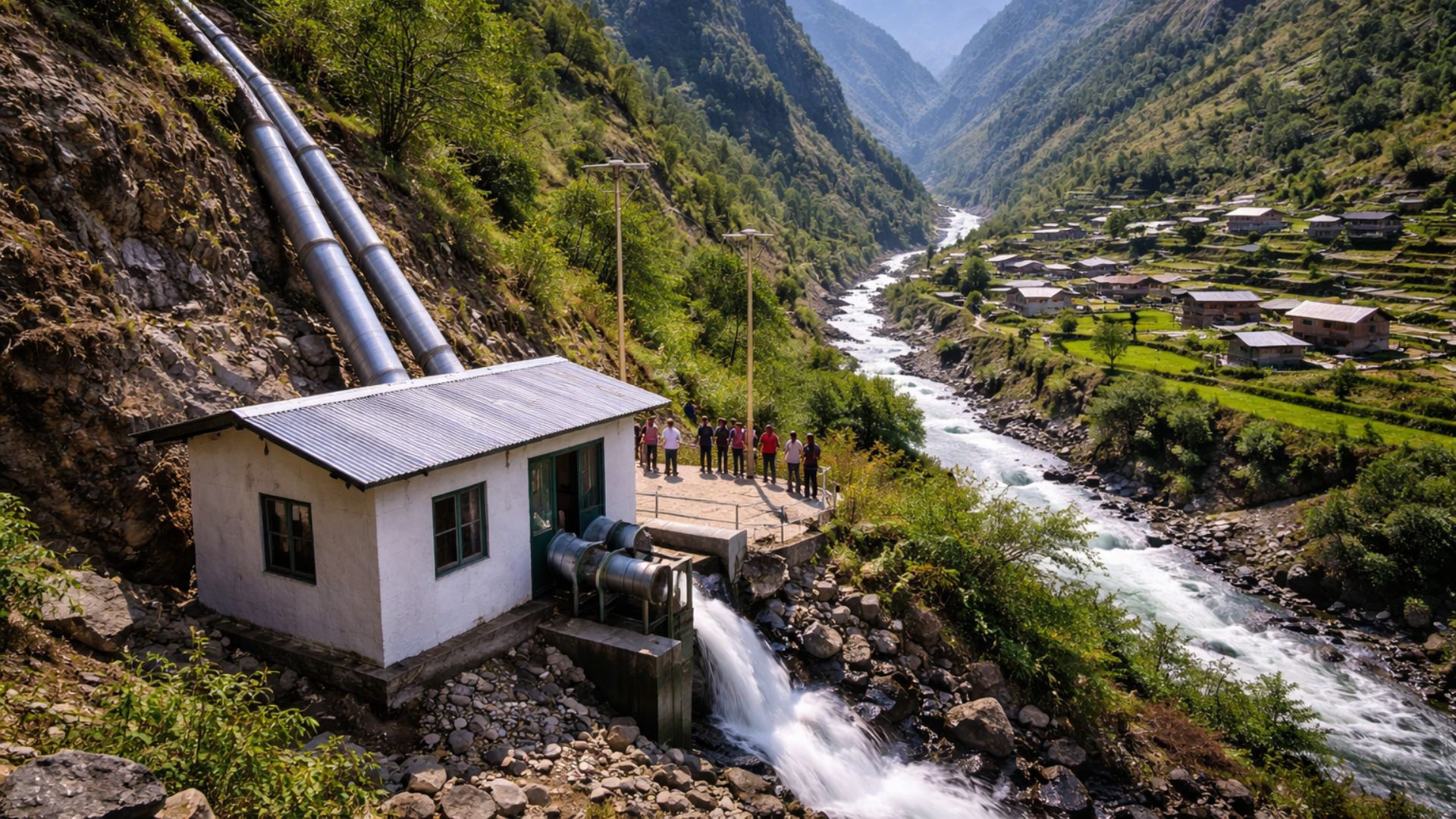


Micro-Hydroelectric Communities Transform Isolated Villages of the Himalayas by Bringing Clean Energy Without Relying on the National Grid, Using Only Constant Flow and Natural Gradient to Supply Homes, Health Services, and Small Businesses in Mountainous Regions of Nepal.
The first light bulb lit inside a house, without kerosene and without a fuel generator, became the most direct image of electrification in isolated villages of the Himalayas in Nepal, where community micro-hydroelectric systems use flow and gradient to bring energy off the national grid.
In mountainous regions where the transmission line is far away and transportation can take hours on foot, these systems act like local mini-grids, powering homes, essential services, and small businesses, with operation organized by the community itself and daily maintenance.
How the Community Micro-Hydroelectric System Works in Nepal
The logic of micro-hydroelectric systems is simple in design and demanding in execution: water is captured at one point of the stream, flows through a channel or pipe, gains speed with the gradient, and finally moves a turbine connected to the generator.
-
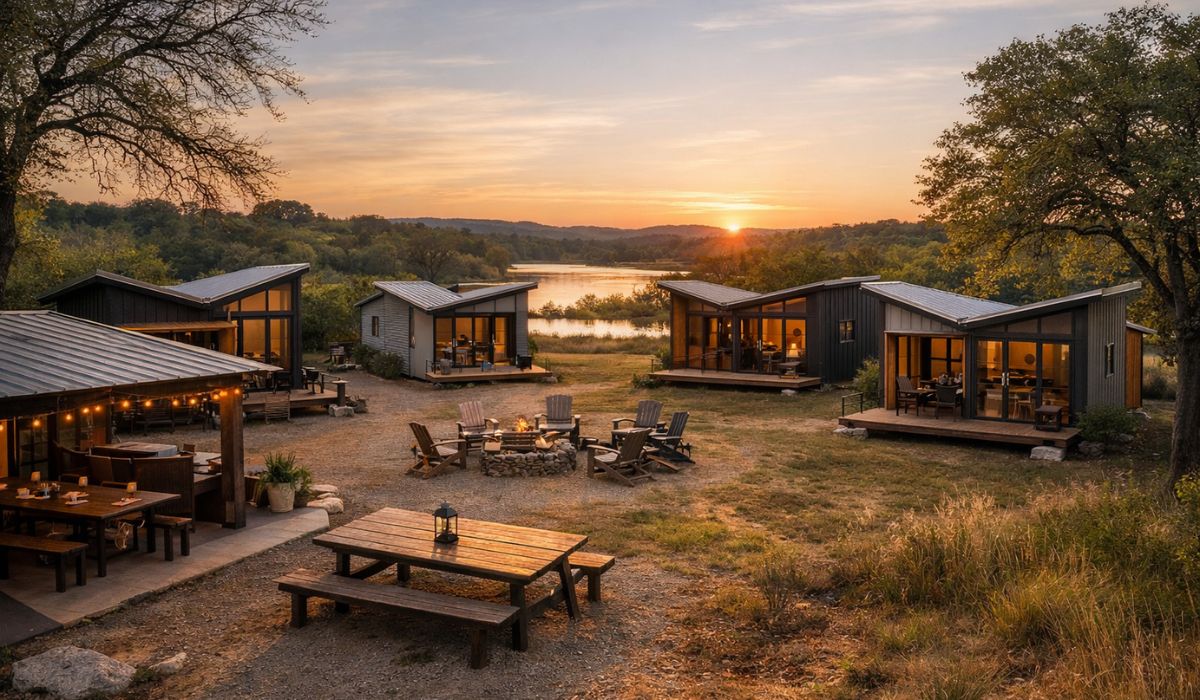
Friends have been building a small “town” for 30 years to grow old together, with compact houses, a common area, nature surrounding it, and a collective life project designed for friendship, coexistence, and simplicity.
-
This small town in Germany created its own currency 24 years ago, today it circulates millions per year, is accepted in over 300 stores, and the German government allowed all of this to happen under one condition.

-
Curitiba is shrinking and is expected to lose 97,000 residents by 2050, while inland cities in Paraná such as Sarandi, Araucária, and Toledo are experiencing accelerated growth that is changing the entire state’s map.

-
Tourists were poisoned on Everest in a million-dollar fraud scheme involving helicopters that diverted over $19 million and shocked international authorities.

Since the model usually operates with steady water flow, without a large reservoir, the territorial impact tends to be smaller than that of large power plants, in addition to fitting well in narrow valleys, steep slopes, and perennial water courses.

Two factors determine the potential of the site, and they appear in the basic calculation of the sector: the available flow in the stream and the “head,” a term used for the vertical drop that the water travels, a central parameter for estimating how much energy can be extracted.
Therefore, a modest watercourse, but constant throughout the year, can provide enough generation for residential lighting, charging cell phones and radios, functioning of schools and health posts, and community services, as long as the project effectively sizes pipes, drops, and distribution.
Expansion of Micro-Hydroelectricity and the 1,400 Installed Systems
In Nepal, micro-hydroelectricity has become a key piece of decentralized electrification in remote areas, supported by public programs and international cooperation, focusing on supplying locations outside the grid’s reach and creating minimum conditions for local economic activity.
Reports from the United Nations Development Programme indicate that investments in micro-hydropower in off-grid villages have impacted over 100,000 households and helped enable more than 1,000 businesses in mountainous communities.
The scale of this effort is also reflected in sector surveys compiled by multilateral institutions: a report from the World Bank, based on data received from the Alternative Energy Promotion Centre, records about 1,400 units in the country’s micro-hydroelectric landscape.
The same document describes that this installed base totals an aggregated capacity of tens of thousands of kilowatts, with potential service to hundreds of thousands of households, varying according to the operating condition of each plant, integration with the grid, and local operational status.
Impacts of Electrification on Health, Education, and Small Businesses

Electricity, in these contexts, does not come as a convenience but as infrastructure that reorganizes daily life, because it extends study hours, increases safety after dark, and alters the functioning of businesses, in addition to reducing dependence on fuels for lighting.
In Kharbang, in the Baglung district, the experience reported by international organizations describes energy supporting activities that require continuous electricity supply, such as workshops and services, while improving the capacity of basic community structures.
According to these reports, the presence of stable light allows for extended operating hours of clinics and supports tasks directly related to health, such as the refrigeration of vaccines and the use of equipment that was previously limited by the lack of electricity.
Alongside the impact on services, regular energy opens up space for small-scale enterprises, such as repairs, welding, and agro-processing, which depend on simple machines but require available outlets and a local grid that can handle peak consumption.
Engineering and Local Management Ensure Continuous Operation
Despite appearing as a straightforward solution, reliability does not come down to just installing turbines and generators, because mountain rivers carry sediments and debris, and civil infrastructure needs to protect the intake, stabilize pipelines, and control sand that accelerates wear and tear.
Technical reports on mini and micro-hydropower describe recurring components in these projects, such as sedimentation basins and load tanks, precisely to reduce particle entry into the system and avoid performance losses that, in isolated areas, can be costly.
When the management is community-based, daily operation often includes usage rules, local billing, and organization of preventive maintenance, since the response to failures needs to be swift and often depends on parts and labor available in the region itself.
On the other hand, the design along the water flow usually favors adaptation to the terrain, because it takes advantage of small drops along the course and eliminates the need for large reservoirs, which helps make generation feasible in points where geography complicates traditional alternatives.
Decentralized Energy in Mountainous Regions and Off the Grid
Micro-hydroelectricity remains on the map of solutions for hard-to-reach areas because it responds to a persistent reality: not every territory easily connects to transmission lines, and remote communities need systems that operate where people live.
With mountains, narrow valleys, and rivers flowing powerfully, the concept of generating energy without a “giant power plant” translates into practice: securely capturing the flow, conducting water down the gradient, transforming movement into rotation, and keeping electricity circulating within the territory.
If the arrival of light changes schools, clinics, and commerce in just a few weeks, what essential services do you believe would receive immediate priority in these villages when energy becomes available daily, with stability and local management?

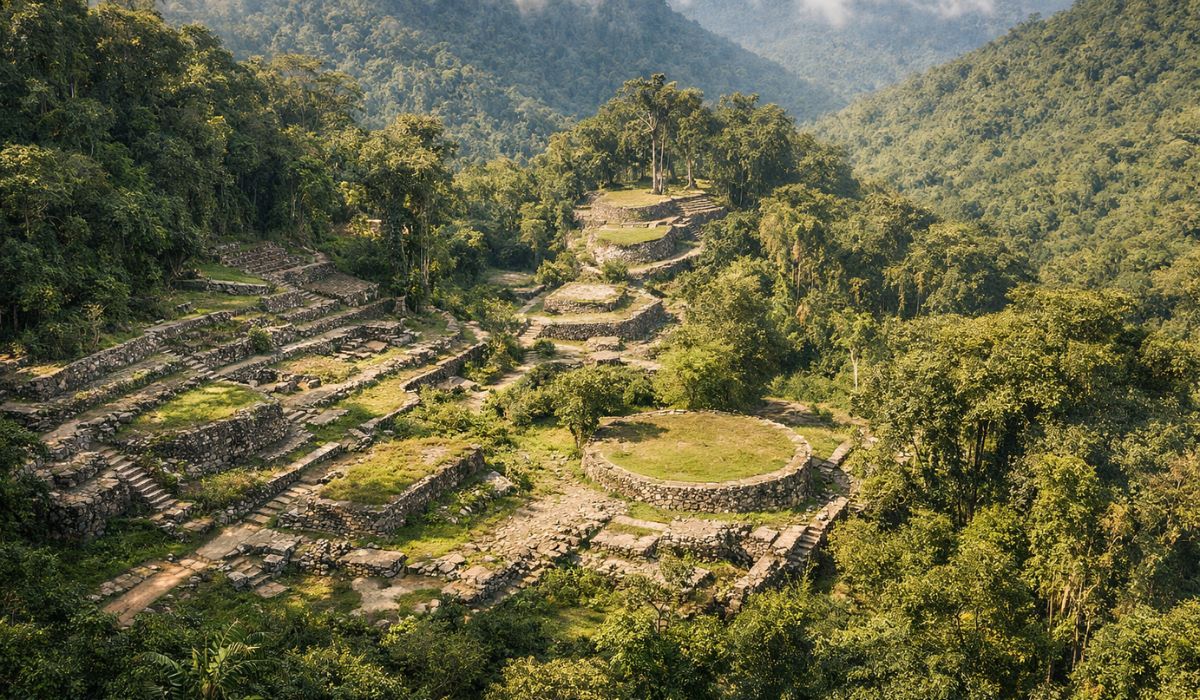







A energia constante mantém funcionando os maquinários de postos de saúde, hospitais, oficinas, supermercados, nas residências isso tem um valor imensurável, como manter funcionando geladeira, Micro-ondas, fornos, TV e etc.