





 Portuguese
  English
  Spanish
  8 min of reading
  0 comments


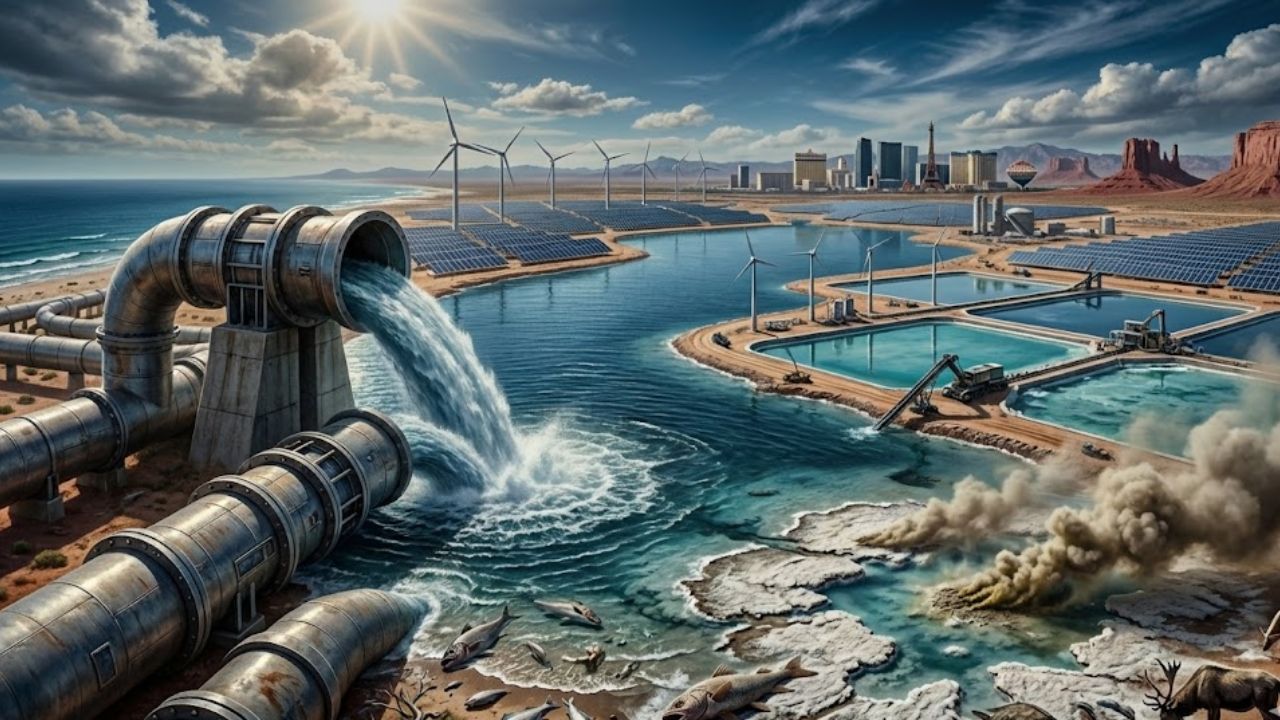
In Attempting to Pump Water from the Pacific, Desalinate, Create Artificial Seas, Store Energy, and Extract Lithium, Nevada Enters a Race Against Desertification That Could End in an Ecological Tragedy Hard to Reverse.
Nevada lives in an extreme and measurable scenario. It is the driest state in the United States and operates like an oven, with an annual average of 178 mm of rainfall, while evaporation exceeds 2,500 mm per year. In practice, the sky “takes” about 14 times more water than the ground receives. In this context, the idea of pumping water from the Pacific has ceased to be a delusion and has begun to be discussed as a real alternative.
The problem is that this engineering emerges on top of a larger crisis, the collapse of the Colorado River, a lifeline that sustains 40 million people and an economy estimated at 1 trillion and 400 billion dollars.
With Lake Mead and Lake Powell levels falling to alarming levels in the summer of 2022, the proposal promises a future of water, energy, and strategic minerals. But it also carries a historical warning: the ghost of the Salton Sea.
-
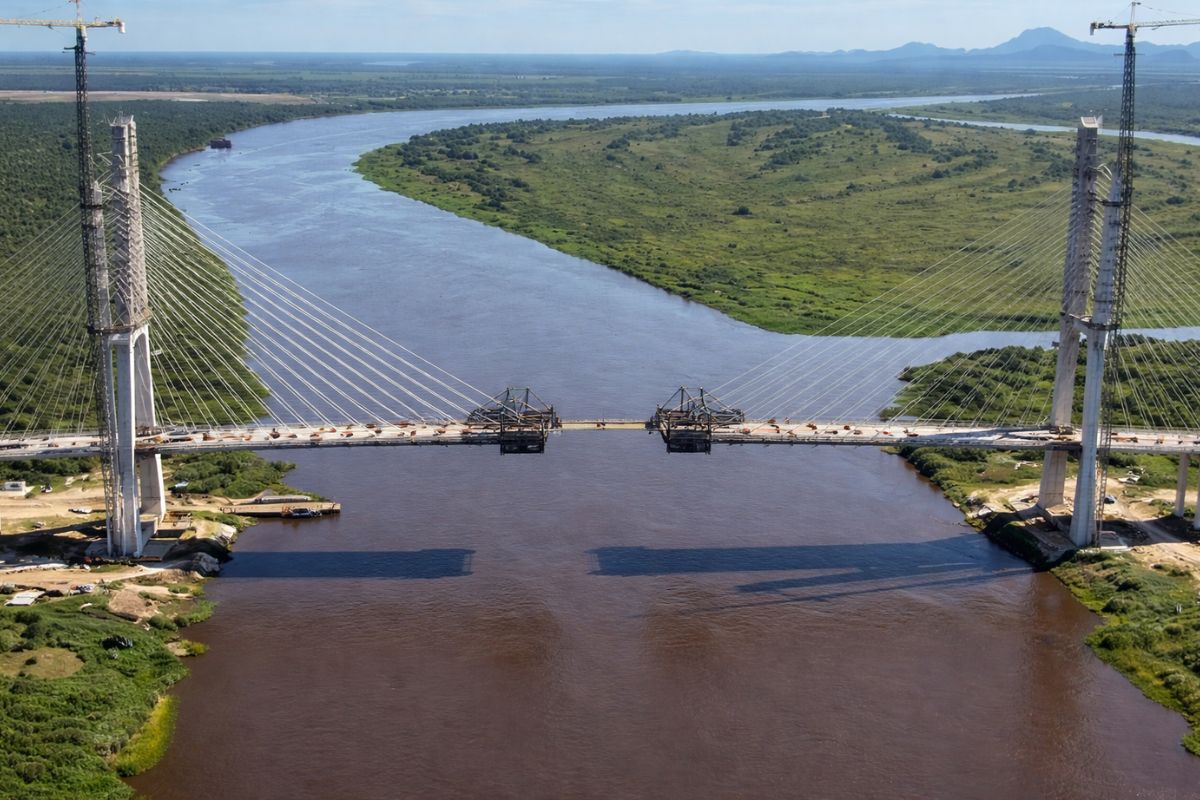
Only 46 meters remain for Brazil and Paraguay to connect via the Bioceanic Route bridge, the project that will link the Atlantic to the Pacific by land and change the logistical map of four countries in South America.
-
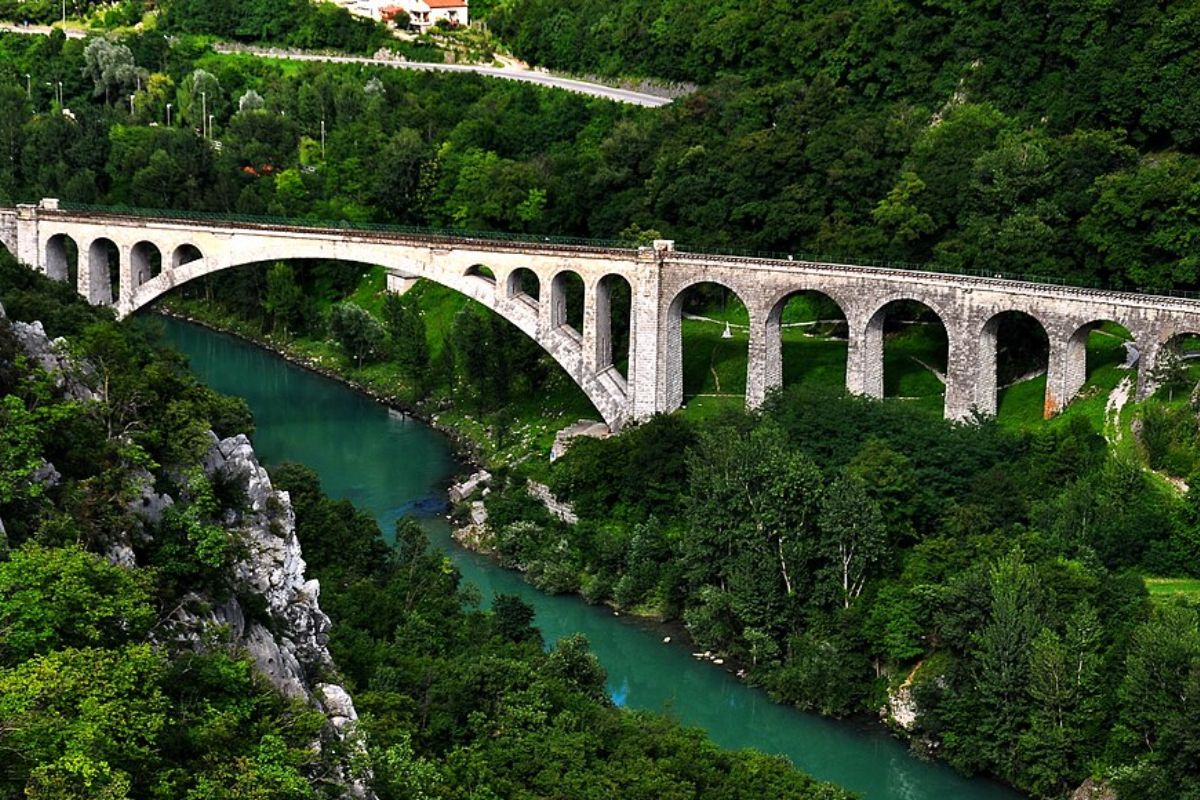
The bridge that holds the largest stone railway arch in the world: built over 100 years ago, destroyed in the war, and rebuilt to continue operating to this day, it still carries trains over the Soča River in Slovenia.
-
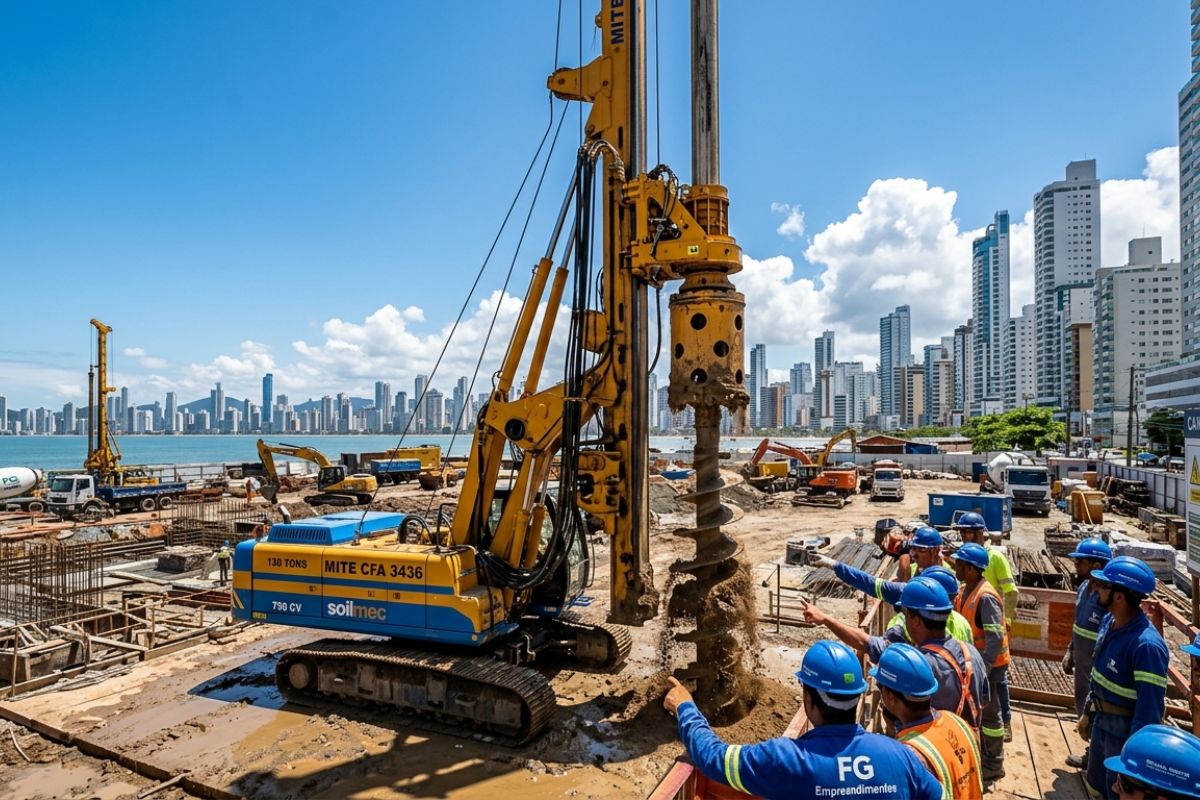
Italian giant of 130 tons arrives at the Senna Tower construction site and accelerates foundations: Mite CFA 3436 drills up to 50 m, 750 hp engine, investment of R$ 20 million, unique in Latin America.
-
The adobe house in Monteiro Lobato takes shape with bamboo and clay from the land, a stone foundation, and a roof for the wind; cracks are normal, and finishing with lime turns it into a “common house.”

The Drought That Became a Systemic Risk in the Colorado River
The numbers alone are frightening, but what turns the drought into an immediate threat is the domino effect. When reservoirs decline, it’s not just the water supply that shrinks.
Energy also enters the game. There is a critical milestone cited by engineers: the altitude of 272 m, known as Deadpool. If the water reaches this level, there will not be enough pressure to cross the Hoover Dam.
The described impact is direct. About 2000 MW of clean energy would leave the grid at once, and the flow of the river downstream could be compromised, putting pressure on agricultural areas in California and Arizona.
The diagnosis that arises from this situation is harsh: this is no longer a “normal” drought that ends with some rain, but rather a process of permanent desertification in the American West, where irrigation cuts, which consume a large portion of the river’s flow, sound like a bandage on an open wound.
What the Plan Promises by Pumping Water from the Pacific Inland


The proposal informally known as “The Nevada Water Plan” is based on a simple and radical principle: if freshwater is becoming scarce, then the solution may lie in the resource that seems infinite, seawater.
The plan envisions capturing water from the Pacific Ocean off the California coast, desalinating it, and then pumping water from the Pacific over the Sierra Nevada, dumping it into arid valleys within Nevada.
The goal is not limited to water supply. The ambition is to create one or more giant artificial lakes, something akin to an inland sea in regions referred to as Panamint Valley, Big Smoke Valley, and Amargosa Valley.
From there, the project sells itself as a multifunctional complex: providing water, storing renewable energy, exploring strategic minerals, and even modifying the local climate.
This is where the promise becomes both seductive and dangerous at the same time. The same scale that can bring structural gains also multiplies errors. And for the plan to exist, it needs to overcome obstacles of physics, chemistry, continuous operation, and environmental risk.
Desalination by Reverse Osmosis and the Scale That Changes Everything
To reduce corrosion in the pipes and avoid soil salinization, the strategy is to treat the water right at the source. The technology cited is reverse osmosis, which uses very high pressure, around 1000 psi, equivalent to 70 bar, to force seawater through semipermeable membranes.
The pores are so small that they only allow water molecules to pass through, retaining salt, bacteria, and other impurities.
The challenge lies in scale and maintenance. There is reference to a plant in San Diego, Carlsbad, producing about 50 million gallons per day. However, the Nevada plan would require capacity several times larger.
Furthermore, the membranes clog with marine organisms and organic matter, necessitating pre-treatment and high maintenance costs. The larger the system, the greater the weight of “invisible” operations, cleaning, membrane replacement, brine disposal, and production stability.
The Pipeline Route and the Attempt to Reduce Environmental and Legal Conflict
A point presented as a practical solution is the choice of path. Instead of crossing protected areas or enforcing expropriations, engineers suggest that the underground pipes follow existing corridors, such as Highway 95 and old railway lines.
The logic is clear: using existing right-of-way reduces legal barriers, facilitates pumping stations, and associated electrical transmission lines.
The described route would leave the coast, cross the Mojave Desert, follow ancient dried riverbeds, and reach the center of Nevada. Even with an “intelligent” route, the central bottleneck remains: gravity and energy.
The Physical Cost of Raising Water and the Dilemma of Continuous Energy
Nevada is a plateau, and the target valleys mentioned are between 1000 and 1700 m above sea level. The Sierra Nevada and coastal mountain ranges function as walls. According to thermodynamic principles, the energy required to lift colossal volumes of water is fixed and extremely high.
Initial estimates indicate that to operate the system with sufficient flow to form lakes, the consumption could be around 6 GW continuously.
The presented comparison is striking: the Hoover Dam has a maximum installed capacity of about 2 GW. About three “Hoovers” would be needed just to power the pumping.
If this were done with fossil electricity, the plan would lose its climate legitimacy and become an emissions problem. The proposal attempts to escape this dead end with a reinterpretation of the pumping itself.
The “Water Battery” and the Duck Curve in the West
The plan to pump water from the Pacific is also presented as a solution to the instability of renewable energy. California and Nevada are leaders in solar power, with California cited as having over 42 GW of installed capacity, while Nevada is progressing towards a goal of 50% renewable energy by 2030.
However, this growth creates the “duck curve”: during the day, there is surplus energy, and prices drop, sometimes to the point of forcing a reduction in generation; by evening, demand rises, and solar disappears, requiring the activation of gas plants.
The proposed response is pumped hydro storage, functioning as a giant battery. During the day, with cheap and surplus energy, pumps lift water to reservoirs at altitude. At night, the water descends through pressurized pipes, spins turbines, and returns electricity to the grid.
The cited efficiency is around 70% to 80%. It is an attempt to transform a brutal cost into an asset for energy stability, converting electrical energy into potential energy and then back again.
Brine as “Liquid Ore” and the Role of Lithium in the Equation
Even with energy engineering, the estimated initial investment of 16 billion dollars remains enormous. To make the equation more attractive, the plan relies on the byproduct of desalination.
For every 2 liters of incoming seawater, 1 liter of freshwater and 1 liter of concentrated brine is obtained. Traditionally, this brine is hazardous waste because discharging it into the ocean can raise local salinity and affect ecosystems.
The economic narrative attempts to reverse the signal. By concentrating seawater, the amount of valuable minerals doubles, and ocean water contains lithium, magnesium, rubidium, boron, and uranium. The plan proposes to integrate direct lithium extraction at the output of the plants, using selective absorbent materials to capture ions without relying on months of evaporation.
There is also reference to investments and demonstrations in the Salton Sea region, referred to as the Lithium Valley, with major companies investing and relevant annual production estimates in geothermal brine.
The Ecological Alert: Why the Salton Sea is a Warning and Not a Detail
Environmental opposition is anchored in a real and brutal example, the Salton Sea, the largest artificial lake in California, which emerged accidentally in 1905 after a breach in the Colorado River levee, flooding the depression for two years.
Being a closed basin, the water only leaves through evaporation, and the salt remains. After more than a century, the cited salinity reaches 74 parts per thousand, double that of the Pacific Ocean.
The described consequences form a disaster package. Death of fauna due to salinity and eutrophication, with algal blooms consuming oxygen. Odor and hydrogen sulfide gas.
Retreat of the lake exposing sediments with arsenic, selenium, and DDT accumulated from agricultural discharges, turning into toxic dust raised by the winds. And a cited public health effect, with hospitalizations for childhood asthma in the neighboring Imperial County at a rate about twice the state average.
Critics fear that Nevada’s “inland sea” will repeat this script. Even with desalinated water, evaporation in the desert is extremely high, varying between 2 and 3 m per year. Over time, soil salt and minerals washed down from the mountains accumulate in the lakes.
Without a continuous outlet to discharge this salt, the system tends to evolve into dead saline lakes. And there is a simpler and more dangerous operational risk: if pumping stops for economic or technical reasons, the lakes would dry up, leaving crusts of salt and chemicals as new sources of dust in the West.
Lake Effect, Invasive Grass, and Species That May Pay the Price
There are also indirect impacts. A large body of water increases local humidity. This can favor diseases in animals adapted to arid environments and stimulate invasive plants such as cheatgrass, described as a short-cycle grass that grows with moisture in the spring and dries out in early summer, turning into highly flammable straw.
The result could be a new fire cycle, with more likely fires in areas where they were previously rare, destroying slow-growing native species.
The main text also cites an extreme vulnerability in Amargosa Valley: the Devils Hole Pupfish, one of the rarest fish in the world, which exists in a single flooded cave.
Any change in the pressure of the water table or leakage from the project could alter the chemistry and temperature of the habitat, pushing the species toward extinction.
Between Genius and Arrogance, the Decision That Could Define the Decade
On paper, pumping water from the Pacific seems like the key that opens several doors at once: water for a desertifying region, a battery for stabilizing renewables, and an economic engine through strategic minerals.
In practice, the proposal behaves like a giant bet, with technical, financial, and ecological risks that do not forgive interruptions or half measures.
The central dilemma is not just whether it can be built. It’s whether it can be sustained for decades without creating a new Salton Sea on an expanded scale, with toxic dust, wildlife collapse, fires, and irreversible impacts in the desert.
And you, would you bet on pumping water from the Pacific to reshape the environment or defend that the West learns to adapt with less water?






Seja o primeiro a reagir!