





 Portuguese
  English
  Spanish
  4 min of reading
  0 comments


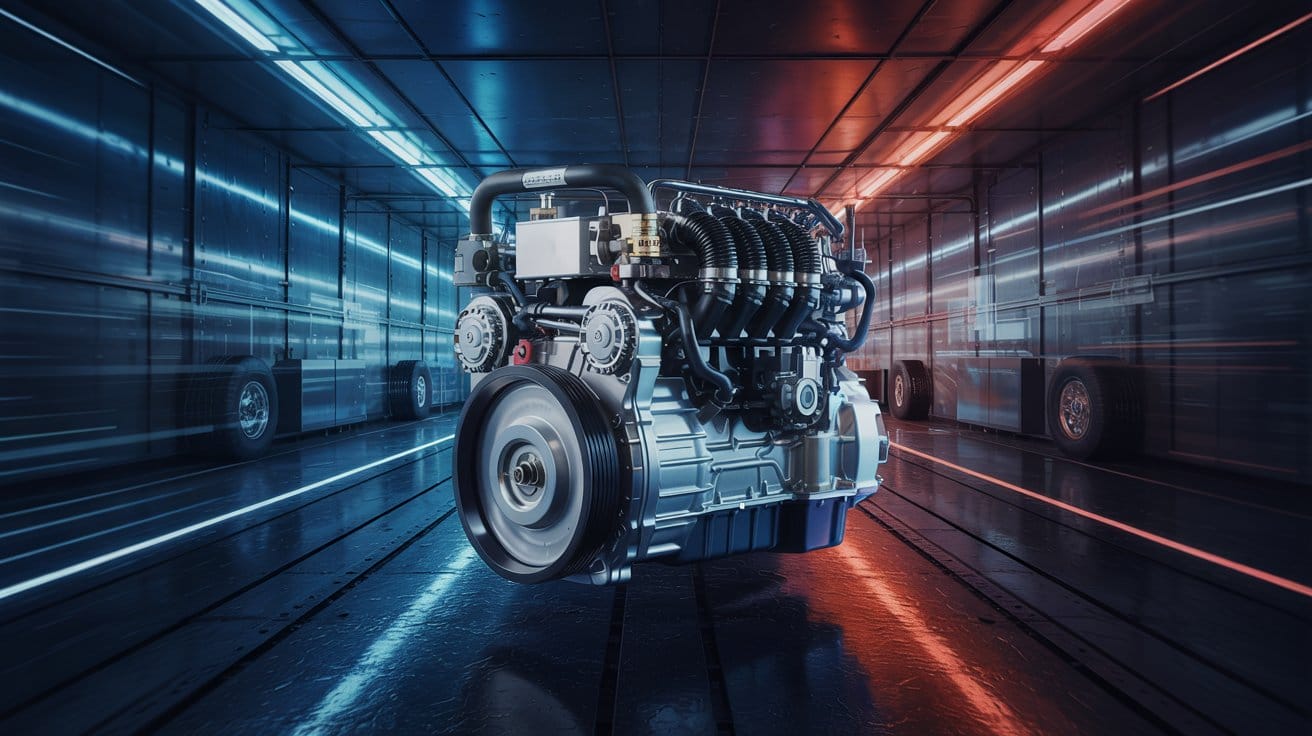
Revolutionary Engine In Testing Promises To Redefine Hybrid And Electrified Cars Of The Future, With Innovative Solutions For Efficiency And Sustainability.
The automotive industry is on the brink of a revolution. A new combustion engine technology, developed by the Spanish startup INNengine, promises to reconfigure future hybrid models and possibly even fully electrified cars.
Known as e-REX, the engine has already attracted the attention of industry giants like Renault and Geely and is about to be tested to prove its potential.
If the innovation is confirmed, the e-REX could be a historical milestone, redefining what we understand by efficiency and sustainable mobility.
-
Motorola launched the Signature with a gold seal from DxOMark, tying with the iPhone 17 Pro in camera performance, Snapdragon 8 Gen 5 that surpassed 3 million in benchmarks, and a zoom that impresses even at night.

-
Satellites reveal beneath the Sahara a giant river buried for thousands of kilometers: study shows that the largest hot desert on the planet was once traversed by a river system comparable to the largest on Earth.

-
Scientists have captured something never seen in space: newly born stars are creating gigantic rings of light a thousand times larger than the distance between the Earth and the Sun, and this changes everything we knew about stellar birth.

-
Geologists find traces of a continent that disappeared 155 million years ago after separating from Australia and reveal that it did not sink, but broke into fragments scattered across Southeast Asia.

The Revolution Of e-REX
In 2020, engineer and co-founder of INNengine, Juan Garrido Requena, released a video that caught the automotive world’s attention.
In it, Garrido introduced the e-REX, an engine designed to be the foundation for future hybrid vehicles.
Unlike conventional combustion engines, which have been adapted for current hybrids, the e-REX was developed from scratch with specific features to meet the demands of electrified cars.
According to Garrido, the aim of e-REX was to create a compact, efficient engine without the typical vibrations or noises of traditional engines.
Weighing only 35 kilograms, the e-REX engine stands out not only for its size but also for its power.
According to Garrido, the engine has twice the power of a two-stroke engine and four times that of a four-stroke engine, while maintaining excellent fuel efficiency.
Additionally, it emits significantly lower levels of CO₂ and NOx, representing a considerable improvement over conventional engines, while maintaining power similar to that of a 2,000 cc engine.
One of the central innovations of the e-REX is the design of its opposing pistons and the variable compression ratio system, which allows the engine to adapt according to the need for power or efficiency.
This innovative approach eliminates typical vibrations of combustion engines, creating a more comfortable experience for both drivers and passengers.
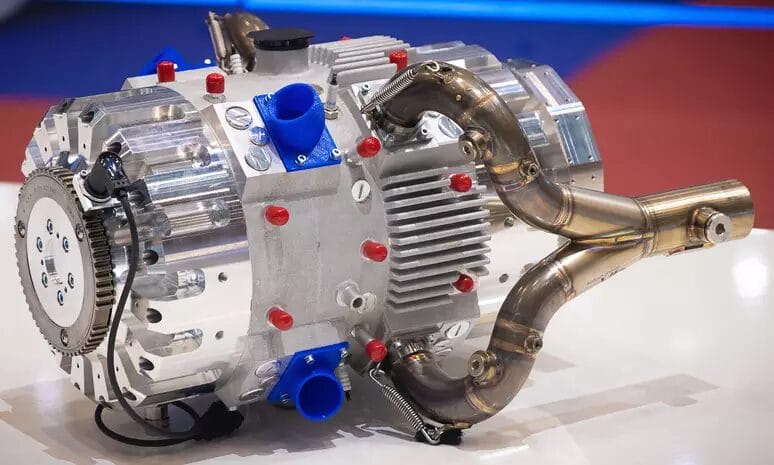
The Engine Of The Future: For Extended Range Hybrids
The e-REX was not designed to replace conventional combustion engines, but to power extended range hybrids, a category of hybrid cars that operate differently from traditional models.
While traditional hybrids use a combustion engine as the main energy source and an electric motor for support, extended range vehicles work in the opposite way: the electric motor is primary, and the combustion engine serves to power a generator, which in turn generates electricity to move the wheels.
In practical terms, this means that, although the car has a combustion engine, it is essentially an electric vehicle, with the combustion engine functioning as a “battery,” a way to extend the range of vehicles without relying on frequent charging infrastructure.
This setup could have a significant impact on sustainable mobility, making hybrid cars more efficient and accessible.
A Horse Enters The Game
Although the concept of extended range hybrid vehicles is not new, the entry of large corporations in the search for new technological solutions may change this scenario.
A Horse, a joint venture formed by the giants Renault (45%) and Geely (45%), with participation from Aramco (10%), is an example of this.
The company aims to develop next-generation hybrid engines, batteries, and other essential components for future vehicles.
In 2025, Horse began producing 49 kW hybrid engines capable of powering hybrid cars at speeds of up to 130 km/h.
Now, the company will test the prototypes of the e-REX engine, created by INNengine.
The partnership aims to evaluate the feasibility of the technology and, if the tests are successful, mass production could begin, giving a significant boost to hybrid and electrified cars.
These tests will be conducted at the laboratory of the Polytechnic University of Valencia, specifically in the Department of Clean Mobility and Thermofluids.
The results of the tests will determine whether Horse will license the e-REX technology for mass production, which could accelerate the revolution of hybrid cars.
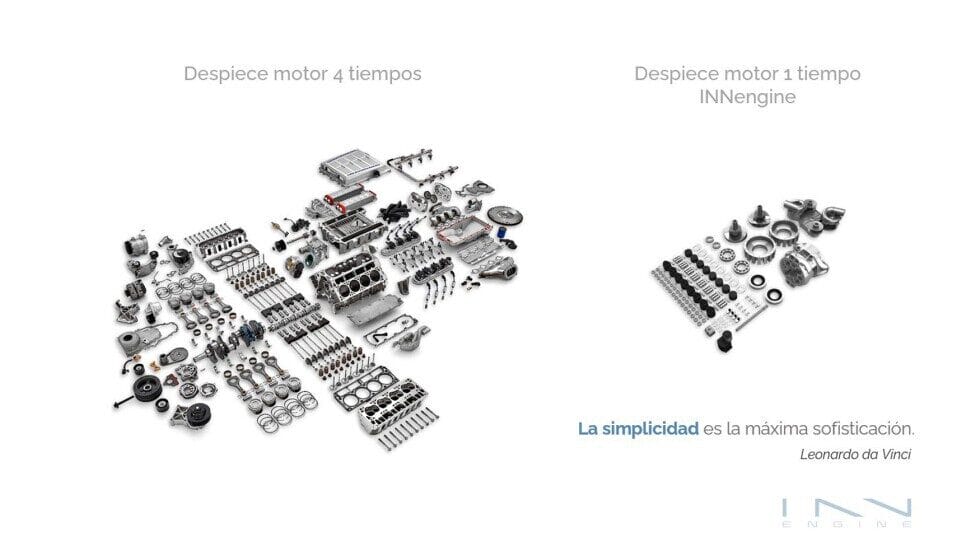
Implications For Diverse Industries
Julien Faure, Technology Director of Horse, highlighted that the innovation brought by the e-REX engine has the potential to transform not only the automotive industry but also other sectors such as marine, aviation, drones, and even energy generation.
According to Faure, the tests could be historically significant, indicating a new direction for the development of combustion engines and expanding the application of sustainable technologies across various fields.
Roberto Leandro, Executive Director of INNengine, also emphasized the positive impact of this partnership.
For him, collaboration with Horse is a “bold step towards a more sustainable future”.
The Spanish startup believes that if the tests show the viability of the e-REX, the technology could be a true game-changer for the automotive industry, especially regarding the development of more ecological vehicles with greater autonomy.
What The Future Holds?
The movement of major players in the sector, such as Renault and Geely, and the promising technology of the e-REX have drawn the market’s attention.
If these tests prove successful, the Spanish engine could become a global benchmark for extended range hybrids and even fully electric cars.
With the growing demand for more sustainable and efficient mobility solutions, it is important for the automotive sector to continue innovating, seeking alternatives that meet both consumer needs and environmental challenges.
What do you think about this revolutionary technology? Do you believe combustion engines will play an important role in the future of electric cars? Leave your opinion in the comments!







-

Uma pessoa reagiu a isso.