





 English
  Francês
  Alemão
  Italiano
  Japonês
  Norueguês
  Portuguese
  Spanish
  7 min of reading
  0 comments


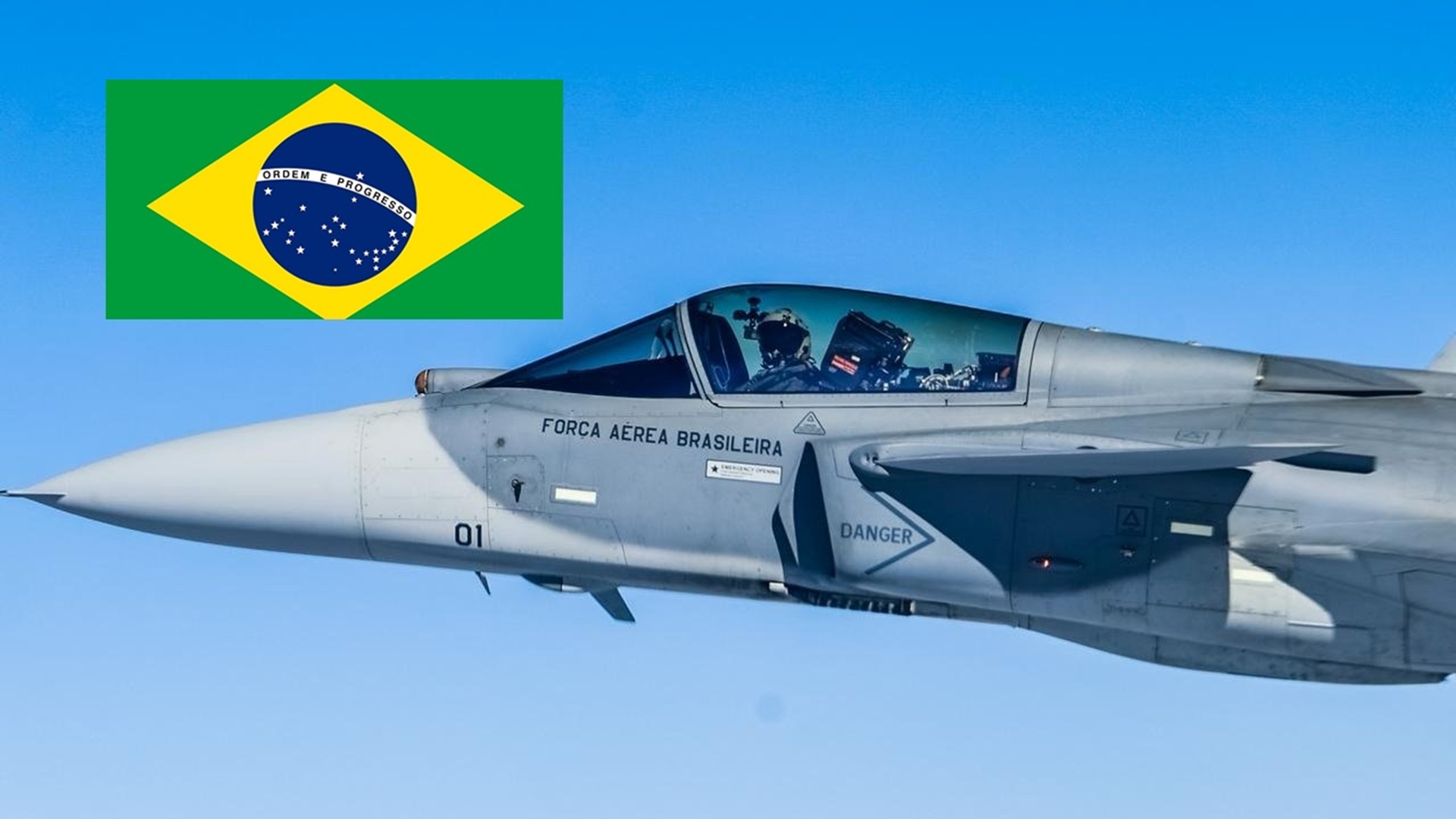
The impact of the debut of the first Gripen fighter produced in Brazil overstepped borders and provoked a wave of comments from Argentinians, who recognized the Brazilian technological and industrial advancement while regretting the loss of strategic capacity of their own country
The presentation of the first F-39 Gripen fighter produced in Brazil marked, this Wednesday (25/03), a new stage for the national defense industry and for the Brazilian Air Force. The ceremony was held at the Embraer facility in Gavião Peixoto, in the interior of São Paulo, with the presence of President Luiz Inácio Lula da Silva, who participated in the event and named the aircraft.
The fighter presented is the first supersonic model of its kind manufactured on Brazilian territory within the partnership between Embraer and the Swedish company Saab. The program foresees the acquisition of 36 aircraft by the FAB, with part of them being produced in the country, in an agreement signed in 2014.
Delivery of the first F-39 Gripen fighter produced in Brazil
The delivery of the first F-39 Gripen fighter assembled in Brazil was treated as a milestone for the sovereignty and defense industry of the country. The ceremony gathered the President of the Republic, Luiz Inácio Lula da Silva, the Vice President of the Republic and Minister of Development, Industry, Commerce and Services, Geraldo José Rodrigues Alckmin Filho, the Minister of Defense, José Múcio Monteiro Filho, and the Commander of the Air Force, Air Lieutenant Brigadier Marcelo Kanitz Damasceno.
-
Expansion of Federal Institutes: 38 new campuses and R$ 200 million for public education; see the cities included.

-
Lula’s government changes rule in important benefit and thousands of Brazilians will no longer receive it; see what has changed.

-
This discovered deposit near the Andes could change the future of Argentina, attract billions, and even shake up the global metals market.

-
Volkswagen is in such a deep crisis that it has decided to convert one of its factories in Germany into a production line for components for the Israeli Iron Dome missile defense system to save 2,300 jobs.

The presentation took place on Wednesday morning (25), at the Embraer airfield in Gavião Peixoto (SP). The event marked the display of the first supersonic F-39E Gripen fighter produced in the country, within the new phase of the program conducted in partnership with Saab.
According to the information presented during the ceremony, the national model is developed by Embraer in cooperation with the Swedish company. The initiative integrates the FAB modernization program and includes the transfer of Swedish technology and direct participation of Brazilian engineers in production.
In total, 15 of the 36 aircraft acquired by the Brazilian Air Force will have final assembly carried out at the Embraer plant on national territory. Another 14 fighters anticipated in the current contract with the FAB will follow this same production model.
The Minister of Defense, José Múcio Monteiro Filho, stated that the FX-2 project schedule already anticipated that 2026 would include the first aircraft produced in Brazil. In his statement, he said that the delivery has become a reality and that the moment represents a historic achievement that evokes emotion and allows a sense of pride for the responsibility fulfilled.
The Commander of the Air Force, Air Lieutenant Brigadier Marcelo Kanitz Damasceno, highlighted the strategic weight of the fighter’s delivery. In his speech, he stated that the roll-out of the FAB 4109 aircraft symbolizes the transition from planning to execution and from expectation to reality.
Damasceno also declared that the aircraft represents the most powerful combat platform ever incorporated into the Air Force throughout its history. According to him, the production of the Gripen on national territory is an achievement of the entire nation and the real expression of a “Supersonic Brazil,” which advances towards ever higher flights.
Operational capacity and modernization of the FAB
The F-39 Gripen is described as a fighter equipped with advanced combat systems and high operational capacity in different scenarios. The aircraft takes on a central role in the modernization process of the Brazilian Air Force, replacing the old American-made F-5 fighters that had been in operation for decades.
According to the information released, the fighter can reach speeds of up to 2,400 kilometers per hour. This performance corresponds to about twice the speed of sound and reinforces the operational leap represented by the new vector.
The aircraft also has an autonomy of up to two and a half hours of flight. Additionally, it features in-flight refueling capability, a characteristic that extends its operational range.
In February of this year, the fighter was placed on air defense alert in the country for the first time. This means that the aircraft can now be employed in real missions and has taken on the responsibility for the protection of the airspace of the federal capital.
The incorporation of the model is treated by the FAB as part of a new stage of Brazilian air defense. For the institution, the arrival of the F-39 represents the incorporation of a next-generation vector, with the capacity to elevate the operational level in the protection of national airspace.
Technology transfer, jobs, and industry participation
The production of the Gripen in Brazil is pointed out as a strategy for absorbing advanced technical knowledge. This process encompasses stages related to production, logistical support, and future modernizations of the aircraft.
In practice, the initiative seeks to ensure the internalization of technology and strengthen the Defense Industrial Base. The program also expands Brazil’s strategic autonomy in a sector considered to be of high complexity.
The impact of the F-X2 Project was also highlighted in the socioeconomic field. The program is described as one of the main technology transfer projects ever carried out in the country and enabled the training of about 350 Brazilian engineers in Sweden.
In addition to professional qualification, the ecosystem created around the project resulted in the generation of more than 12,000 jobs. Of this total, two thousand are direct and ten thousand are indirect.
According to the information presented, this environment contributes to the retention of talents trained in institutions such as the Technological Institute of Aeronautics. The process also reduces external dependence in strategic sectors related to defense and technology industry.
With the serial production of the F-39 Gripen, Brazil becomes the only country to produce the aircraft outside Sweden. National and international companies such as AEL Sistemas, Atech, and Akaer are already participating in the production of avionic systems, structures, and strategic components.
The ceremony also featured the presence of civil and military authorities, members of the Air Force High Command, and representatives of the defense industry. Specialists from the Air Force Academy, responsible for areas ranging from aircraft maintenance to logistics, communications, and operational support, also participated.
The participation of these professionals occurred on the same day that the Day of the Aeronautics Specialist is celebrated. Their presence at the event reinforced the recognition of the dedication, competence, and commitment of these military personnel in the functioning of the Brazilian Air Force.
Repercussions in neighboring countries to Brazil
The presentation of the first F-39 Gripen fighter produced in Brazil also resonated in other Latin American countries. One of the statements described the achievement as historic for the entire region and highlighted that the first Saab Gripen E manufactured in Brazil is already flying and has escorted the presidential plane.
In the same repercussion, the advancement was related to strengthening Brazilian technological autonomy and the growth of the country’s defense industry. The comment emphasized that the project, developed with Saab, aims to boost technological autonomy and strengthen the Brazilian defense industry.
In Honduras, the repercussion was presented in a tone of emphasis on the regional reach of the delivery. The record classified the episode as the presentation of the first supersonic fighter produced in Latin America and highlighted the participation of President Luiz Inácio Lula da Silva in the act.
In this account, the Brazilian president defined the moment as a historic and symbolic event. The statement attributed to Lula asserts that the episode demonstrates that Brazil is a country that believes in itself, invests in technology, and reaffirms its sovereignty.
The Brazilian Air Force also appeared in the international repercussion by stating that the development of the F-39 combat aircraft marks a new era in air defense. The emphasis fell on the fact that the contract provides for technology transfer and training of Brazilian professionals.
Another point echoed outside Brazil was the information that, of the 36 aircraft acquired by the FAB, 15 will have final assembly at the Embraer plant. The assessment reproduced in foreign media maintains that this milestone places Brazil among a select group of nations capable of developing and producing high-complexity combat aircraft, in an achievement considered unprecedented in Latin America.
Among comments from South Americans, the presentation of the Brazilian fighter also provoked comparisons with other countries in the region. One of the records states that Brazil has technologically and militarily surpassed Argentina since the 1970s and attributes this situation to Argentine political decisions.
Another comment mentions that, while Argentina sells in parts the engineering built over years in the CAREM reactor project, Brazil continues to invest in technological development within its own country. The same statement argues that industrial sovereignty is one of the most important things a nation can have and concludes that, without industry, there is no nation.
The regional repercussion, therefore, focused on two main points. On one hand, the achievement was treated as a Brazilian industrial and technological milestone; on the other, it was seen as an event with an impact for all of Latin America.
With the presentation of the first F-39 Gripen fighter produced on national territory, Brazil begins a new phase of the modernization program of the Brazilian Air Force. The advancement combines local production, technology transfer, professional training, and increased participation of the national industry in a strategic defense project.









Seja o primeiro a reagir!