





 English
  Francês
  Alemão
  Italiano
  Japonês
  Norueguês
  Portuguese
  Spanish
  5 min of reading
  0 comments


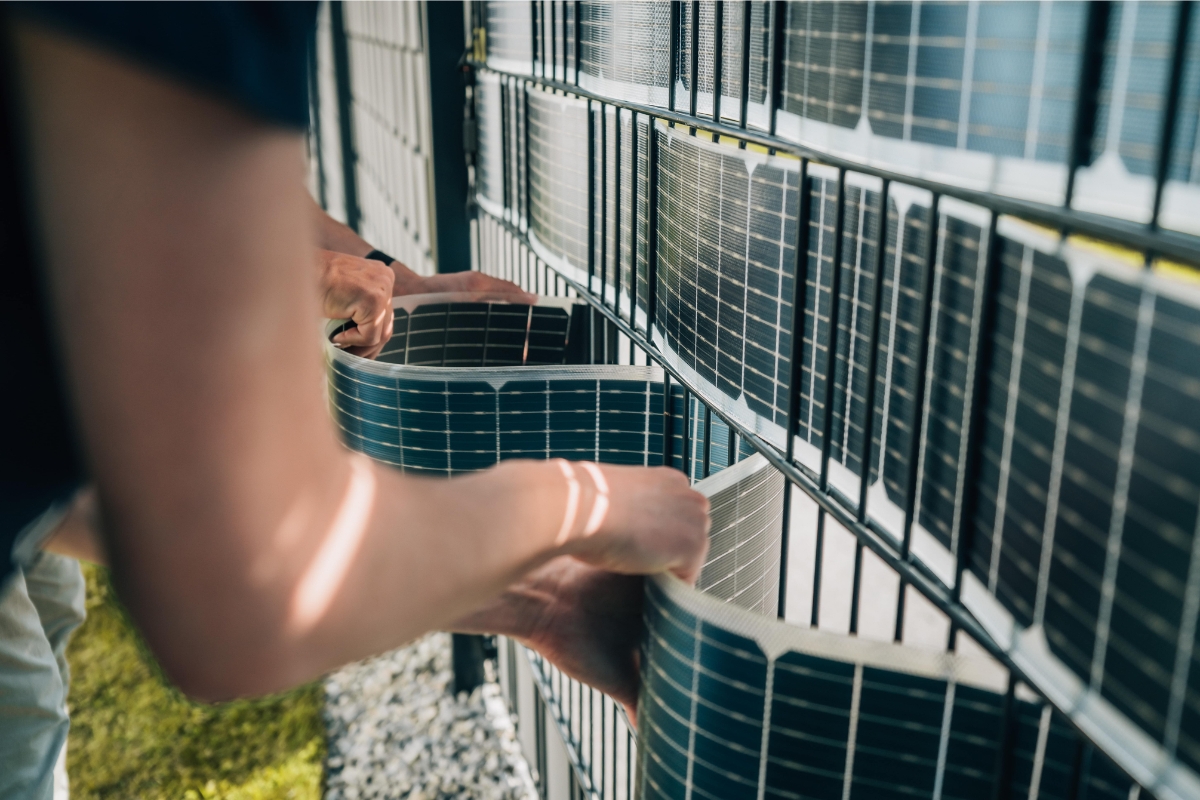
Metal fence stops being just a physical limit when it receives flexible solar strips, reaching up to 18.8 kWp in 100 meters and transforms a common enclosure into energy infrastructure with an impact that shakes the sector
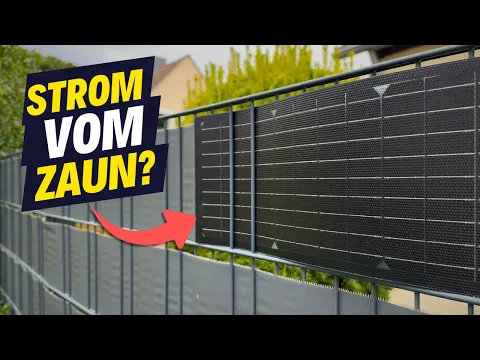
A common fence can become a source of energy. This is the proposal of Sunbooster VERTICAL+, a solution created to take advantage of already installed metal structures and convert them into photovoltaic generation without occupying the roof or opening new areas on the land.
The appeal lies in the format. Instead of rigid glass panels, the system uses flexible solar strips that weave through the fence mesh and create a lighter installation, with an integrated look and a promise of production during peak electricity cost times.
System uses 6 strips per module and reaches 468 Wp in 2.5-meter panels
The proposal was designed for double-panel metal fences, widely used in residential, rural, and commercial areas. The product works with two widths, 2.0 meters and 2.5 meters, following formats already common in this type of enclosure.
-
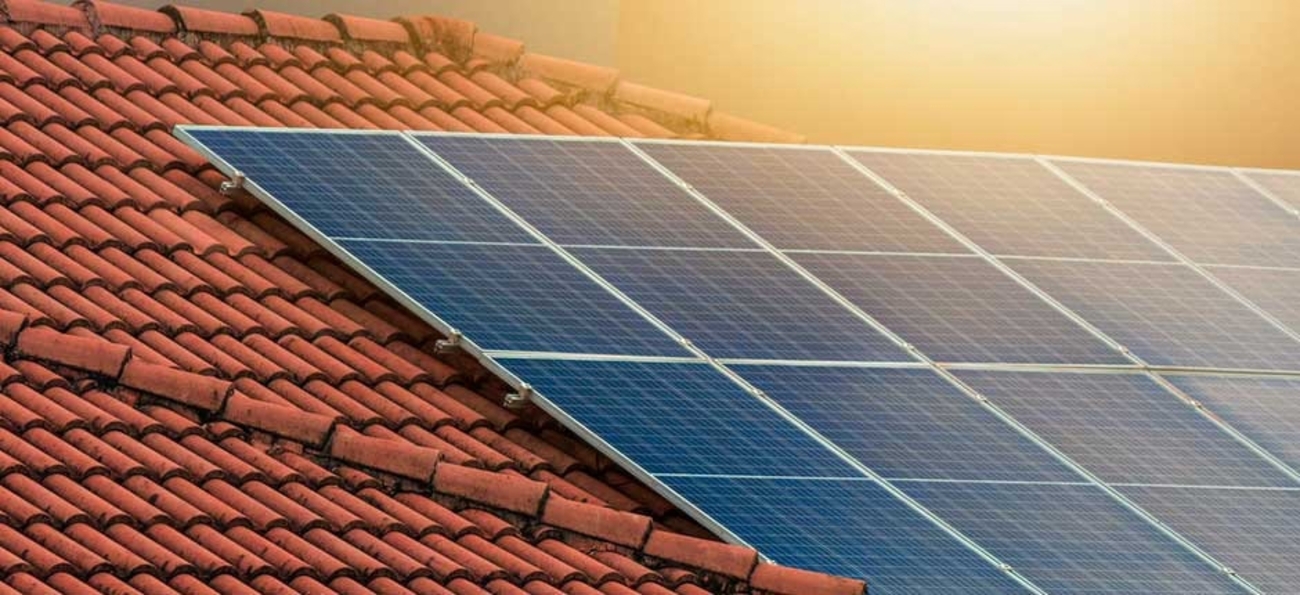
Roraima bets on the sun to escape high tariffs: Amid the energy crisis and price hikes, solar energy is growing in Roraima and transforming consumption in the North region.
-
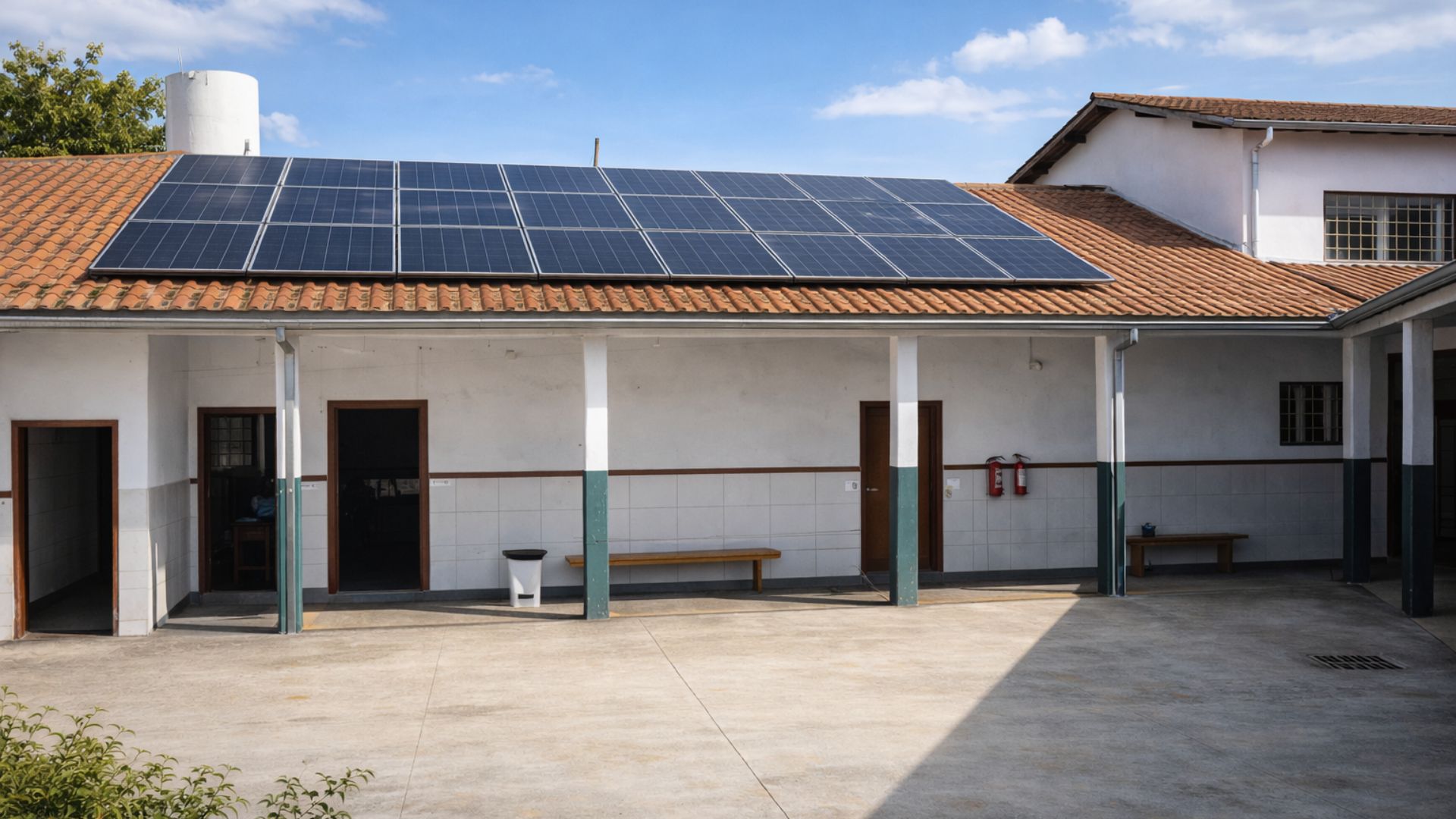
Copel boosts solar energy in Paraná and brings innovation to public schools, promoting savings on electricity bills, energy efficiency, and a direct impact on the quality of education.
-
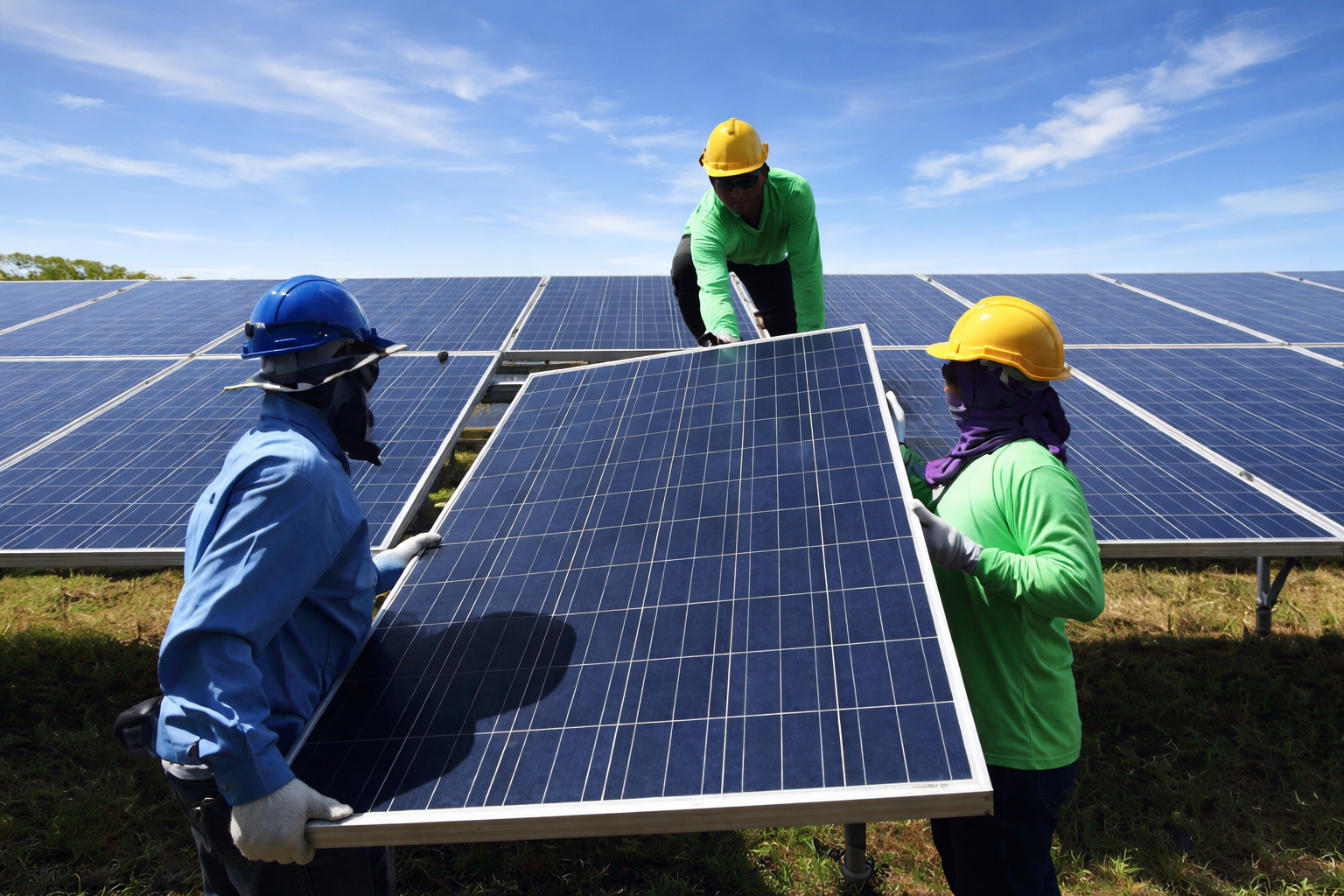
Brazil reaches historic milestone in solar energy: Sector surpasses 2 million accumulated green jobs and generates billions in the national economy even under market pressure.
-
Minas Gerais takes the lead in renewable energy: State surpasses historic mark of 14 GW in solar energy generation in MG and consolidates dominance in the Brazilian electric sector.

Each strip measures 186 mm in height and has 1.8 mm in thickness. The weight is also noteworthy, with about 1.0 kg in the 2.0-meter version and 1.2 kg in the 2.5-meter version, well below what is seen in traditional rigid modules.
The power varies according to size. The company reports 62 Wp per strip in the 2.0-meter version and 79 Wp per strip in the 2.5-meter version. Since each set uses 6 strips, the system reaches 372 Wp or 468 Wp per complete module.

Installation bets on a lightweight structure and avoids the logic of rigid panels
The project’s differential lies in the assembly method. The strips are intertwined in the fence itself, occupying the space that in many cases would already receive privacy strips. This reduces the need for extra supports and avoids a heavy appearance in the enclosure.
This design also helps with the structural aspect. Instead of placing large and heavy panels on the grid, the proposal distributes the weight across smaller and flexible elements, which decreases the load on the fence and reduces an important concern regarding wind and mechanical stress.
The brand presents versions for installation with direct connection to the residential grid, as well as broader models for larger projects. In the kits aimed at residential use, the strips, cables, fixings, inverter, and power cable for connecting the system are included.
Vertical orientation aims to pull generation to morning and late afternoon
The system works with bifacial cells, capable of capturing light from both sides. In practice, this opens up space to also take advantage of light reflected by the ground and nearby surfaces, something especially relevant in vertical structures.
The company’s bet is clear. Instead of concentrating almost everything at the peak of midday, the vertical installation seeks to enhance production in the early morning and late afternoon, periods when many homes still consume a lot of energy. The promised impact is more self-consumption and less waste of generation.
According to pv magazine, an international portal specialized in solar energy, the company presented the product to the market with versions ranging from 372 W to 1.872 kW, reinforcing the idea of a modular solution aimed at both residences and larger uses.

Shadow of the fence itself is a technical challenge and the company claims to have reduced this effect
One of the most important doubts in this type of project is the shadow created by the fence itself. The metal bars can cut off part of the light reaching the cells, and this usually affects the performance of solar systems installed on perforated structures.
The company claims to have adjusted the electrical design of the cells to reduce this loss. In a statement released by the brand itself, a set of 2.5 meters reportedly reached 385 W on March 4, 2025, equivalent to more than 82 percent of the module’s maximum power.
This point is central to understanding the product. The idea makes sense on paper and addresses a known limitation, but practical performance still depends on the position of the fence, shadow incidence, dirt, ground reflection, and each property’s consumption routine.
Project plans expansion for rural areas, businesses, and fences of 100 meters
The product was not presented only for small residences. The company also talks about use in agricultural areas, industrial enclosures, and commercial lots, where the length of the fence can significantly increase the total installed capacity.
According to the numbers released by the brand, a fence with 10 meters could reach close to 1.8 kWp and generate around 2.2 MWh per year. Meanwhile, a closure with 100 meters would have the potential to reach about 18.8 kWp and an annual production close to 22 MWh.
This range changes the perception of the project. What seems like a niche solution for backyards can gain scale in larger properties and transform the fence into an energy asset, not just a physical limit of the land.

Price starts at 619.90 euros and the reported warranty is 20 years
The price varies according to size and configuration. In the company’s showcase, the individual version of 2000 mm appeared for 619.90 euros, while larger options with more modules advance to higher price ranges.
The brand also reports a 20-year warranty for the modules and states that it uses encapsulation with DuPont material. The product is also listed as a pending patent application, indicating that the company is trying to protect the solution while expanding its commercial presence.
The combination of price, lightweight format, and integrated installation helps explain the interest surrounding the proposal. At the same time, the purchasing decision tends to depend on a simple calculation: how much this fence can truly generate over the year and how long it takes to return the investment.
The Sunbooster VERTICAL+ emerges as an attempt to change the place of solar energy in the property. Instead of looking only at the roof, it pushes generation to a structure that often goes unnoticed and opens a new front for self-consumption.
If the promise of yield is confirmed in real use, the fence stops being just a limit and starts functioning as energy infrastructure. This increases the value of the space, pressures traditional solutions, and changes the strategic reading.









Seja o primeiro a reagir!