





 English
  Francês
  Alemão
  Italiano
  Japonês
  Norueguês
  Portuguese
  Spanish
  3 min of reading
  0 comments


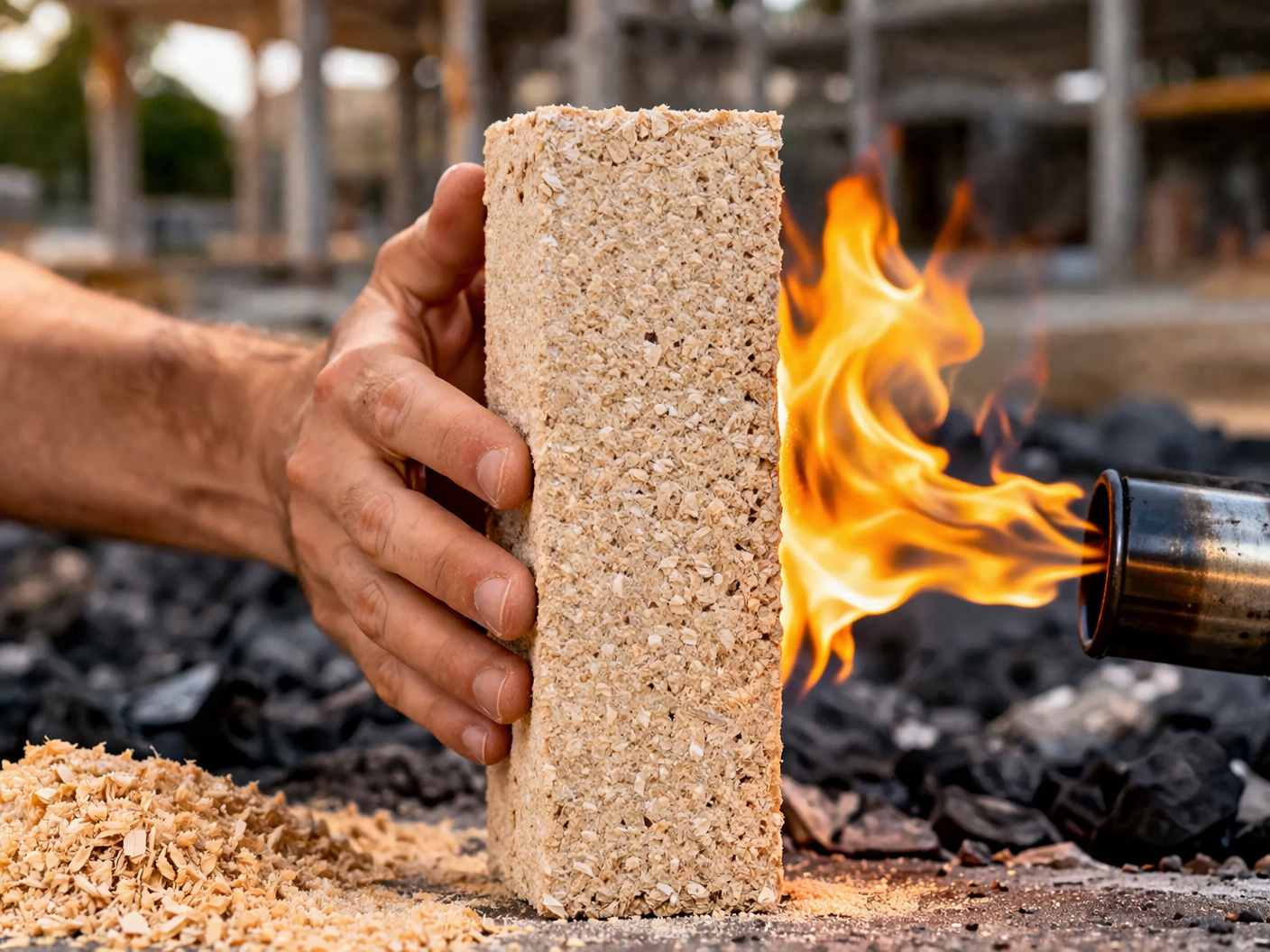
Researchers reveal that sawdust can be used in fire-resistant construction with lightweight, recyclable material and performance comparable to traditional solutions
An unlikely combination has caught the attention of scientists: sawdust can be used in fire-resistant construction when mixed with a mineral known for combating flames. What was once discarded as waste can now find a place in safer and more sustainable solutions.
The information was published by Chem Circularity, a scientific journal focused on circular economy and material sustainability. The study shows how the union of sawdust and struvite can generate a solid, lightweight, and efficient material against fires.
In addition to reducing waste, the discovery points to pathways for more modern construction, focusing on reuse and safety.
-
For 45 years, Spain and Morocco have been trying to connect Europe to Africa through a project of just 14 kilometers in the Strait of Gibraltar, and an active tectonic fault on the seabed continues to make the project nearly impossible.

-
Goodbye expensive water tank: residents replace traditional system with a cheaper and more efficient solution that reduces water consumption and reuses rainwater.
-
Mexico is building a 300-kilometer railway corridor that connects the Pacific to the Atlantic in just seven hours and wants to compete directly with the Panama Canal, which is already facing water scarcity issues.

-
The largest tunnel module factory in the world was built from scratch on a beach in Denmark to produce 89 concrete blocks and will be demolished after the project: each structure weighs up to 10 times the Eiffel Tower and will be installed on the bottom of the Baltic Sea with an accuracy of 12 millimeters in a tunnel that will halve the travel time between Hamburg and Copenhagen.


How sawdust stopped being waste and became a solution in construction
Sawdust is a common waste product from the wood industry. In many cases, it ends up being burned or discarded without reuse.
Researchers decided to test a new application for this material, combining it with struvite, a mineral known for helping to contain the spread of fire.
The idea was not entirely new, but there was a significant problem: the difficulty of making the two materials bond efficiently.

Natural enzyme helped solve an old challenge
The breakthrough occurred when scientists used an enzyme extracted from watermelon seeds. This element allowed for control over the formation of struvite crystals.
As a result, the mineral began to fill the spaces between the wood particles, creating a strong bond between them.
The result was a more resistant material, capable of forming solid structures after being molded and dried.
Tests show resistance above that of wood itself
Once completed, the material underwent strength tests. The results indicated good performance, even in compression situations.
Chem Circularity, a scientific journal focused on circular economy and material sustainability, highlighted that the material exhibited superior resistance to the original wood under certain conditions.
This performance reinforces the potential of the solution for applications in the construction industry.
Why the mixture helps contain fires
The ability to resist fire comes from struvite. When heated, it releases water vapor and ammonia.
This process helps to lower the surrounding temperature and makes it difficult for the fire to spread. Additionally, the gases released do not feed the flames.
Another important effect is the formation of a surface layer that reduces the flammability of the material, increasing protection.
Lightweight material can change the use in fire-resistant construction
Initial tests indicate that the new solution can offer protection similar to that of traditional cement-based materials, but with less weight.
This can facilitate transportation, reduce installation effort, and expand use in different types of construction.
The lightness, combined with resistance, makes the material an interesting alternative for the sector.

Recycling reinforces the sustainable appeal of the technology
Another point that stands out is the possibility of reuse. Unlike common materials that end up discarded after demolitions, this compound can be recycled.
The process involves grinding, heating, and separating the components for reuse.
Sawdust can be used in fire-resistant construction and also help reduce waste, something increasingly valued in the construction industry.
The discovery shows how a simple material can gain a new function and create real impact. The union of sawdust and struvite points to safer, lighter, and more sustainable solutions.
This type of advancement can influence the future of construction, especially in projects that seek efficiency without compromising fire protection.
Did you like this innovation? Share it with others and leave your opinion on the use of sawdust in construction.









Seja o primeiro a reagir!