





 Português
  Inglês
  Espanhol
  3 min de leitura
  0 comentários


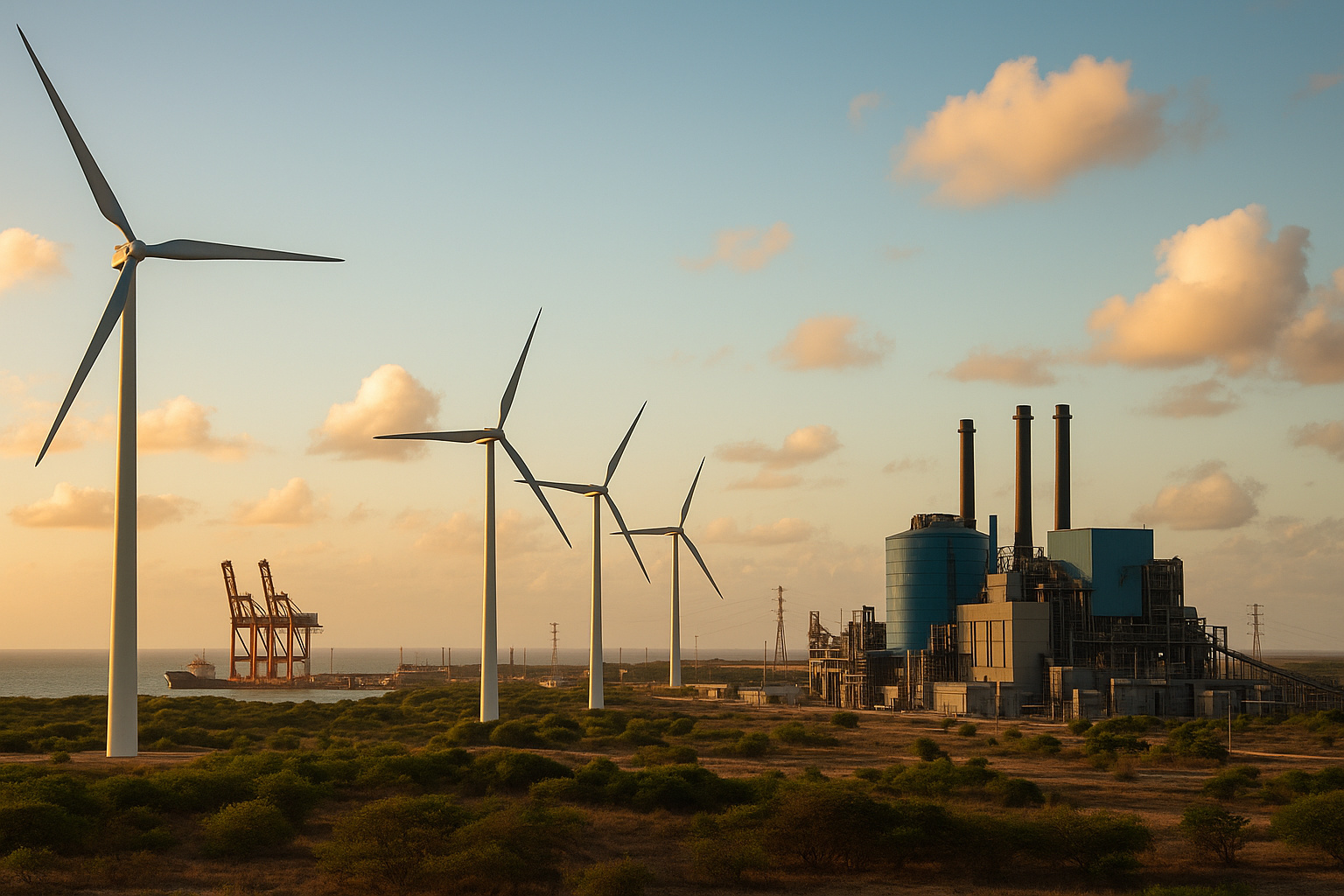
The Northeast Takes Center Stage in the Future of Brazil’s Industry by Attracting Clean Energy and Powershoring Projects.
Northeast Takes Leadership and Repositions the Future of Brazil’s Industry with Clean Energy and Powershoring Advancement
The Northeast currently stands out as the region that can redefine the future of Brazil’s industry by hosting large projects seeking clean, abundant, and competitive energy.
This is stated by energy expert Adão Linhares Muniz, who argues that the northeastern geography has all the conditions to house ultra-electrointensive industries.
The analysis presented in this recently published reflection explains what is changing, who is leading the process, when it is advancing, where it is concentrated, how the energy transition favors this movement, and why the concept of Powershoring places the Northeast at the center of the country’s green neoindustrialization.
-
Renewable energy advances over protected areas in Brazil, and a survey by the Energy Transition Observatory reveals silent impacts that challenge environmental conservation and pressure sensitive traditional territories.

-
Rio Grande do Sul accelerates energy transition: State invests in renewable technologies and consolidates decarbonization strategies and pathways to attract billions in new industrial investments.

-
With 160,000 m² of collectors, an area larger than 20 football fields, Silkeborg, in Denmark, hosts a solar thermal plant that heats 19,500 homes and could become the largest solar heating plant in the world.

-
A study reveals the expansion of renewable energy procurement in Brazil and shows how companies are taking advantage of opportunities to reduce expenses, ensure energy efficiency, and strengthen strategic environmental commitments.


According to Muniz, the world is undergoing a productive reorganization that directs energy-consuming factories to regions capable of providing clean electricity at competitive prices. In this scenario, the northeastern territory emerges as one of the planet’s most strategic areas.
Powershoring: The Strategy That Drives the Future of Brazil’s Industry
In his analysis, Muniz highlights:
“The Powershoring Strategy – The world is experiencing a reorganization of its production chains, driven by the urgency of the energy transition.”
Thus, globalized companies seek locations with abundant renewable energy, stable costs, and robust electrical infrastructure. As a result, the Northeast positions itself as a natural destination for this new geoeconomy, combining sun, wind, strategic logistics, and proximity to international markets.
Clean Energy as the Engine of the Northeast’s Neoindustrialization
The specialist reinforces that the pillar of this transformation lies in the expansion project of transmission lines between Northeast and Southeast, which will increase the energy export capacity from 13 GW to 24 GW by 2033.
Muniz explains that HVDC-VSC technology will bring the necessary stability to integrate wind and solar – precisely the sources that sustain the northeastern competitive advantage.
He emphasizes:
“This infrastructure is the bridge that connects the availability of clean and cheap energy to the demand of global industries seeking to decarbonize their operations, the core of powershoring.”
Data Centers and Green Hydrogen Lead the New Industrial Wave
The arrival of ultra-electrointensive companies, such as data centers, has already begun. Ceará, for instance, has authorized the direct connection of large digital structures to the basic network – a milestone for Powershoring.
At the same time, green hydrogen (H2V) is transforming the Northeast into a global powerhouse. Muniz emphasizes that the Brazilian government plans to use H2V to strengthen the national production chain, not just to export it.
Coordinator Rafael Dubeux summarizes this vision:
“We want to leverage the advantage of having one of the cheapest hydrogens in the world to deepen the production chain…”
Traditional Industries Also Rush to the Northeast
Industries such as cement and steel see survival and competitiveness by migrating or establishing new plants in the region, attracted by clean energy and the opportunity to produce green steel and green cement — growing demands in the international market.
Strategic Logistics Expands the Region’s Potential
The advancement of Powershoring also depends on integrated logistics. Ports like Pecém and Suape are receiving billions in investments and becoming industrial-port hubs.
Meanwhile, the Transnordestina Railway connects productive areas to the coast, allowing for the efficient and sustainable transportation of inputs and products.
Regulation: The Next Step to Unlock the Future
Aneel is discussing new rules for ultra-electrointensive consumers, essential to avoid speculation, ensure project maturity, and provide legal certainty.
According to Muniz, this regulatory framework will be decisive in consolidating the Northeast as a global hub for the low-carbon industry.
Conclusion: Northeast Advances to Become a Green Industrial Power
By combining clean energy, robust infrastructure, efficient logistics, and, moreover, modern regulation, the Northeast assumes a historic role in the country.
Thus, the region strengthens itself as the gateway to green neoindustrialization and as a strategic axis to transform the future of Brazil’s industry.
With the advancement of Powershoring, the country, therefore, gains the chance to convert its energy potential into real economic development.










Seja o primeiro a reagir!