





 English
  Francês
  Alemão
  Italiano
  Japonês
  Norueguês
  Portuguese
  Spanish
  5 min of reading
  0 comments


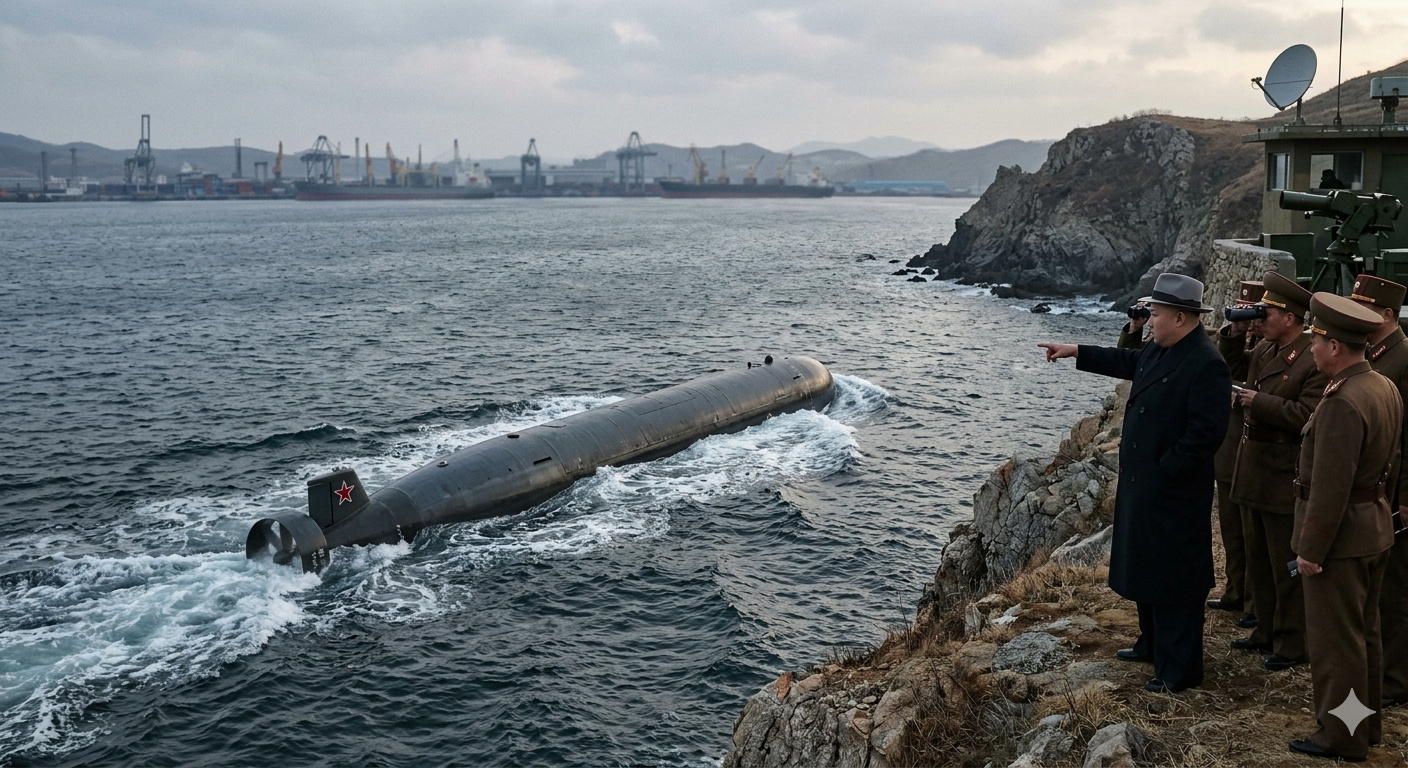
North Korea’s Haeil nuclear submarine drone travels up to 1,000 km, operates for days submerged, and integrates a new nuclear deterrence strategy.
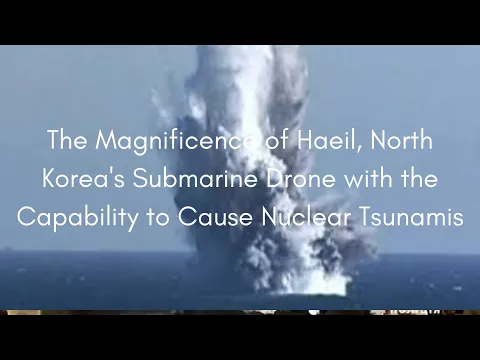
On March 21, 2023, Kim Jong-un arrived at a port on the eastern coast of North Korea and personally observed the launch of a torpedo-shaped object in the gray waters of the Sea of Japan. The object submerged, disappeared beneath the surface, and did not return to sight for two whole days. When it emerged, 59 hours and 12 minutes later, it detonated a test warhead against a target simulating an enemy port. Kim was described by the state agency KCNA as “very satisfied” with the results. The object was called Haeil — 해일, in Korean: “tsunami”. It was an autonomous submarine drone designed for a single mission: to stealthily infiltrate enemy waters, navigate to a strategic port, and detonate a nuclear warhead that would create, according to Pyongyang, a “super-dimensional radioactive tsunami” capable of destroying naval strike groups and rendering ports unusable for decades.
North Korea had entered a category of weapons that, until then, had only been achieved by Russia.
Nuclear submarine drone Haeil: secret development and hidden tests for over a decade
What surprised Western analysts most when reading the KCNA statement was not only the revelation of the drone but the information that the Haeil had been in development since 2012 and had been tested more than 50 times in the previous two years.
-
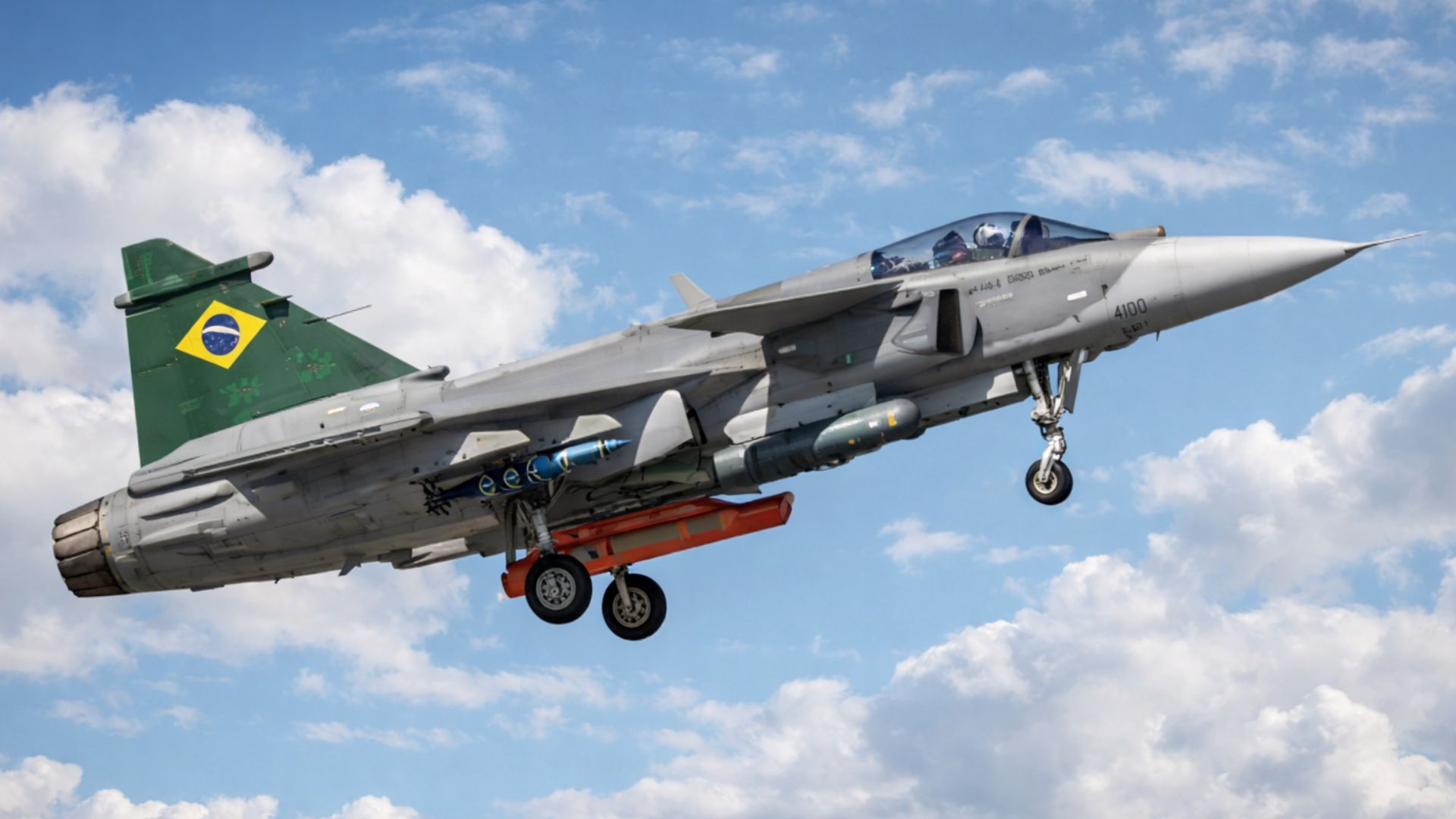
Brazil presents the first national F-39 Gripen fighter and redefines air defense with technological advancement, job creation, and strengthening of the defense industry on the global stage.
-
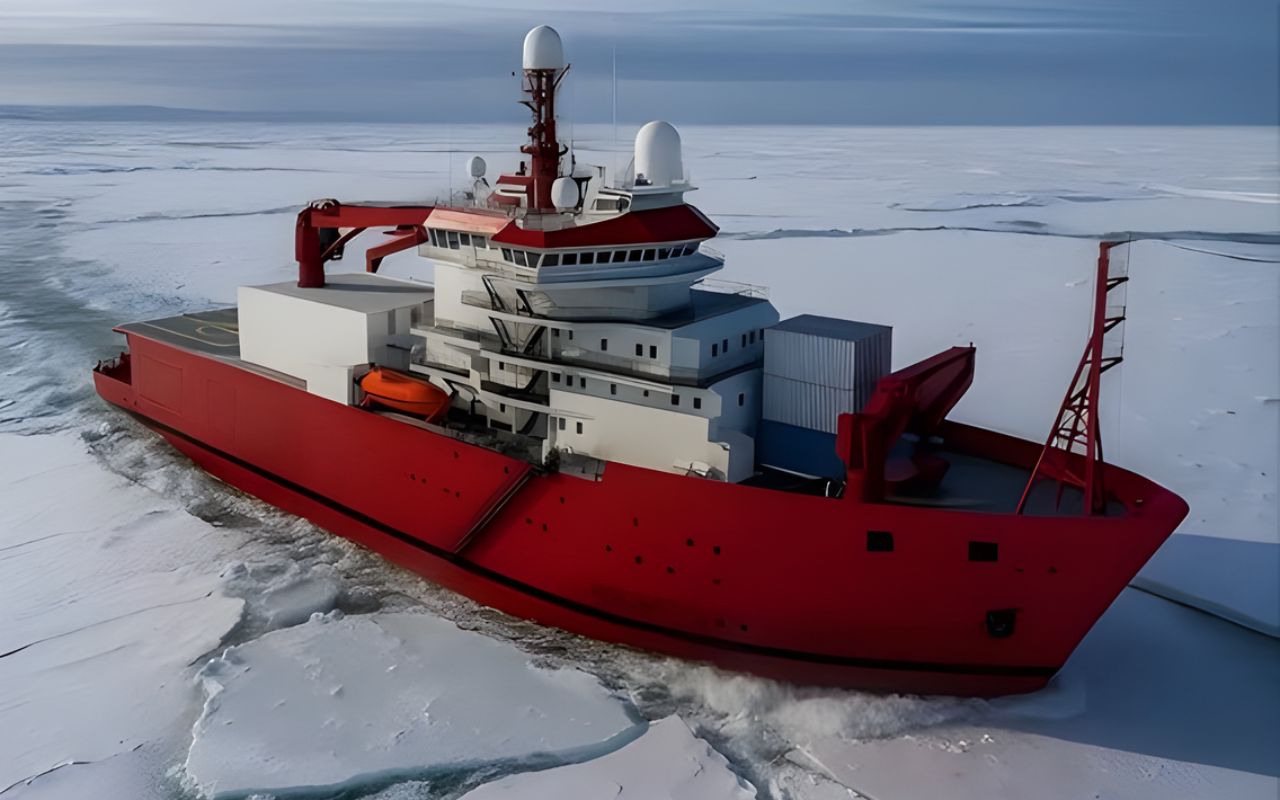
The construction of the Polar Ship Almirante Saldanha is progressing ahead of schedule and strengthens Brazil’s presence in Antarctica; the vessel will be 93 meters long, have a two-month autonomy, and technology to face ice.
-
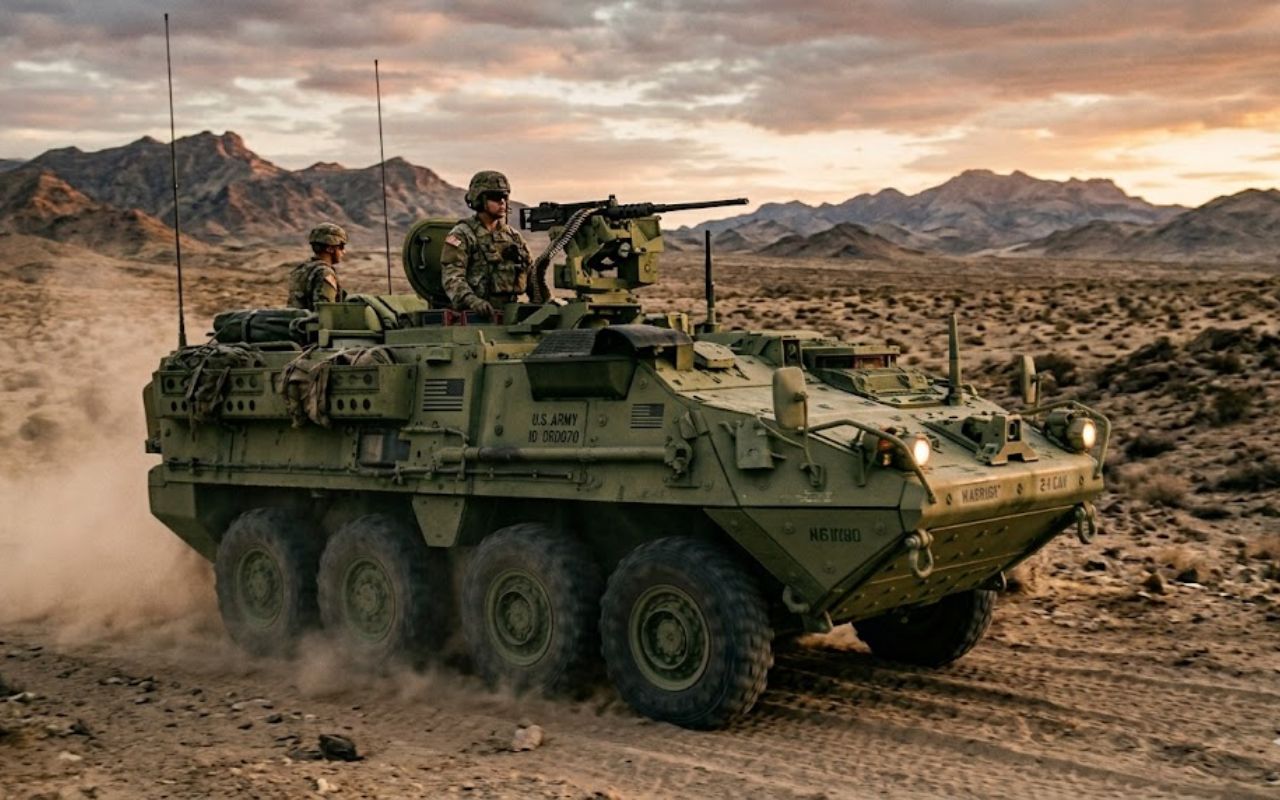
The United States Army has an armored vehicle that reaches speeds of up to 100 km/h, capable of operating normally on different types of terrain and also on asphalt without causing damage; equipped with a 350 hp engine, it can transport up to 9 soldiers — meet the Stryker.
-
Gepard 1A2: the armored vehicle that fires 1,100 rounds per minute and became a shield against drones in Brazil.

Eleven years of secret development, with dozens of tests, without any prior mention in open intelligence reports. The revelation occurred at a strategic moment. The United States and South Korea were conducting the largest joint military exercises in recent years, called Freedom Shield, with aircraft carriers and dozens of aircraft operating in the region.
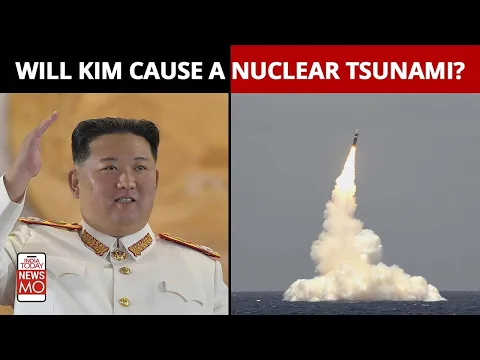

The North Korean Politburo had formally approved the development of the system in October 2021, keeping the program under absolute secrecy. Kim Jong-un personally supervised 29 of the recorded tests.
North Korea described the Haeil as a direct response to what it called an “escalating nuclear crisis” on the Korean Peninsula, claiming to possess a rapidly expanding nuclear deterrence capability.
How the Haeil works: range, autonomy, and nuclear submarine attack capacity
The Haeil is described by analysts as a combination of a large torpedo and an unmanned underwater vehicle, with diesel propulsion and smaller dimensions than the Russian Poseidon system, but with a similar strategic concept.
In the March 2023 test, the drone operated for 59 hours and 12 minutes at depths between 80 and 150 meters, executing elliptical and figure-eight trajectories, simulating evasive routes to complicate detection by anti-submarine systems.

The final target was a simulated port in the Hongwon Bay area, where the test warhead detonated accurately.
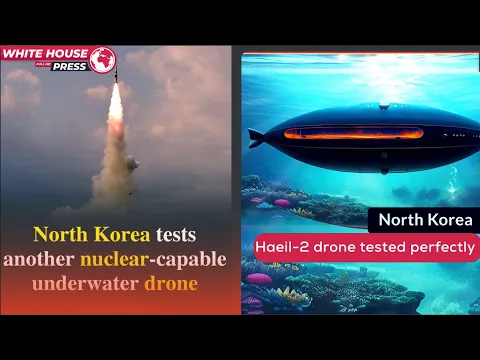
Additional tests reinforced the system’s performance. In Haeil-2, conducted between April 4 and 7, 2023, the drone traveled approximately 1,000 km in over 71 hours. In 2024, a variant called Haeil-5-23 was tested in response to trilateral military exercises involving the United States, South Korea, and Japan. In 2025, the system appeared in military parades in Pyongyang, indicating formal integration into the arsenal.
The Haeil can be launched directly from coastal ports or towed by vessels, eliminating the need for dedicated submarines as a launch platform.
The nuclear strategy of North Korea and the role of the Haeil in deterrence
The development of the Haeil is part of the nuclear doctrine formalized by Kim Jong-un starting in 2021. During the 8th Congress of the Workers’ Party, a plan was presented with 13 new strategic systems, including hypersonic weapons, nuclear submarines, and underwater launch systems.
The Haeil represents exactly this category.
In 2022, North Korea established by law the conditions for the use of nuclear weapons, including the possibility of first use and the creation of an automatic retaliation system in case the leadership is incapacitated.
In this context, the Haeil functions as an “autonomous retaliation weapon,” capable of being launched in advance and operating without communication with the surface, making it immune to attempts to neutralize the central command.
International analysts point out that the goal is to ensure a response capability even in scenarios of preemptive attack.
Limitations of the Haeil drone and challenges for anti-submarine defense
Experts from the 38 North center highlight important limitations of the system. Diesel propulsion reduces global strategic range, restricting use to regional targets, mainly South Korea and Japan. The low speed, necessary to reduce noise, increases exposure time and potential detection by anti-submarine warfare systems.

Moreover, the drone may be vulnerable before launch if identified in ports or coastal facilities.
Despite these limitations, analysts recognize that the Haeil has high strategic and political value, demonstrating technological capability and increasing the complexity of the defense scenario.
Expansion of the North Korean nuclear arsenal and new attack vectors
The Haeil is just one piece within a broader nuclear program. Since 2017, North Korea has demonstrated the capability to reach the continental United States with intercontinental ballistic missiles. In the same year, it conducted a nuclear test with an estimated yield between 140 and 250 kilotons.
In 2023, Kim Jong-un presented compact tactical nuclear warheads and ordered accelerated production expansion. In 2025, he reinforced the goal of growing the nuclear arsenal.
Estimates indicate about 50 warheads ready and enough material for up to 90. The strategic differential lies not only in the yield but in the diversification of delivery vectors, including ballistic, hypersonic, cruise missiles, and underwater systems like the Haeil.
Why the Haeil changes the military calculation even if not used
The impact of the Haeil does not necessarily depend on its use in combat. The mere possibility of nuclear underwater drones operating autonomously alters the strategic planning of adversary countries. Strategic ports, naval bases, and maritime routes are now considered vulnerable to an invisible and potentially already moving threat.
This uncertainty creates a new level of deterrence. There is no way to know if a device has already been launched, nor where it is located. This ambiguity is a central part of North Korean strategy.
When Kim Jong-un appeared alongside the Haeil in 2023, what was being demonstrated was not just a weapon system, but a shift in the paradigm of underwater warfare. A weapon that, even silent and invisible, already fulfills its strategic function simply by existing.









Seja o primeiro a reagir!