





 English
  Francês
  Alemão
  Italiano
  Japonês
  Norueguês
  Portuguese
  Spanish
  3 min of reading
  0 comments


Conducted by the Sprinkler Institute Brazil, daily monitoring of fire occurrences in the country accounts for 647 reports in the first months of the year
The volume of news about structural fires increased in the first three months of 2025. This is indicated by a survey from the Sprinkler Institute Brazil, a non-profit organization whose mission is to promote the use of sprinklers in fire prevention and combat systems in industrial and commercial facilities in the country. Through daily monitoring of fire news in Brazil, the Institute managed to capture 647 occurrences of structural fires from January to March of this year, representing a 6% increase compared to the same period in 2024, when 610 reports were registered.
The numbers also showed a significant increase compared to 2023 (581 occurrences) and 2022 (515 reports). “Even with the closure of a year already marked by high numbers, the first quarter of 2025 showed that fires continue to rise. Buildings such as factories, hospitals, and shopping centers remain vulnerable. This is often a reflection of a negligent attitude on the part of those responsible, who see fire protection merely as a legal requirement, rather than a real safety priority,” reports Marcelo Lima, ISB consultant.
-
Oncorp wins auction and enables biodiesel and gas thermal plants in Brazil, with strategic projects in Suape and Xavantes Aruanã.

-
Raízen Recovery: Shell Cosan May Reduce Control After R$ 65 Billion Debt

-
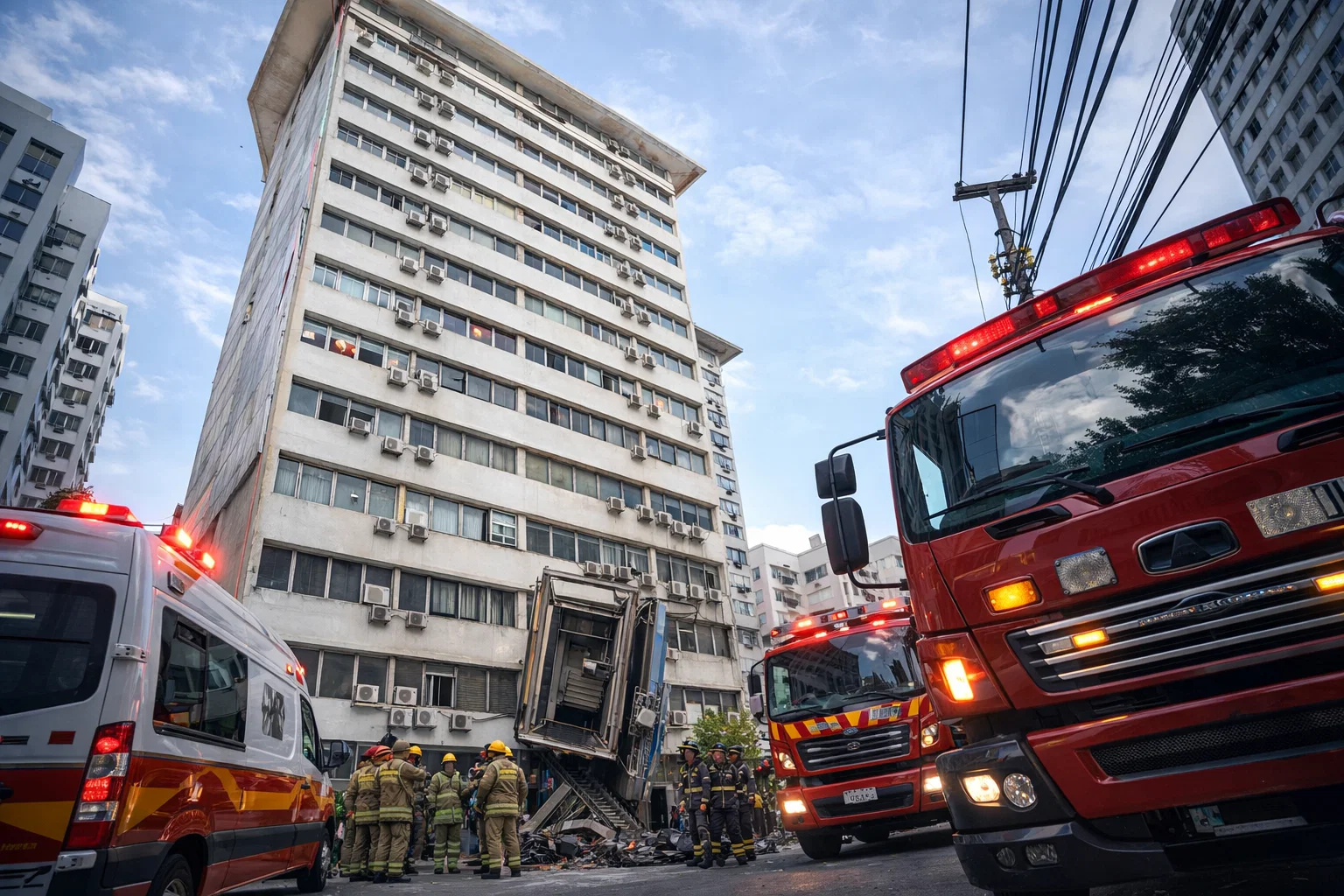
Elevator Plummets From Tenth Floor in Commercial Building in Recife, Raising Concerns About Safety and Engineering of Vertical Transport Systems Used Daily in Urban Buildings
-
Outback Montes Claros: Chain Confirms First Unit in Northern Minas in 2026


The recorded occurrences are referred to as “structural fires,” meaning those that could have been prevented by installing sprinklers and occurred in warehouses, hospitals, hotels, schools, public buildings, museums, among others. The ISB does not include residential fires in the statistics, which, although also structural fires, are not subject to monitoring because fire safety legislation does not apply to single-family homes, where the majority of occurrences happen.
The fire prevention and combat legislation is state-level and is up to date. The one in São Paulo is one of the most advanced in the country and serves as a model for much of Brazil. “The issue lies in applying it correctly,” explains Marcelo Lima.
“The legislation requires the installation of fire protection systems but does not set clear criteria regarding the quality or reliability of the equipment used. Except for fire extinguishers, there is no certification requirement, which allows for the presence of systems that, although compliant with the law, may not function properly in an emergency. The risk is that this failure may only be noticed at the worst moment, during a real fire,” Lima explains. “The lack of official fire statistics in Brazil remains one of the main challenges in the sector. The ISB advocates that the Military Fire Departments throughout the country should release fire occurrence data so that we can understand the real situation of cases and propose changes,” he concludes.
About the ISB (Sprinkler Institute Brazil)
The Sprinkler Institute Brazil (ISB) is a non-profit organization whose mission is to promote the use of sprinklers – also known as automatic sprinklers – in fire prevention and combat systems in industrial and commercial facilities in the country. Founded in 2011, the ISB advocates for the use of this technology as the most effective measure to prevent human and material losses.
PRESS INFORMATION
Content Communication
Ricardo Morato (ricardo.morato@conteudonet.com)
Cell: (11) 98799-5868
Carol Freitas (carol.freitas@conteudonet.com)
Cell: (11) 99196-3890








Seja o primeiro a reagir!