





 Português
  Inglês
  Espanhol
  4 min de leitura
  1 comentário


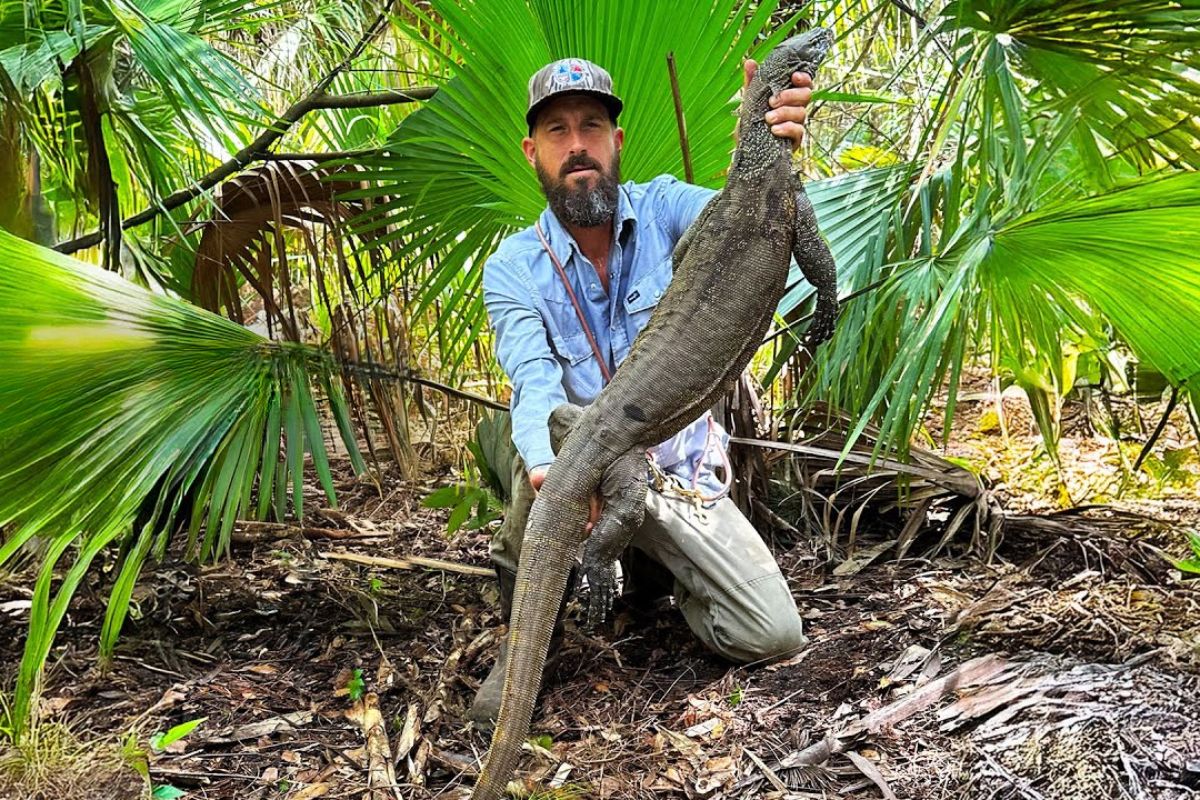


The New Invasive Threat Emerges Between Homes and Sensitive Natural Areas, With Reports of Nile Monitors Sunbathing on Canal Banks and Disappearing into Vegetation. Teams Controlling Iguanas and Monitoring Pythons Describe a Carnivorous, Intelligent Predator That Is Difficult to Spot and Capable of Pressuring Native Wildlife and Even Pets in the State
A new invasive threat in Florida gained traction after recent sightings of Nile monitors were reported during routine iguana control efforts in canals. In practice, the conversation shifted from just pythons and iguanas when a large, predatory, fast lizard entered the radar of field workers.
The striking point is the combination of setting and perceived frequency: canals, residential areas, and sensitive natural regions emerge as observation sites, while the animal’s behavior favors quick disappearances into vegetation. This raises a question that troubles managers and residents: to what extent can this predator spread unnoticed?
Where the Nile Monitor Is Appearing and Why This Alarms

Reports locate Nile monitors in sections of canals used for monitoring invasive iguanas, with mentions of animals sunbathing on the banks and escaping into tall grass and cover areas.
-
A bright yellow mushroom imported from Asia escaped from a cultivation farm in the United States in 2010 and is now aggressively spreading across 25 states, destroying entire communities of native fungi in American forests.

-
Buried under China, a colossal machine weighing 20,000 tons began operating as the largest neutrino detector on the planet and, in just 59 days, surpassed results that science took half a century to achieve.

-
Iran enters the center of a climate alert after the war emitted 5.6 million tons of CO2 in two weeks, surpassing the annual pollution of entire countries.

-
Lunar exploration may change after a Chinese probe finds a “cavity” of radiation that reduces the impact on astronauts by up to 20% at certain times on the Moon.


The same dynamic appears in residential areas, where residents describe encounters with a large lizard capable of causing fright, precisely because it does not seem to “belong” to the local environment.
This appearance pattern reinforces the alert because the new invasive threat is not restricted to a single type of landscape.
When a predator is seen both near homes and in sensitive natural regions, the risk shifts from being isolated to a continuous pressure on native wildlife, in addition to increasing the chance of conflict with domestic animals.
What Makes This New Invasive Threat Different From Iguanas and Pythons

The Nile monitor is described as a predatory, carnivorous lizard, with hunting behavior and a tendency to stay hidden, which changes the type of concern in daily life.
The comparison made in the field is direct: it would be like a smaller version of a Komodo dragon, with a predator’s demeanor and little tolerance for approach.
Another practical difference appears when contrasted with iguanas, often associated with a plant-based diet.
Here, the animal is placed in the group of invaders that “eat meat” and move strategically, requiring a different level of attention.
In the language of those monitoring the issue, this new invasive threat mixes the element of surprise from an active predator with the detection difficulties typical of species that hide.
Size, Behavior, and What Sightings Suggest About Real Risk
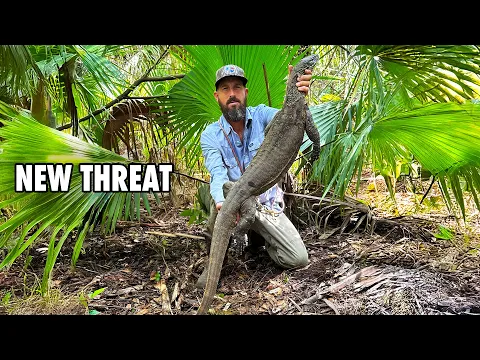

The numbers cited in reports help explain why the issue escalated so quickly: there are references to an individual about 1.80 meters long and another estimate of at least 1.20 meters from head to tail.
Even without an official count of how many exist in each area, this size is enough to change public perception and operational response.
Behavior also plays a role.
The description emphasizes intelligence, the ability to avoid detection, and a preference for areas where it can warm up and disappear quickly, which complicates image confirmation in some cases.
For technical debate, the message is simple: when the predator is hard to see, the impact can appear before the creature becomes a routine sight to the population, and that is why the new invasive threat becomes a priority in the conversation about management.
The Response in the Field and the Role of Authorities in the “War” Against Invaders
The situation is treated as a serious problem, referencing a “war” conducted by Florida wildlife authorities against this unwanted guest.
The central point is to reduce the advancing space of a species that does not belong to the local ecosystem, in a state already dealing with multiple pressures from invaders.
This context helps explain why the new invasive threat is not treated as a curiosity.
The accumulation of non-native species creates an environment where each new predator increases complexity: the risk to small animals grows, pressure on native wildlife increases, and the cost of response rises when the problem approaches neighborhoods, canals, and sensitive natural areas.
The new invasive threat is already in the public debate, but the question that really matters is how each community reacts when an invader steps out of the “video” and becomes a common scene near home.
Have you seen any invasive animal in your neighborhood or recreational area, and what would make you take it seriously: an official warning, a personal scare, or a direct impact on pets and local wildlife?







Isto pode ser interessante pois o Varano do Nilo é um predador natural de Pitons da rocha , podendo assim ajudar no controle das Pitons burmesas , ele fareja ninhos e se alimenta de indivíduos jovens , ele não representa ameaça maior do que as Pitons burmesas , eu deixaria ele cuidar das Pitons e das iguanas !