





 Português
  Inglês
  Espanhol
  3 min de leitura
  0 comentários


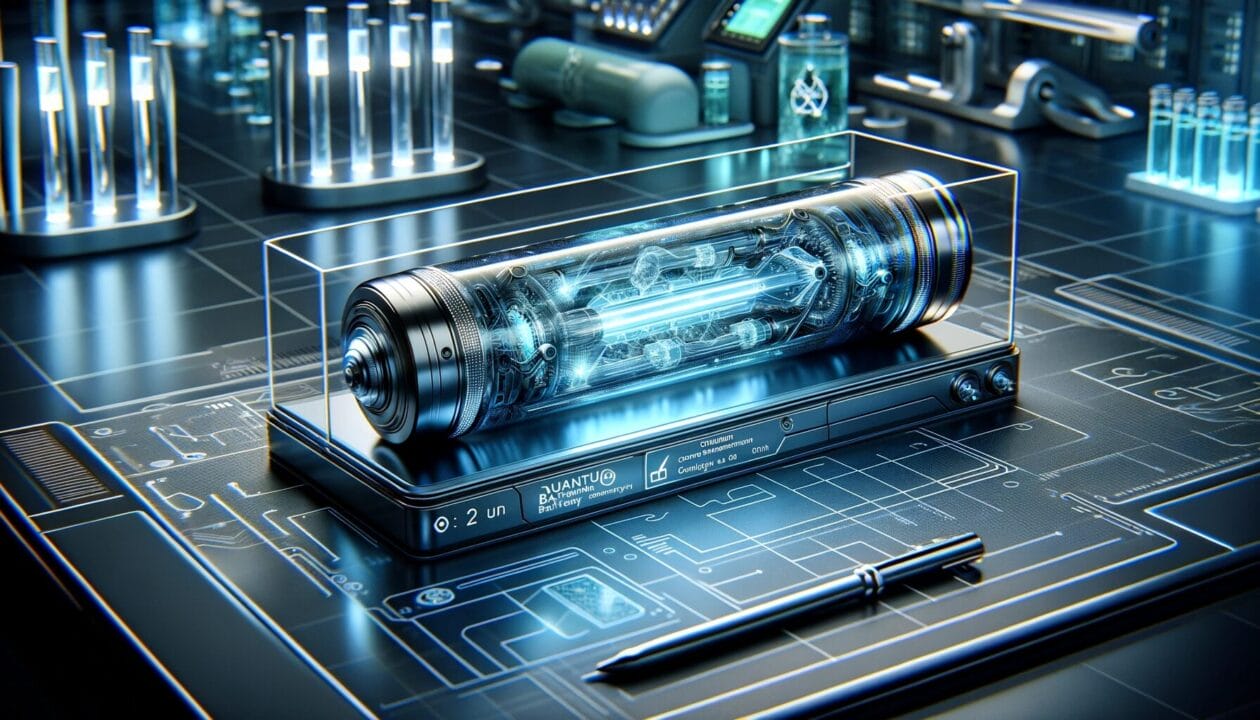
New Japanese Quantum Battery Promises to Transform the Market, Reducing Charging Time from 10 Hours to Just Seconds, While Offering Various Other Benefits.
Japanese scientists have created an innovative quantum battery that uses the principle of superposition for recharging. This cutting-edge technology, exploring quantum phenomena, promises to outperform conventional batteries in terms of performance and durability. This discovery is attracting interest from various companies and universities, driving significant studies and research in the field, and already demonstrating considerable advancements.
Understand the Main Benefits Behind the New Japanese Quantum Battery
For the first time, researchers at the University of Tokyo explored a new quantum process that disregards the conventional notion of causality to further improve the performance of these batteries and take another step towards the possibility of adopting them in the real world. However, to make things clear, the word quantum, that is, the physics governing the subatomic world, now has several applications.
From computers, which are talked about a lot, to batteries, indeed. In this field, the technology enables the creation of highly efficient products with very low energy consumption. The new Japanese battery has the advantage of recharging quickly, even when there is limited energy available.
-
A bright yellow mushroom imported from Asia escaped from a cultivation farm in the United States in 2010 and is now aggressively spreading across 25 states, destroying entire communities of native fungi in American forests.

-
Buried under China, a colossal machine weighing 20,000 tons began operating as the largest neutrino detector on the planet and, in just 59 days, surpassed results that science took half a century to achieve.

-
Iran enters the center of a climate alert after the war emitted 5.6 million tons of CO2 in two weeks, surpassing the annual pollution of entire countries.

-
Lunar exploration may change after a Chinese probe finds a “cavity” of radiation that reduces the impact on astronauts by up to 20% at certain times on the Moon.

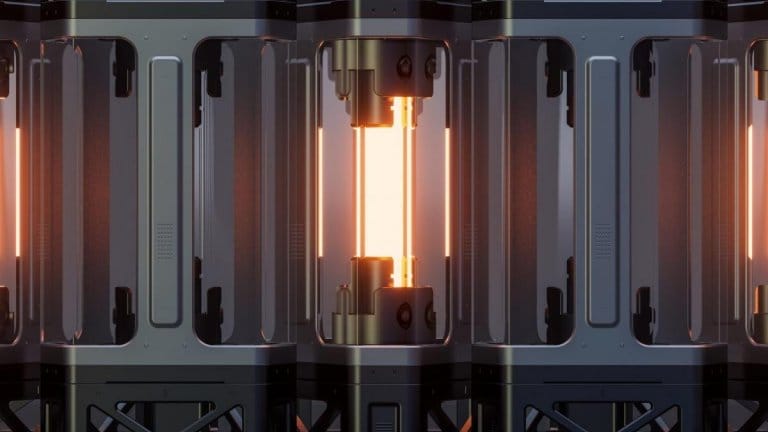
[Image: University of Adelaide]
A study from the Center for Theoretical Physics of Complex Systems at the Institute for Basic Science (IBS) in South Korea estimates that charging a quantum battery is 200 times faster than normal, reducing, for example, a 10-hour charge to just 3.5 minutes. In the case of an ultra-fast station, that time would drop to just 9 seconds.
The quantum battery is currently being developed, and according to Professor Yoshihiko Hasegawa from the Department of Information and Communication Engineering at the University of Tokyo, along with various students and researchers, has focused their work on studying the best way to charge a quantum battery since there is more than one method.
Japanese Battery Can Be Charged Using Optical Devices
According to Yuanbo Chen, one of the students involved in Hasegawa’s work, currently, batteries use chemicals such as lithium to store energy. A quantum battery operates based on a different logic.
Chemical batteries are governed by the laws of classical physics, while microscopic particles of a quantum nature follow different rules, offering the possibility to explore innovative ways to utilize them.

The researchers in Japan were particularly interested in how quantum particles can act to overcome their beliefs regarding one of their most ingrained experiences, that of time.
In collaboration with researchers from the Beijing Computational Science Research Center, the Japanese team attempted to charge a quantum battery using optical devices, such as lasers, lenses, and mirrors, exploring primarily an innovative method.
Discover the New Innovative Method to Charge the Japanese Battery
In general, to charge a quantum battery, one proceeds through successive steps placed in an exact order. This happens because randomness, in these fields, follows a defined path in which a specific event (A) is followed by a second (B) and then by a third (C), and so on.
The team from Japan, on the other hand, utilized a new quantum effect they called indefinite causal order (ICO), which allows the randomness of events to proceed in both directions. From A to B, but also from B to A, under a principle known as quantum superposition.
According to Chen, with the ICO, the team demonstrated that the way a battery composed of quantum particles is charged can drastically affect its performance. Significant gains were also observed in both the energy stored in the system and thermal efficiency.
Thus, somewhat counterintuitively, the surprising effect of an interaction was discovered that is the opposite of what could be expected: a low-power charger can deliver more energy more efficiently than a higher-power charger, being used by the same device.







Seja o primeiro a reagir!