





 Portuguese
  English
  Spanish
  6 min of reading
  0 comments


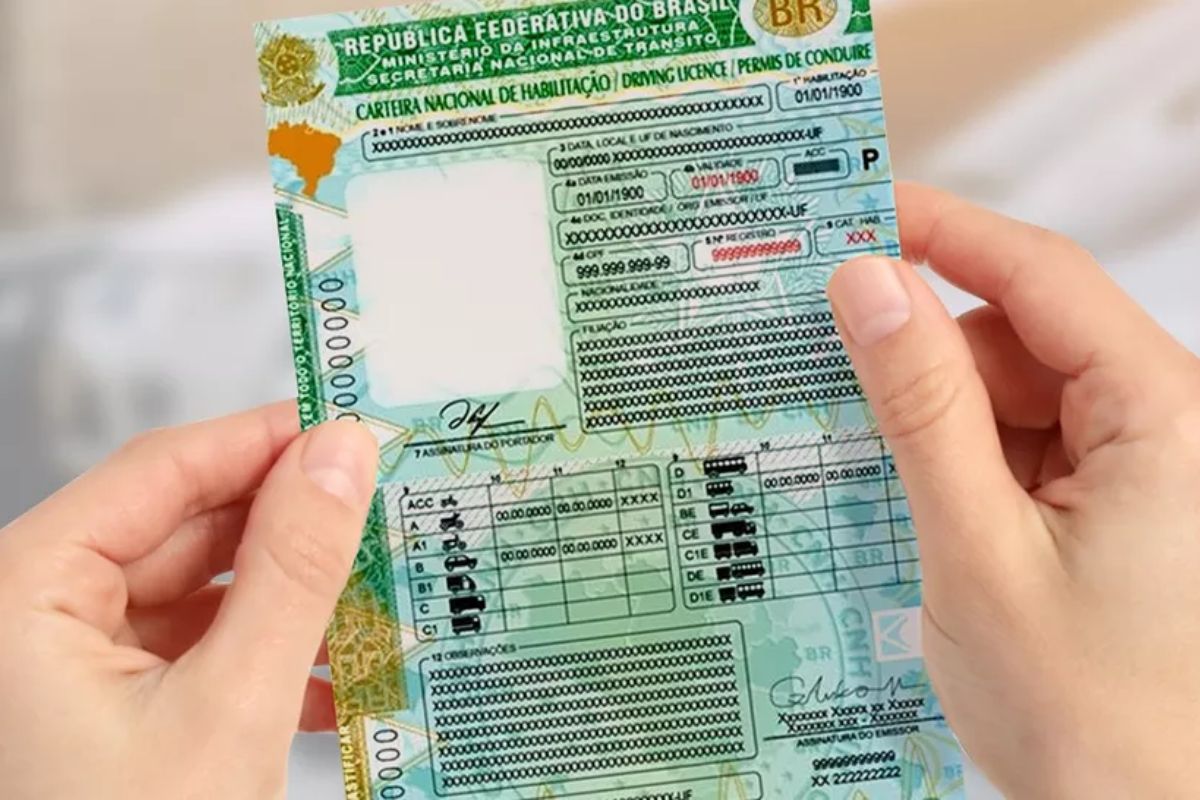
Drivers Are Confused by the New CNH with Codes A1, B1, and C1, Think They Need to Retake Exam and Change Category, but Experts Explain That Nothing Changes in the Letters A, B, C, D, and E, Only the Visual and the International Reading of the Document, Without Impact on Validity or Rules.
Since June 2022, the new CNH with reformatted visuals has been issued throughout Brazil, and more than two years later, it still leaves many people confused when they see codes like A1, B1, and C1 printed at the bottom of the document. Many people look at the table, do not understand anything, and already imagine that the license “is incorrect” or “is incomplete.”
According to the UOL portal, many drivers believe that these codes created subcategories, requiring an extra test or an immediate change of category. However, experts remind that the letters A, B, C, D, and E remain the only valid categories in Brazil and that the 2021 change in the validity of the license remains exactly the same, with varying deadlines according to the driver’s age.
Why Did Codes A1, B1, and C1 Appear in the New CNH
One of the main reasons for the confusion is the belief that Contran invented subcategories to separate motorcycles by engine size or cars by type of transmission, manual or automatic.
-
With an investment of R$ 612 million, a capacity to process 1.2 million liters of milk per day, Piracanjuba inaugurates a mega cheese factory that increases national production, reduces dependence on imports, and repositions Brazil on the global dairy map.

-
Brazilian city gains industrial hub for 85 companies that is equivalent to 55 football fields.

-
Peugeot and Citroën factory in Argentina cuts production by half and opens a layoff program for more than 2,000 employees after Brazil drastically reduced purchases of Argentine vehicles.

-
A Brazilian city gains a factory worth R$ 300 million with the capacity to process 200 thousand tons of wheat per year, a mill of 660 tons/day, silos for 42 thousand tons, and an industrial area of 276 thousand m².


Some drivers see A1, B1, or C1 and think that the old CNH “is no longer valid” and that they will need to retake the theoretical and practical exams to “update” the category.
According to lawyer Marco Fabrício Vieira, a member of Contran’s Legal Effort Thematic Chamber, this is simply not true.
The table with the codes A1, B1, C1, BE, and others, adopted in 2022, follows an international standard designed to make life easier for enforcement agents in other countries.
In other words, it serves as a kind of “visual translation” of the Brazilian CNH to the standard used abroad, without creating new requirements for the driver.
In practice, the codes with letters and numbers help foreign traffic authorities quickly understand which types of vehicles that driver is licensed to operate, without needing to master the details of the Brazilian Traffic Code.
Here, the same rules apply that the driver already knew before the new CNH.
Which Categories Really Count in the Brazilian CNH
Despite the table with combinations like A1, B1, and C1, the official structure of the license in Brazil remains organized into five basic categories, as defined by Article 143 of the Brazilian Traffic Code.
Category A is intended for the driver of a two- or three-wheeled motor vehicle, with or without a sidecar.
Category B applies to the driver of a motor vehicle that does not fall under category A, whose gross weight does not exceed 3,500 kilograms and whose seating capacity does not exceed eight places, excluding the driver.
Category C is aimed at the driver of vehicles from category B and also motor vehicles for transport of cargo with a gross weight exceeding 3,500 kilograms.
Category D qualifies the driver for vehicles from categories B and C and also for vehicles intended for passenger transport with a capacity greater than eight seats, again excluding the driver’s seat.
Finally, category E is reserved for vehicle combinations, when the towing unit falls under categories B, C, or D, and the attached unit, such as a trailer, semi-trailer, or articulated vehicle, has a gross weight of 6,000 kilograms or more or transports more than eight additional passengers.
In all cases, it is these letters A, B, C, D, and E that define the driver’s capabilities, not the numerical combination displayed in the lower table of the new CNH.
Where to Find the Category and Validity in the New CNH
A common question is: after all, which information “counts” on the new CNH, the one at the top or the table with codes below? The answer is straightforward.
The driver’s category is still indicated in the so-called “first fold” of the document, in the field “Cat.Hab.” on the right side of the CNH. It is there that the driver should look first to check if they have A, B, C, D, or E.
In the second half of the CNH, the table with silhouettes of vehicles and the internationally adopted codes appears.
On the line corresponding to the driver’s licensing category, the validity of the CNH is printed, which follows the rules in effect since 2021. From there, the driver can quickly verify both the category and until when the document is valid.
Right below the table is the observation box. There, any medical restrictions and information that the driver is engaged in paid activity, when applicable, are recorded.
This is yet another point where the new CNH organizes visually what already existed in terms of content, without creating new requirements or obligations.
Security Items and Visual Changes of the Document
Besides the table with the codes, the new CNH brought a series of graphic resources to make counterfeiting more difficult and to meet international requirements. Among the new features is the use of fluorescent ink that glows in the dark, visible only under specific conditions, as well as elements that only appear under ultraviolet light. There is also a hologram at the bottom of the document, enhancing security.
While the old model was dominated by shades of green, the new layout mixes green and yellow, giving the CNH a more modern look, similar to that of current travel documents.
Another noticeable detail is the position of the driver’s signature, which now appears just below the photo, at the top of the document, and not after the fold as it did before.
Social Name, ACC, International Code, and Validity of the CNH
The new CNH has also opened space for advances in terms of identity. The document allows the use of social name and affective affiliation, should the driver wish to include this information. This adaptation aligns the driver’s license more closely with current civil documents and recognizes different forms of family organization.
The renewed graphic standard also encompasses the Provisional License. Those still in the provisional phase have the letter P in the top right corner of the CNH, while drivers with a definitive license are identified with the letter D.
The ACC field, referring to the Authorization to Drive a Moped, still exists, ensuring that this type of license is also clearly indicated.
In terms of technology, the new CNH features an MRZ code, the same type of code used in passports, which allows for boarding at self-service terminals in certain contexts, according to Senatran.
The QR Code introduced in 2017 remains on the back of the license and continues to provide access, via an app, to all information related to the driver.
Finally, the graphic change did not alter the validity of the CNH, which has been defined since 2021. The document continues to be valid for ten years for drivers under 50 years old, five years for those between 50 and 69 years, and three years for drivers aged 70 or older.
In other words, those who received the new CNH retained the same renewal deadlines, now with a more modern and easier-to-check document both domestically and abroad.
After understanding what has really changed in the CNH, have you checked your license or do you still think you need to do something because of the codes A1, B1, and C1?










-

-

-

6 pessoas reagiram a isso.