





 Português
  Inglês
  Espanhol
  6 min de leitura
  0 comentários


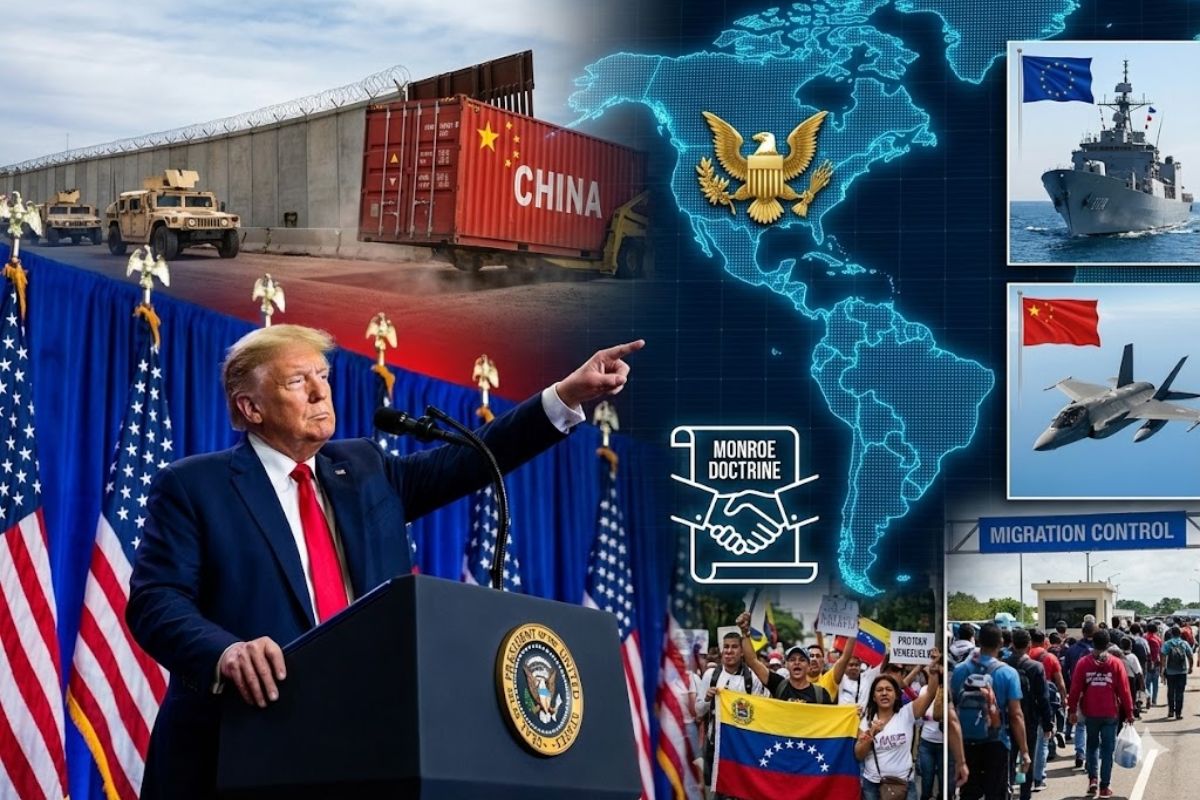
In The New Trump Security Strategy, Washington Promises To Focus Military Resources In Latin America, Reaffirm The Monroe Doctrine, Contain China’s Influence, Harden Borders, Press The Maduro Regime, And Transfer Part Of Defense Costs To European And Asian Allies Until The Next More Globally Unstable Decade
The new Trump security strategy was published on Friday, December 5, 2025, and officially repositions U.S. foreign policy. The document, released by the White House, outlines a readjustment of global military presence to prioritize threats in the western hemisphere, with direct focus on Latin America, while reducing engagement in theaters deemed less relevant to American national security.
The new directive comes amid a widespread military mobilization in the Caribbean and rising tensions with Nicolás Maduro’s government in Venezuela. While reaffirming the Monroe Doctrine, the new Trump security strategy promises to confront China’s influence in the region, contain mass migrations, tighten border control, and transfer defense responsibilities to allies in Europe and East Asia, especially around Taiwan.
Latin America Returns To The Center Of American Strategy
According to the document, the new Trump security strategy establishes a clear turn: less ambition for global leadership and more concentration on the western hemisphere.
-
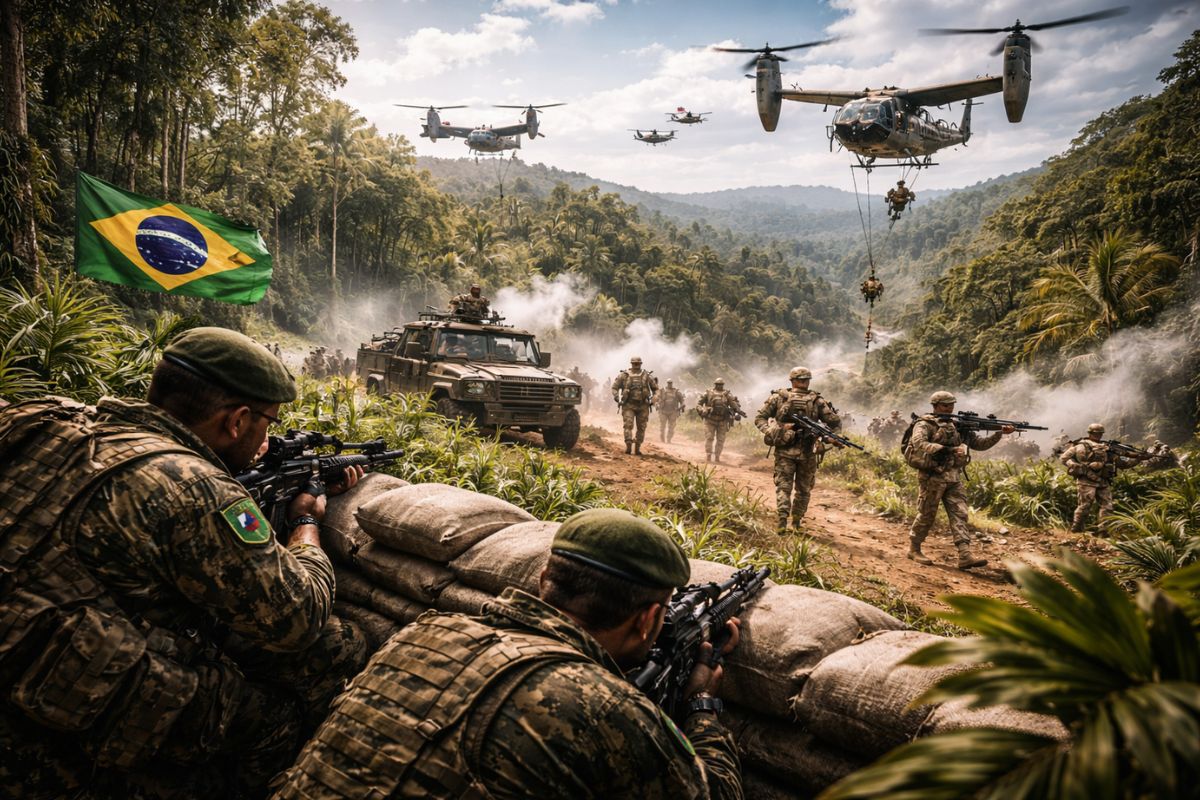
If the USA were to go to war with Brazil, Washington’s greatest fear would not be the attack itself, but facing a vast territory, prolonged resistance, and a costly, chaotic, and unpredictable occupation.
-
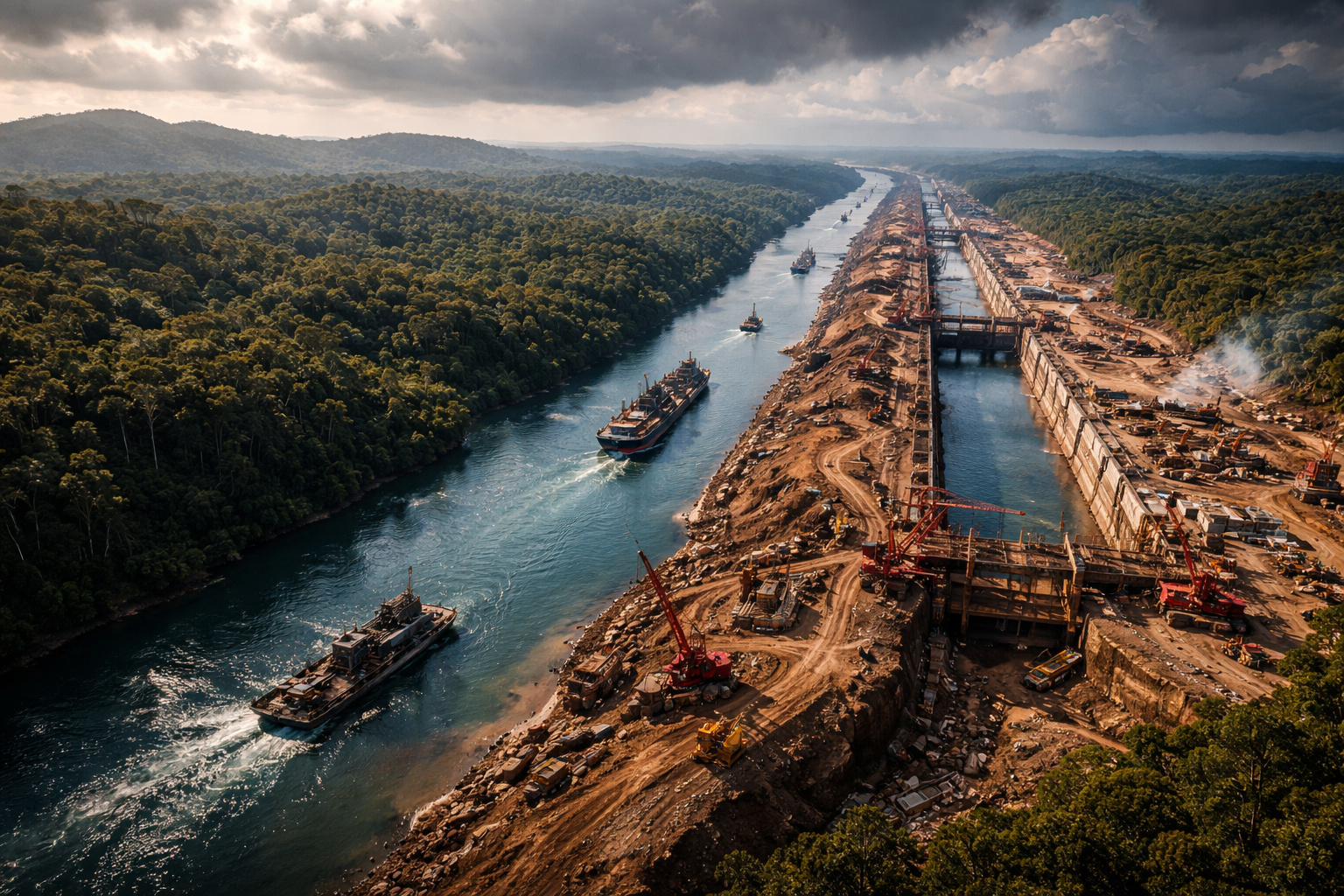
In 2013, Nicaragua sold the concession for a canal to rival Panama to a Chinese billionaire who lost 85% of his fortune, disappeared, and was declared bankrupt. Now the project resurfaces with a new route, a new Chinese partner, and a cost of $64.5 billion.
-
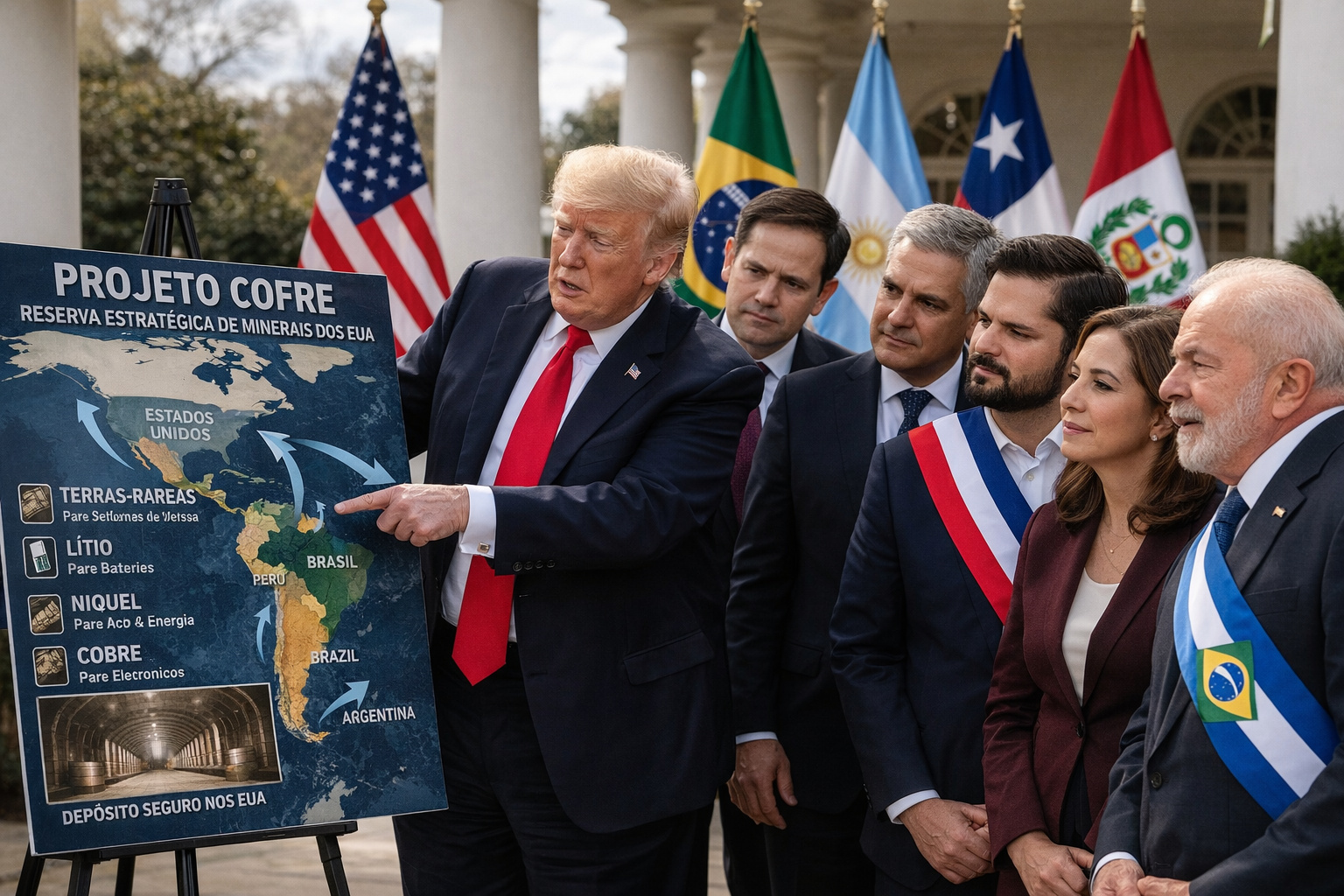
The USA announces a mysterious billion-dollar vault project to store critical minerals, but what intrigues experts is not just the plan itself, but why Latin America, including Brazil, has entered the center of this global dispute against China.
-
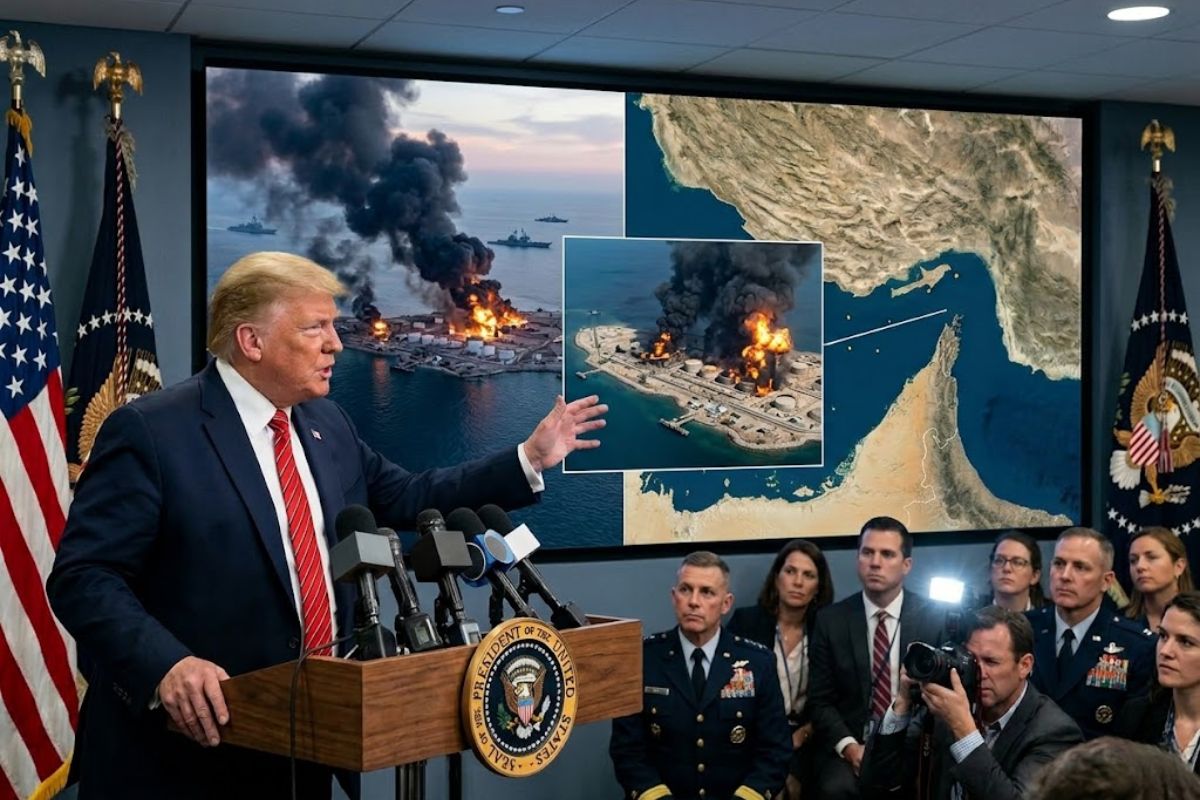
Trump Announces Bombing of U.S. Military Targets on Iranian Island Responsible for About 90% of Iran’s Oil Exports, Warns of Further Attacks if Navigation in Strategic Strait of Hormuz Is Threatened

The White House speaks of “readjusting our global military presence” to face urgent threats in the Americas, moving away from areas whose relative importance has diminished over the years.
In practice, this means strengthening the Coast Guard and Navy’s presence in strategic maritime routes of the Atlantic and the Caribbean.
The text links this reinforcement to three simultaneous objectives: controlling illegal migration and other forms of undesirable migration, reducing drug and human trafficking, and ensuring dominance over critical transit routes in crisis scenarios.
The implicit message is that the political and military command of the United States intends to be more present, for longer periods, in the Latin American neighborhood.
Monroe Doctrine Revived And Direct Message To External Powers
The new Trump security strategy explicitly states the objective of “reaffirming and applying the Monroe Doctrine” to restore U.S. preeminence in the western hemisphere.
The classic concept of “America for Americans” is updated with language aimed at containing external powers from the region.
The text indicates that Washington will “deny external competitors” the capacity to position forces, establish threatening military capabilities, or control strategic assets on the continent.
China is cited as the main non-Western actor with relevant economic presence in Latin America, especially due to its trade relations with major countries in the region.
The strategy acknowledges that part of this influence will be difficult to reverse, but relies on the argument that, often, the ties of Latin American countries with Beijing are mainly commercial, rather than ideological.
The response proposed by the new Trump security strategy is to recruit already established allies in the hemisphere, disrupt illicit flows, and make the United States the preferred economic and security partner for Latin American governments.
Military Pressure On Maduro And Operation Against Cartels
The publication of the plan comes amid large-scale military exercises in the Caribbean, featuring aircraft carriers, troops in amphibious invasion operations, and bombarding simulations in open sea.
Nicolás Maduro’s Venezuela is cited as a direct target of this pressure, at a time of escalating rhetoric between Washington and Caracas.
The fight against Latin American drug cartels, mentioned by the Trump administration since August, now appears formalized in the new Trump security strategy.
The document promises targeted actions against criminal organizations, including the declared possibility of using lethal force when the United States considers the model of relying solely on traditional law enforcement insufficient.
In practice, the combination of naval mobilization, operations in the Caribbean, and official guidelines signals that military and political pressure on the Maduro regime and regional organized crime networks is likely to persist, directly supported by the new security framework.
Mass Migration And Borders As The Axis Of Security Policy
Another central axis of the new Trump security strategy is migration. The text states that the government intends to “end mass migrations” and make border control the principal element of American security.
Europe is cited as a negative example of migration policy, criticized for its choices in recent years.
At the same time, the document envisions support for European actors opposing the European Union’s migration guidelines, indicating Trump’s intention to intervene in the internal European debate.
In the western hemisphere, the logic is to combine militarization of borders, agreements with neighboring countries, and pressure on governments to contain large-scale movements towards American territory.
The White House associates this migration control with other instruments present in the new Trump security strategy, such as monitoring maritime routes, combating cartels, and cooperating with Latin American allies to strengthen surveillance and repression systems.
Europe, Ukraine And “Civilizational Erasure”
The document also dedicates significant space to Europe.
The new Trump security strategy accuses European governments of blocking progress on a solution to the war in Ukraine and labels some expectations regarding the conflict as “unrealistic.”
There is also reference to a “civilizational erasure” on the European continent, language that reinforces Washington’s criticism of cultural, migratory, and security policies adopted by European governments and institutions.
Although the text maintains historical commitment to the transatlantic alliance, the declared priority is to transfer part of the defense burden to Europeans themselves, reducing dependence on the United States.
This movement aligns with the broader objective of the new Trump security strategy to end the model in which allies outsource their military costs to Washington, opening space for the redistribution of resources and means towards Latin America and the Pacific.
Taiwan, East Asia And Division Of Responsibilities
In Asia, the new Trump security strategy maintains focus on Taiwan, the world’s main hub for artificial intelligence chip production, and asserts that the United States will continue to harden its military presence in the Western Pacific.
The document reinforces the pressure for Japan and South Korea to increase defense spending, with investments aimed at deterring regional adversaries.
At the same time, the White House speaks of “transfer of responsibilities” to strategic partners in East Asia and the Middle East.
In the case of the Gulf and the Gaza Strip, the text links the bombing of Iranian nuclear facilities and recent peace agreements to the possibility of the United States reducing its direct focus, provided regional allies assume greater leadership in combating radicalism.
The logic is consistent with the central axis of the new Trump security strategy: concentrate resources in areas considered vital, such as the western hemisphere, and demand more robust counterparties from allies in other fronts.
What Assessment Should Latin America Make Of This Turn
The reorientation presented by the new Trump security strategy suggests a more intense and lasting American military presence in Latin America, in a context of competition with China, pressure on regimes deemed hostile, and expanded combat against organized crime and mass migration.
For Latin American countries, the new document opens a cycle of greater direct involvement from Washington in internal issues, including borders, public security, economy, and external alignments.
At the same time, it reinforces that European and Asian allies will be called upon to assume more costs and risks, while the United States seeks to preserve its capacity for action prioritizing its immediate surroundings.
In light of this shift, how do you see the impact of the new Trump security strategy on Latin America in the coming years: an opportunity for partnership or a source of new conflicts in the region?









-

Uma pessoa reagiu a isso.